If you are planning a trip or Argentina or Brazil, be sure to include one of the most awe-inspiring waterfalls on the planet. The beauty and immensity of Iguazú Falls is difficult to capture, but it’s no surprise that it is a UNESCO World Heritage Site and included in the list of New 7 Wonders of Nature.
Our family of four visited both sides of the falls, which straddle the border of Argentina and Brazil, in November of 2024. It was easily one of the highlights of the entire trip for us! If you have time in your itinerary, we cannot recommend it enough.
In this post I’ll share our favorite highlights, how to get there, when to visit, where we stayed, and some ideas for what you might see.
When planning your visit, you might want to consider going to both sides of the falls since each offers unique perspectives and experiences (this is what we did!). Iguazú National Park (on the Argentina side) and Iguaçu National Park (on the Brazil side) are both amazing and well-worth visiting if you have time for each, although I don’t recommend trying to tackle them both in one day.
How to Get There
Getting to the Brazilian Side (Iguaçu National Park)
If you are coming from Rio de Janeiro or other parts of Brazil, most people choose to fly to Foz do Iguaçu (Brazil). The main airport serving the Brazilian side is Foz do Iguaçu International Airport (IGU) and it connects to major Brazilian hubs like São Paulo (GRU) or Rio de Janeiro (GIG). Flight times are around 1.5–2 hours from those cities. From the airport it’s about 10–30 minutes by car or taxi to the entrance of the park.
It is also possible to get there by bus from Rio de Janeiro, but we’re talking 24 hours (or more!) of bus travel, so it’s not very common.
Getting to the Argentine Side (Iguazú National Park)
If you are coming from Buenos Aires, the closest airport on the Argentine side is Cataratas del Iguazú International Airport (IGR) near Puerto Iguazú. There are lots of daily flights from Buenos Aires that are around 1.5 hours. Then you can take a car or taxi to downtown Puerto Iguazú. From there it’s just a short taxi, transfer, or shuttle ride (about 15–20 min) to the entrance of Iguazú National Park on the Argentina side.
If you want to travel by bus, it is much more doable from Buenos Aires. Argentina has some of the best long-distance bus routes in South America with overnight options where you can sleep while you drive and “cama” choices where your seat lays almost flat into a bed. The travel time is also less and typically takes around 16-20 hours. So still way longer than a flight, but much more popular and approachable for budget travelers.
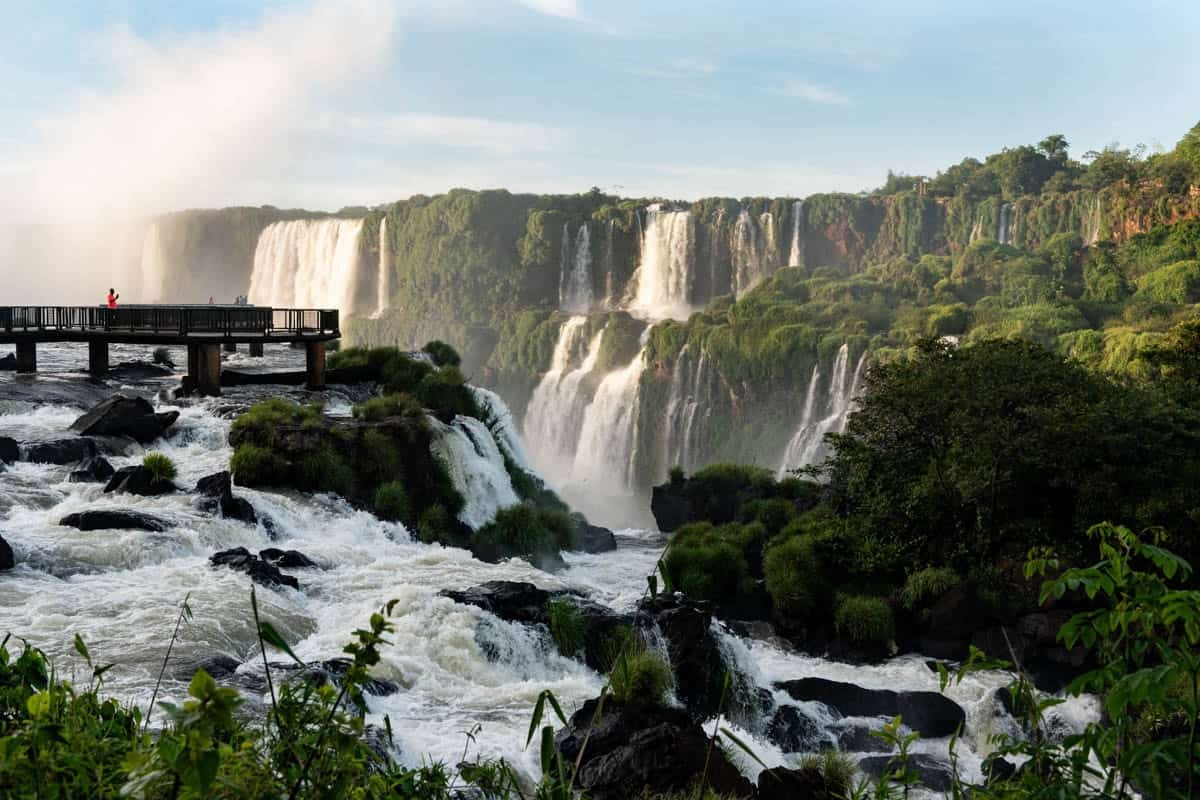
FUN FACT: The name “Iguazú” comes from the Guaraní words “y” (water) and “ûasú” (big), literally translating to “big water.”
When it the best time of year to visit?
You can visit the falls anytime year round and they are always flowing, but most people recommend going in either April-May or September-November. Both tend to have fewer crowds and good water flow with more moderate temperatures.
June-August is peak tourist season with cooler temperatures (remember that this period is winter in the southern hemisphere) but the crowds can be overwhelming.
December-March is rainy season so if you want to see the absolute majesty of the falls running full-force, this is the time to visit. But the heat and humidity of the South American summer can be oppressive and you can expect frequent rain and trail closures.
What To Expect
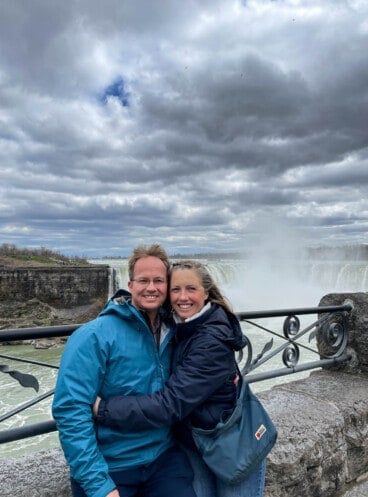
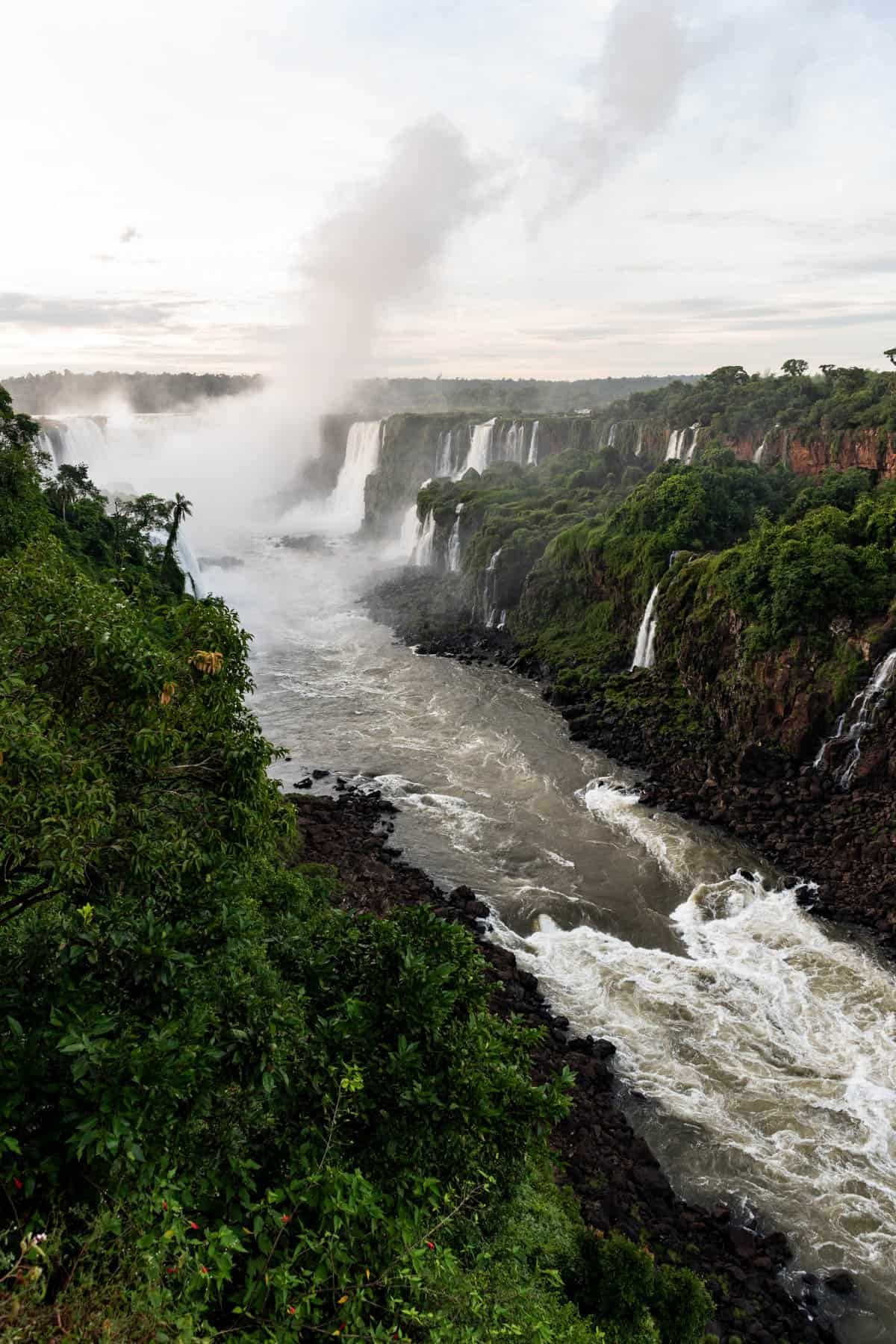
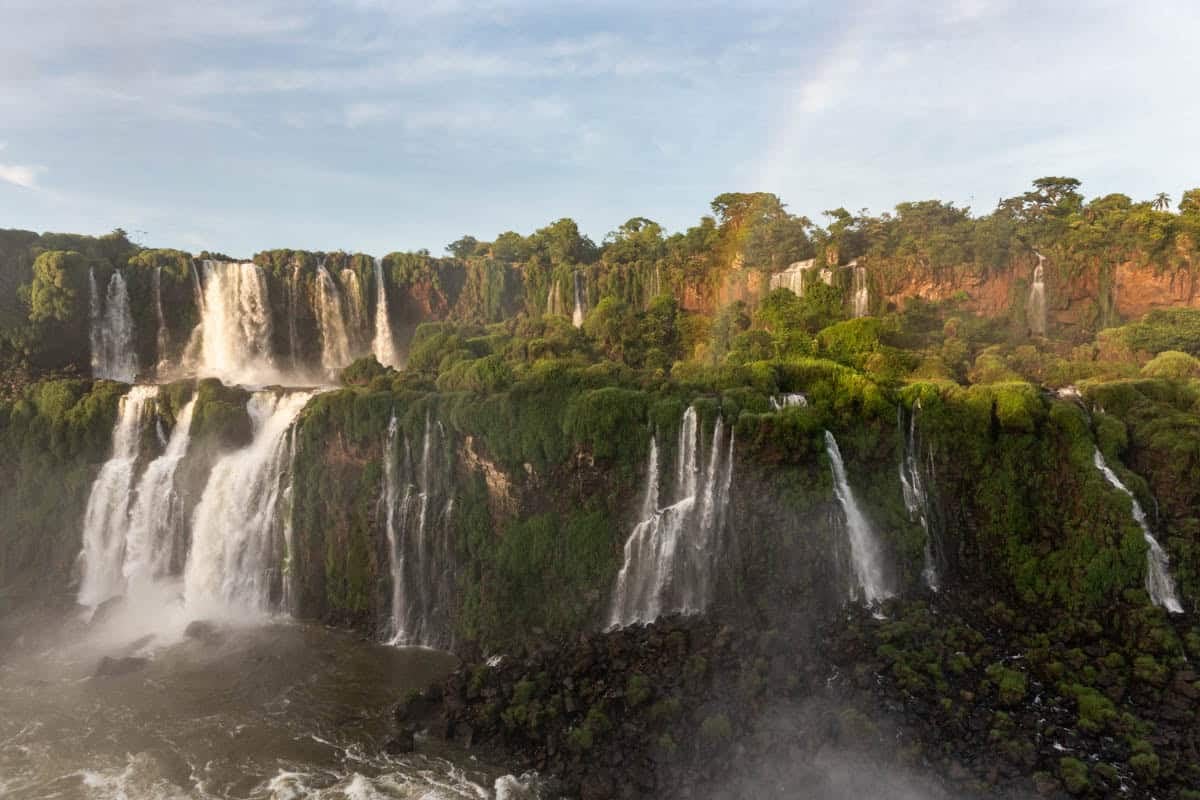
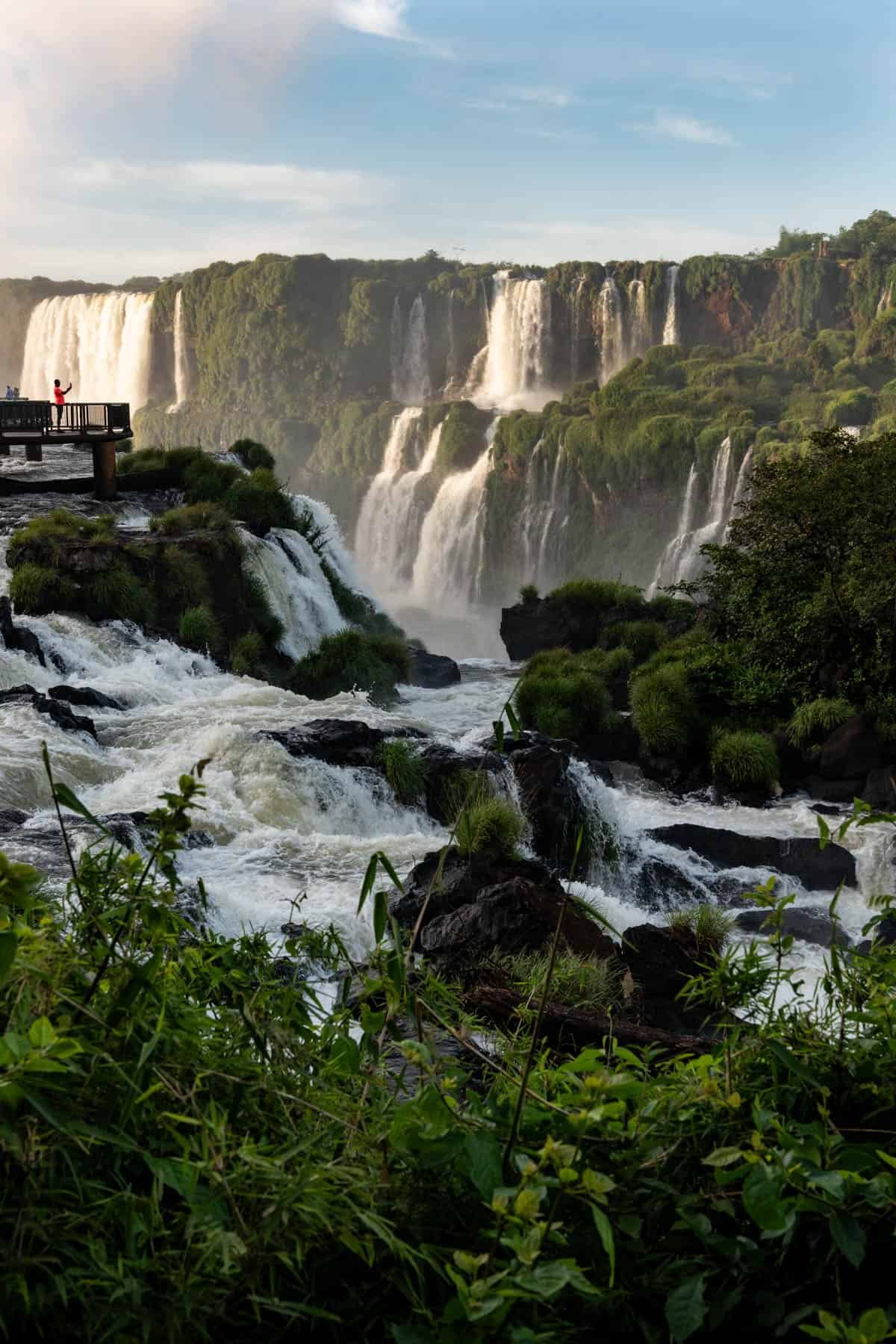
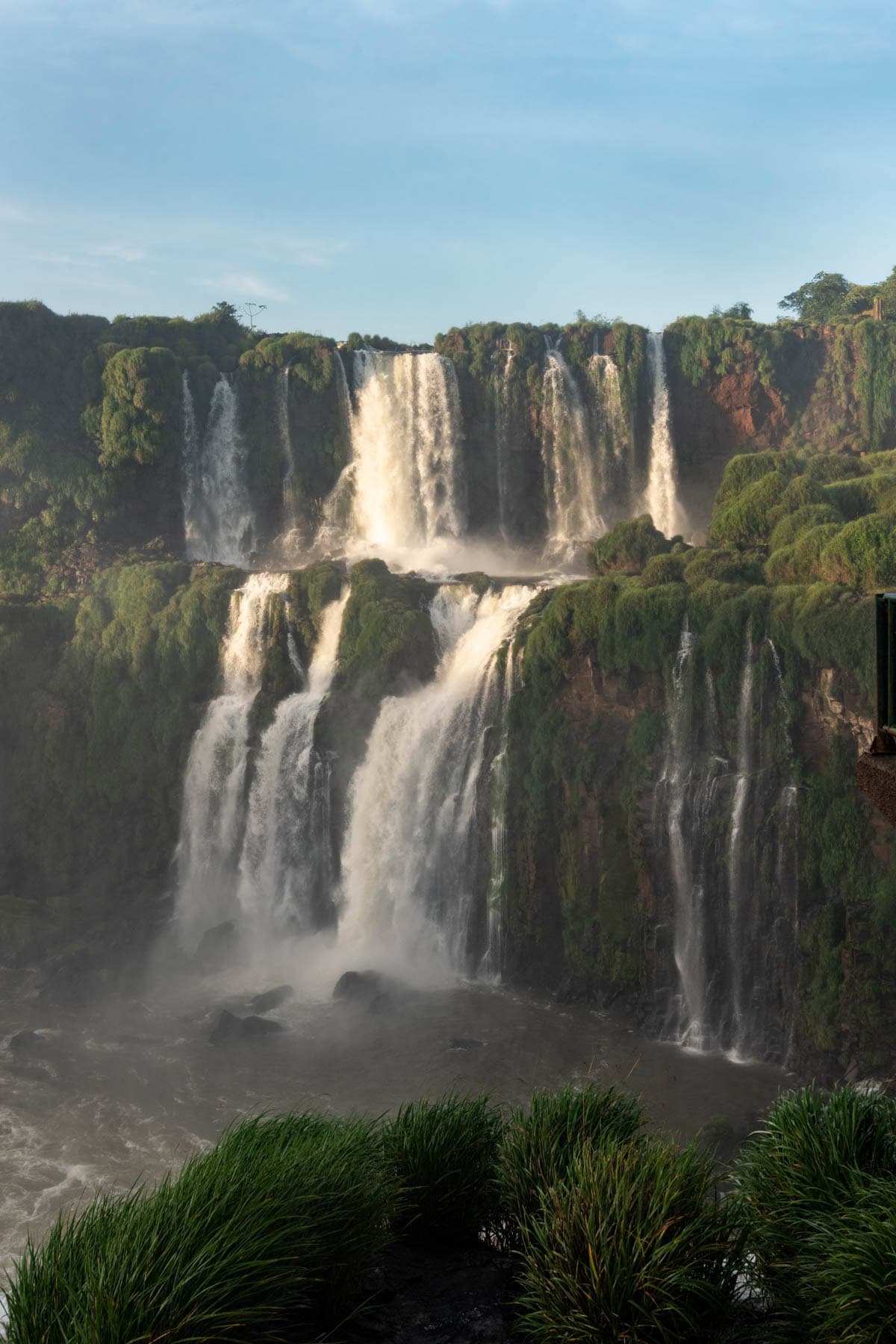
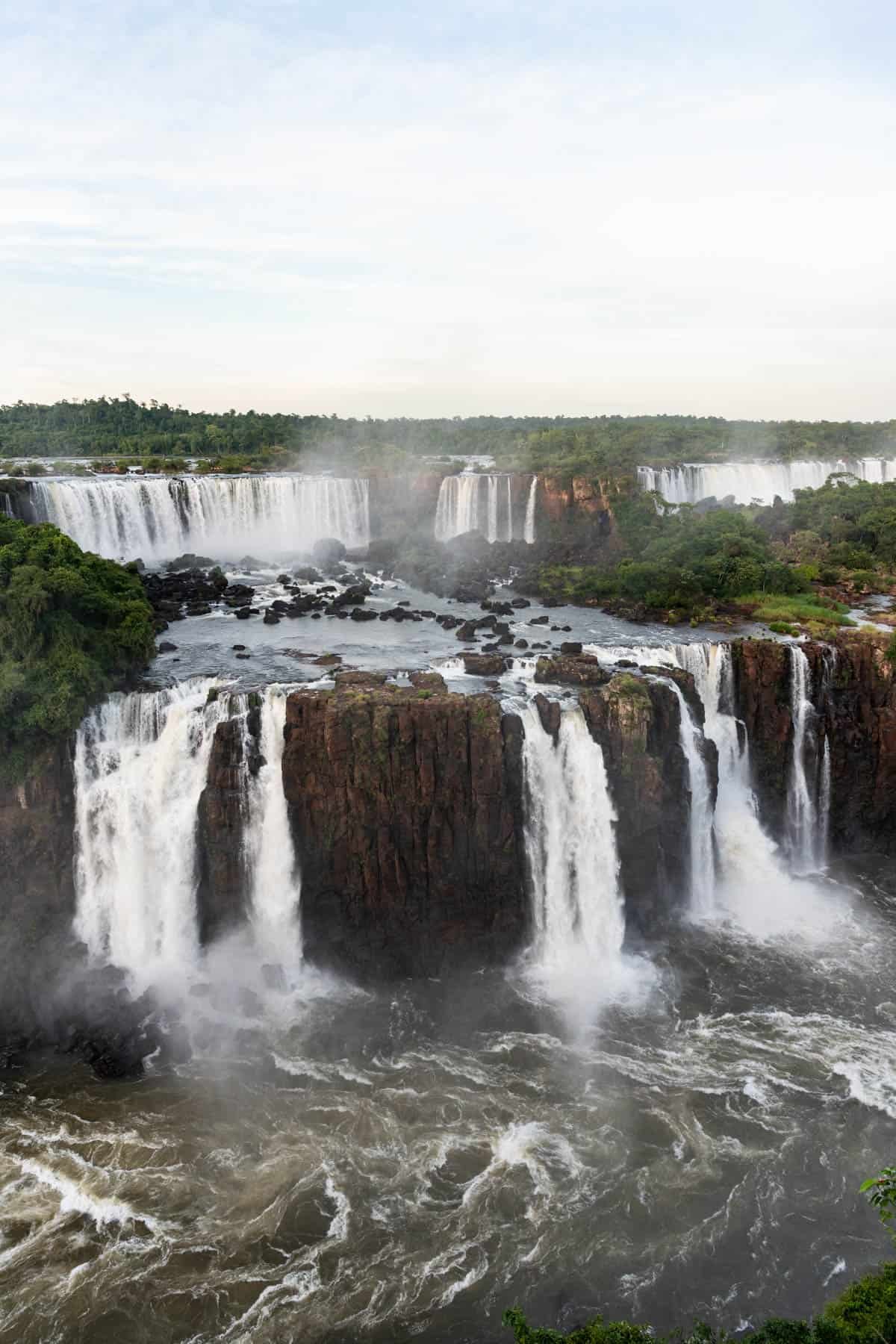
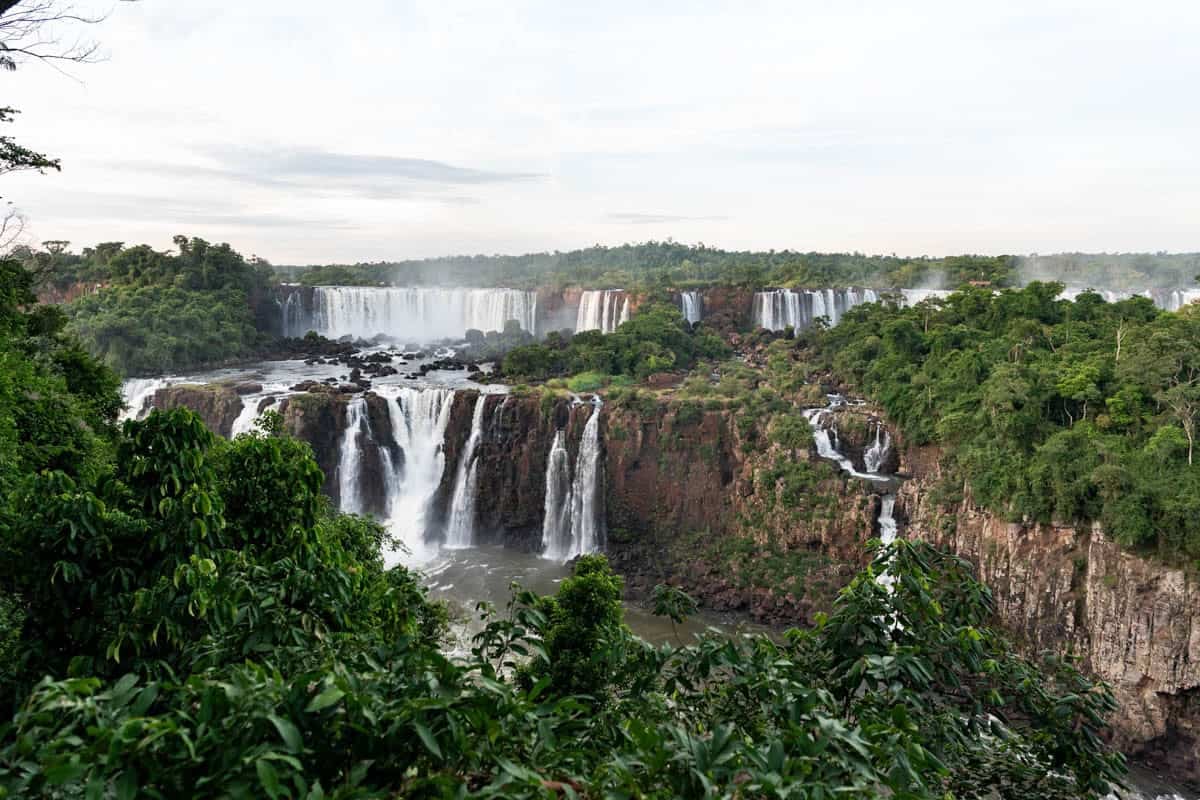
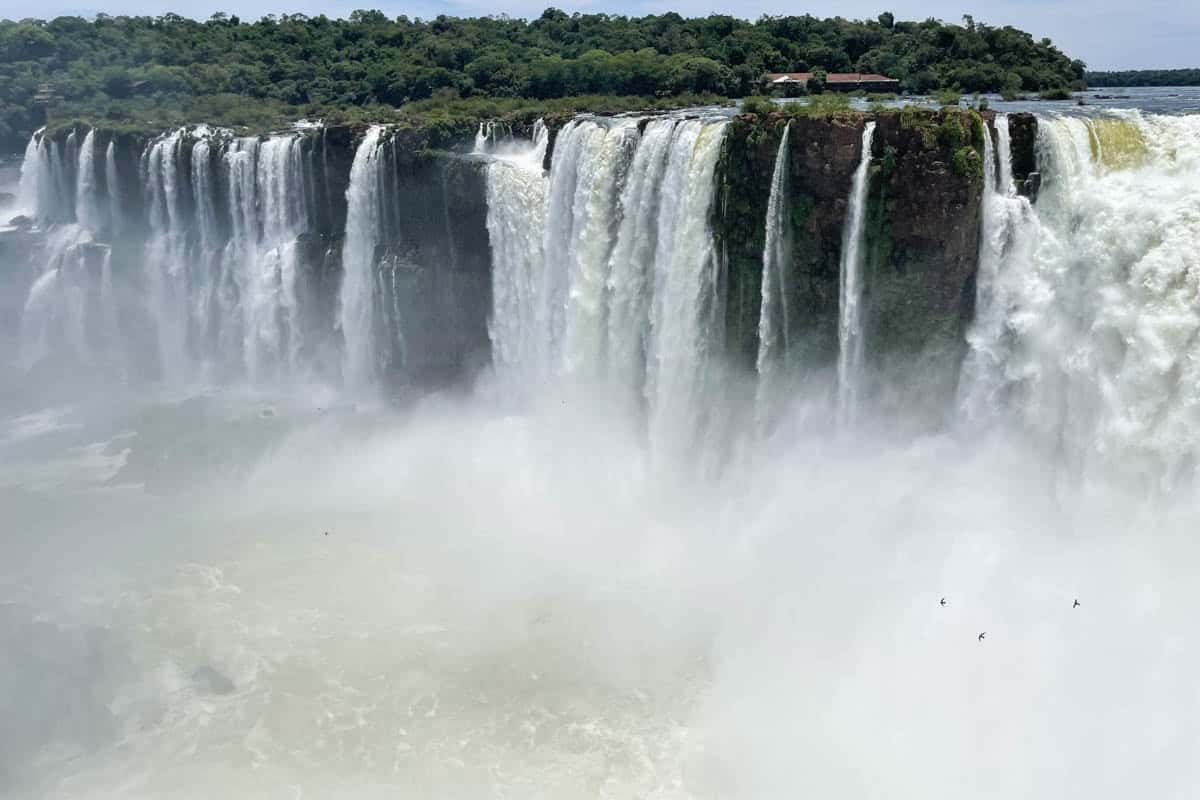
Instead of one or two giant waterfalls, Iguazú Falls is actually made up of around 275 waterfalls over a 1.7-mile area. It is both wider than Niagara Falls and has a greater volume of water!
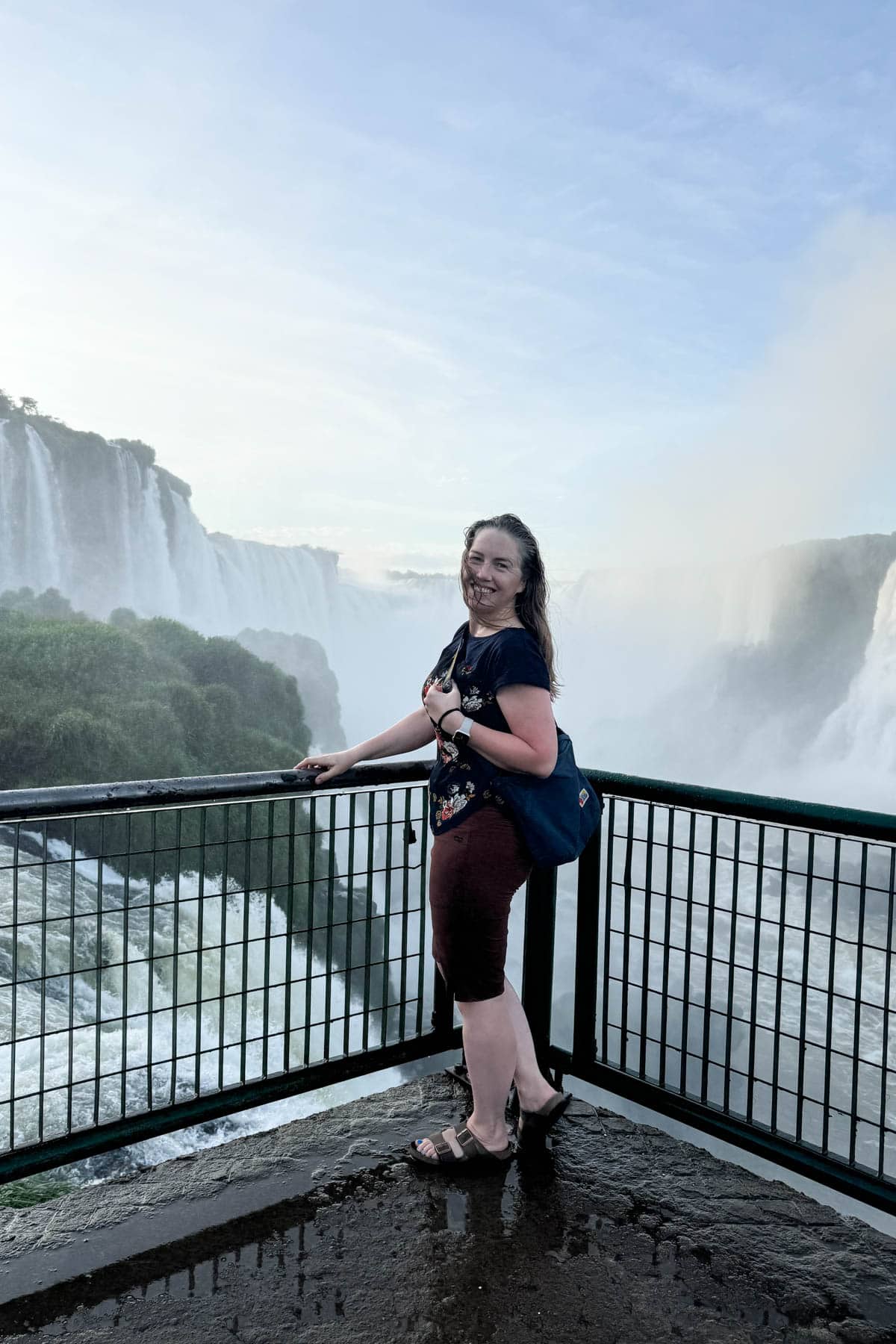
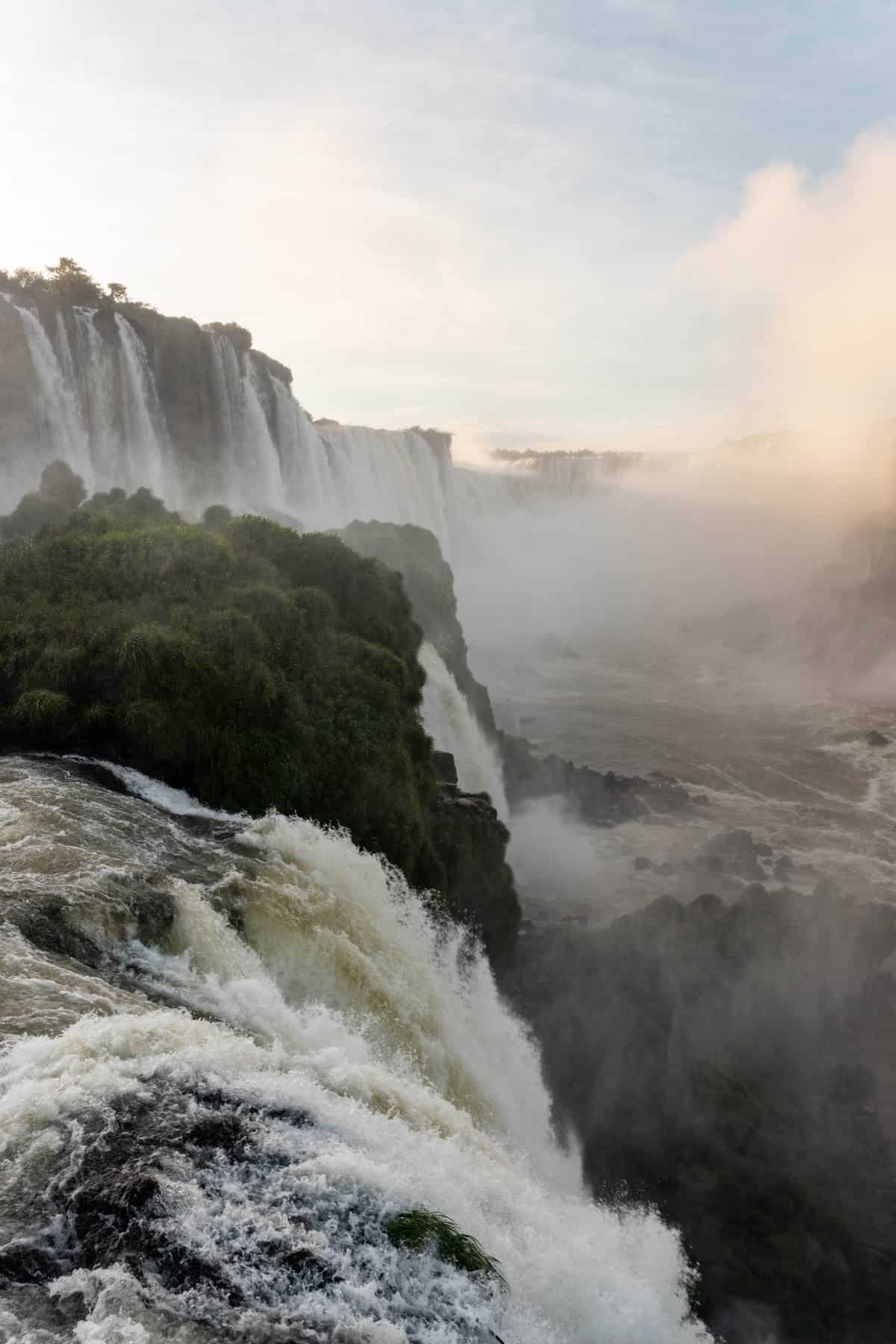
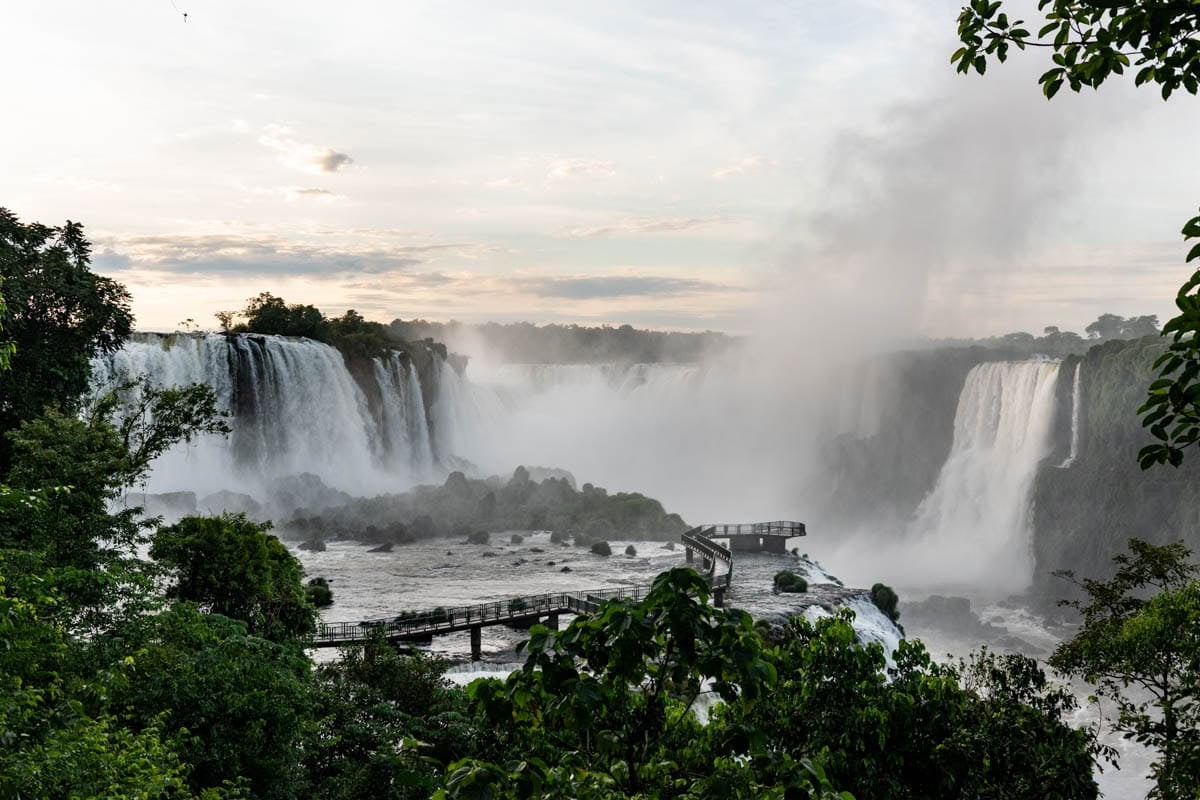
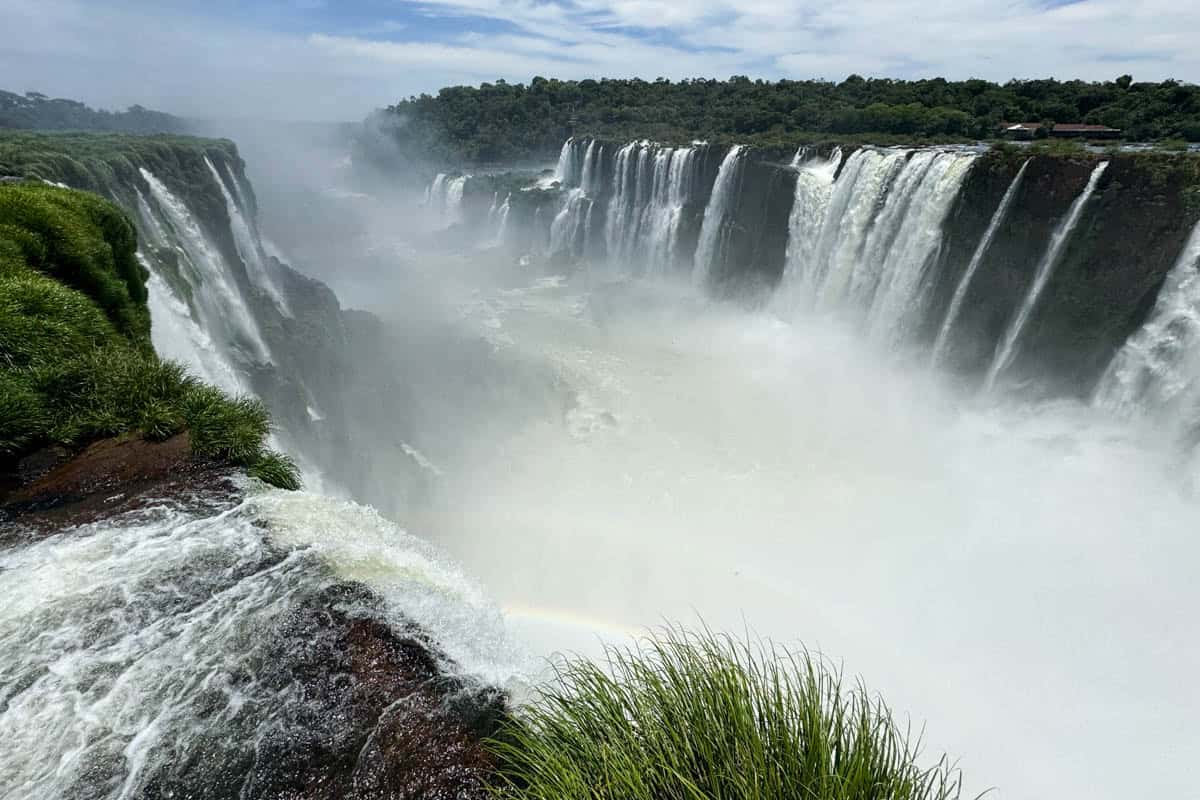
The star attraction is the Devil’s Throat (Garganta del Diablo), which is an enormous horseshoe-shaped chasm that is about 260 feet (80 meters) high. On the Argentine side of the falls, you can walk to the very edge of the top of the Devil’s Throat and look down into it or ride a boat upriver into the falls. On the Brazilian side of the falls, there is a boardwalk that takes you right into the heart of the Devil’s Throat and let’s you get sprayed with water.
Because there is so much spray from the water, there are almost always rainbows, including at nighttime when you might see a rare moonbow (a lunar rainbow) if you are one of the lucky few who get to visit the park after dark.
Natural Wonders of the World?
From 2007 to 2011 a global poll was taken to determine the 7 “wonders of nature” and Iguazú Falls, on the border between Argentina and Brazil, was selected, along with the Amazon rainforest, Komodo Island in Indonesia, Table Mountain in South Africa, Puerto Princesa Underground River in the Philippines, Jeju Island in South Korea, and Ha Long Bay in Vietnam.
An older list compiled by CNN in the 1990’s didn’t include Iguazú or these other wonders, but instead included the Aurora Borealis, the Grand Canyon, the Great Barrier Reef, the Harbor of Rio de Janeiro, Mt. Everest, the Paricutin Volcano, and Victoria Falls.
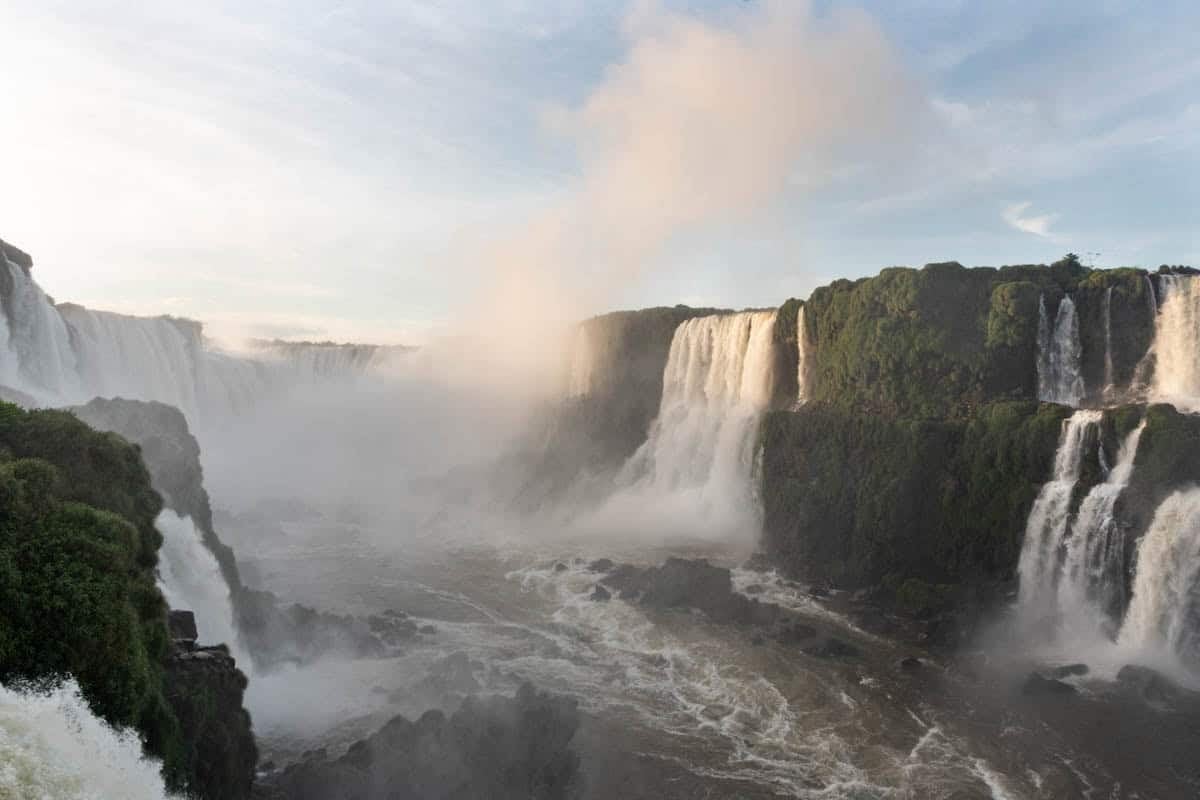
Tips for Getting the Best Photos
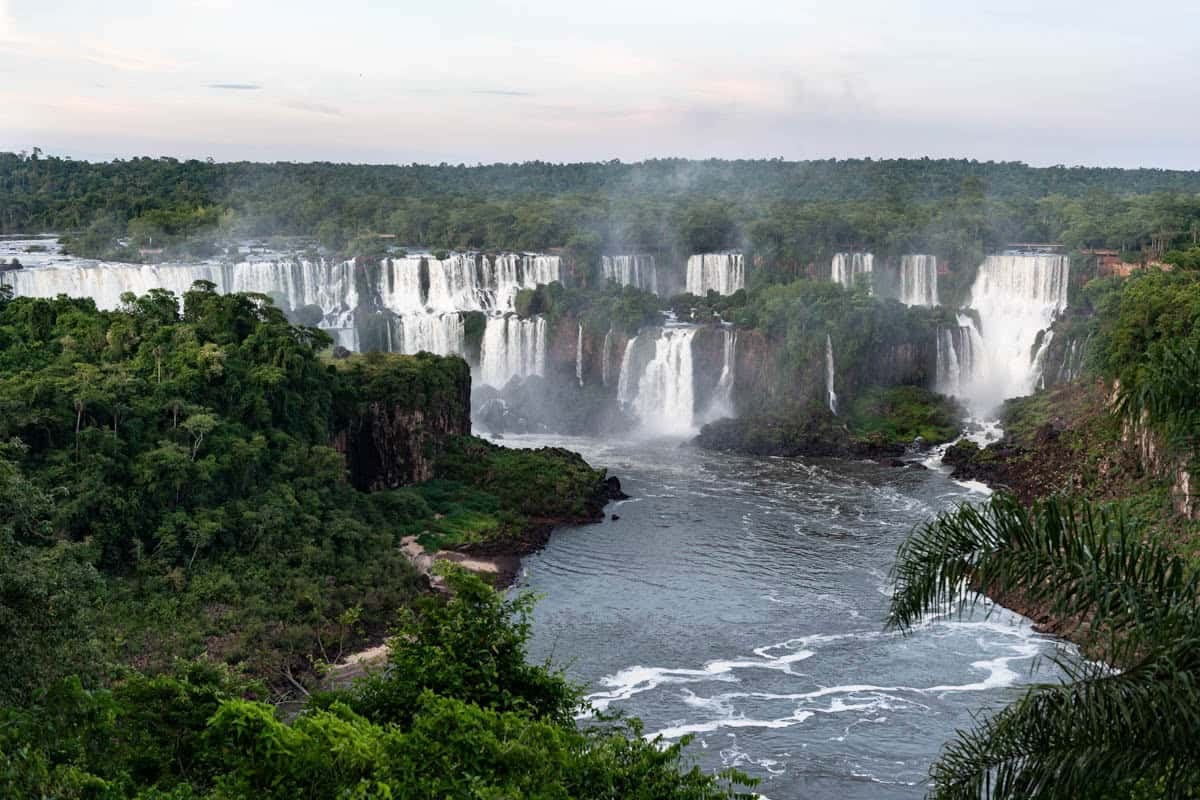
Our first day at Iguazu Falls was a bit of a shock when the catwalks were practically shoulder-to-shoulder with tourists jostling each other for position in a slow crawl to the edge of the falls. The upside to that is there are plenty of people around who are willing to take photos, but it can be a frustrating way to experience a place like this.
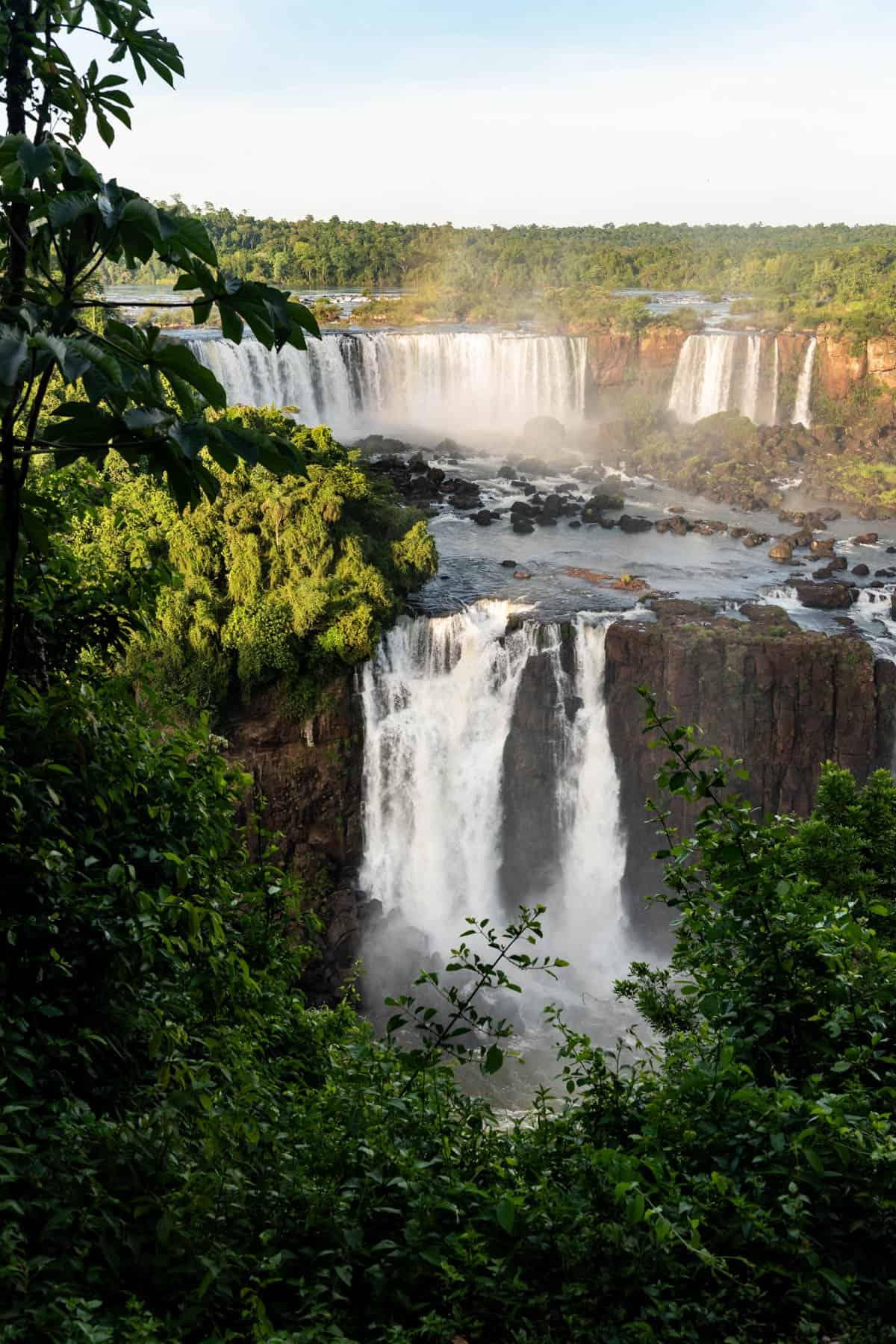
If you want the BEST experience (and get photos like you see here with completely empty walkways with not a soul about), the secret is to stay in the park and get up early.
There is only ONE hotel on the Brazil side that is actually in the park, which gives you this early morning access before the park opens to visitors at 9am. It was the main reason we decided to stay on the Brazil side of the park, which is my strong preference after visiting both sides.
I got up around 5:45 and walked down to the same catwalks we had been on the day before. There were only one or two other people on the trail with me at that time and it felt like I had this incredible wonder of the world all to myself. It was peaceful and serene, with only the sounds of the jungle and the thundering of the waterfalls.
It was absolutely magical and the highlight of my entire trip. Easily in the top 10 travel experiences of my entire life.
Where to Stay
There are lots of options and you need to decide whether you are going to stay in Argentina or Brazil, along with what your price point and priorities are. But if you can splurge, then I have a strong recommendation for a once-in-a-lifetime stay in our favorite hotel of all time.
Inside the Park
If you want the best views, the most convenient access to the falls, and a luxury stay, then it’s worth it to splurge and stay inside the park on either side. In Argentina, that would mean staying at the Gran Meliá Iguazú, which is just steps away from the trails and viewpoints of the Argentine side of the falls.
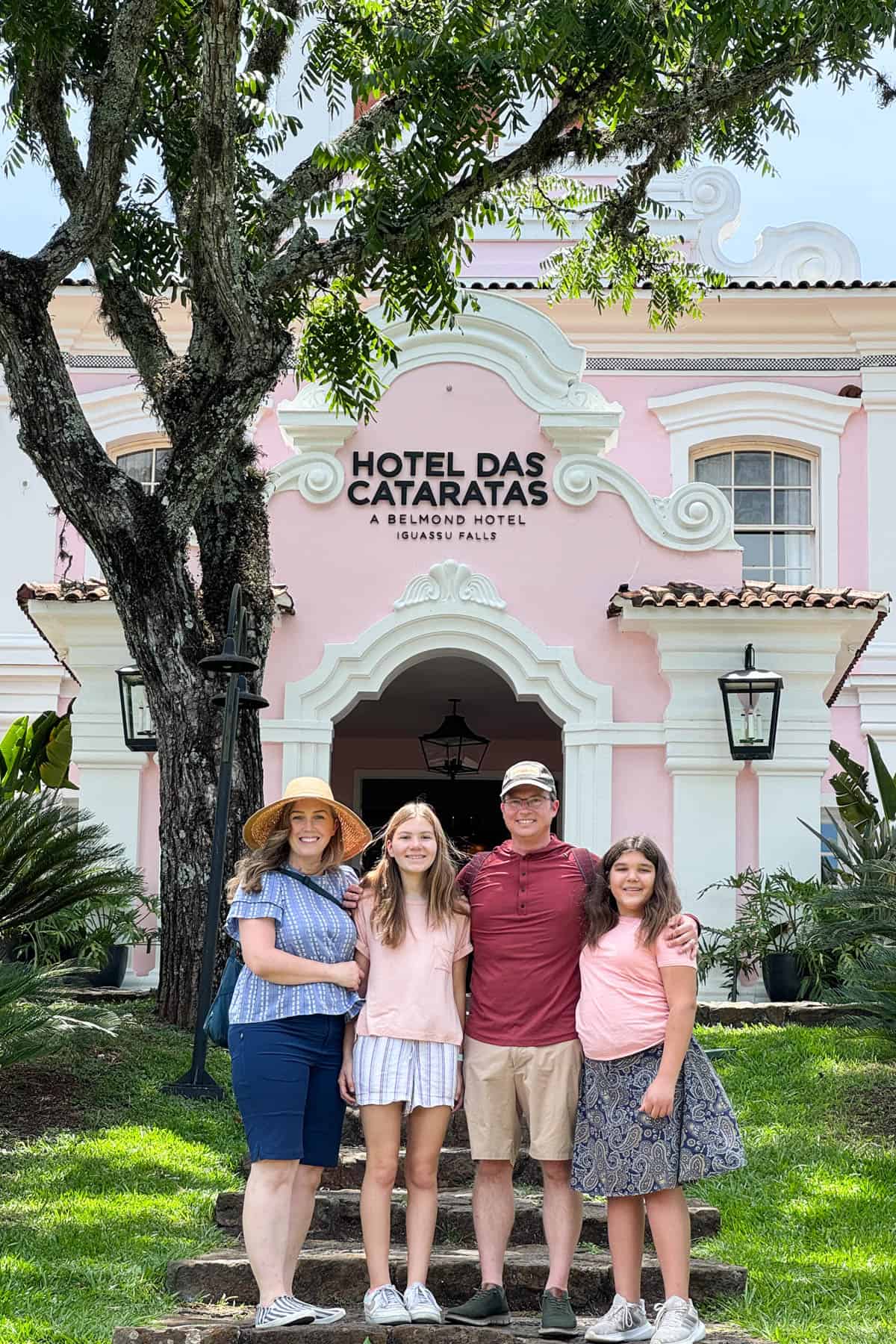
In Brazil (where we stayed), it means staying at Hotel das Cataratas which is a Belmond Hotel and one of the most iconic stays of my life. Keep scrolling for more on this resort and our experience staying there (spoiler alert: it was incredible and I would go back in an instant).
Outside the Park
In Argentina, that would mean staying in or around the town of Puerto Iguazú. It’s a short drive from the park entrance and ideal if you want more variety or are looking for a more budget-friendly option. Staying in Puerto Iguazú generally means lower prices and more restaurants and shops, but you have more limited hours inside the park and will need to factor in transportation to and from the park entrance.
In Brazil, staying outside the park means looking at options in the city of Foz do Iguaçu. Again there is a variety of hotels to choose from, including hotels and even larger resorts with water parks or multiple pools. The town is a little further from the park entrance on the Brazilian side, so plan on about 30-40 minutes to get into the park to see the waterfalls if you are staying outside the park here.
Our Top Pick: Hotel das Cataratas
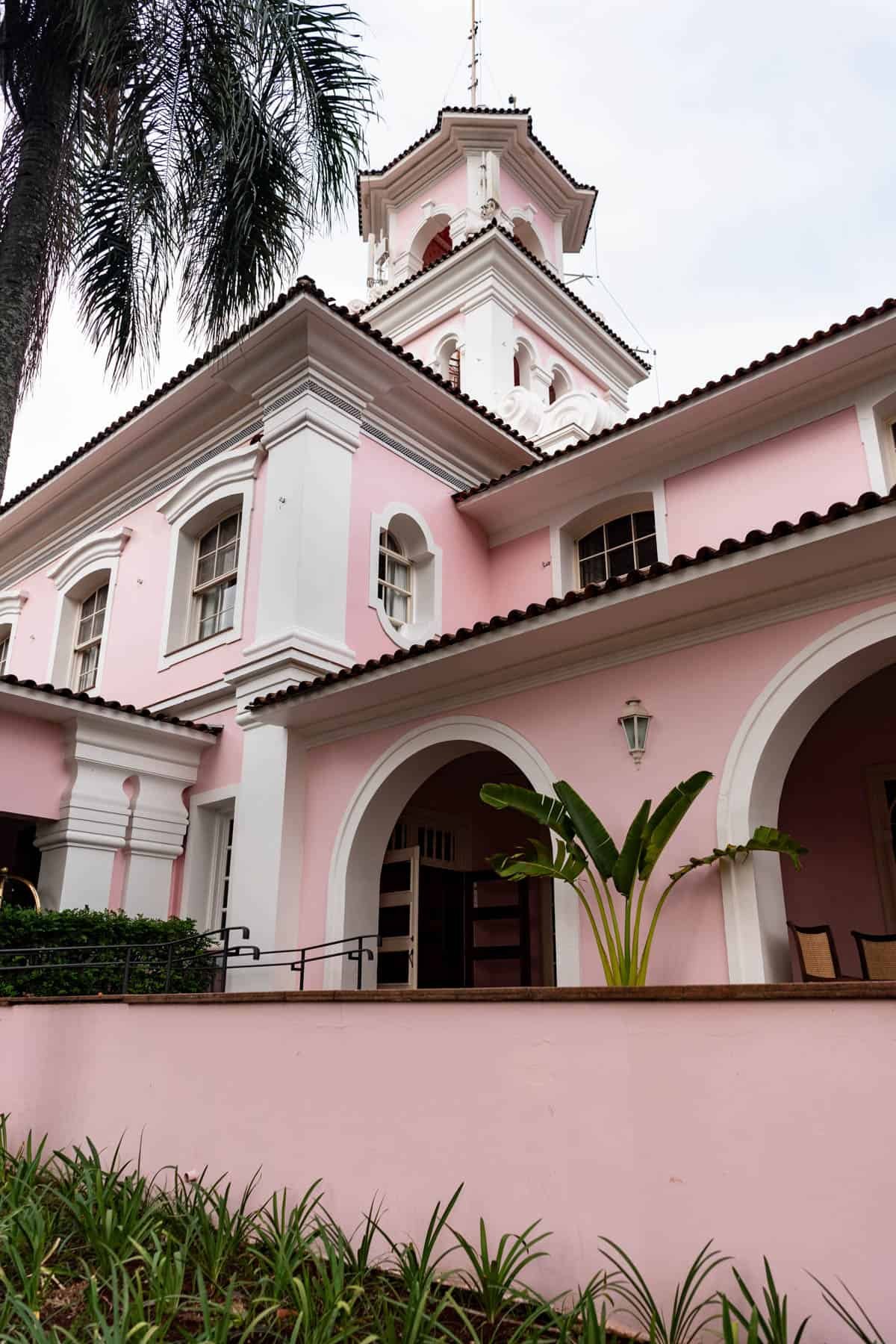
Although there are plenty of hotels and hostels outside of the park on both sides of the falls, I cannot recommend the Hotel Das Cataratas at Iguassu Falls on the Brazil side enough. This isn’t sponsored at all, but our kids haven’t stopped talking about this place and have proclaimed it their favorite hotel we have ever stayed at.
You are literally just steps away from the falls, which means you have access to this wonder of nature without the crowds both before the park opens and after it closes. All other visitors have to leave by 5:30pm, so there is still plenty of daylight to enjoy incredible views from the hotel lawn without anyone around other than your fellow resort guests.



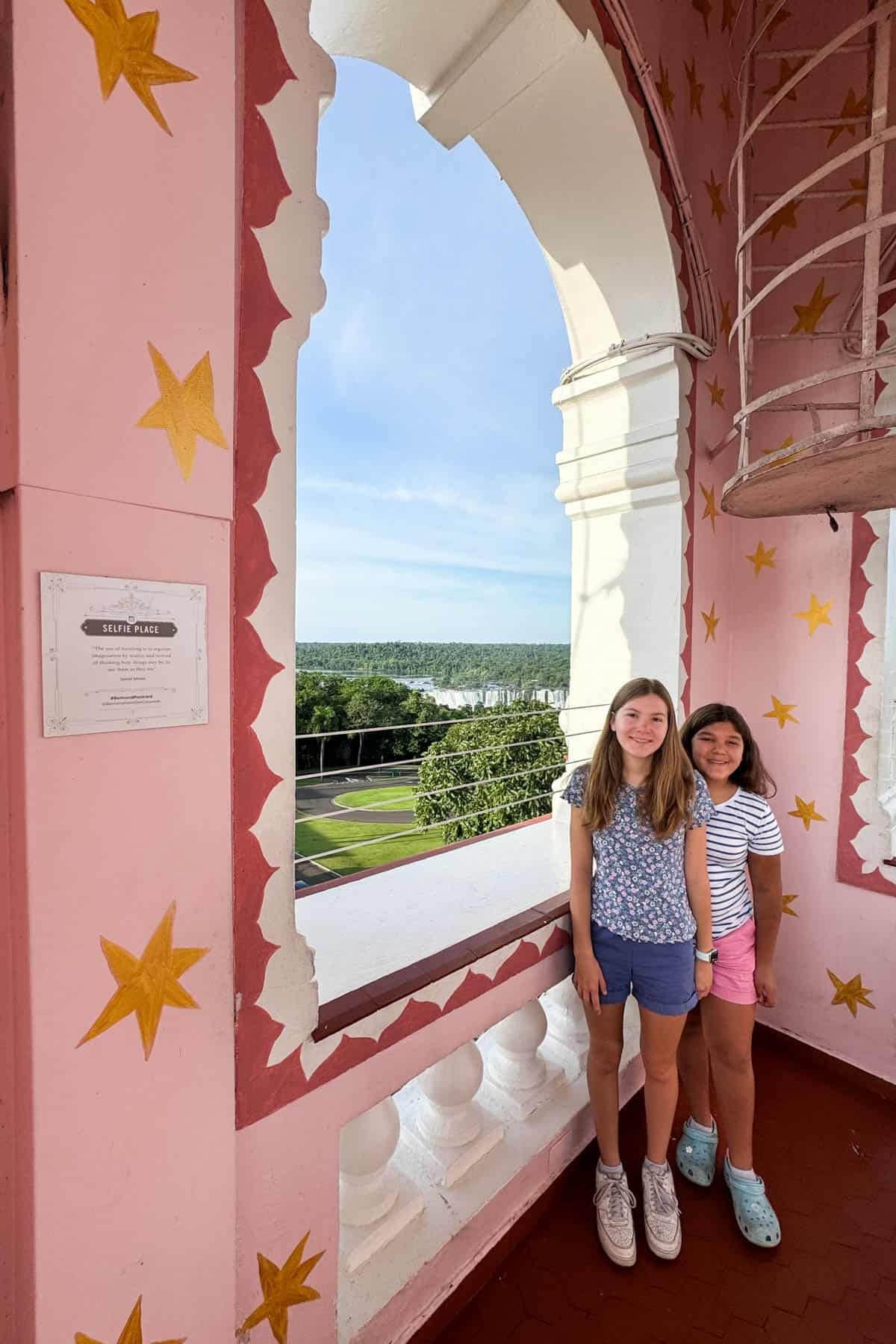
The hotel was finished in 1958 and is built in a charming Portuguese colonial style with a pastel-pink exterior that feels completely at home with the lush rainforest surroundings. It has a fantastic pool, excellent restaurants, incredible staff, and beautiful rooms.
The biggest con to this resort is that there is nowhere else to eat unless you leave the park to go into the nearby town. But they provide a complimentary shuttle for resort guests, so that helps. You actually can’t drive your car into the park and will need to park outside the gates and take the resort shuttle in.
With such a busy, adventure filled trip, the kids appreciated downtime at the pool during the middle of the day when it was super hot and the crowds at the falls were at their peak. We ordered burgers poolside and it was legitimately one of the best burgers I’ve had anywhere.


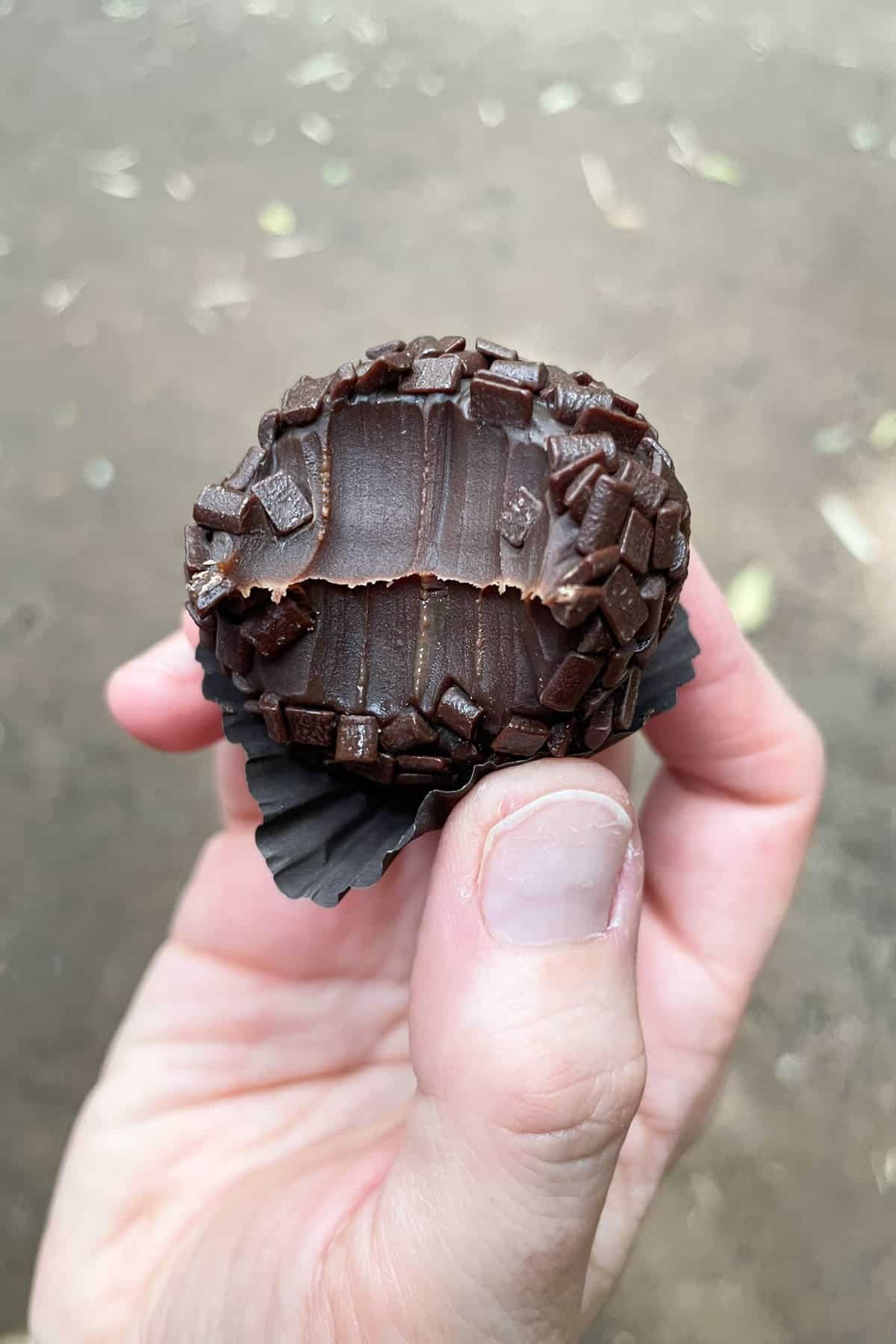
We also had these coconut chips to welcome us in our room made from fresh coconut and they were so yummy that we ended up asking for more and then getting some bagged up to take home to friends. I also recommend trying brigadeiros (the famous Brazilian chocolate truffles) while you are there.

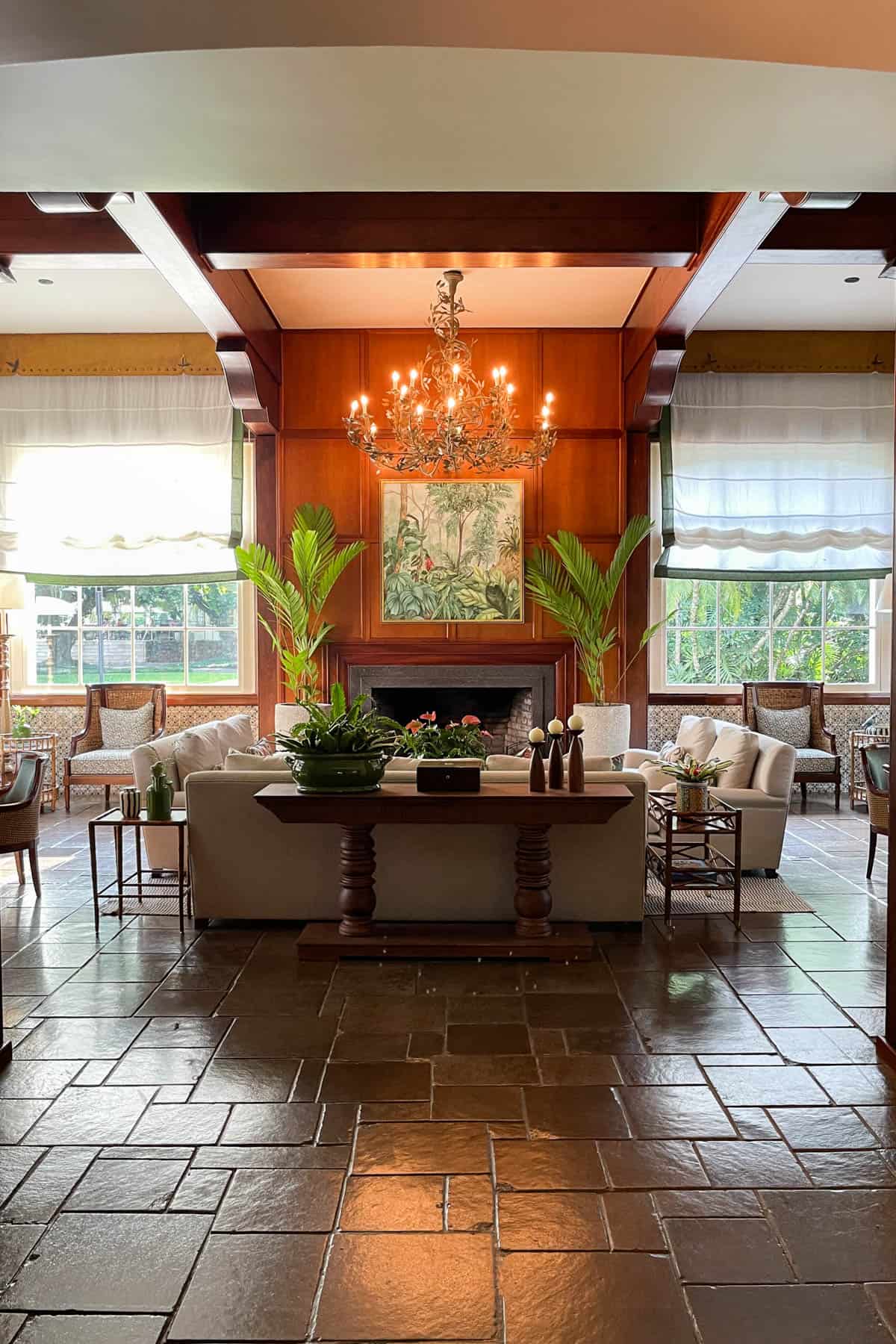
Other on-site highlights for the kids were playing games in the entrance room which is richly decorated in dark tropical woods, climbing the lookout tower for another perspective on the falls, the breakfast buffet with a huge slab of honeycomb dripping over a platter of fresh fruit along with an omelet station and huge pastry assortment, and just exploring the grounds to see the fun details like an old VW van and resort bicycles all painted in the signature pink color of the hotel.


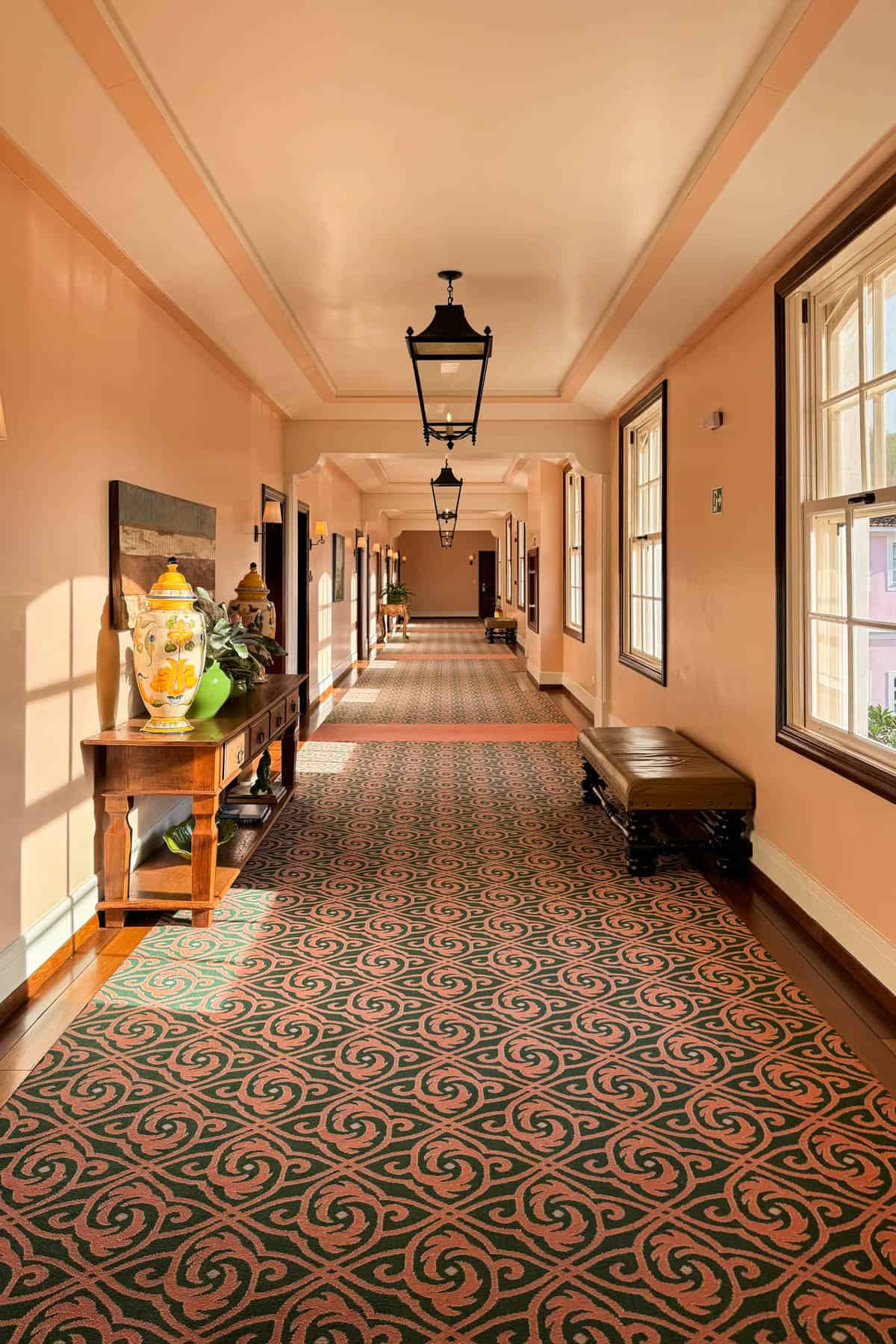
Honestly, I could go on and on about this place because it was just so beautiful and unique. This post might sound sponsored, but it wasn’t. We would go back in a heartbeat.

Visiting the Argentina Side of the Falls
The Argentine side of Iguazú National Park has a totally different feel from the Brazilian side. After purchasing entrance tickets and passing through the main entrance near Puerto Iguazú, you board the Ecological Jungle Train, which is an open-air, quiet ride that moves slowly through the dense subtropical forest. The train drops you at Garganta del Diablo Station, where the real anticipation begins.
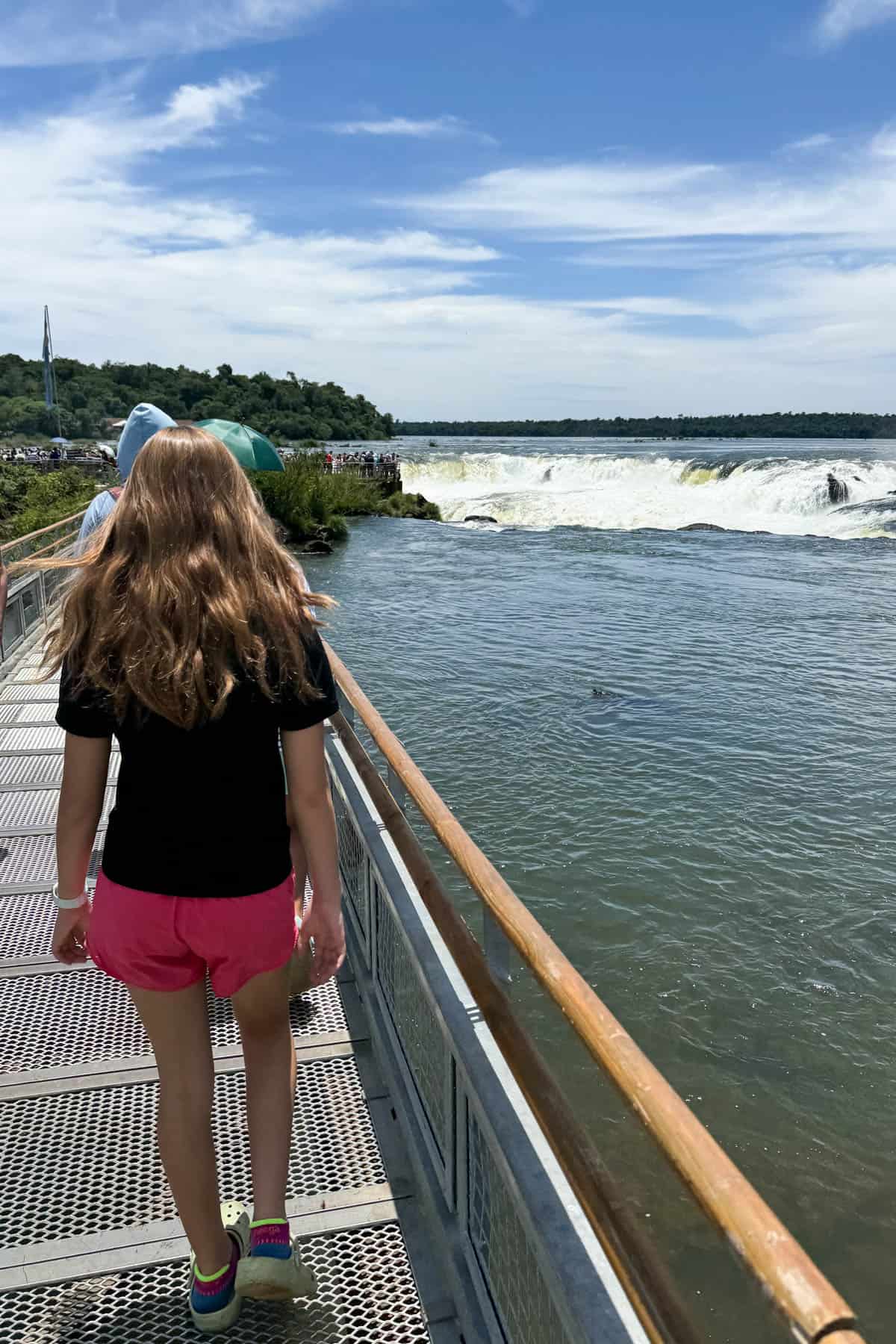
From there, you walk about ¾ mile along a long metal catwalk stretching across the river. There were a couple areas with benches where you can stop and rest, if needed. You’ll see the water flowing calmly around islands and channels beneath your feet while the sound grows louder with each step.
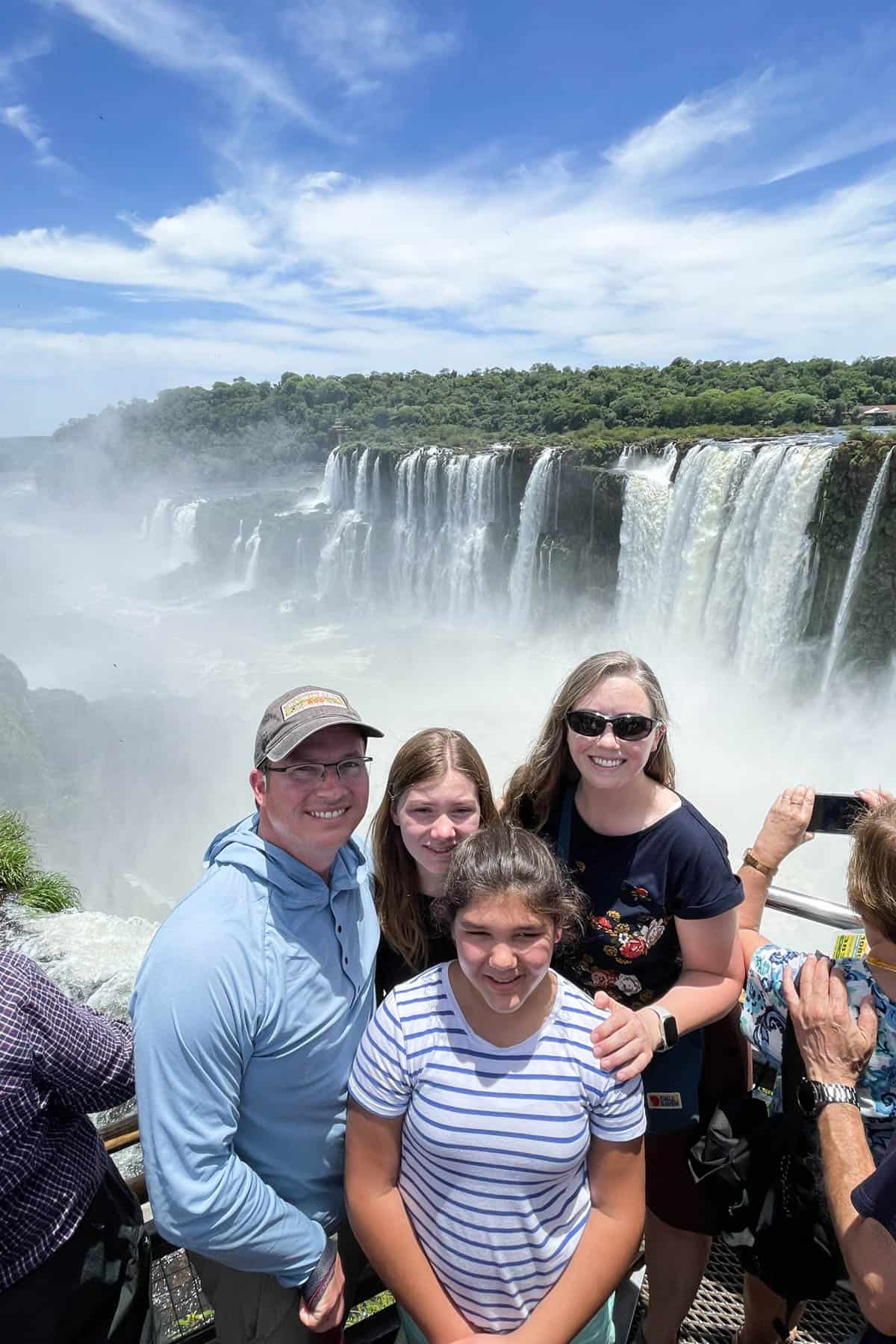
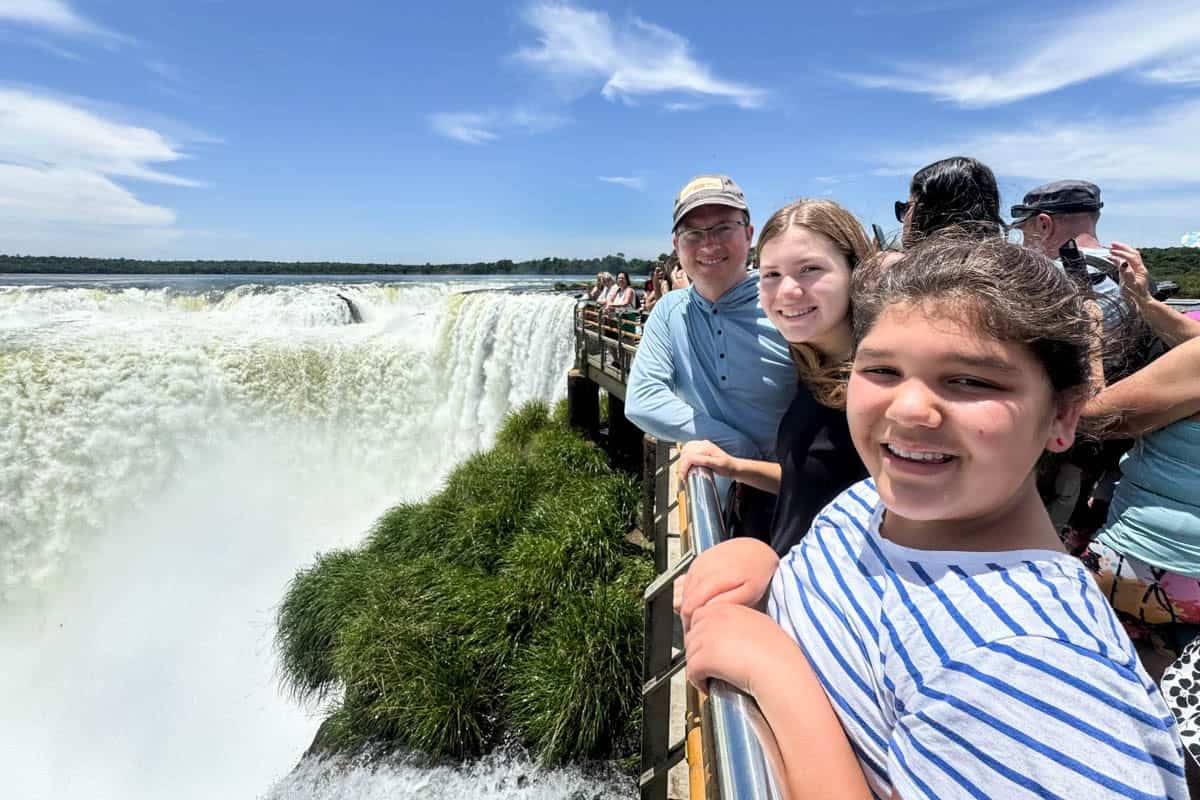
When you finally get to the platform overlooking Devil’s Throat, you are standing directly above a massive chasm where an enormous volume of water plunges straight down. The roar is thunderous and rainbows flicker in and out of view.
Pros and Cons of Visiting One Side Over the Other
This is the classic Iguazú planning debate. The short answer is that both sides are worth it, but they offer very different experiences. Best strategy? Do both. But here are some pros & cons to help you decide if you only have time for one.
Brazilian Side
Here are some of the pros we came up with for the Brazilian side:
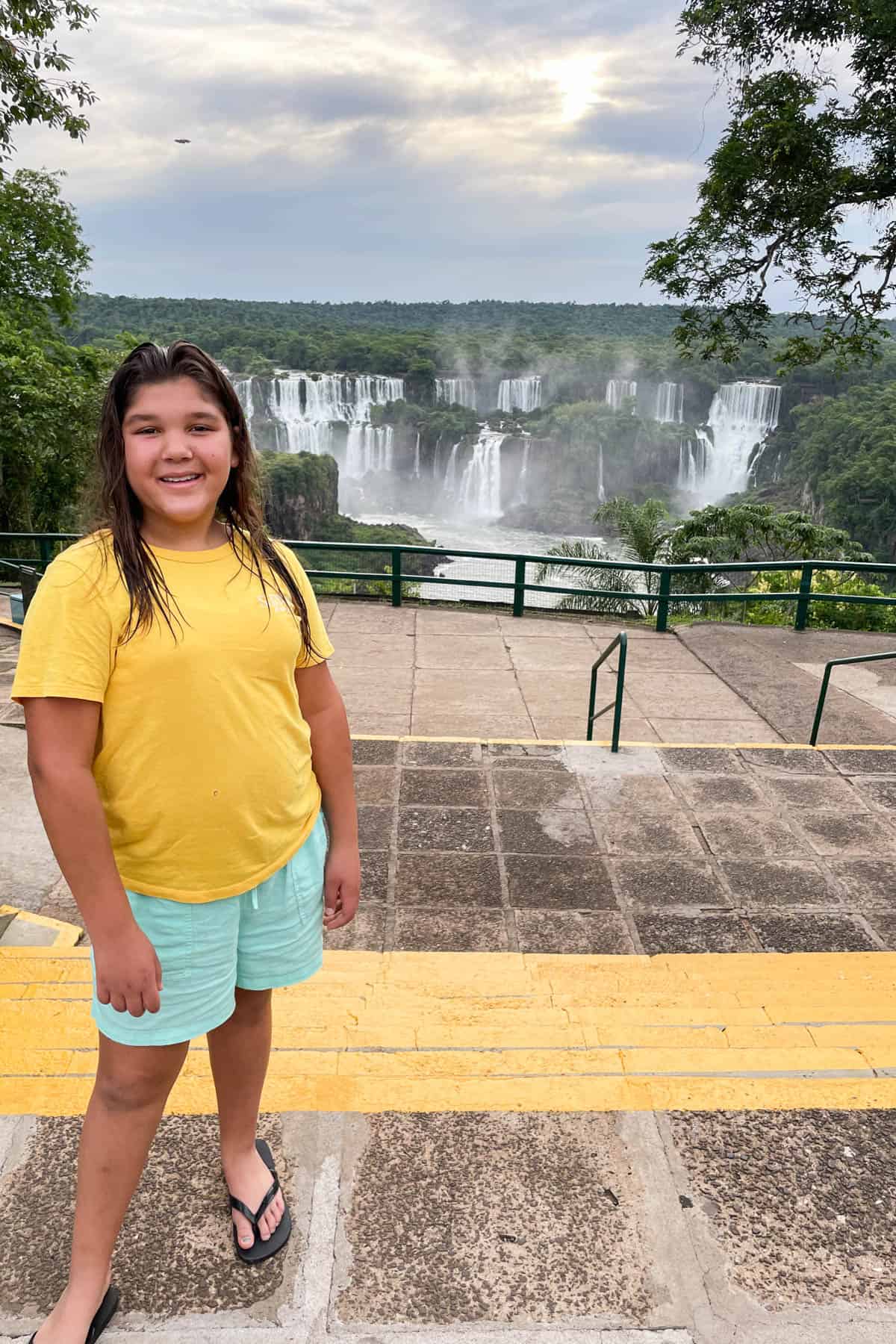
- Panoramic, postcard views: This side gives you the classic wide-angle perspective of the entire waterfall system. We thought it was the best for the most amazing for photos and first impressions.
- Shorter & easier visit: One main trail that is well-paved and mostly flat or downhill, with a lift for coming back up. You can see the falls in 2–3 hours on this side.
- Excellent accessibility: Great for families, strollers, and anyone with mobility concerns.
- Devil’s Throat from below: You experience the power of the falls head-on, standing on platforms with spray and rainbows. It’s a very immersive experience.
Here are some of the cons we came up with for the Brazilian side:
- Smaller portion of the falls: You’re seeing about 20% of the waterfalls (but from the best angles).
- Can feel brief: Some visitors feel it’s “over too fast.”
Argentine Side
Here are some of the pros we came up with for the Argentine side:
- You’re on top of the falls: Boardwalks take you right over the cascades, sometimes inches from rushing water.
- Much larger park: About 80% of the falls are on this side.
- More developed feel: There are gift shops, food, and it feels more developed (this might be a con for some people, actually).
- Multiple trails & experiences: Upper Circuit, Lower Circuit, Devil’s Throat, jungle paths, ecological train.
- Full-day experience: Easy to spend 6–8 hours exploring.
Here are some of the cons we came up with for the Argentine side:
- More walking & time commitment: Not ideal if you’re short on time or traveling with very young kids.
- Can be crowded: Especially mid-day and during high season.
- Less panoramic photography: Fewer wide-angle “all-in-one” shots.
Wildlife In and Around Iguazu Falls
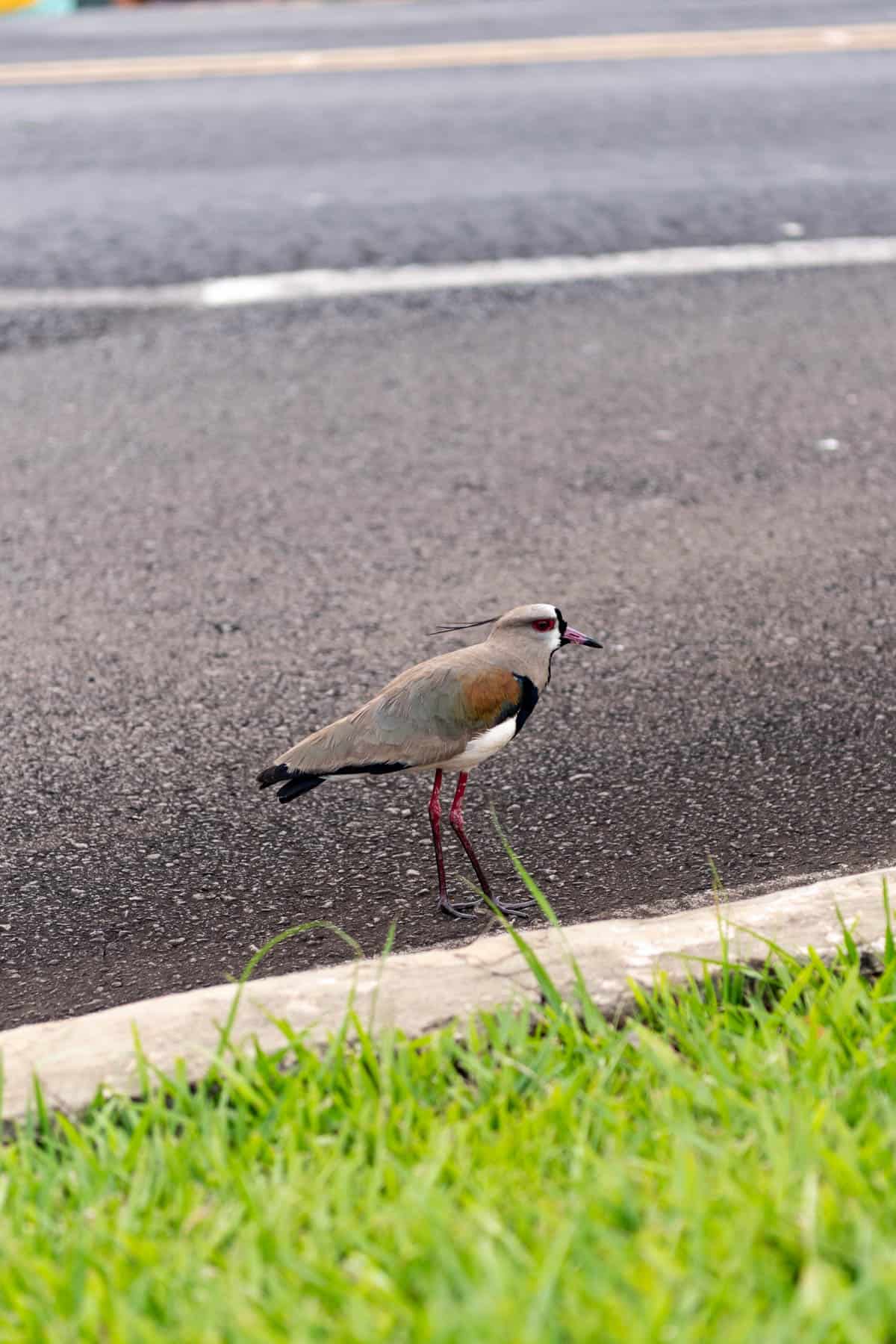
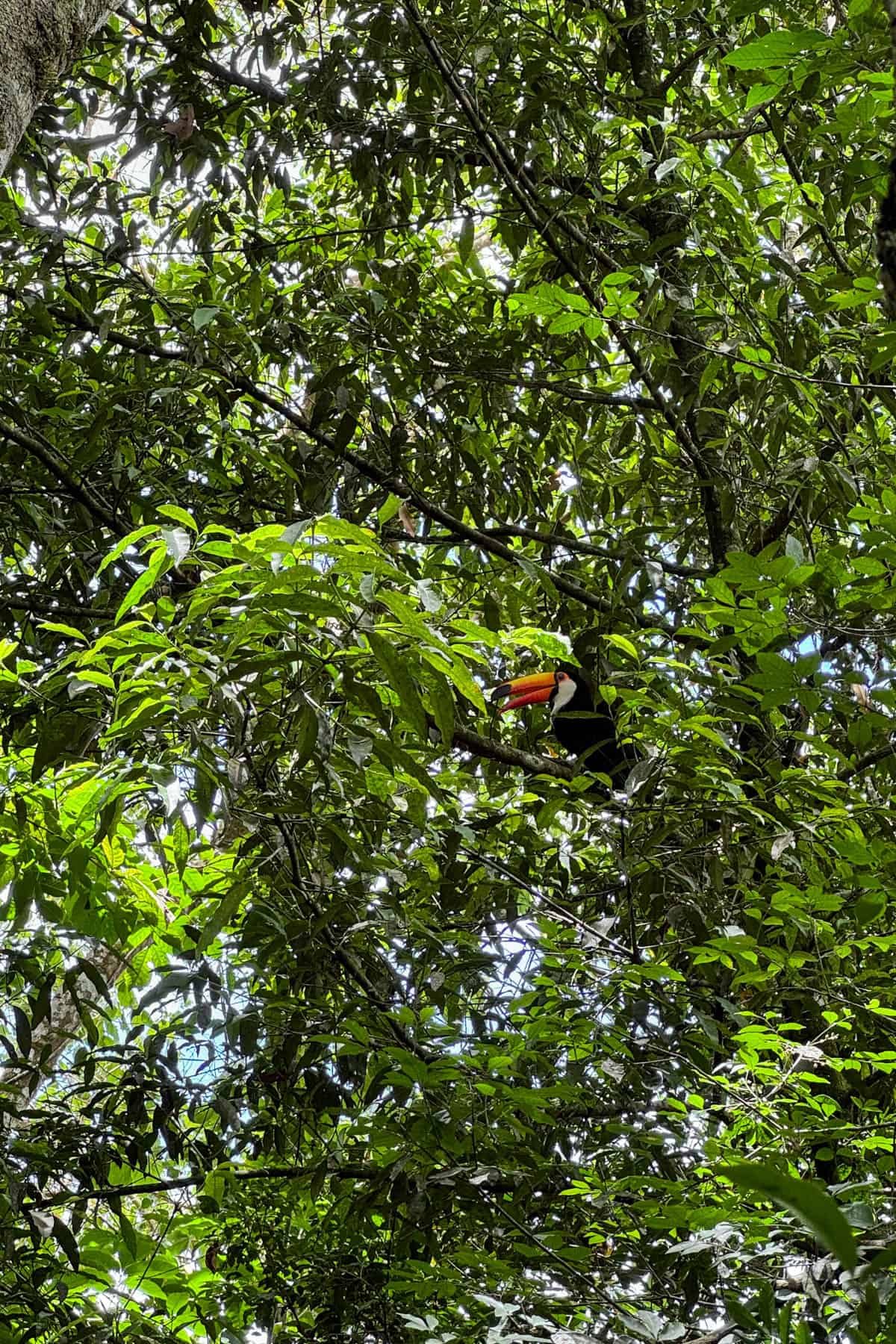
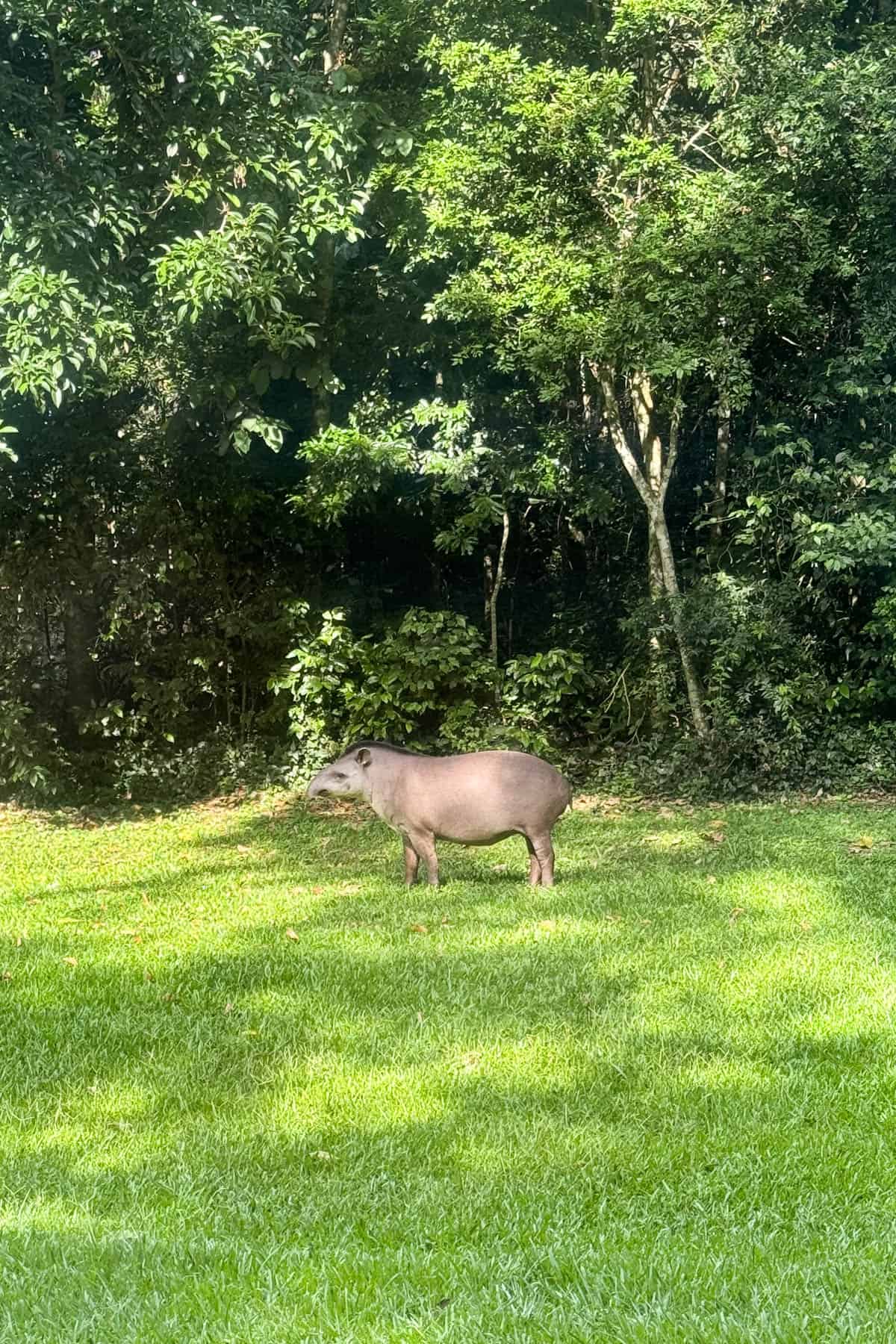
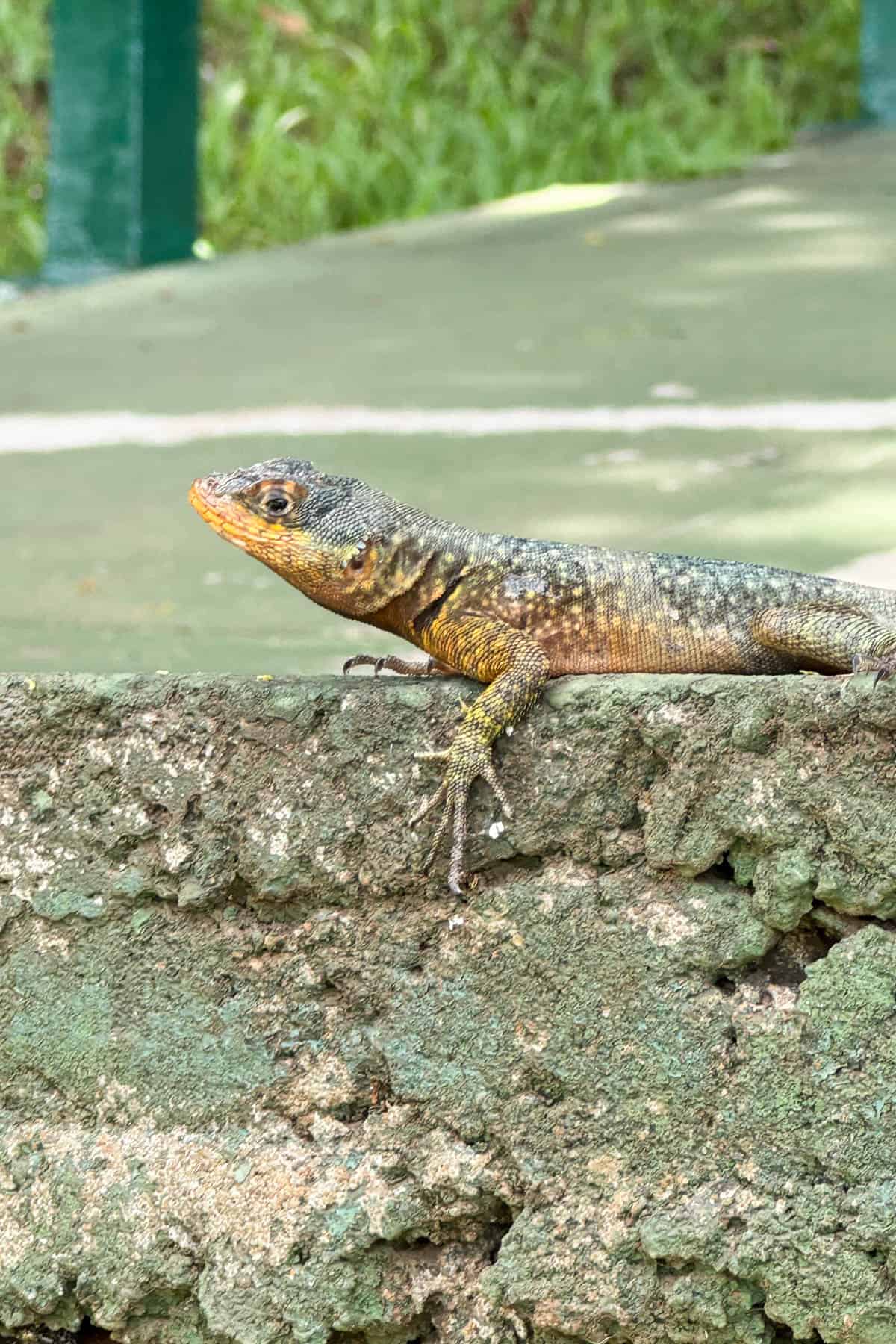
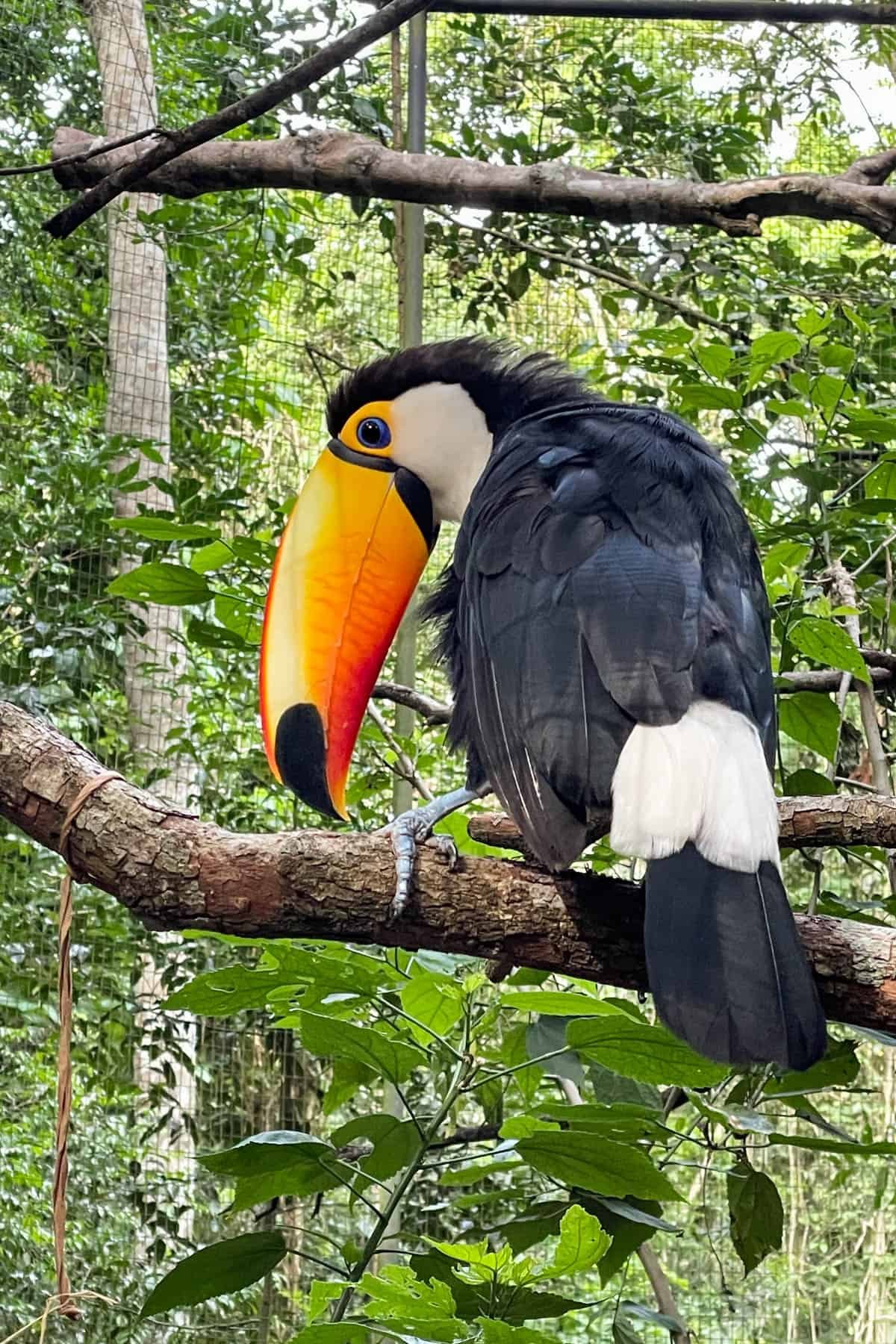
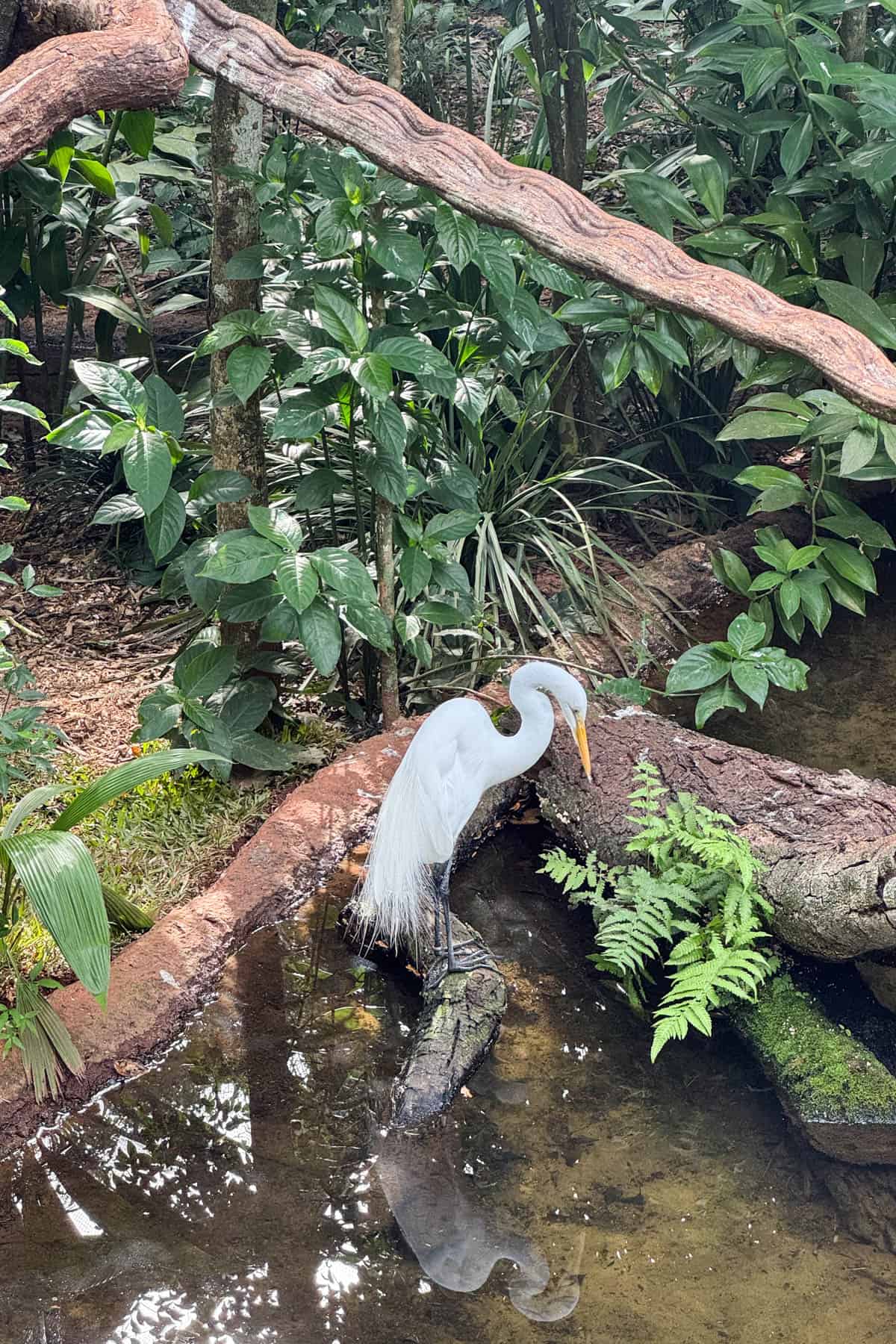
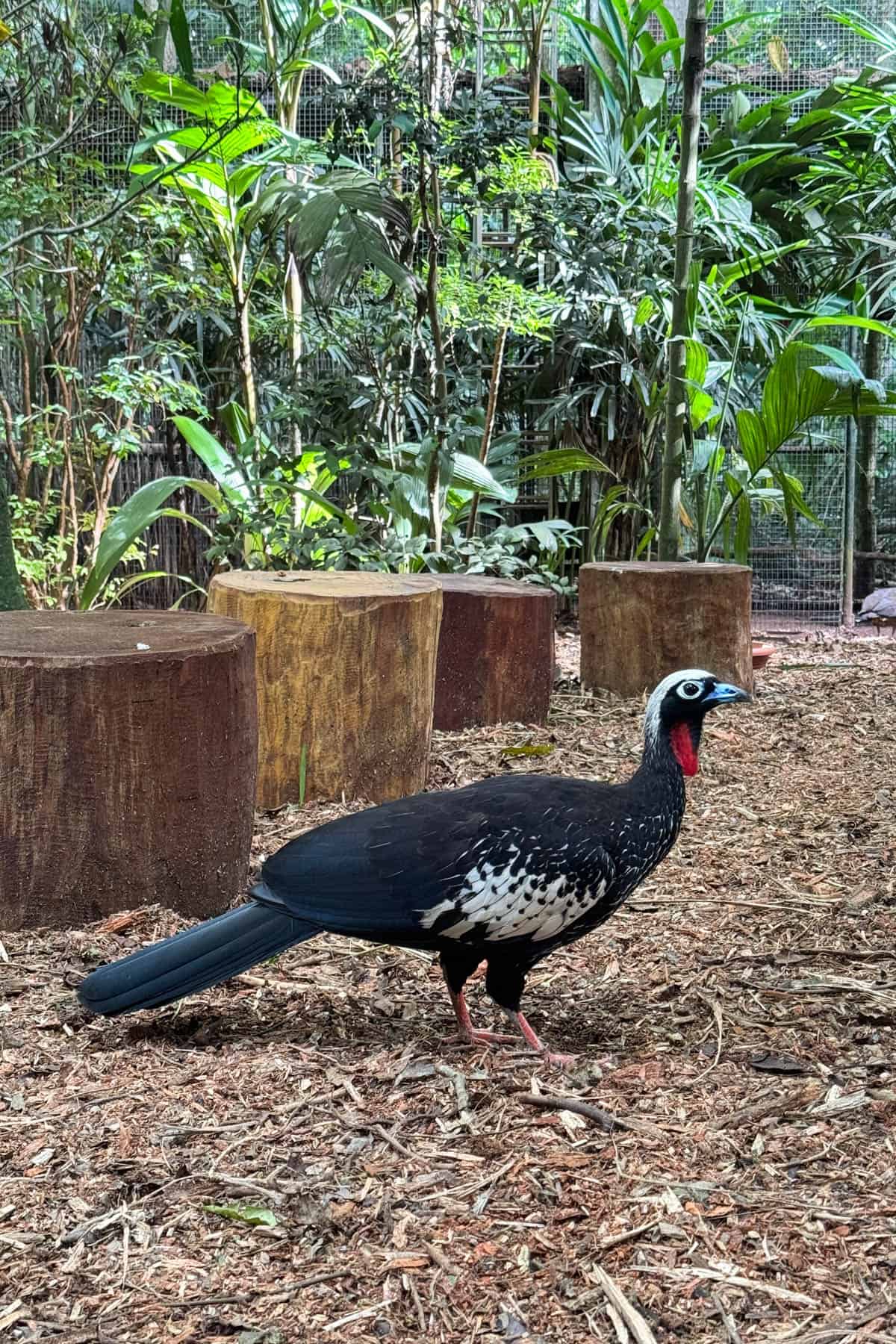
The rainforest surrounding Iguazu Falls is home to huge variety of wildllife. We saw toucans, coatis, butterflies, lizards, a tapir, and monkeys. There are even jaguars, although they are much more rare and difficult to spot. There are also thousands of plant species, adding to the wide array of biodiversity.
We spotted the tapir below was hanging out on the side of the road just inside the park, although our driver said usually they are pretty shy and hide in the jungle. If you don’t see enough wildlife just wandering around though, there are animal parks outside of the national park itself where you can go see even more wildlife!
Parque das Aves
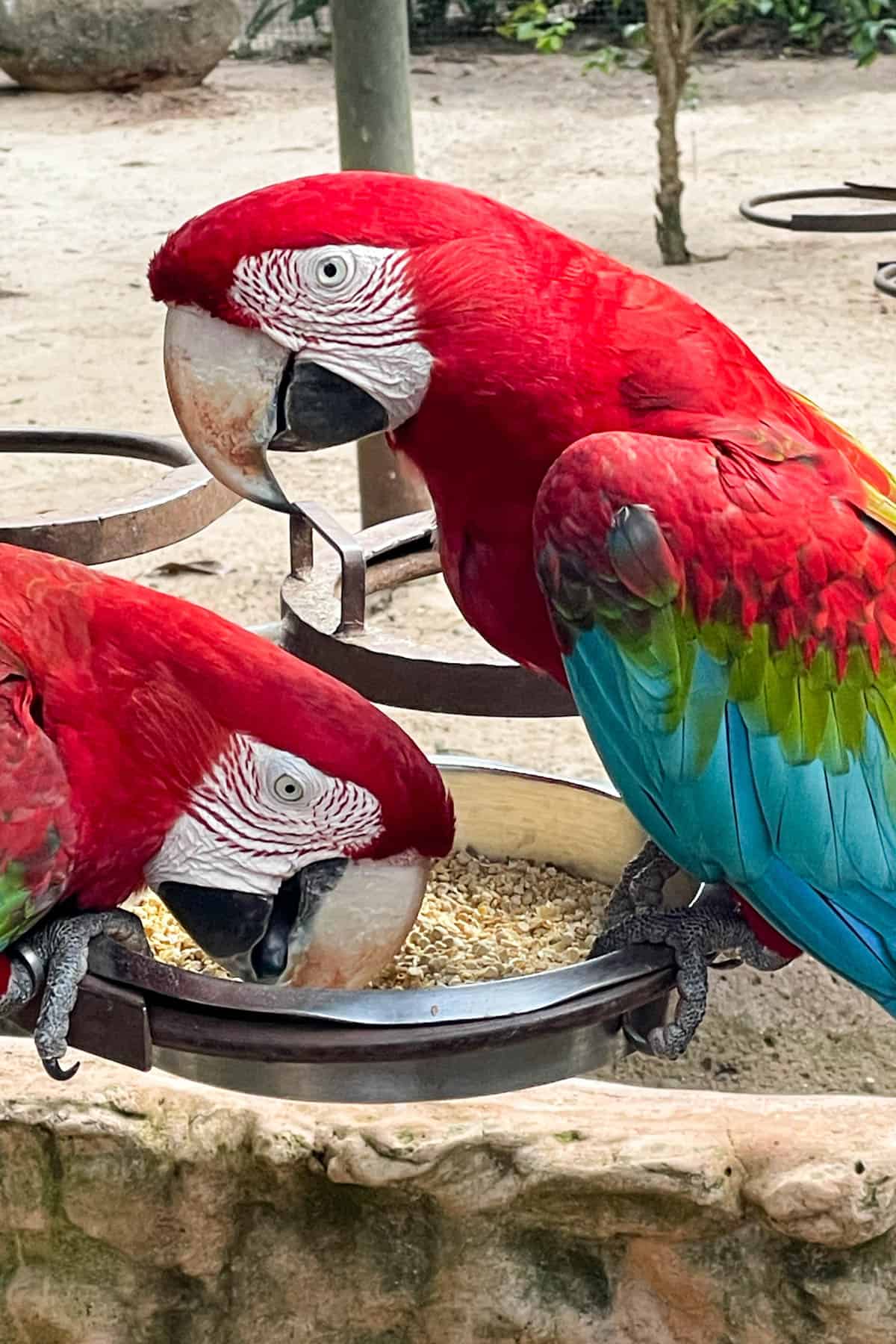
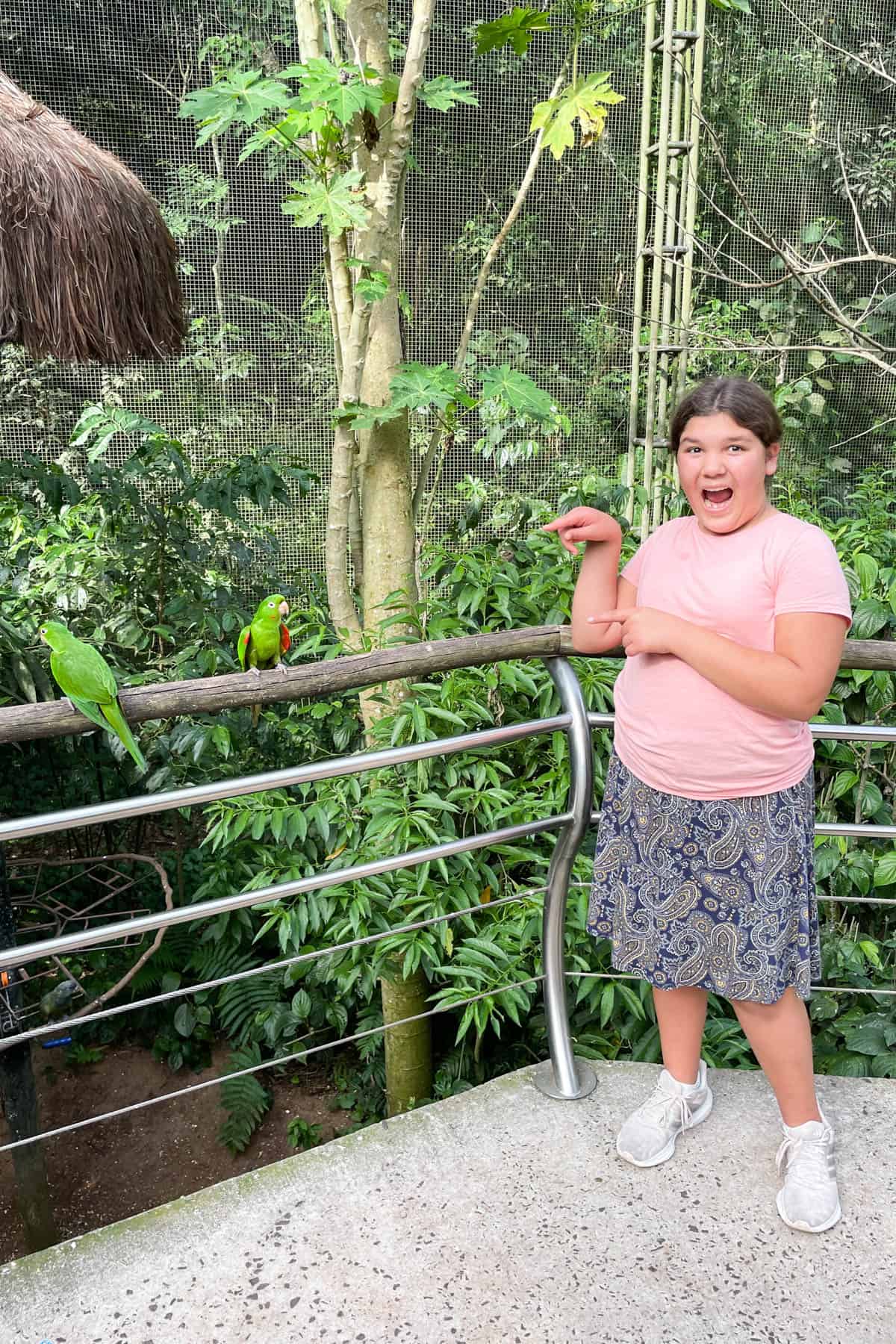
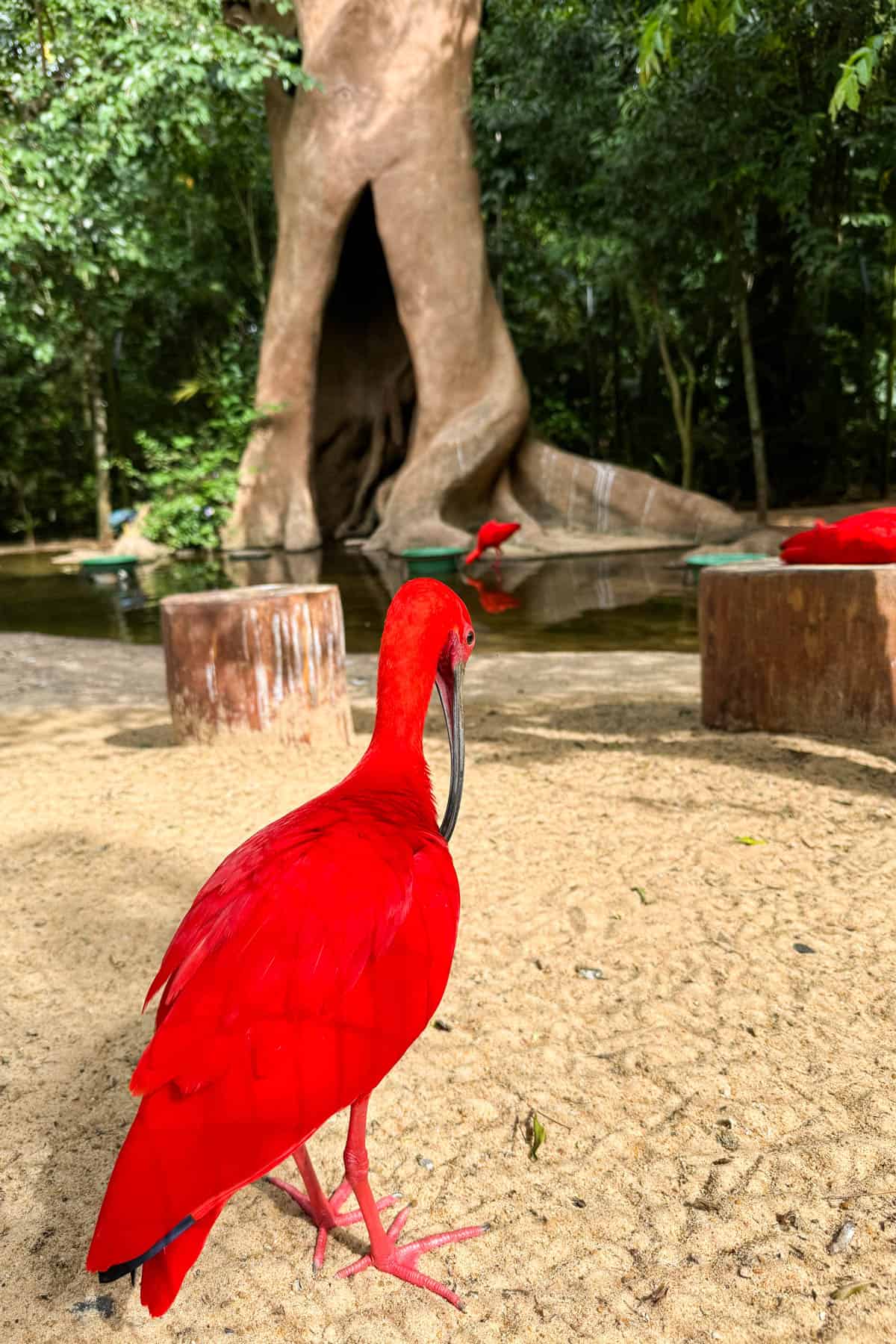
Aside from the waterfalls themselves, the Parque das Aves bird sanctuary near the Brazilian park entrance was our kids’ second favorite thing about staying at Iguazu Falls. We got here a little later in the day and only had an hour or two, but they would have stayed all day if they could. They were begging to go back for more birds the next day! The whole park is really beautifully appointed with so many incredible tropical birds that have been rescued.

You will see toucans, macaws, parrots, flamingos, and other tropical species up close, and in many cases the birds are flying freely around you. Plus there are lots of educational signs to learn more about the park’s mission and the birds it houses.
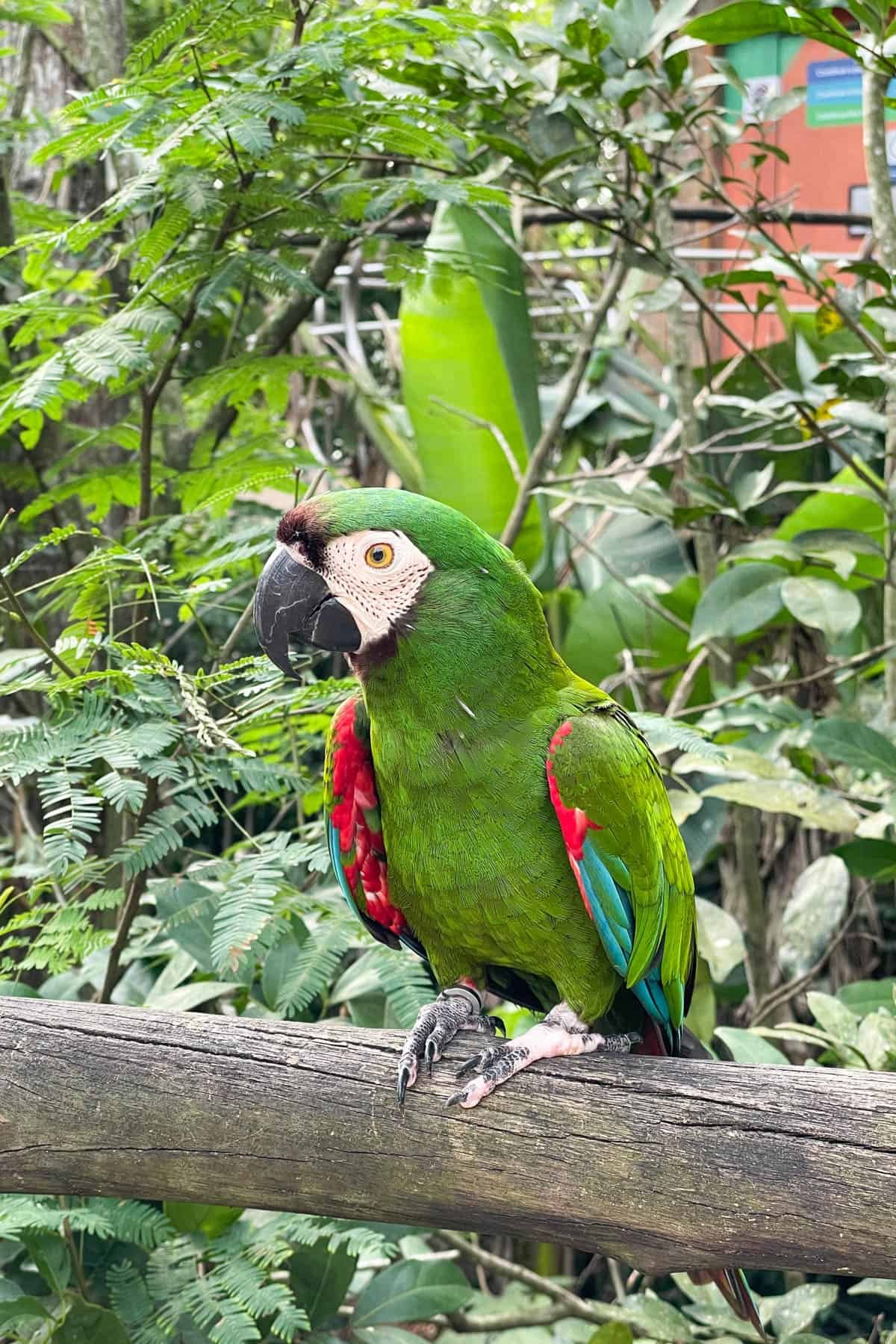
Guira Oga Wildlife Refuge (Argentina)
On the Argentine side near Puerto Iguazú, the Guira Oga Wildlife Refuge is an animal rescue center that focuses on rehabilitating native wildlife. They also have birds, as well as small mammals and reptiles if you want to learn about local conservation and see animals being cared for and can’t make it to Parques das Aves on the Brazilian side.
Adventure Activities at the Falls
Macuco Safari / Boat Ride (Brazil)
One of the most popular adventure experiences near Iguazú Falls on the Brazilian side is the Macuco Safari where you take a jungle buggy or hike through the forest to the river below the falls. Then you climb into a boat and are driven upstream toward the base of the falls. You will probably (pretty much definitely) get soaked by the spray off the falls and the waves as you approach the Devil’s Throat. Keep in mind that there are often age and height requirements for this activity and it depends on the provider.
Food, Culture, & Evening Activities
Churrascaria & Show (Brazil)
If you are a meat-lover and haven’t been to a Brazilian churrascaria, you can find them here! In Foz do Iguaçu you can go to a dinner show combining Brazilian barbecue with music and dance from across Latin America.
Shopping
Both Foz do Iguaçu and Puerto Iguazú have markets and handicraft centers where you can pick up fun souvenirs to take home.
Friendship Bridge to Paraguay
If you are looking for an adventure that is off-the-beaten-path, consider walking across the friendship bridge that spans the river between Argentina and Paraguay. The falls are only about 15 miles from the Paraguay border, which makes it easy to visit if you want to get a snack and snap a picture at the border crossing.

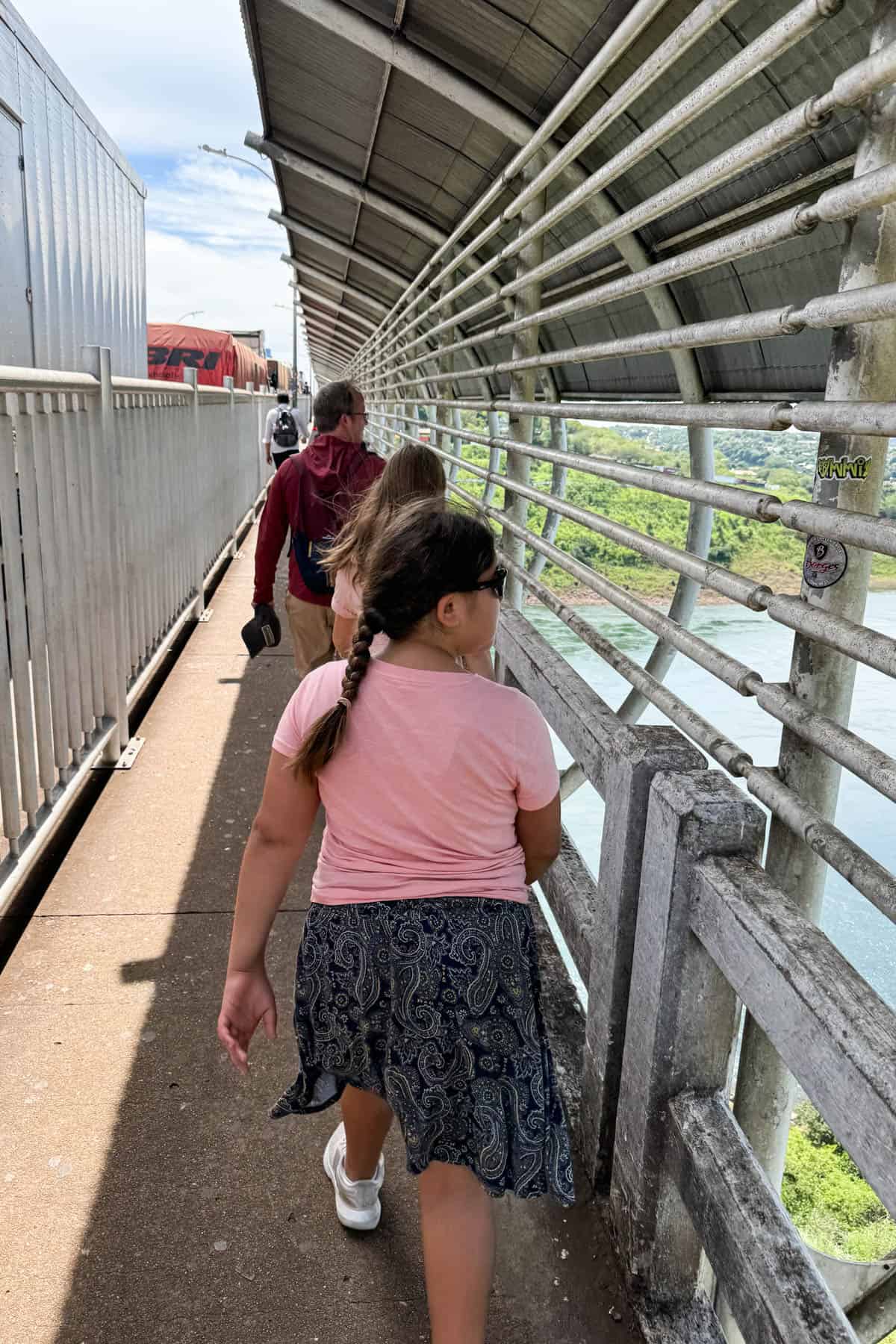
We only spent about half an hour in Paraguay – just long enough to grab cold sodas and hot empanadas. The empanadas were some of our favorites we had in South America with beef and chopped hard boiled egg inside. It’s not much of a visit to a new country, but it was still a fun adventure walking back and forth across the border and seeing the differences between the two countries.

FAQ’s
Yes, you absolutely can fly into one country and depart from the other. That’s actually how we approached it on our trip where we flew from Rio de Janeiro to Iguazu Falls, then crossed the border and flew out of Argentina to Buenos Aires a few days later.
If you are booking flights, it looks like this: Arrive in Brazil (IGU) → Visit Brazilian side → Cross to Argentina → Carry on via IGR airport.
Or in the opposite direction, you can arrive in Argentina (IGR) → Visit Argentine side → Cross to Brazil → Depart from Foz do Iguaçu (IGU).
Either way, be sure to coordinate your transfers so you allow enough time for immigration checkpoints between arrivals and departures.
Not at all. The international border between Foz do Iguaçu (Brazil) and Puerto Iguazú (Argentina) is very close to the falls, and crossing it is a common part of visiting both sides. We crossed it both ways on multiple days and never had an issue, although you want to be sure to have your passport and visa documents with you and give yourself extra time in case of delays.
To cross, you must go through exit and entry passport control at both countries. Typically this takes 20 minutes or so (in our experience) although it can be up to around 60 minutes depending on queues, documentation, and time of day.
Have you been to Iguazu Falls? I would love to hear about your experiences in the comments below!