
Home to some of the most iconic sites in the world, Rio de Janeiro is at the top of many travel bucket lists for good reason. We took our kids and loved it for the food, the culture, the adventure, and so much more!

We took our kids (ages 10 & 13 at the time) to Rio de Janeiro and absolutely fell in love with this vibrant, colorful city that is full of art and music and culture. It was the first leg of our trip through South America that took us to Iguazu Falls, Buenos Aires in Argentina, and Colonia in Uruguay.
When is the Best Time to Visit Brazil?
The entire country is massive (it’s bigger than the lower 48 states in the USA!), but the best time to visit Rio de Janeiro is generally considered to be either April through October, with August–October often considered the sweet spot. During those months, you can expect good beach weather, comfortable temperatures for hiking, and more moderate crowds for sightseeing and just enjoying the city at a relaxed pace. You can expect:
- Pleasant temperatures (mid-70s to low-80s °F / ~24–28°C)
- Lower humidity/less rainfall
- Fewer tourists and crowds
- Generally better hotel prices
- Still warm enough for the beach
I don’t recommend February to March in Rio de Janeiro (especially with kids) unless you are planning to go for Carnival when Rio is at a fever pitch in terms of nonstop energy, parades, and prices. During those months it is also more hot and humid with surging crowds, but there are also parades and parties galore.
December to January can be good if you are going for summer beach vibes and long daylight hours (remember that Rio de Janeiro is in the summer hemisphere so their seasons are flipped for those of us from the northern hemisphere), but it can be very hot and humid with frequent rain showers and high crowds and costs.
Bottom line: We think you’ll get the best overall experience in April-May or September-October.
Rio Highlights with Kids
Rio de Janeiro has a fantastic mix of iconic landmarks, natural beauty, beaches, and culture. If you are the kind of person who feels tired just reading that list, just remember that you can always go back to the beach and chill while watching a game of beach volleyball. There really is something for everyone.
Absolute Must-Sees (Iconic Rio)
Christ the Redeemer Statue (Cristo Redentor): Standing 98 feet (30 meters) tall, with arms stretching nearly 92 feet (28 meters) wide, atop Corcovado Mountain, which rises about 2,330 feet (710 meters) above sea level, this really is one of the most iconic sights not only in Rio but in the world. Christ the Redeemer is one of the New Seven Wonders of the World for good reason, and it offers absolutely incredible panoramic views over the city.

You can get there by rideshare, taxi, or tour transport to the Corcovado Train Station in the Cosme Velho neighborhood. If you haven’t purchased tickets in advance, you’ll join a ticket line at the station, where attendants sell timed-entry tickets that include the train ride up the mountain.
Once you have your ticket, you’ll queue to board the Corcovado cogwheel train. It’s a historic red train that climbs slowly through Tijuca National Park, the lush urban rainforest surrounding the mountain. The ride takes about 20 minutes, with glimpses of dense greenery and occasional openings where the city peeks through the trees. When you get to the top, there’s a short walk to the base of the statue area, where visitors are guided toward escalators and elevators (or stairs, if you prefer) that take you the final distance to the main viewing platform with that statue.
You’re surrounded by sweeping 360-degree views of Rio: Sugarloaf Mountain, Guanabara Bay dotted with small boats, Copacabana and Ipanema beaches, and the city unfolding between mountains and sea.

When is the best time of day to go to the Christ the Redeemer Statue?
You might read elsewhere that if you go early in the morning or near sunset it will help you avoid crowds, but I don’t think that sets fair expectations (although it is best for photos in terms of lighting). We went with a local photographer/guide (look for @riophotoguide on Instagram) who was absolutely incredible and gave us the inside scoop on all the most iconic spots in Rio and she said that it is NEVER not crowded at Christ the Redeemer.
We arrived first thing in the morning, over an hour before they actually open, and there was already a line forming for tickets. Even though we were on the first train up to the summit, there were so many people that I really don’t see how you could beat everyone there for a totally clear shot without any other people in it. Most photos you see from here on social media has the crowds photoshopped out. Here’s what it really looks like:

It was a bit of a madhouse up there, some folks were definitely frustrated, and from what we have been told that is what you should really expect. That said, the vast majority of people visiting were patient, kind, and respectful about taking turns taking photos and trying to make sure everybody got their shot.
Case in point, this photo of us below, where our photographer used photo editing tools to remove the people standing just to our left and right who also had photographers taking photos for them.

Another reality check is that it is not uncommon for the statue to be covered in clouds. This is how the statue looked when we first got there. Like most everybody else, we hung around for probably an hour before the clouds finally blew away and we were able to get photos with blue skies and a clear view of the statue.
I don’t say any of this to criticize or be a downer, but too few travel blogs and posts talk enough about what it is REALLY like to visit a place. I actually loved the experience and hearing the gasps of delight from all the people waiting for a glimpse of the statue when the cloud blew away was delightful. But if you know you get cranky around crowds or with uncooperative weather, you might want to plan your attitude accordingly going in to this experience.


Our Top Tips for Christ the Redeemer
- Book your tickets in advance. You can purchase your Corcovado Train tickets online ahead of time to you don’t have to stand in the ticket line at the base. Be aware that the timed-entry tickets sell out, especially in high season, so having them booked already helps a lot.
- Go early in the morning. Our advice is to try for the earliest time slots available. Theoretically you will have fewer crowds, clearer views, and cooler temperatures before tour buses and large groups show up around mid-morning.
- Check the weather. Christ the Redeemer is often partially (or completely) hidden by clouds. This was our experience when we first got there, so we waited it out with hundreds of other visitors and were rewarded with great views once the clouds blew away, but we definitely got lucky. You could also consider adjusting your time or day you plan to visit this sight so you don’t miss the views.
- Consider hiring a local photographer/guide. We went with @riophotoguide and she was so nice, helpful, and great to spend the day with. Plus, we ended up with way better photos than we would have had just trying to do it ourselves.


Dona Marta Lookout (Mirante Dona Marta): This is one of Rio de Janeiro’s most underrated viewpoints and a fantastic complement to the more famous sights like Christ the Redeemer and Sugarloaf. It is on the slopes of Corcovado Mountain, and it offers an incredible panoramic view without as many crowds. From the platform, you can see Sugarloaf Mountain, Guanabara Bay, downtown Rio, Flamengo Park, and Christ the Redeemer itself. These ended up being my favorite views in all of Rio.
Most visitors get there by Uber, taxi, or an organized tour, since walking up the access road is steep and not recommended. There is a small parking area and the lookout spot is just a few steps from it, making it very accessible and suitable for families. You only need about 15 to 30 minutes here to soak in the view and take photos, even if there are others there waiting for their turn for the same shots.

Sugarloaf Mountain (Pão de Açúcar): This is one of Rio de Janeiro’s most striking natural landmarks that you’ll see on almost every postcard or poster of the city. It is a smooth, rounded granite dome that looks almost sculpted. You get to ride the famous cable cars up to the top of this iconic rock that juts 396 meters (1,299 feet) above sea level straight up out of Guanabara Bay.
The cable cars have been operating since 1912 and you actually ride them up in two different stages, offering sweeping vistas that change the whole way up. From the top, you get one of the best panoramic views of any city in the world. From here you’ll be able to see Copacabana beach curving along the Atlantic Ocean, the mountainous jungle of Tijuca National Park, and even the Christ the Redeemer statue in the distance on Corcovado mountain.
This spot is spectacular for stunning sunsets and really popular with kids because of the gondola. It’s super accessible, but keep in mind that the line can get long for the gondola. Buying your ticket ahead online or paying extra to skip the line might be things to consider if you are trying to do a lot on a short itinerary.

Visiting Rio’s Famous Beaches
These beaches are so famous that songs have been written about them. Our favorite was Copacabana Beach with its iconic black-and-white mosaic beachwalk. It’s lively and colorful (like all of Rio) and perfect for people-watching. It’s also our top spot when looking for a place to stay (more on that below).
Ipanema Beach has a more glamorous, trendier vibe and is a bit more chill compared to Copacabana. It has fantastic sunset views at Arpoador Rock.
Another beach to checkout that is great for a family-friendly option that is quieter and more laid back is Leblon Beach. It even has a playground nearby.




Tijuca National Park
This national park is one of the world’s largest urban rainforests and it is just incredible how accessible it is from the city. There are waterfalls, short hikes, and scenic viewpoints to enjoy. You can do a guided tour in an open air Jeep with a driver or rent a car and drive yourself. It’s a great break from the hustle and bustle of the city.





Selarón Steps (Escadaria Selarón)
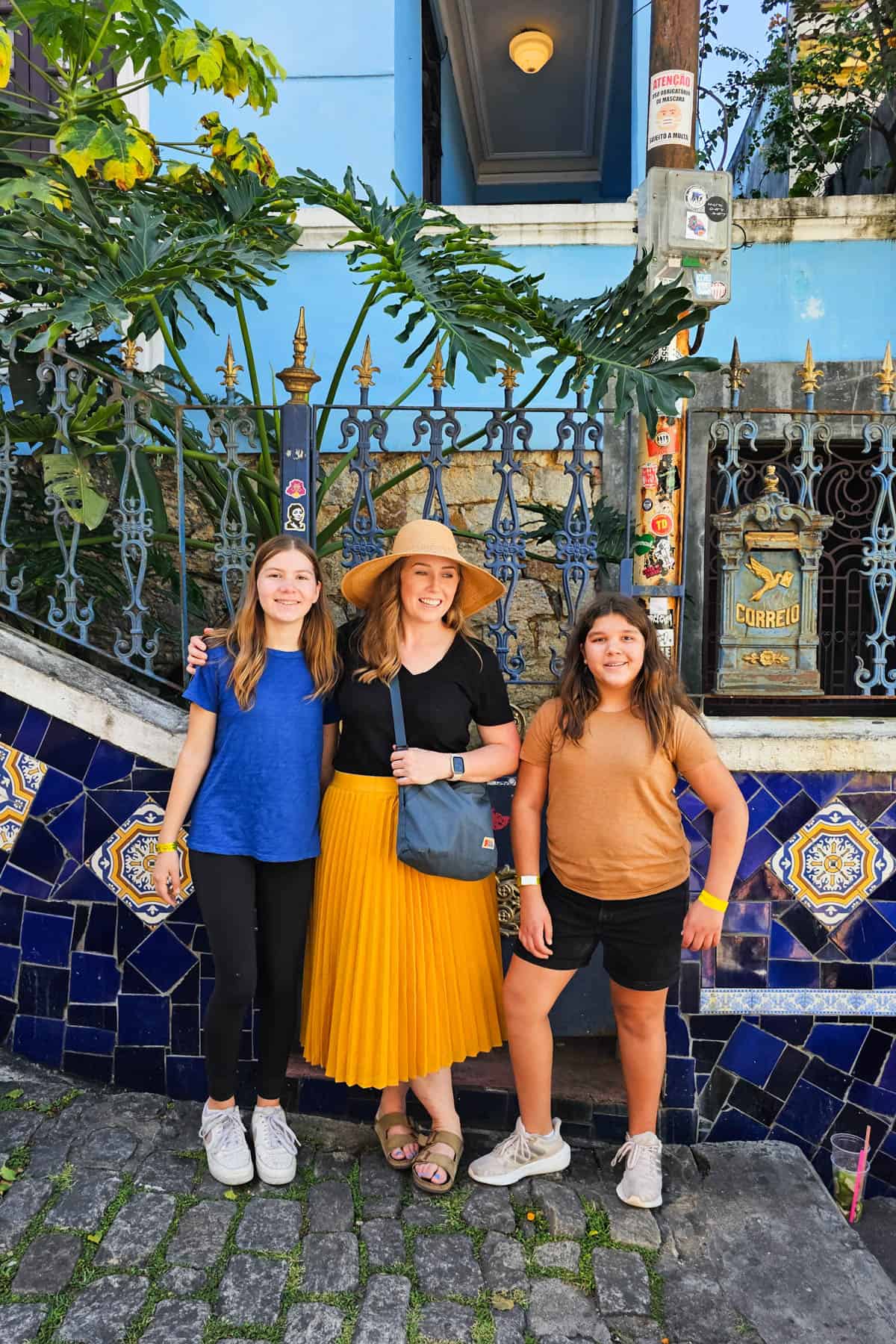
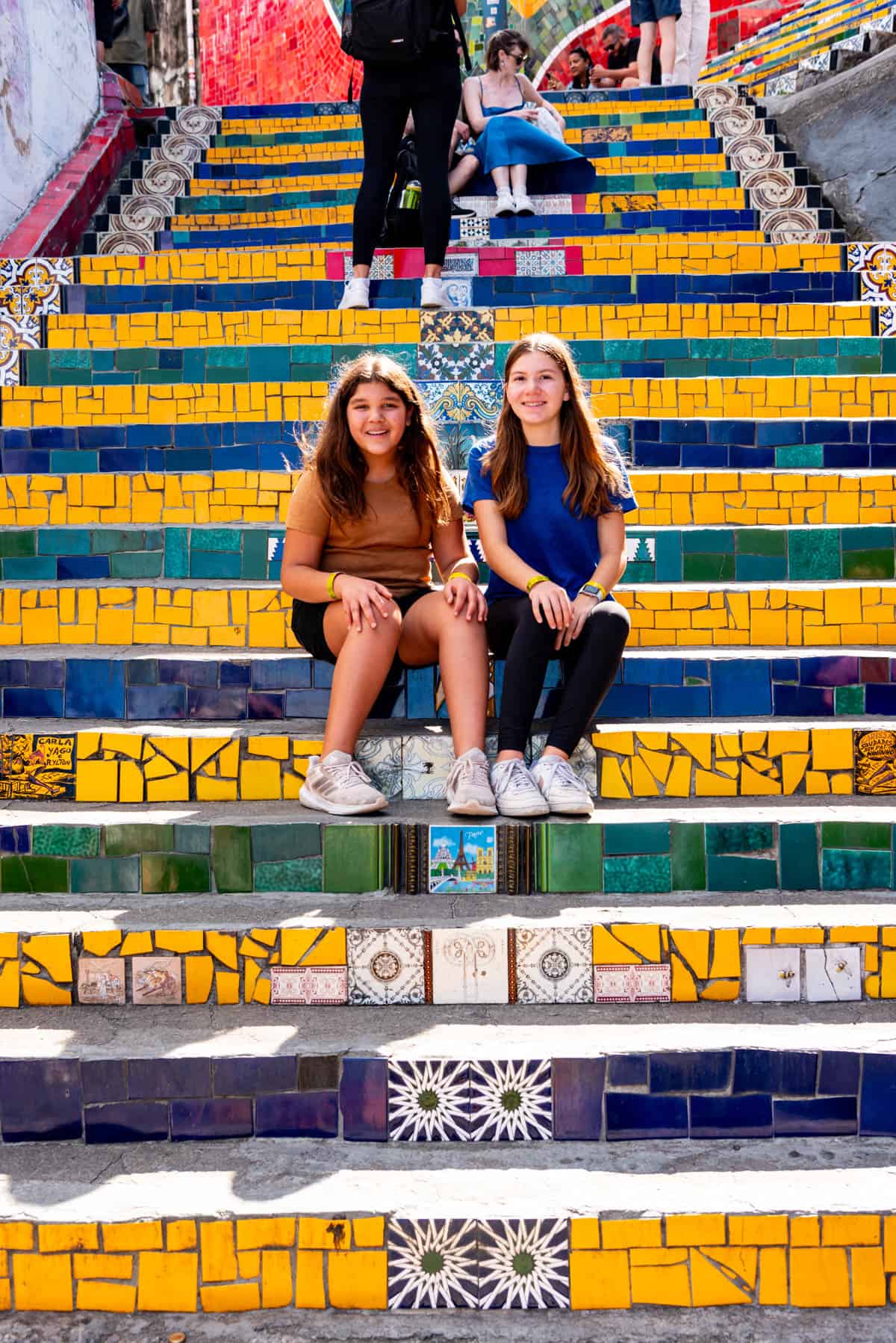
Bring your camera for this colorful tiled staircase that is an ongoing project for the artist who has been adding to it for more than 30 years! The Selaron steps are one of Rio’s most colorful and quirky landmarks with brightly colored tiles from more than 60 countries around the world. The idea came from Chilean-born artist Jorge Selarón as a personal art project in the 1990s. Since then he has constantly been replacing and adding tiles, and has famously said that the work would never be finished because it reflected his life and creativity.
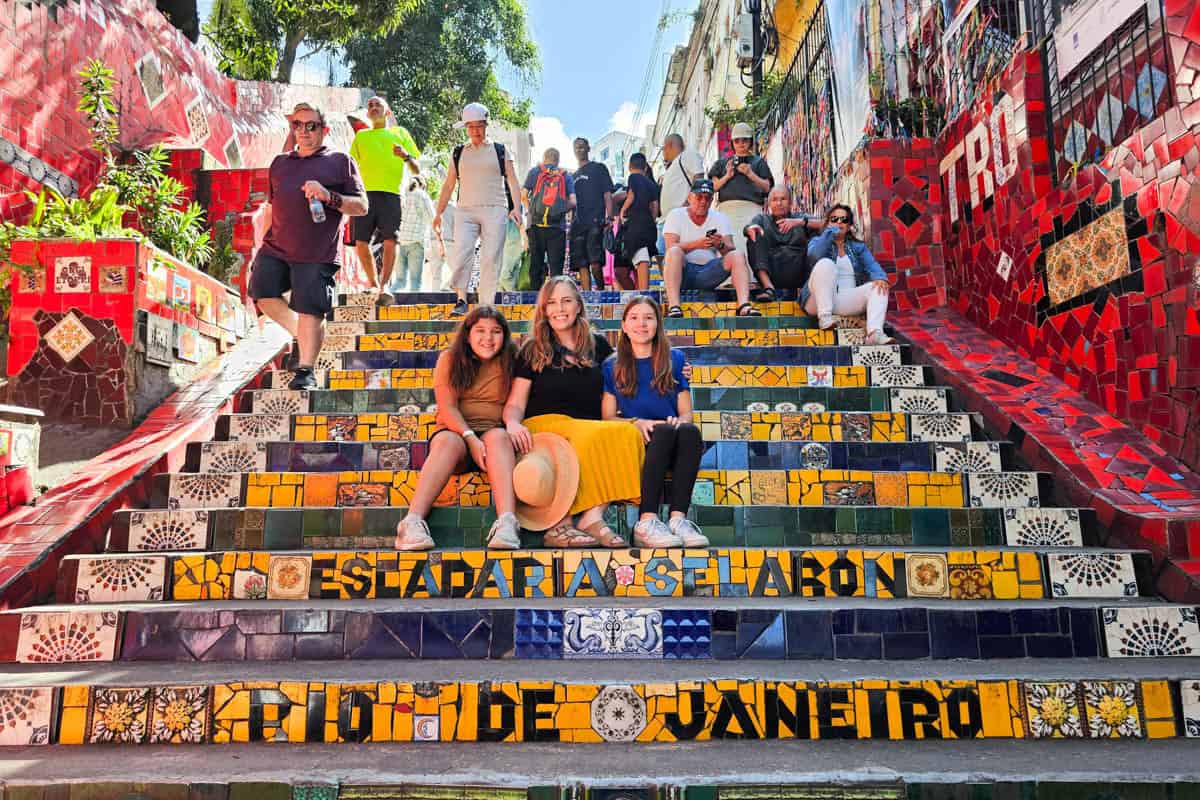
It feels like a living piece of art to walk up (or down) the steps. The sections are each different, with bold reds, blues, yellows, and greens. Many tiles are hand-painted with designs or messages all mixed together in an eclectic style.
It’s a quick visit that doesn’t take a lot of time, but also a very popular photo stop with many people queuing up for a chance to take a photo in particular areas.

Cultural Experiences with Music and Dance
We went to the Roxy Dinner Show in Copacabana and had a great time. It’s a blend of fine dining, live performance, and Brazilian culture in a historic art deco venue. The food was good and the show focused on the rhythms, colors, and traditions of Brazil through music, dance, and visual storytelling.
You’ll hear everything from samba and bossa nova to forró and funk, with costuming, choreography, and lighting and a large cast of dancers, singers, and musicians. Parts of the show felt slightly cheesy and maybe geared toward cruise ships, but we enjoyed it overall.


Samba City is another cultural option near the port area of Rio where the city’s top samba schools design and build their Carnival parade floats and costumes. This is a great way to learn about Rio’s samba culture and enjoy a family-friendly show during daytime hours or instead of attending Carnival. They have guided tours through the warehouses where the floats and costumes are made, you can try on authentic Carnival costumes, and the tour often ends with a mini samba show.
You can also visit Casa do Samba in Lapa, which is a cultural center dedicated to samba with occasional workshops and live music. It has more of a traditional feel and you can often find live performances later in the evening if you are looking for more cultural immersion or are a music lover.
If you want to do a little samba yourself, Rio has plenty of options for drop-in samba lessons, no experience or partner necessary! Rio Samba Dancer in the Ipanema area has almost daily drop-in group classes and focuses on solo samba style with classes that are taught in English and Portuguese. It’s intended to be a friendly, non-intimidating way to give samba a try!
Hang Gliding in Rio
One of the reasons we initially looked at Rio de Janeiro for this trip was because we hoped to go paragliding with the girls. I did it in New Zealand and loved the experience, but none of the rest of the family had tried it. Only we didn’t do enough research ahead of time though to realize that you have to be 16 to go paragliding in Rio (as opposed to New Zealand or Switzerland, where age requirements are much lower).
So we revamped our plans and watched Paul go hang gliding instead. The girls didn’t mind at all because they were definitely having second thoughts about paragliding once they got to the platform at the top of the mountain.

Paul had an absolute blast and said it is one of his favorite adventure activities he has ever done. And honestly the girls and I had fun just watching all of the hang gliders and paragliders setting up their equipment and taking off from the top of the mountain!

Where to Stay in Rio de Janeiro
Copacabana vs. Ipanema — Which Is Better?
If you want access to Rio’s best beaches, this is likely the question you are asking yourself. My ultimate takeaway is that they are both right next to each other, so it’s easy to explore both during your stay.
Copacabana: Home to one of the world’s most famous beaches, there are lots of hotels, restaurants, bars, and nightlife right along the waterfront. We found an AirBnB that was just steps from the beach with a great view of the ocean. Copacabana Beach generally has more accommodation options at a wider range of price points, including more budget-friendly stays and it is a great choice if you want to be in the center of the action with easy access to everything.
Ipanema: Considered more upscale and laid-back than Copacabana, this beach area is typically cleaner and thought of as more trendy and relaxed. It also has great restaurant options, cafés, and nightlife, as well as a reputation for being very safe and walkable at night.

What to Eat in Rio
Brazil is an excellent first-timer food destination if you love bold flavors, lots of grilling, tropical fruit, and very approachable dishes.
Churrascarias (Brazilian Steakhouses)
This is often the most memorable meal for first-time visitors. You get all-you-can-eat grilled meats brought to your table by servers who carve off pieces from long skewers right onto your plate. Every person will have a marker that is painted green on one side and red on the other that you use to indicate to your server to keep bringing more meat (green) or to please stop (red).
Some of the most popular offerings include picanha (top sirloin cap), filet mignon, lamb, pork, chicken hearts, and more, but you’ll also find a huge salad bar with sides like farofa, pão de queijo, rice, and black beans. Our top tip? Go hungry, pace yourself, and don’t skip the picanha. It’s Brazil’s signature cut.
Here are some of the most popular churrascarias in Rio:
- Churrascaria Palace (Copacabana) – This is the one we went to. It’s a classic and beloved by both locals and visitors alike.
- Fogo de Chão (Botafogo) – Has a reputation for being great for first-timers.
- Assador Rio’s – Beautiful views with a more upscale experience.
- Carretão (Ipanema) – Central and approachable with solid quality.
Pão de Queijo (Brazilian Cheese Bread)
This naturally gluten-free, cheesy bread is completely addictive. You will see it at bakeries, cafés, hotel breakfast spreads, and restaurants. We think the fresh, warm versions are the best.
Açaí (Brazilian-Style, Not Smoothie Bowls)
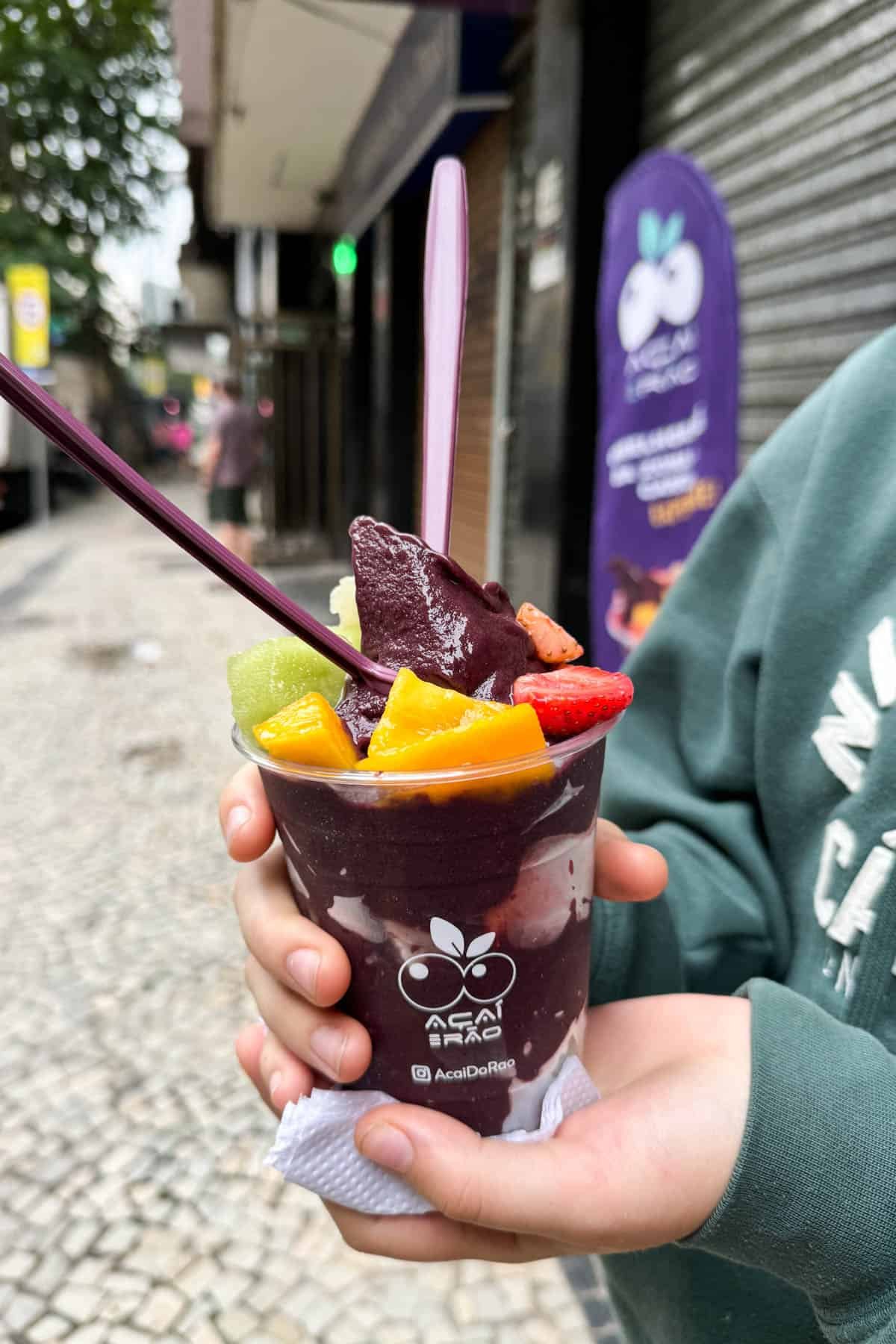
Our girls loved these for a treat after the beach. You have probably seen these in the U.S., but the Brazilian version is less sweet and a bit more earthy. It is served thick and cold – almost like a sorbet – and topped with fresh fruit, granola, or honey. You can find it at beach kiosks or juice bars. This surprises many first-timers.

Brazilian Lemonade (Limonada Suíça)
We love this so much that we have made it at home for years, so I was super excited to try it in Brazil. It’s made with whole limes, sugar, ice, water, and sweetened condensed milk (at least my version is). You’ll find it at restaurants, cafés, and juice bars, and this creamy, tart, and refreshing drink it absolutely a must-try.
Feijoada (Brazil’s National Dish)
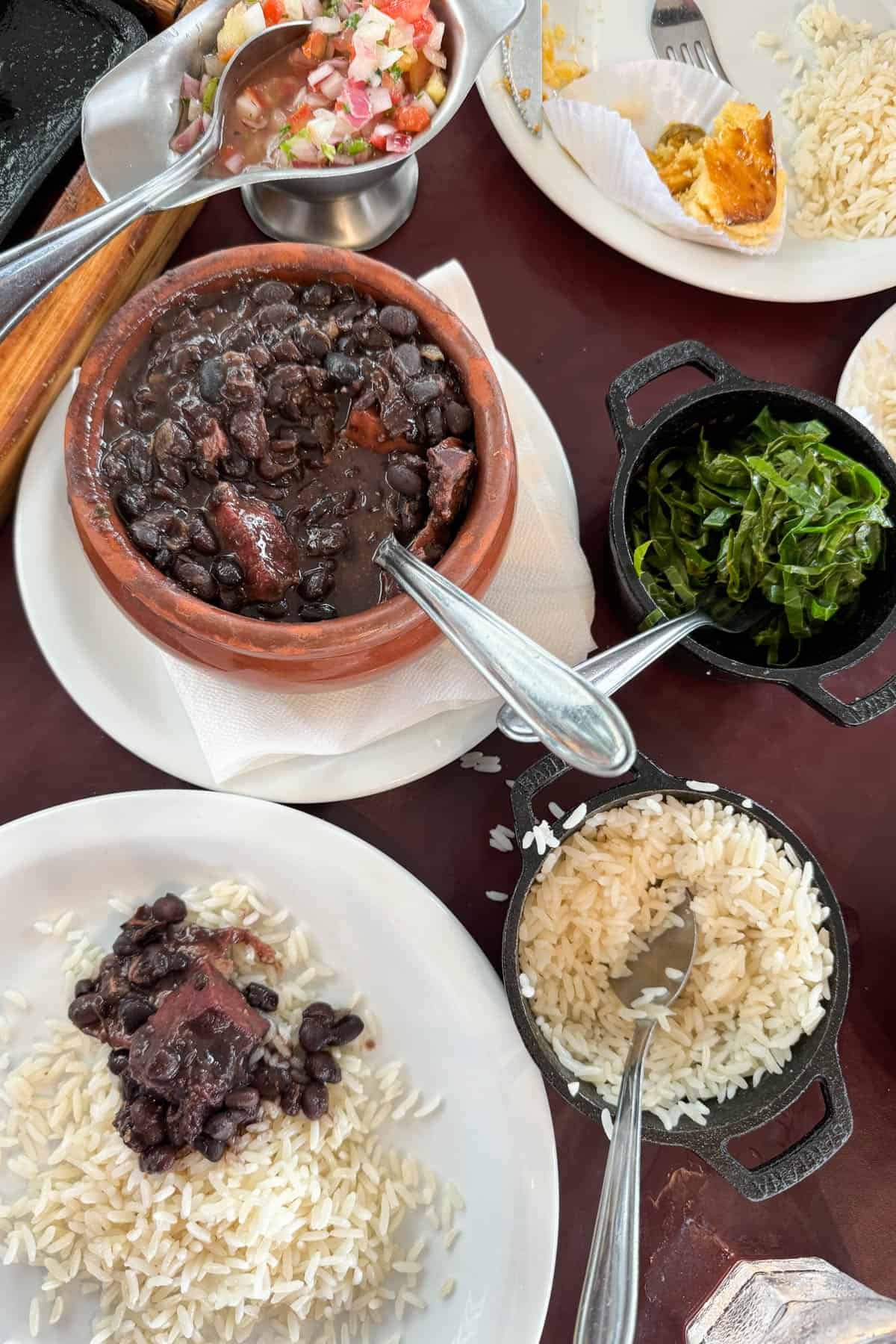
This dish of black beans slow-cooked with pork (usually some combination of sausages, ribs, and sometimes even ears or feet) is the heartiest, most traditional Brazilian meal and it is absolutely delicious. You’ll notice it eaten with rice, farofa (toasted cassava flour), collard greens, and often orange slices.

Moqueca (Brazilian Seafood Stew)
If you are into seafood, I definitely recommend trying the moqueca. You can find Bahian moqueca, which has a coconut milk base, or Capixaba moqueca, which has a tomato base. Either way, this fish or shrimp dish is common in coastal Brazil and very popular in Rio.
Tropical Fruits & Juice Bars
Brazilian fruit culture is incredible and the people seem to be pretty health conscious in general. You can find mango, passion fruit (maracujá), papaya, guava, cashew fruit, and maybe even cupuaçu (a chocolaty sort of fruit from the Amazon).
Street Food and Beach Food
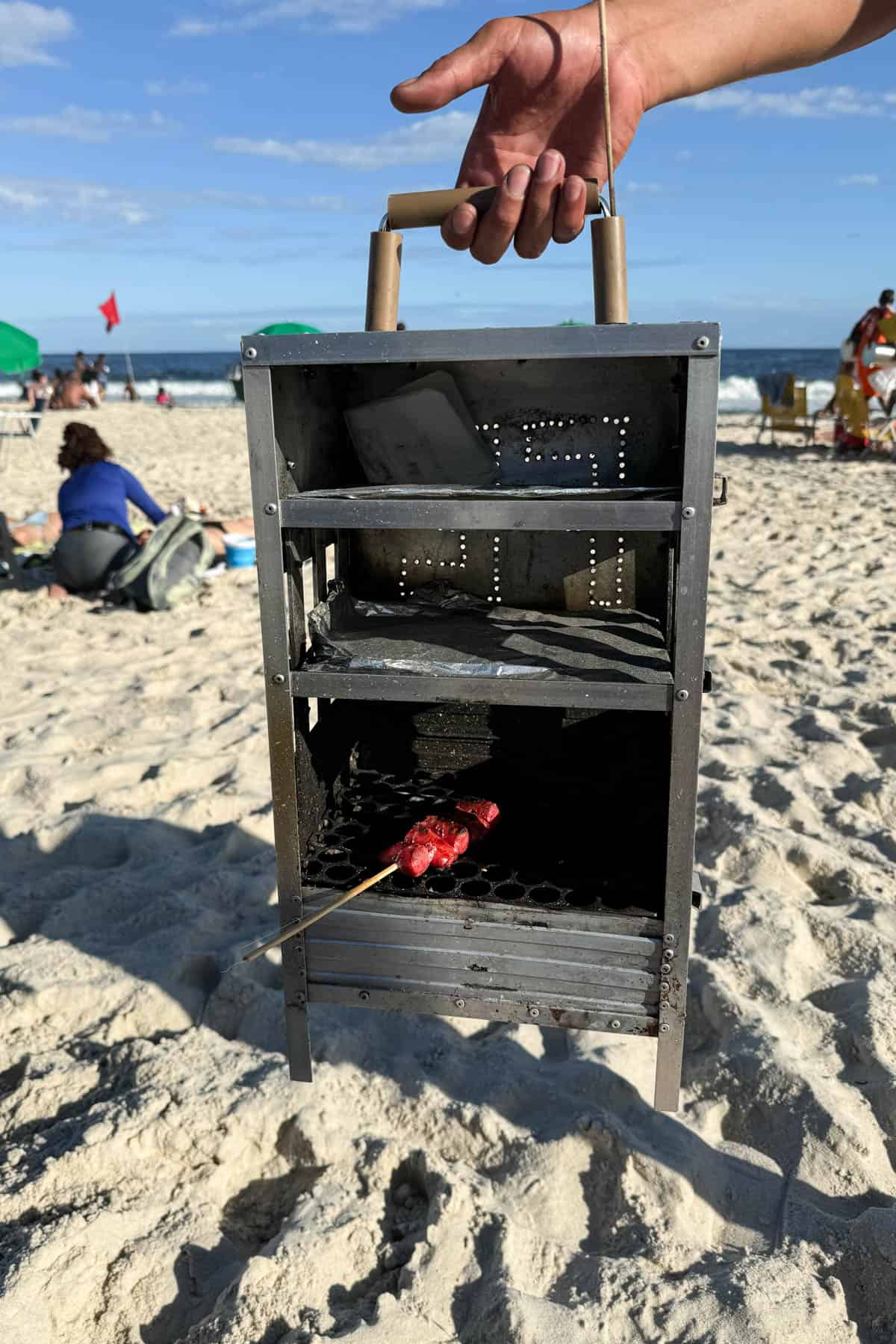
You’ll probably also see vendors along the famous tiled sidewalked of Copacabana and Ipanema, as well as men and women who walk up and down the beach carrying handheld grills. There are all kinds of snacks offered, but the buttered corn and grilled meat skewer were two of our favorites!

FAQ’s
If you have limited time of just 2-3 days, you can still hit many of the city’s highlights like Christ the Redeemer, Sugarloaf Mountain, Ipanema or Copacabana, and the Botanical Garden or Lagoa. With an extra couple of days you can spend time in the Tijuca National Park, exploring the Santa Teresa neighborhood with a guide, visiting the Maracanã, and enjoying more beach time.
Yes, especially in popular areas like Copacabana, Ipanema, and Leblon, but like any travel visitors should be street-smart. You should avoid displaying valuables, don’t wander unfamiliar areas at night, and use Uber or taxis rather than walking once it gets late.
Basic phrases help, but in tourist areas many people speak some English and we didn’t have a problem at all. A couple of times we switched to Spanish (not the same as Portuguese, but enough people also speak that language so it helped when English was becoming a challenge), but really I would not worry about the language here too much.
Have you been to Rio? I would love to hear about your favorite experiences or recommendations below! And if this is your first time visiting Brazil, I highly recommend making time in your itinerary to visit Iguazu Falls too!