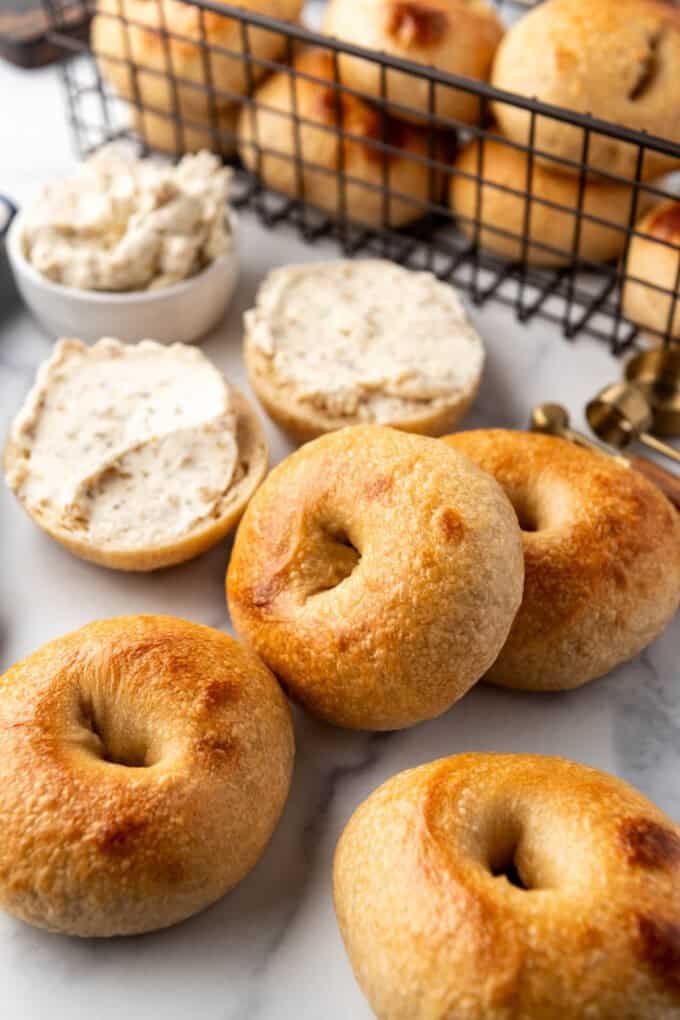
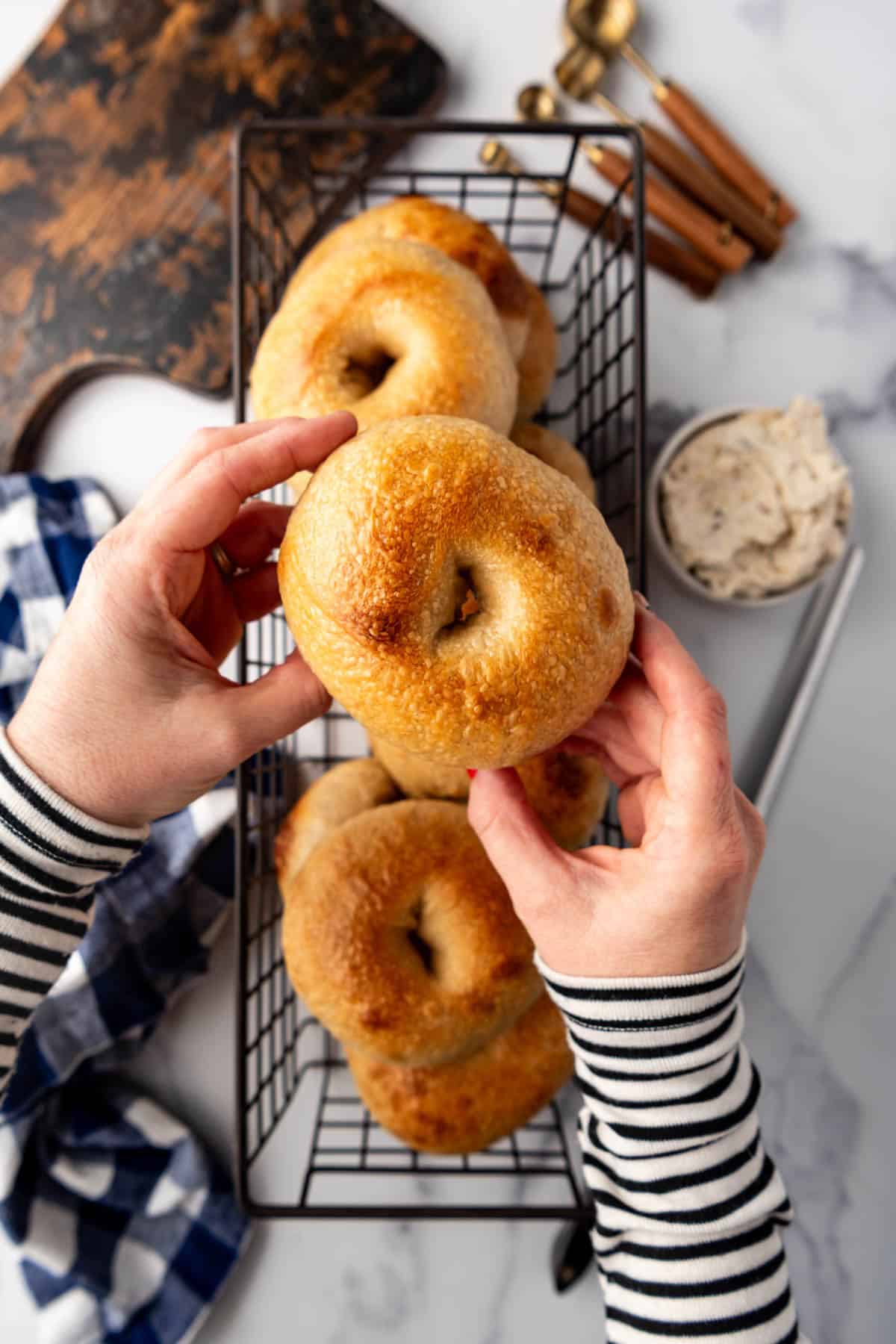
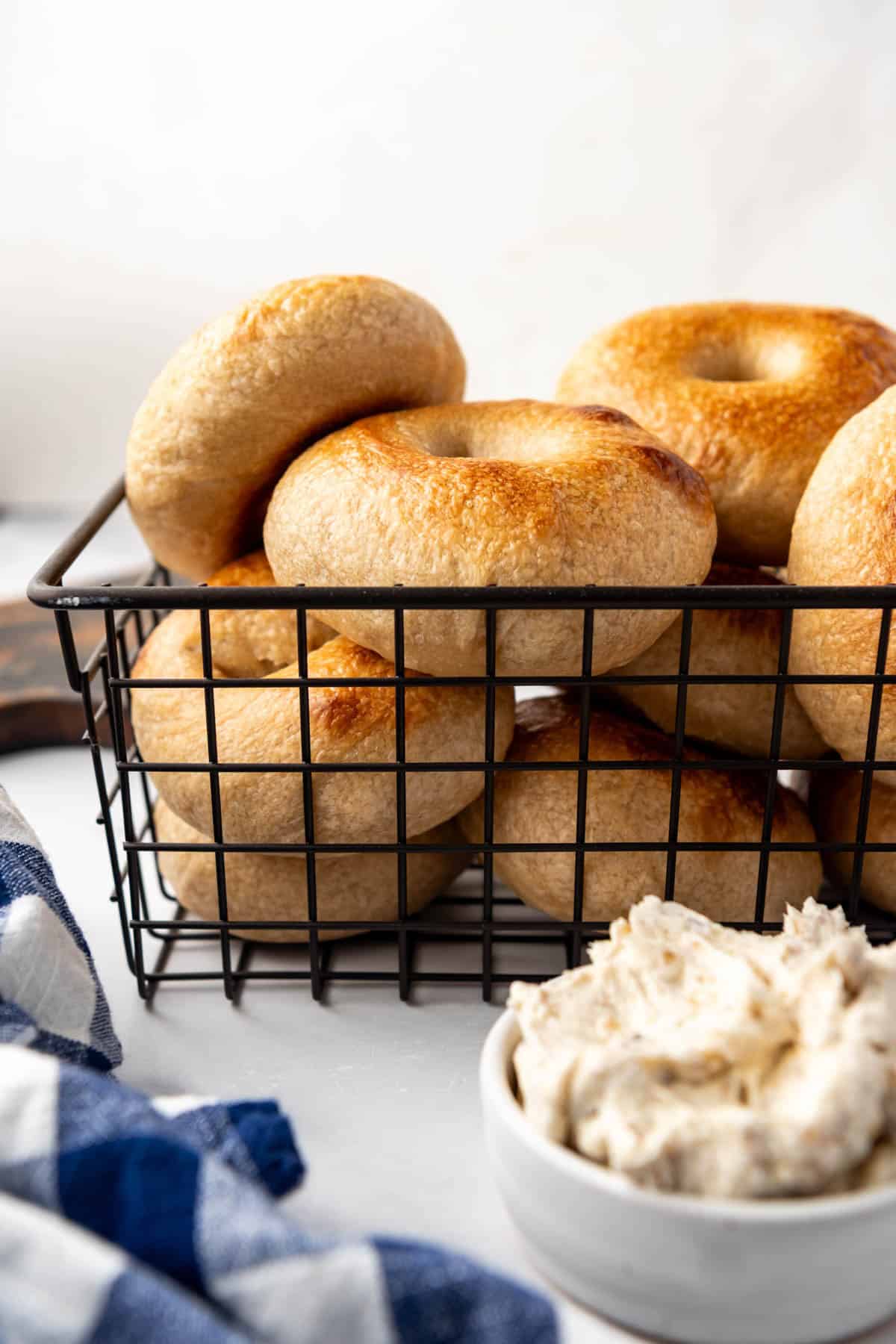
These homemade sourdough bagels are the kind of from-scratch bake that makes weekend mornings feel special. There’s something deeply satisfying about pulling a batch of golden, chewy bagels out of the oven.
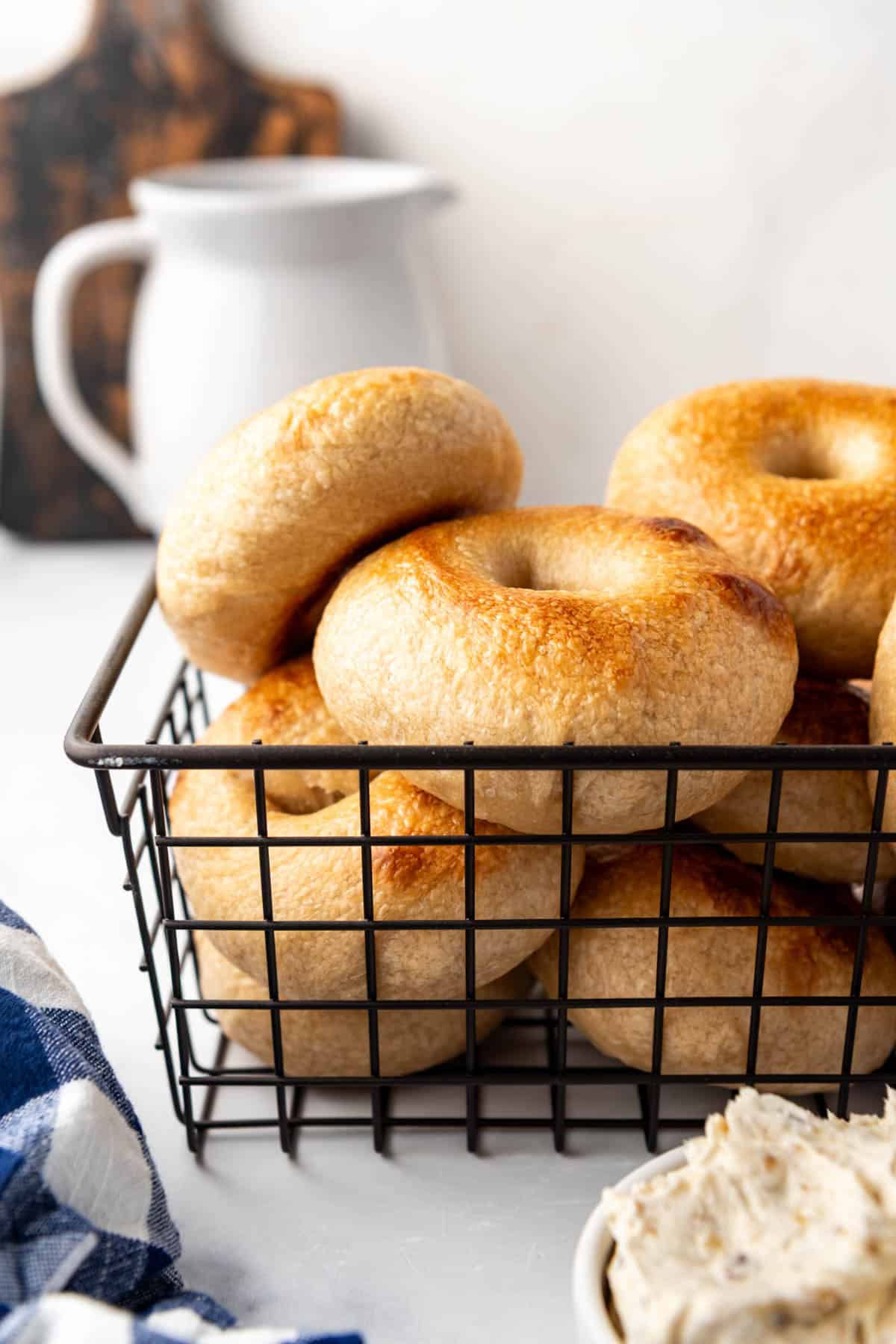
I’ve been making a lot of bagels this year, and it’s becoming one of our favorite weekend traditions. My husband and kids get so excited when they see a fresh batch cooling on the counter – it feels like we’re at our favorite bakery, except we’re all still in our pajamas!
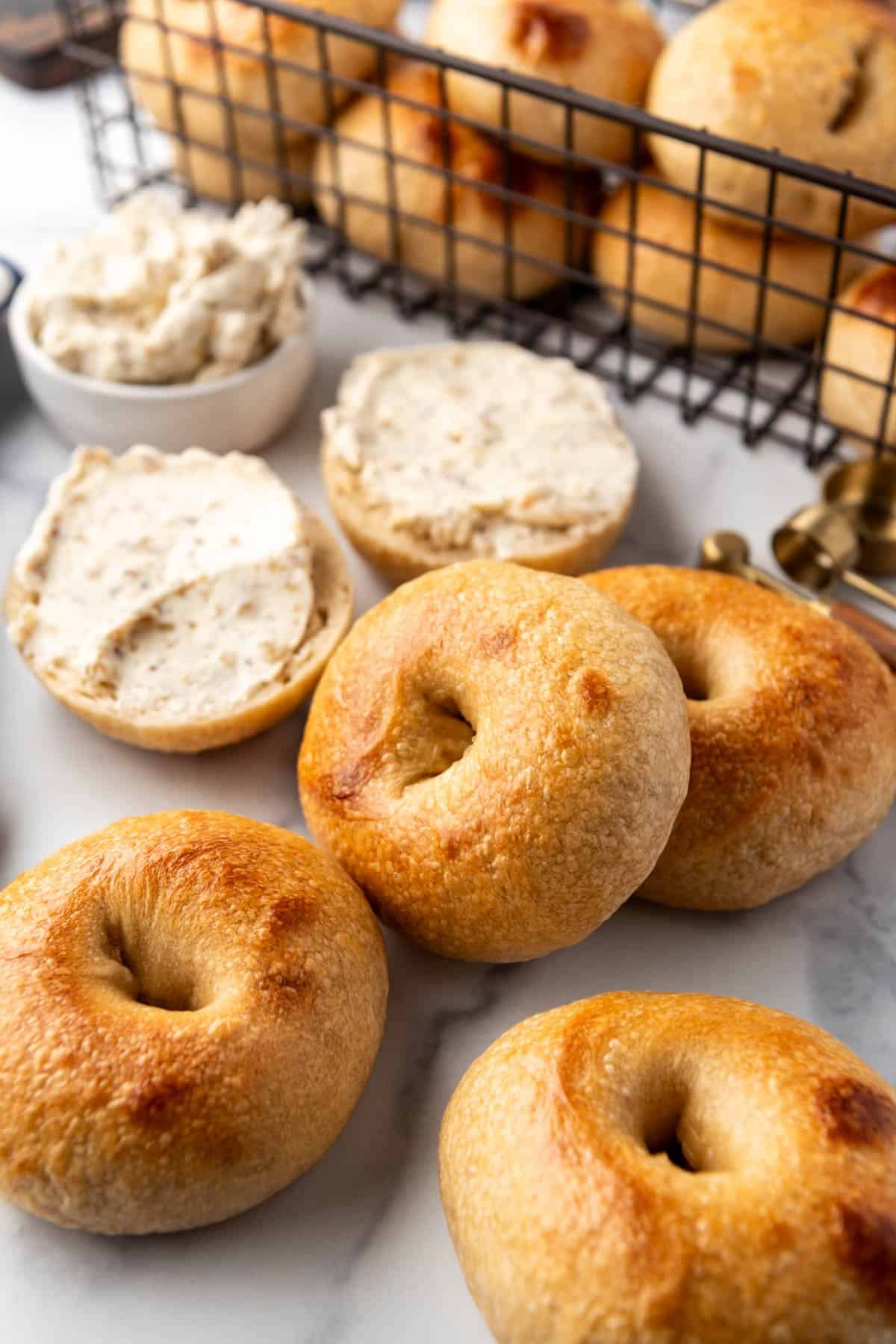
I’ve always loved making breads from scratch, and these homemade sourdough bagels deliver that perfect balance of tangy flavor and classic chew. My girls like them toasted with butter or with a generous swipe of cream cheese, either way they disappear quickly once they hit the table.
My classic Homemade Bagels are still a go-to (they really do rival the best ones we’ve had in New York), but developing this version using my active sourdough starter has been such a fun way to bring even more depth of flavor into our brunch rotation. Even though it takes some planning with the overnight ferment, the payoff is so worth it. Paul actually likes these bagels best!
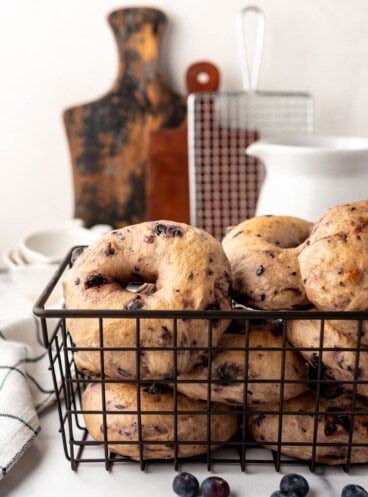
For more sourdough and bagel recipes, check out my Sourdough Sandwich Bread, Berry Breakfast Bagel French Toast Casserole, and these Blueberry Sourdough Bagels.
Why you’ll love this family favorite recipe!

- The long bulk ferment and honey water bath create the signature chewy texture and glossy crust that sets these apart from quicker bagel recipes.
- They’re surprisingly straightforward once you get the hang of shaping them.
- With mostly hands-off time it’s the perfect recipe for a relaxed weekend baking project or make-ahead brunch prep!
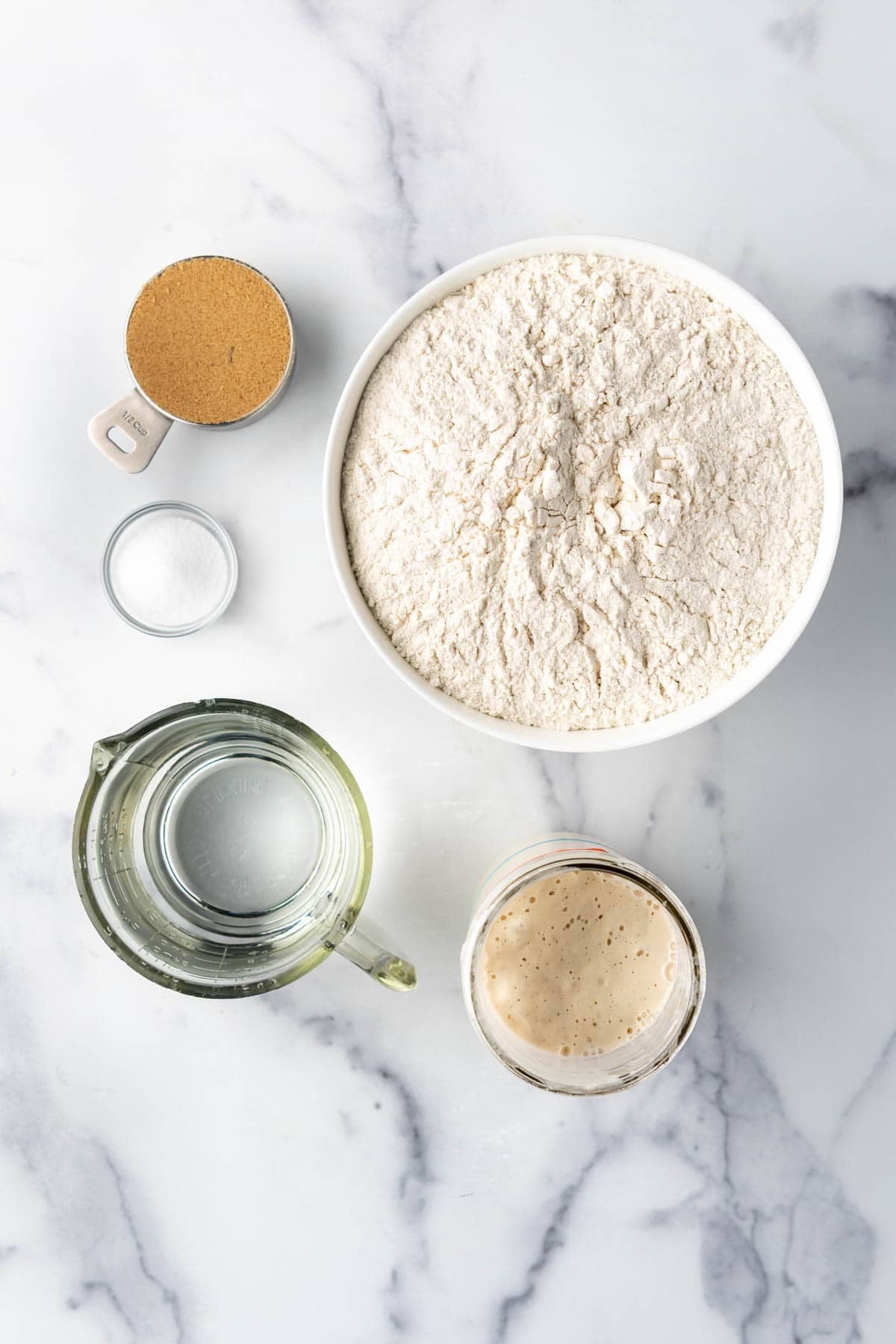
What You’ll Need
Scroll down to the recipe card below this post for ingredient quantities and full instructions.
- Active Sourdough Starter – This is what gives these homemade sourdough bagels their signature tangy flavor and the beautiful chew that makes true sourdough bagels so special.
- Bread Flour – Its higher protein content creates the classic chewy texture we all love in a really good bagel.
- Brown Sugar – It adds just a touch of sweetness and helps feed the starter during the long ferment.
- Salt – Essential for flavor and for strengthening the gluten so your bagels hold their shape during boiling and baking.
- Honey – Added to the boiling water, it gives the bagels a subtle sweetness on the crust and helps them develop that gorgeous golden-brown color.
- Water – To bind the dough together.
Step-by-Step Overview
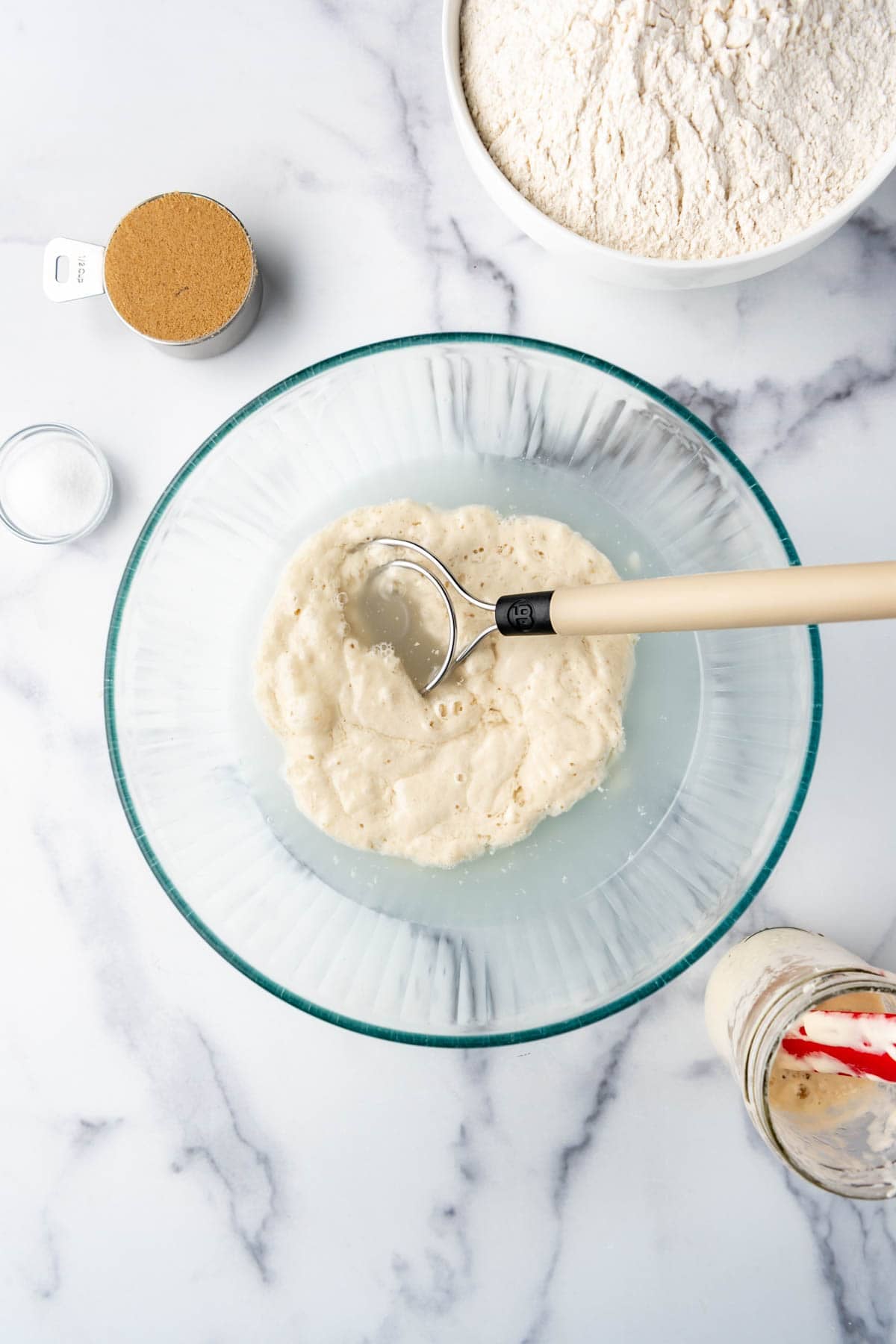
- Make the dough. Combine the active sourdough starter and water in a large bowl. Add the bread flour, brown sugar, and salt.
- Start the dough. In a large mixing bowl, combine the active sourdough starter and water in a large bowl. It should look like a thick, lumpy pancake batter. Add the bread flour, brown sugar, and salt.
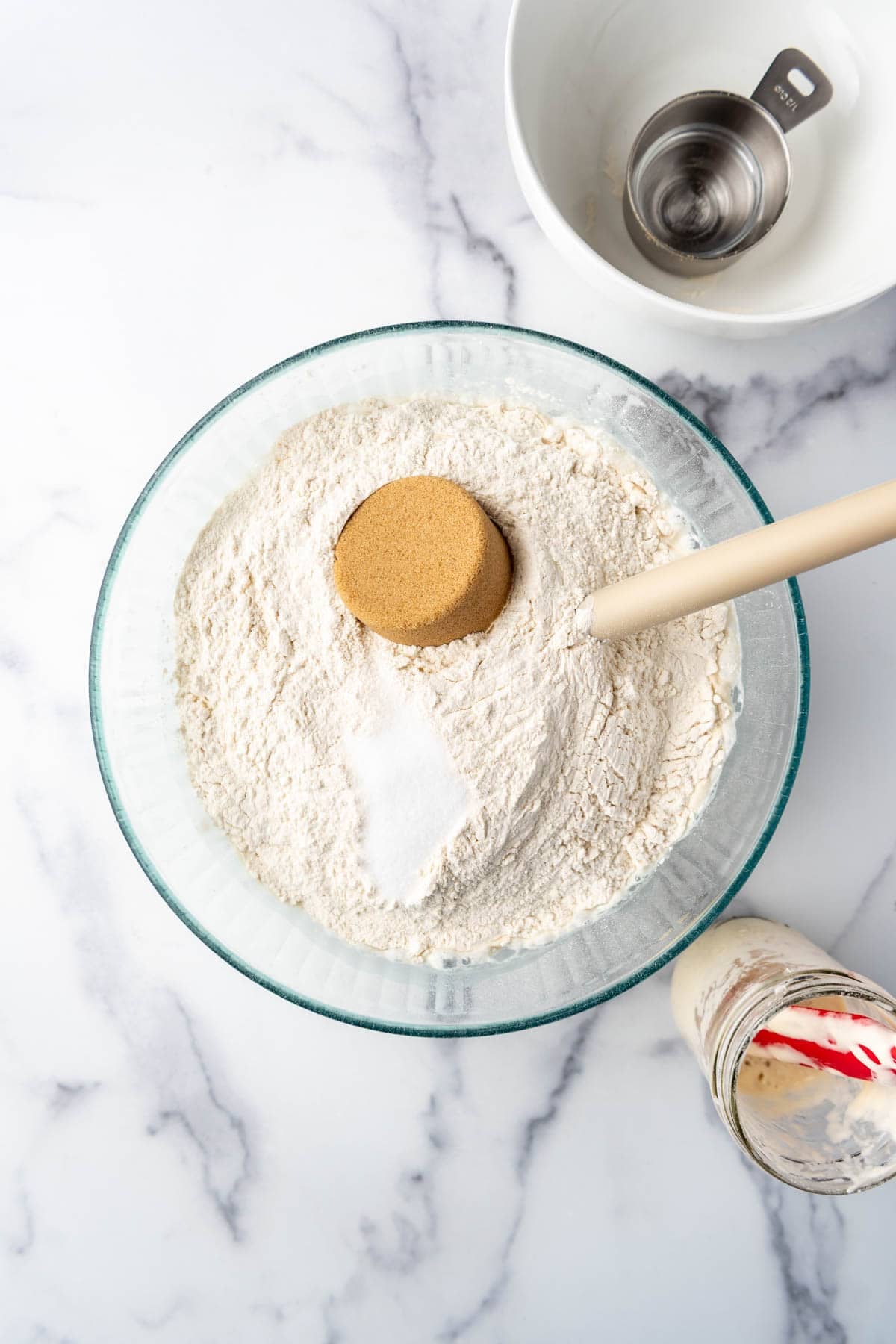
- Mix to combine. Mix with a stand mixer fitted with the dough hook or by hand with a sturdy wooden spoon until a shaggy dough forms.
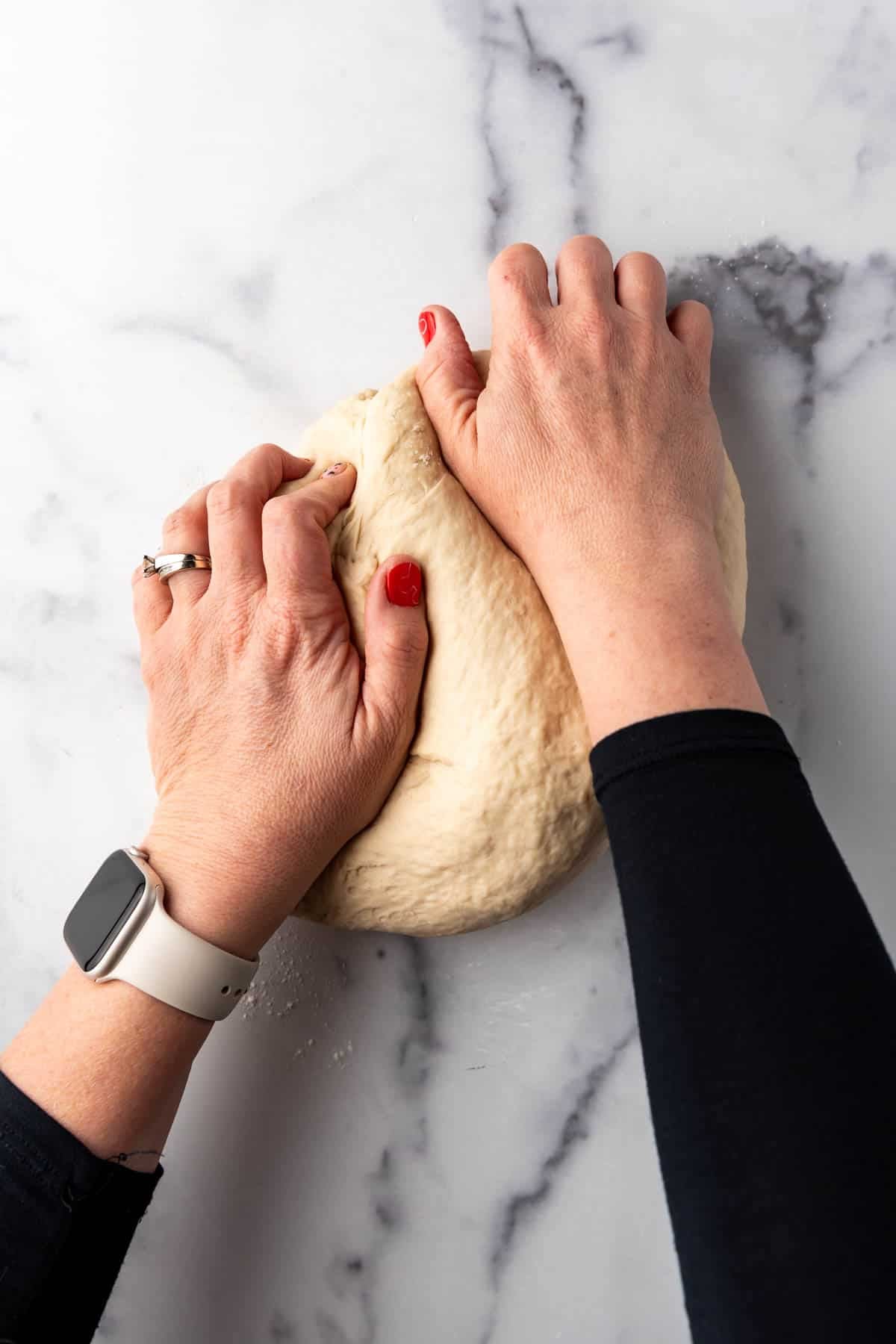
- Knead the dough. Knead the dough for about 5 minutes until smooth and elastic.
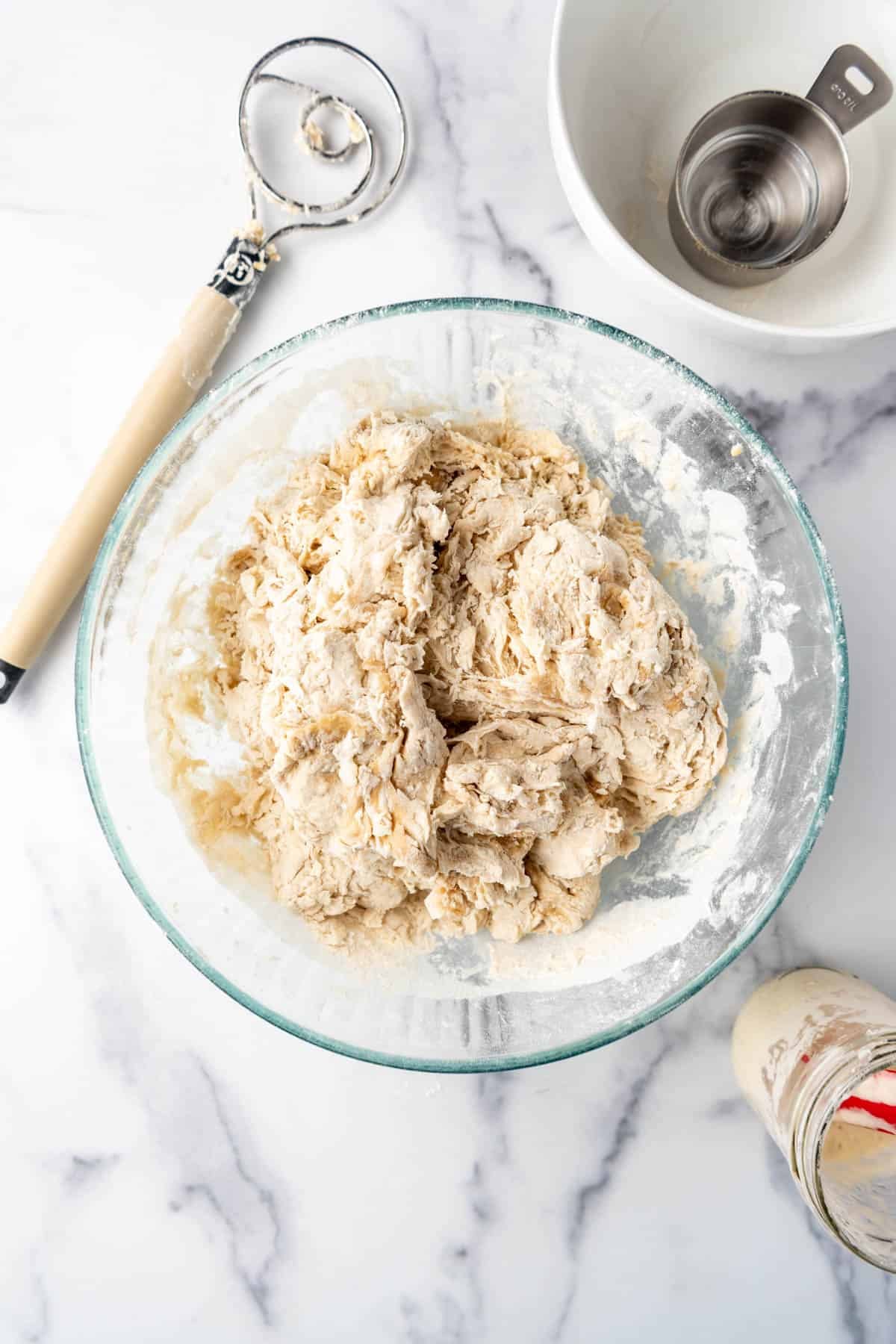
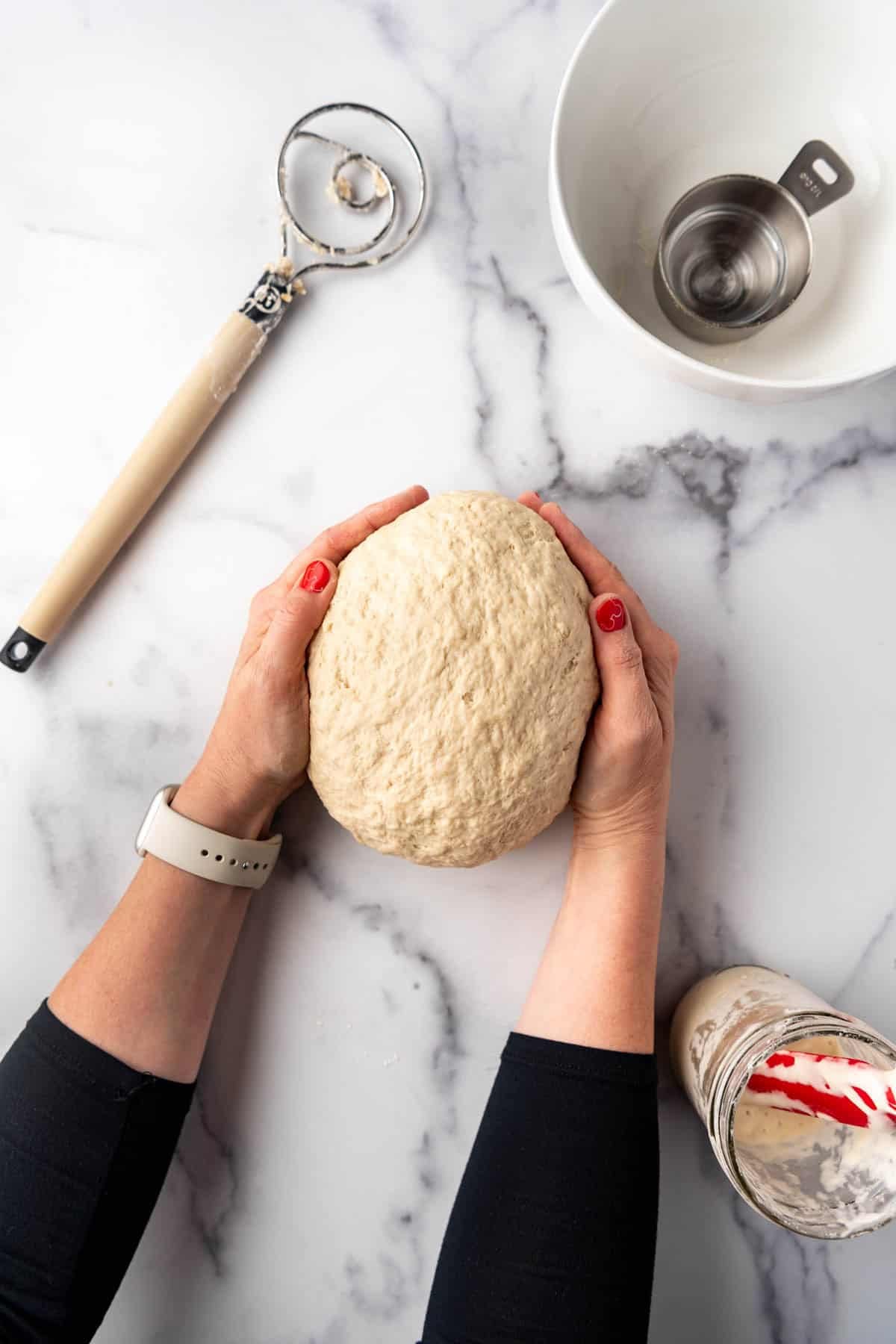
- Rest and knead again. Cover and let the dough rest for 1 hour, then knead briefly again and shape into a tight ball.
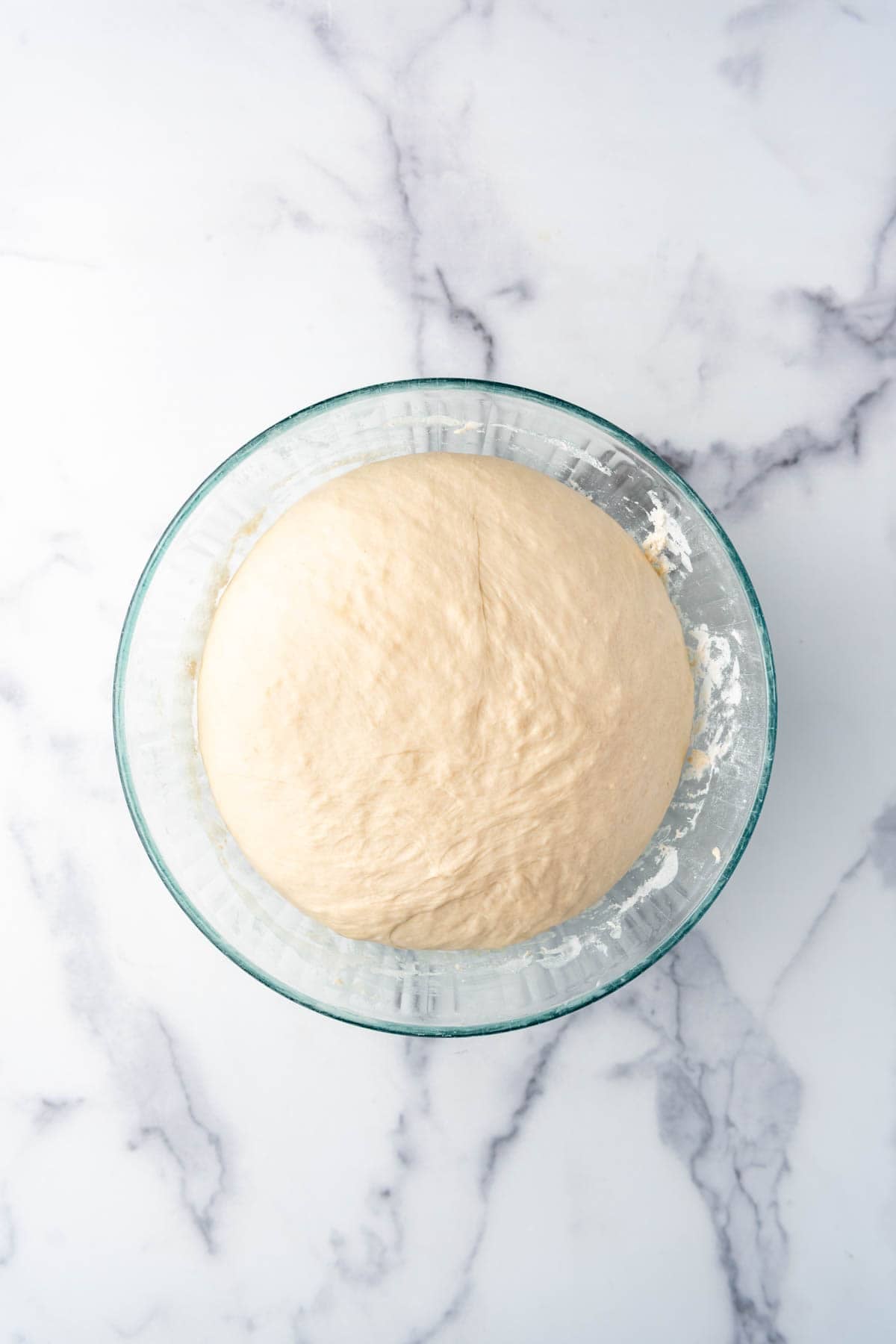
- Bulk ferment. Cover and let the dough bulk ferment for 6-12 hours at room temperature or overnight if your kitchen is on the cool side. The dough should double in size.
The Windowpane Test
To check if your bagel dough has been kneaded enough, I like to do the windowpane test – the same one you’ve probably seen on The Great British Baking Show. Pinch off a small piece of dough and gently stretch it between your fingers. You should be able to stretch it fairly thin so light shines through the membrane without it tearing easily.
Bagel dough is stiffer than most bread doughs, so it won’t stretch quite as far or as thinly as sourdough sandwich bread. If it tears right away, add 1-2 tablespoons of water and knead for another minute or two, then test again. If it feels too sticky, add a little more bread flour (about ¼ cup at a time) until the dough is smooth, strong, and firmer than typical bread dough.
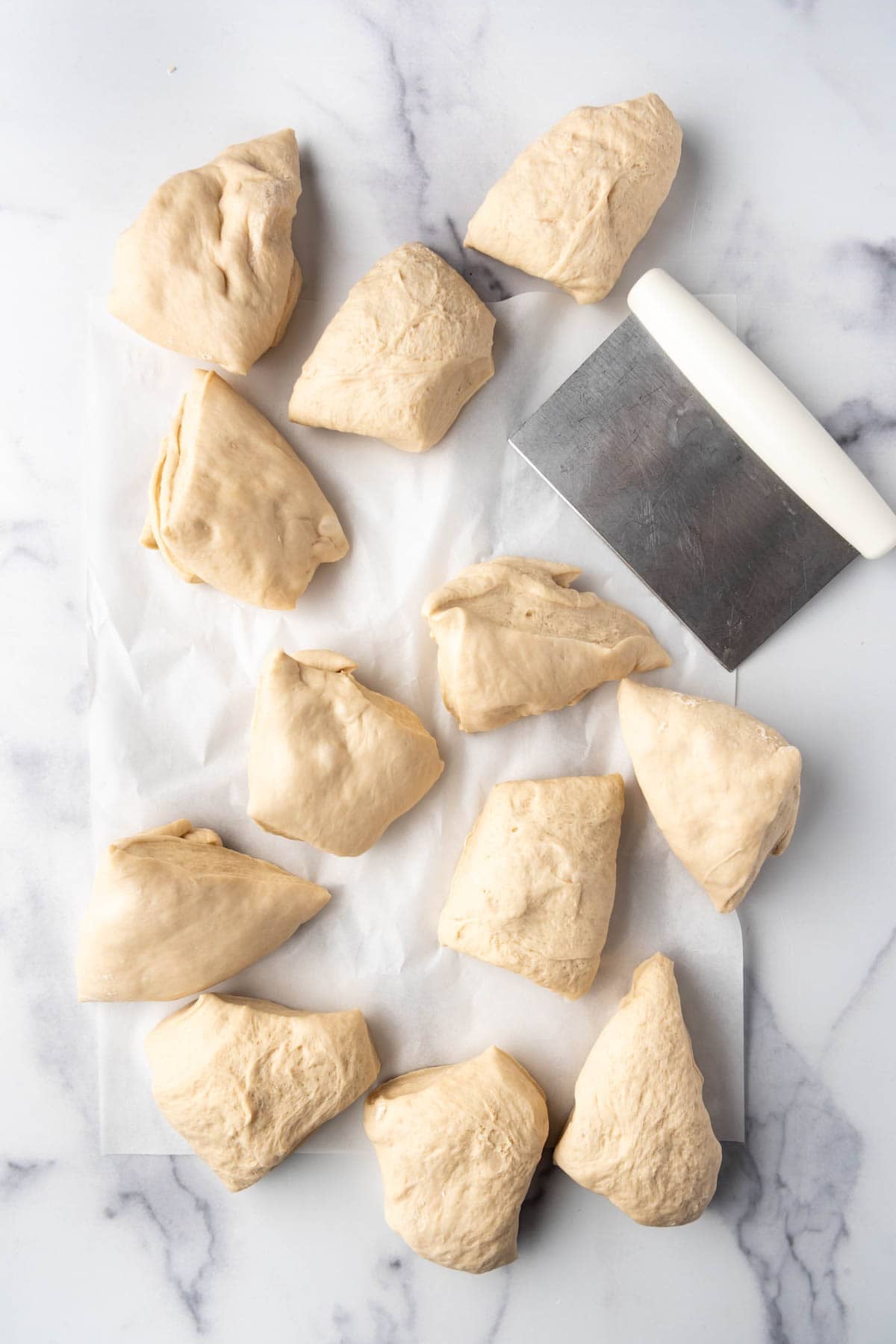
- Divide the dough. Use a bench scraper or sharp knife to divide the dough into 12 even pieces, each about 170 grams (roughly 6 ounces) for large, hearty bagels.
- Rest on tray. Roll each piece into a tight ball, then cover with plastic wrap or a damp towel and let them rest for 20 minutes. This short rest relaxes the gluten and makes shaping the bagels much easier.
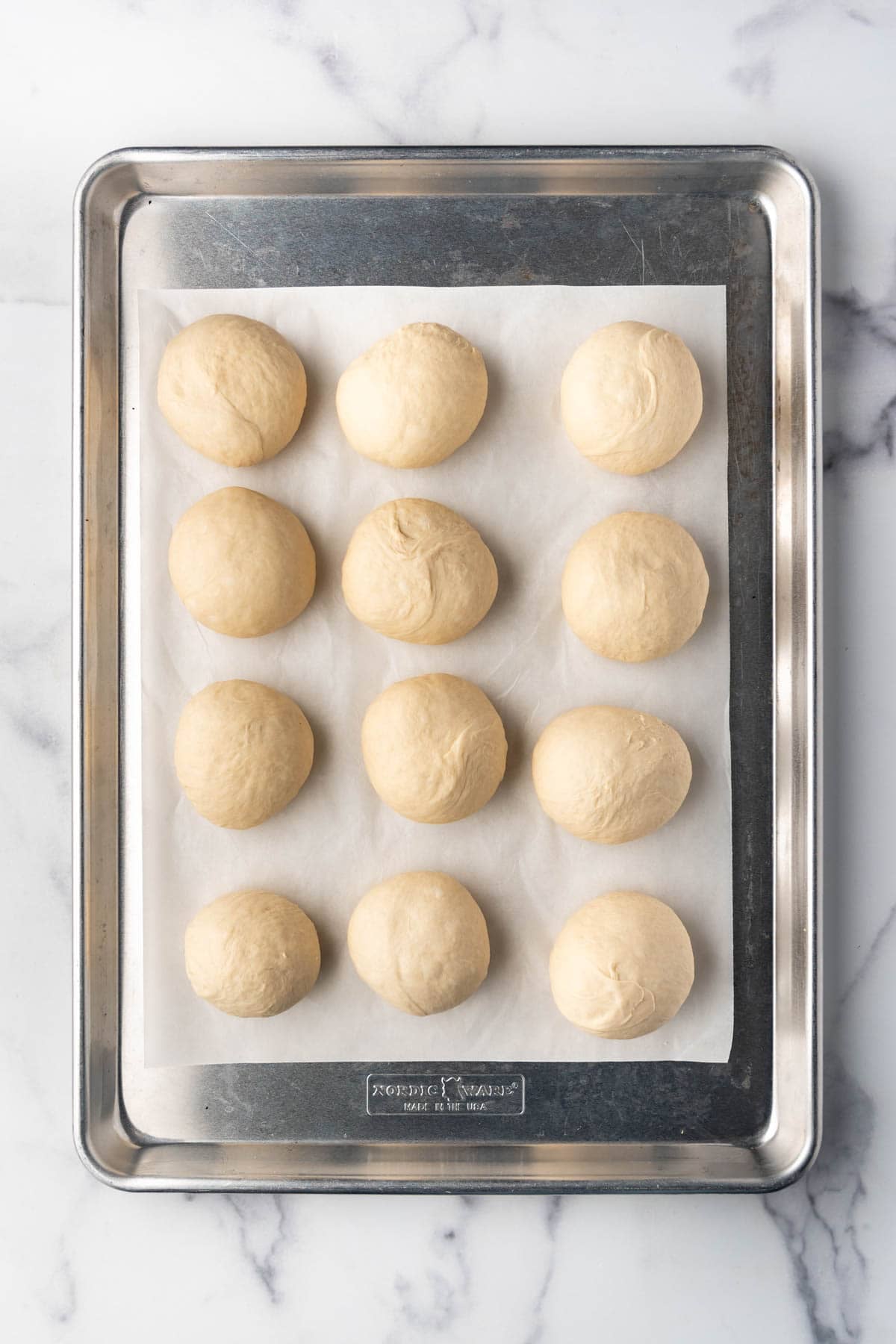
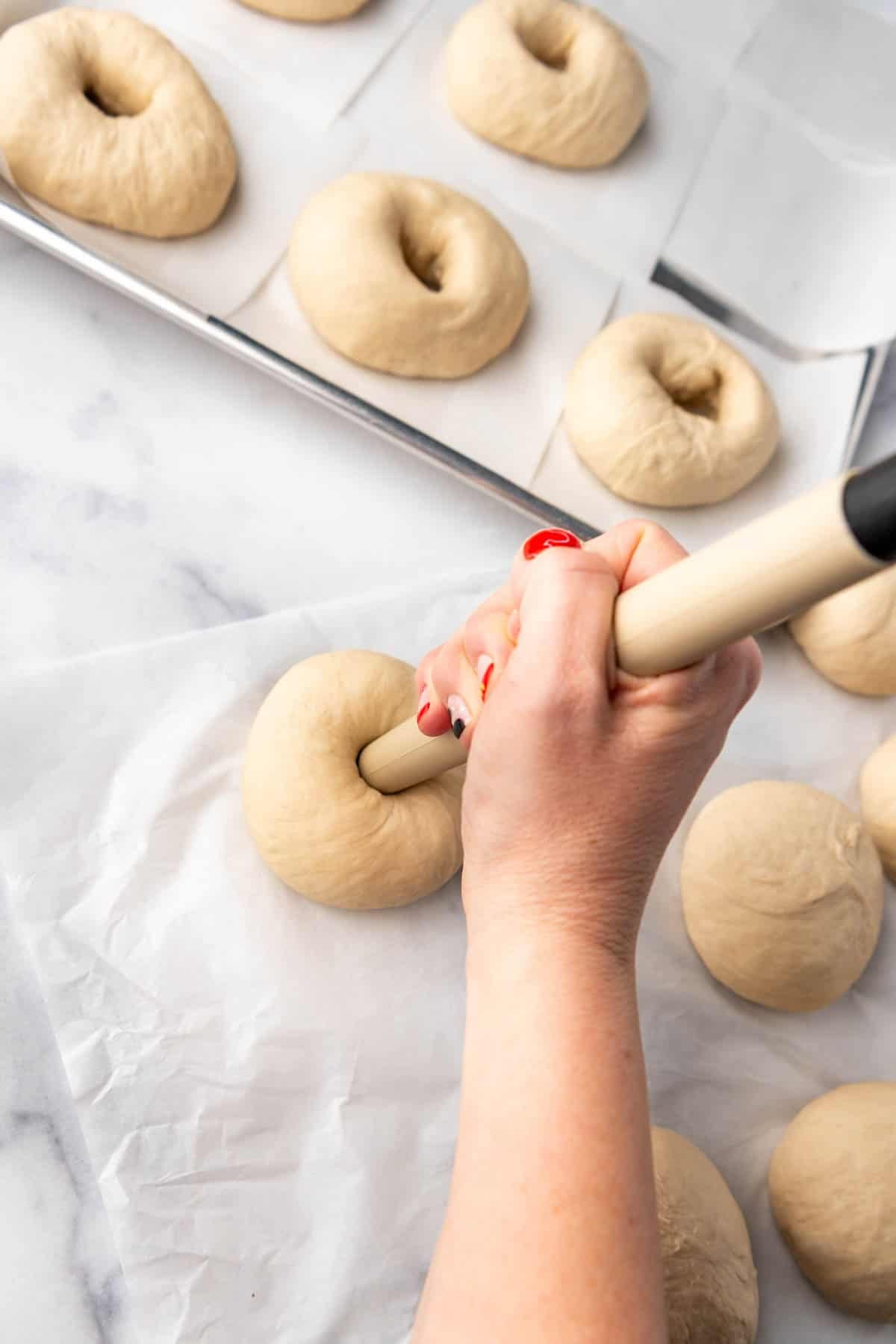
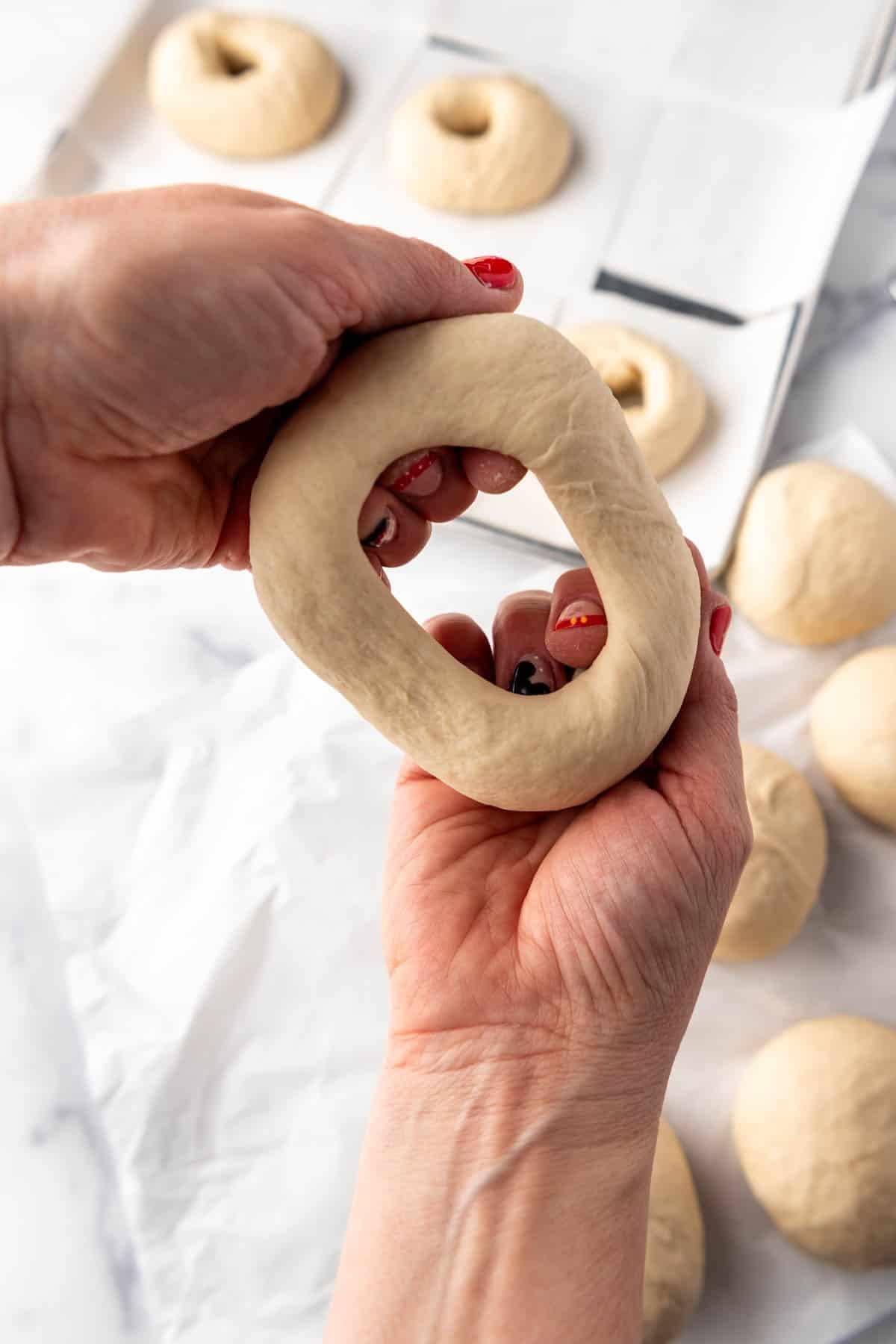
- Shape the bagels (method 1). There are two common ways to shape bagels, and both work well. My favorite is the ball-and-poke method: roll each piece into a tight ball, then poke a hole straight through the center with your finger, the handle of a wooden spoon, or a rolling pin (affiliate link). Gently stretch the hole until it’s even, rotating the bagel as you go.
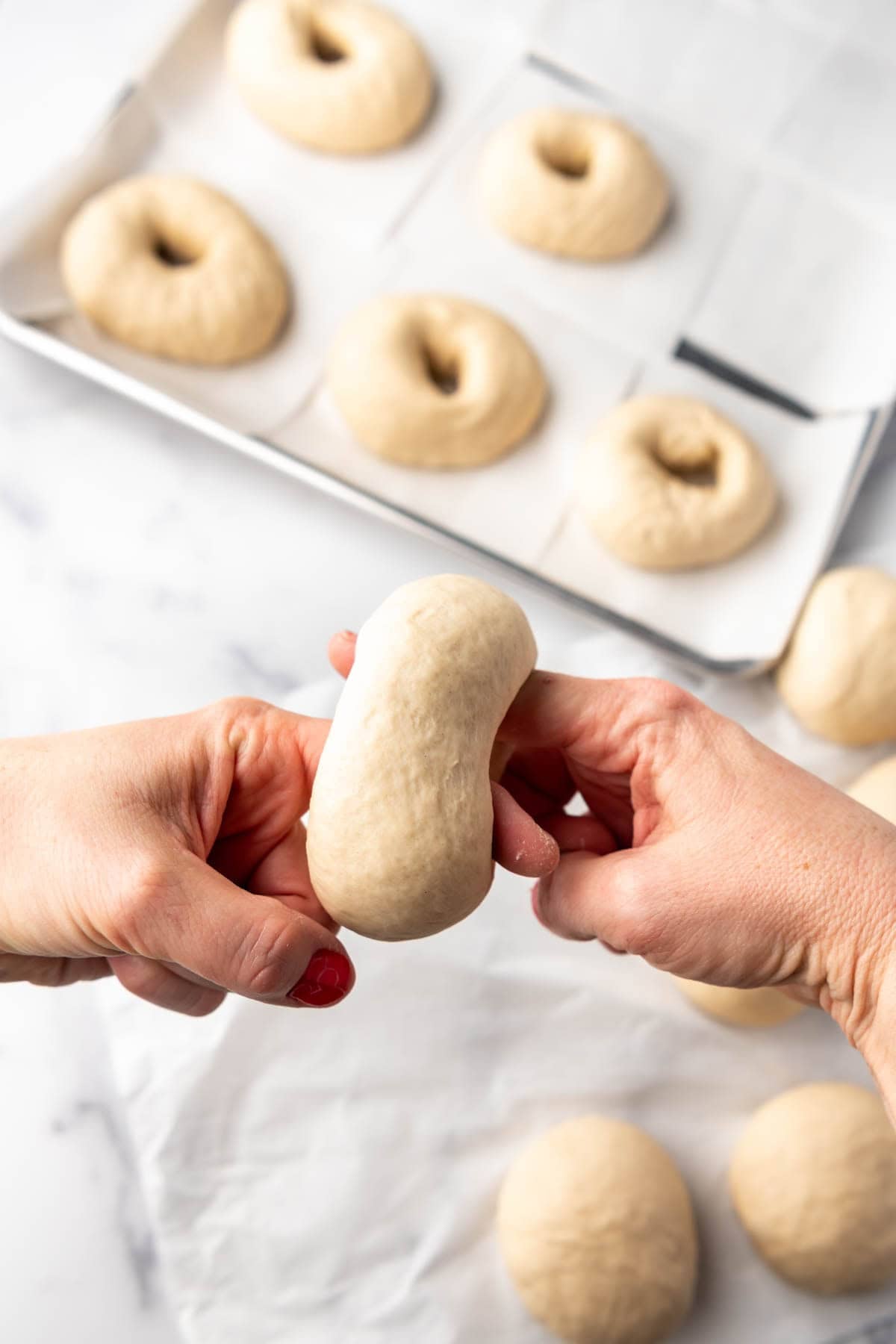
- Shape the bagels (method 2). The second method is to roll the dough into a short rope, then overlap the ends and pinch them firmly together to form a loop. Whichever way you choose, remember that the hole should look a little larger than you want the final bagel to have – it will shrink quite a bit during the boiling and baking.
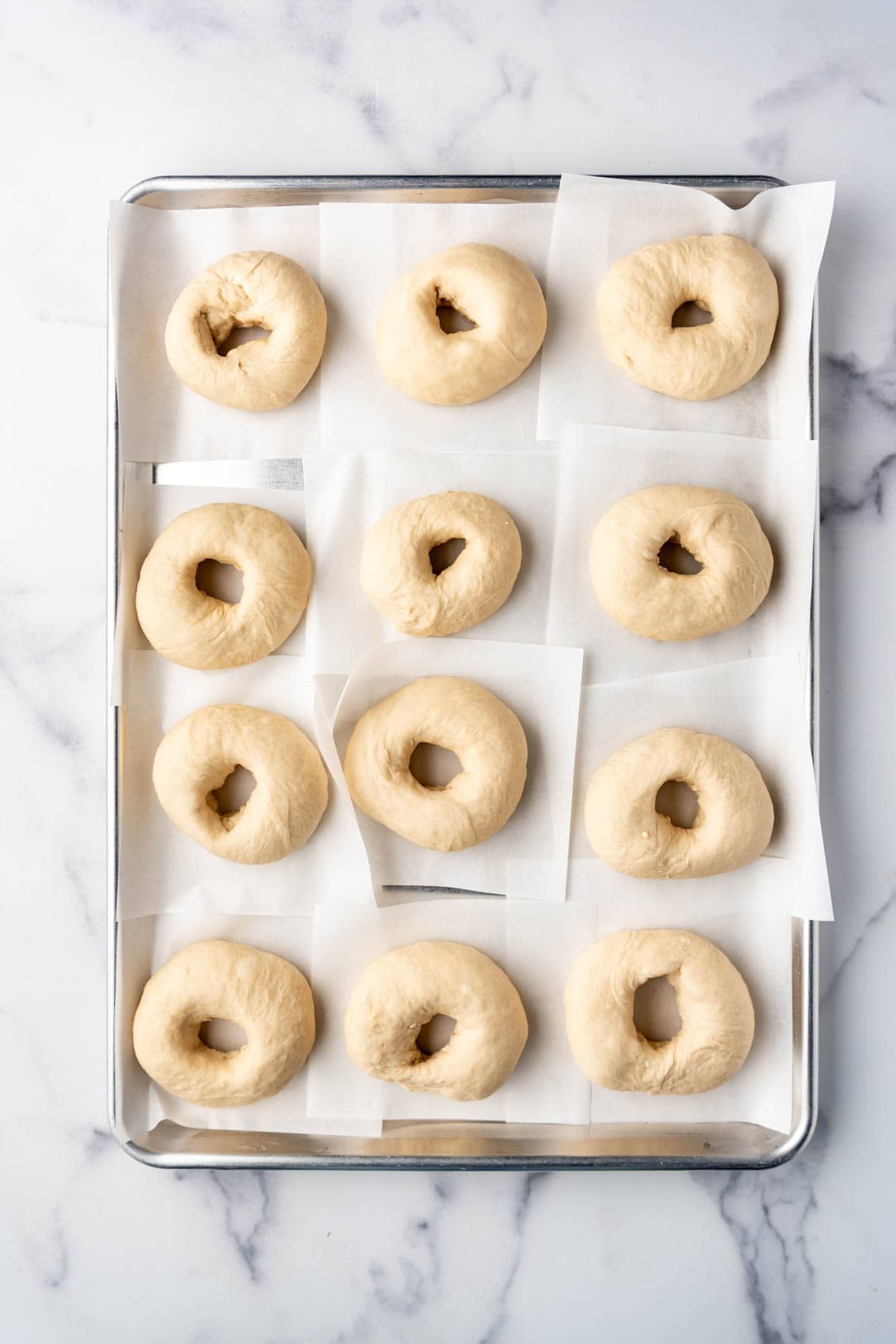
- Final rise. Place onto squares of parchment paper on a baking sheet, cover, and let rise until puffy and jiggly, about 3-4 hours.
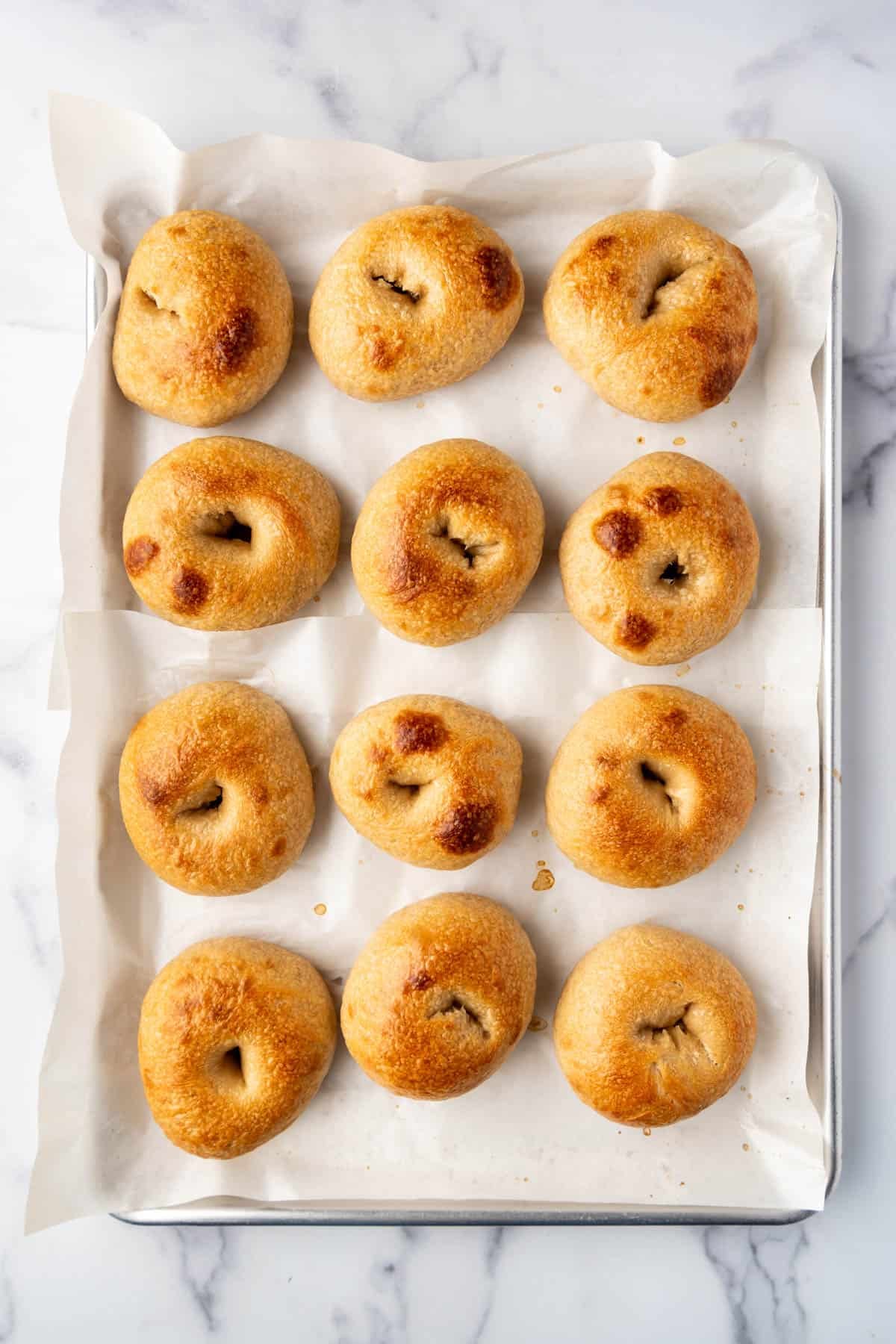
- Boil and bake. Bring a large, wide pot of water to a boil. Add 50 grams of honey. Boil the bagels for 30 to 60 seconds per side, or up to 2 minutes. Transfer to a baking sheet lined with parchment paper and sprinkled with a little cornmeal. Bake at 425°F for 15-18 minutes until golden brown. Let cool for at least 15 minutes before slicing.
Recipe FAQs
I recommend using a fed, active, bubbly starter rather than discard for these homemade sourdough bagels. The active starter provides the strength and leavening power needed for a good rise and that signature tangy flavor. Discard will work in a pinch, but your bagels won’t rise as well and the flavor will be much milder.
This usually happens if the dough didn’t get enough time to ferment or if the gluten wasn’t well developed during kneading. Be sure your starter is lively and active, and don’t try to rush the bulk ferment. Patience really pays off here.
It’s possible if you’re short on time, but I think they taste and texture-wise turn out best when you let them go through the full slow fermentation. I usually mix the dough the night before so they’re ready for brunch the next morning.
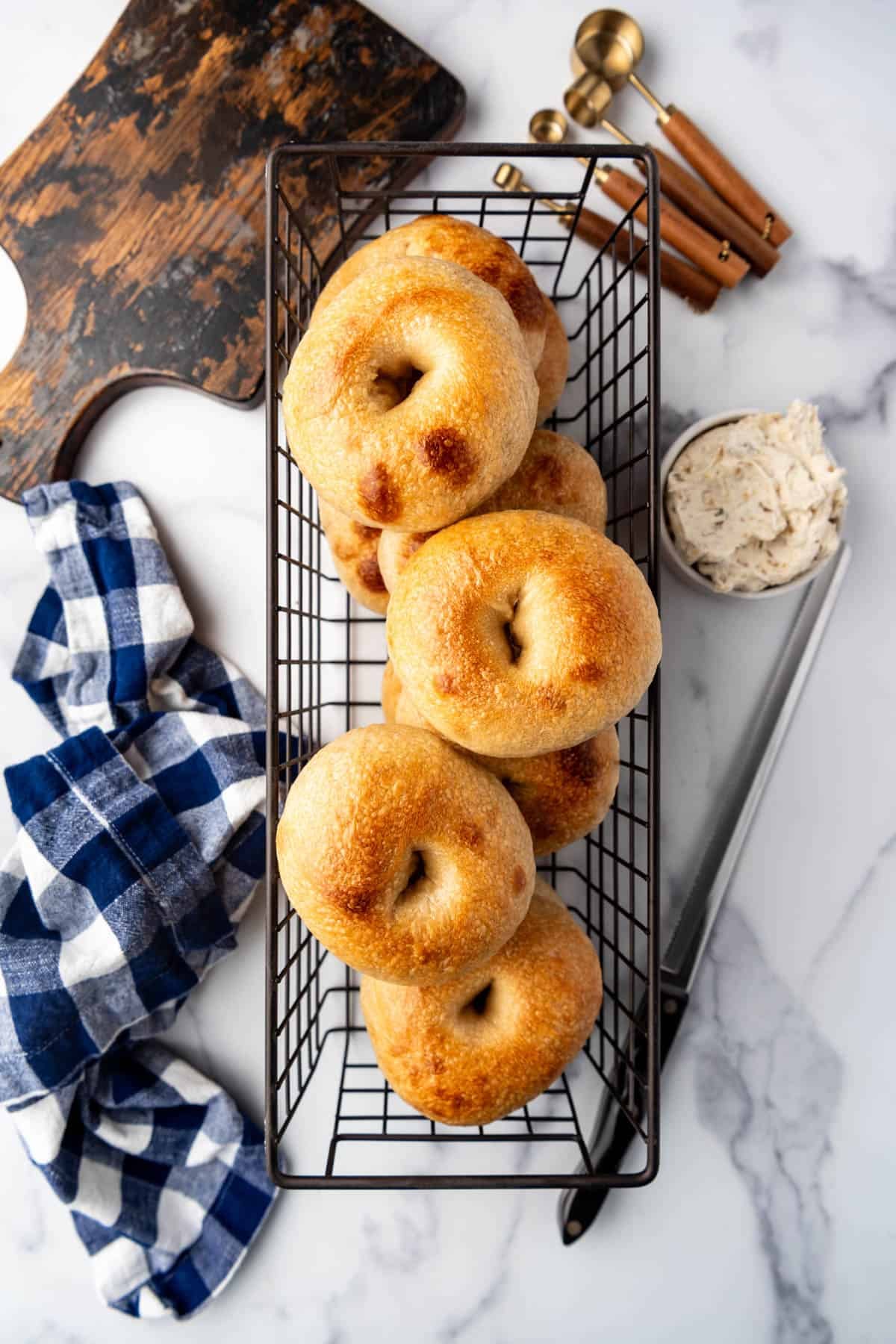
Once completely cool, keep them in an airtight container or bag at room temperature for up to 2 days. For longer storage, slice them and pop them in the freezer.
Absolutely. After shaping, cover the bagels well and refrigerate them overnight for the final rise. In the morning, let them sit out for 30–60 minutes, then boil and bake them fresh.
Tips for Success
- Feed your sourdough starter the night before so it reaches peak activity by the time you mix the dough. This really helps with rise and brings out that classic tangy sourdough flavor we love.
- Weigh your ingredients carefully, especially the flour and water. Even small differences in hydration can affect how your sourdough bagels turn out.
- Don’t rush past the 20-minute rest after you divide the dough. It relaxes the gluten and makes shaping the bagels so much smoother.
- Let the bagels cool on the baking sheet for at least 15 to 20 minutes before you slice them. This helps them finish setting up so the inside stays nice and soft with that perfect chew.
- Boil the bagels just a few at a time so they have room to move around freely in the honey water bath. This gives them an even cook and a beautiful crust.
The Boiling Step
The quick boil in honey-sweetened water is one of the most important steps for getting that classic bagel texture and shiny crust. If it’s your first time making bagels, it might be a surprise to learn that you actually boil the dough before baking – but trust me, this step is what gives bagels their signature chewy interior and prevents them from turning into regular bread rolls.
Boiling sets the outside of the bagel dough so it doesn’t puff up too much in the oven and creates that perfect chew we all love. Here’s some tips to get this bit just right:
- A 30 to 60-second boil per side (or up to 2 minutes if you like them extra chewy) is usually perfect.
- Adding the honey to the water helps with browning and adds just a hint of sweetness to the crust.
- Don’t overcrowd the pot – boiling just 2 or 3 bagels at a time gives them space to move and cook evenly.
Substitutions and Variations
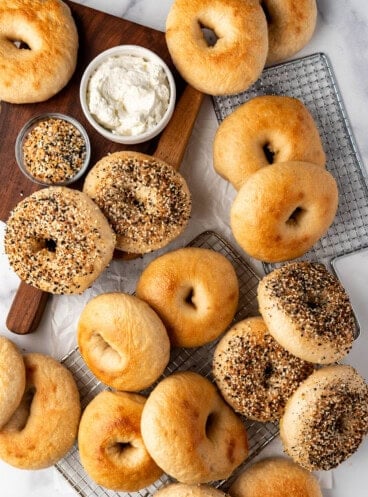
- Sprinkle everything bagel seasoning generously over the bagels right after they come out of the boiling water for that classic seeded look and extra flavor.
- Swap the honey in the boiling water for barley malt syrup if you want a more traditional New York-style bagel taste.
- These also make great mini bagels. Simply divide the dough into 24 smaller pieces instead of 12. Keep the boiling time the same, but reduce the baking time to about 12-15 minutes.
- For a savory twist, add 1-2 teaspoons of garlic powder or onion powder to the dough when mixing.
More Brunch Breads You’ll Love
- Homemade Cinnamon Rolls
- Cranberry Orange Bread
- Quick and Easy Almond Croissants
- Homemade English Muffins
- Overnight Sourdough Waffles
Sourdough Bagels
Ingredients
- 332 grams active starter
- 464 grams water (just under 2 cups)
- 1,112 grams bread flour (9 ¼ cups)
- 110 grams brown sugar
- 22 grams salt

Instructions
- Mix the active starter with the water. Add flour, brown sugar, and salt. Mix again until a shaggy dough forms.332 grams active starter, 464 grams water, 1,112 grams bread flour, 110 grams brown sugar, 22 grams salt
- Knead for about 5 minutes until smooth and elastic. Let rest for 1 hour, then knead again and shape it into a tight ball.
- Cover and let bulk ferment (6-12 hours at room temperature or overnight if your house is on the cool side). The dough should double in size.
- Divide the dough into 12 pieces (about 170 grams each) and shape into tight balls. Cover and let rest for 20 minutes.
- Poke a hole in the center of each ball and stretch into bagel shapes. Place onto squares of parchment paper on a baking sheet, then cover and let rise until puffy and jiggly, about 3-4 hours.
- Bring a large, wide pot of water to a boil. Add 50 grams of honey. Boil for 30 to 60 seconds (or even up to 2 minutes) per side, then transfer to a baking sheet lined with parchment paper and sprinkled with a little cornmeal.
- Bake at 425°F (218°C) for 15–18 minutes until golden brown. Let cool for at least 15 minutes before slicing.
Notes
- Feed your sourdough starter the night before so it’s bubbly and active for the best rise and tangy flavor.
- Weigh your ingredients for accuracy. Sourdough bagels are sensitive to hydration changes.
- Don’t skip the 20-minute rest after dividing the dough; it makes shaping much easier.
- Boil only 2-3 bagels at a time so they have room to move in the honey water bath.
- Let the baked bagels cool for at least 15–20 minutes before slicing so they set properly.
Storage & Make Ahead
- Store: Cool completely, then keep in an airtight bag at room temperature for up to 2 days.
- Freeze: Slice the cooled bagels and freeze in a zip-top bag for up to 3 months. Toast straight from frozen.
- Make Ahead: After shaping, cover the bagels and refrigerate overnight for the final rise. Bring to room temperature for 30–60 minutes, then boil and bake fresh in the morning.