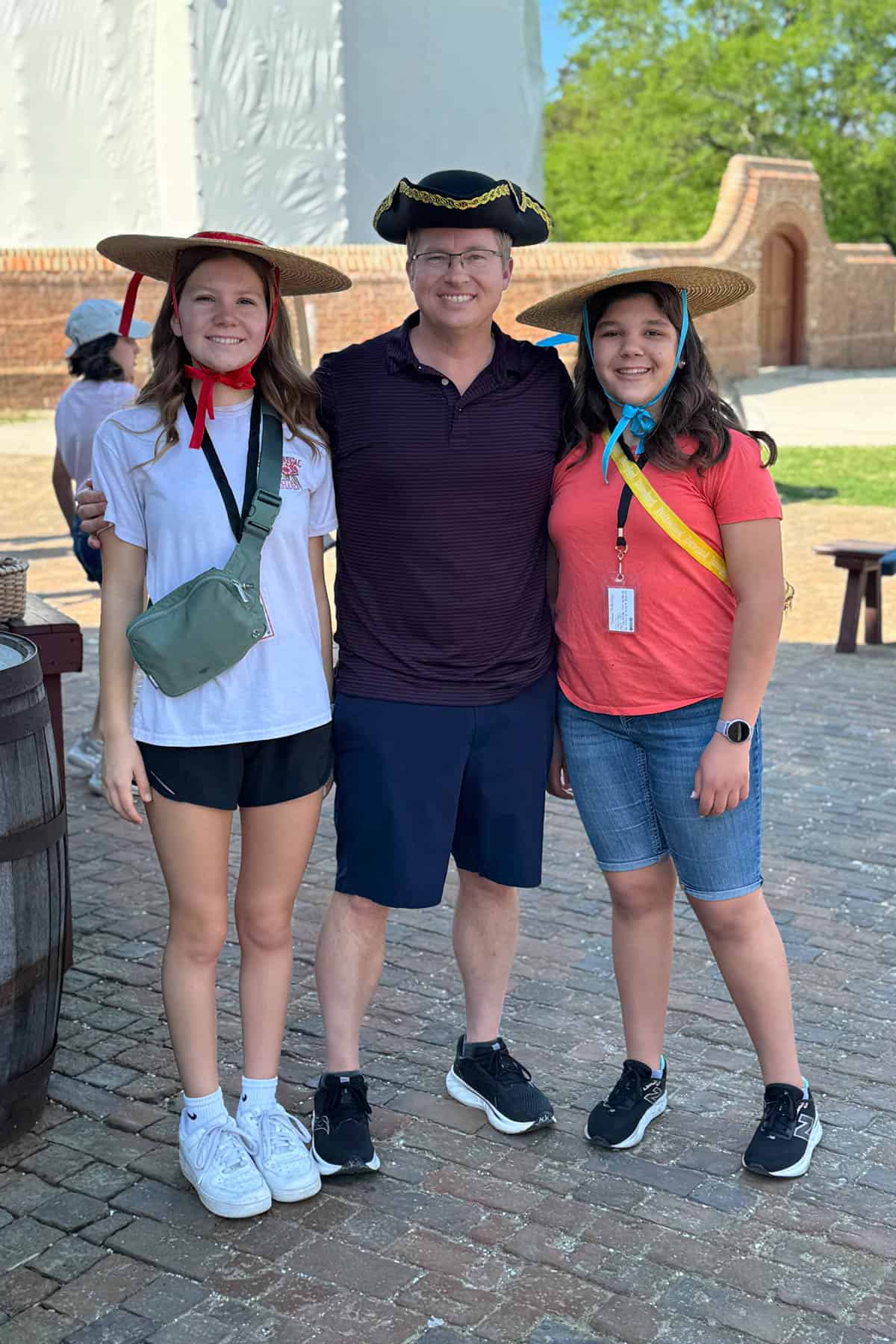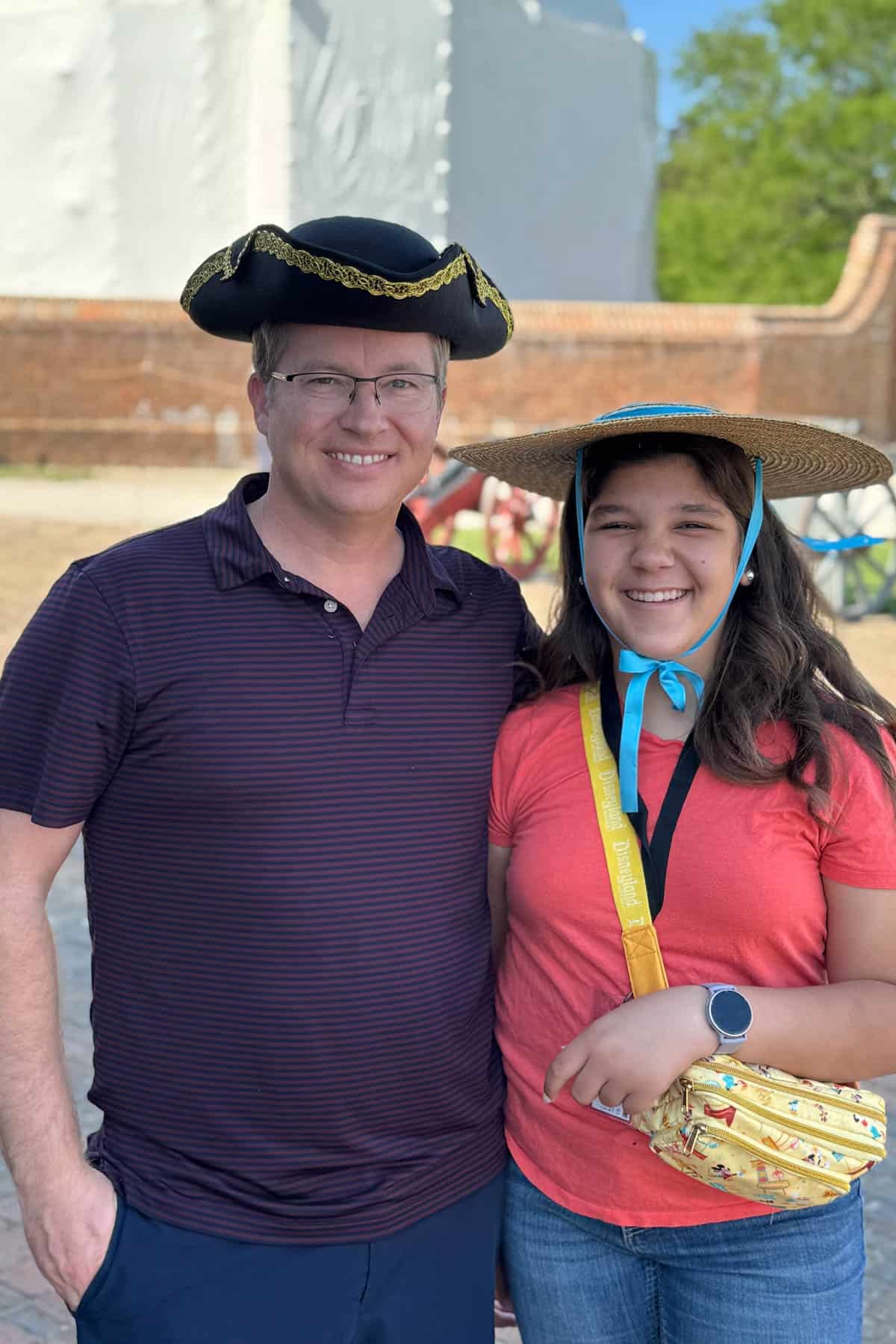
If you want a trip that feels like stepping directly into the 18th century, Colonial Williamsburg delivers. It’s not just a museum or a collection of historic buildings — it’s a fully immersive, living town where costumed interpreters live out daily life, tradespeople practice historic crafts, and you can wander the streets and feel like you’ve slipped back in time.
We spent one full day here and could easily have filled two or even three. There is so much to see, and many of the special experiences only happen on certain days of the week, so every day offers something a little different.
Getting There: Fly Into Richmond
If you’re traveling from out of state, the easiest way to get to Williamsburg is to fly into Richmond International Airport, then rent a car and drive the 50–60 minutes southeast to Williamsburg. The route is easy and straightforward, with mostly highway driving.
Williamsburg is an ideal starting point if you’re planning to continue north toward Washington, D.C. and Philadelphia. If your trip is in the Spring, I recommend starting here and working your way north because the blossoms and warmer temps starter earlier farther south.
Best Time of Year to Visit
Colonial Williamsburg is open year round, but weather really matters here, because much of the experience is outdoors. But there is never a bad time to visit!
Summer & Winter
Virginia can be hot and humid in the summer, and midday can be especially draining. Plan for early mornings with midday breaks or pool time, followed by evening activities. There is special programming around the 4th of July like public readings of the Declaration of Independence and fireworks over the Governor’s Mansion.
Winter can be cold, but not too extreme. You will experience fewer crowds, but Colonial Williamsburg also offers special holiday events and decorations that can make this season surprisingly magical.
Spring & Fall
If you want the most comfortable temperatures and lots of color, spring with its blossoms or fall with the changing colors are less exhausting and more enjoyable overall compared to the extremes of summer or winter.
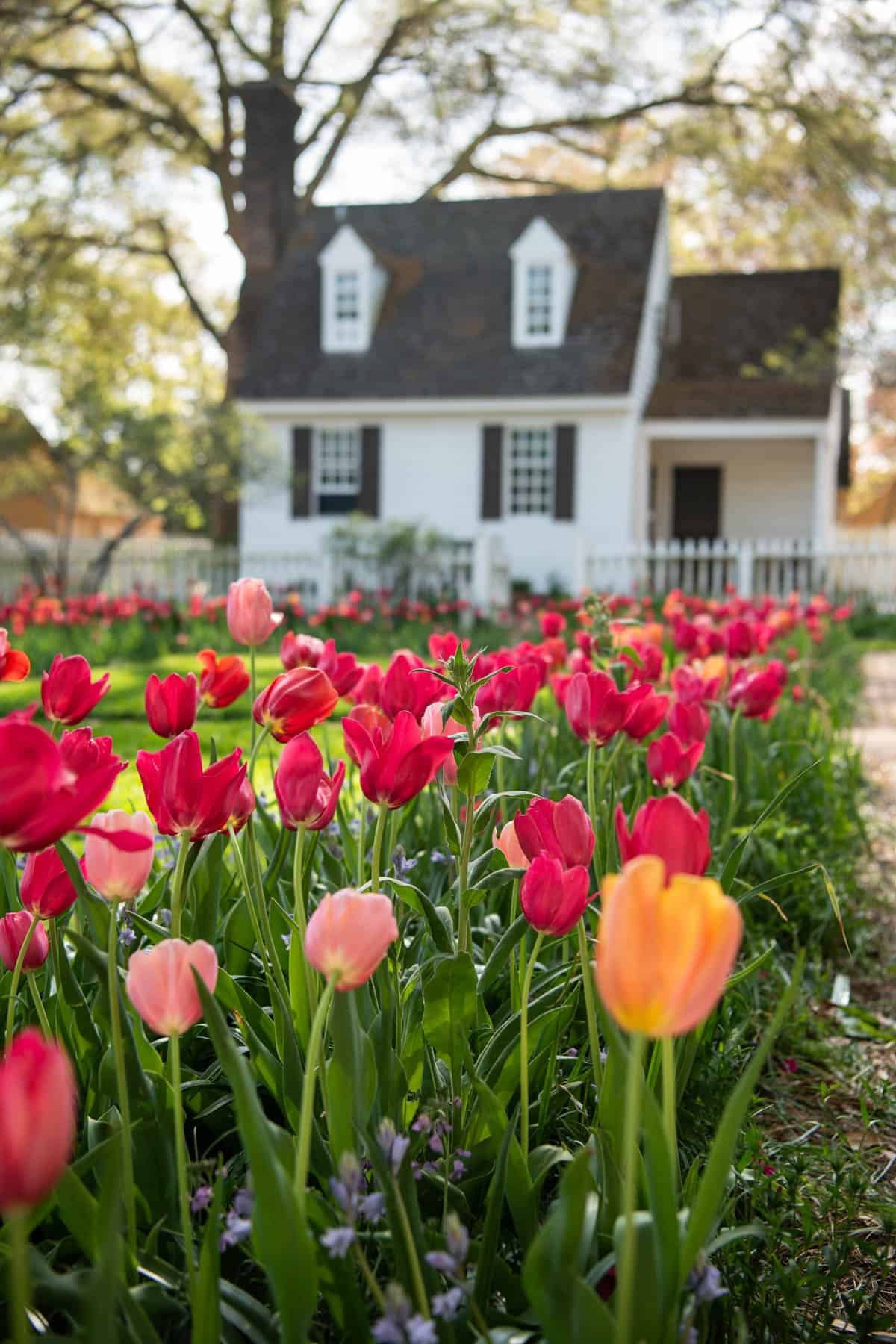
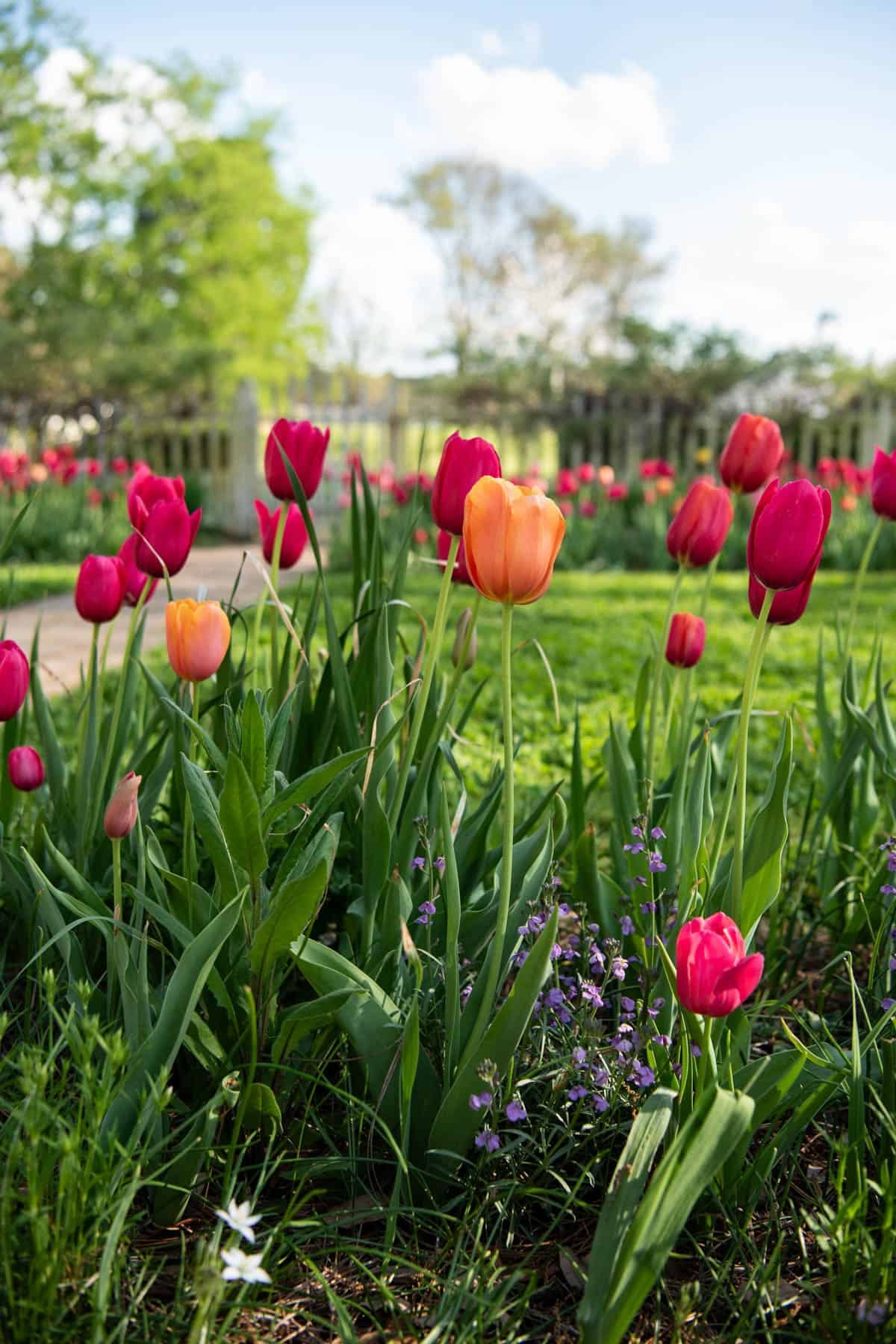
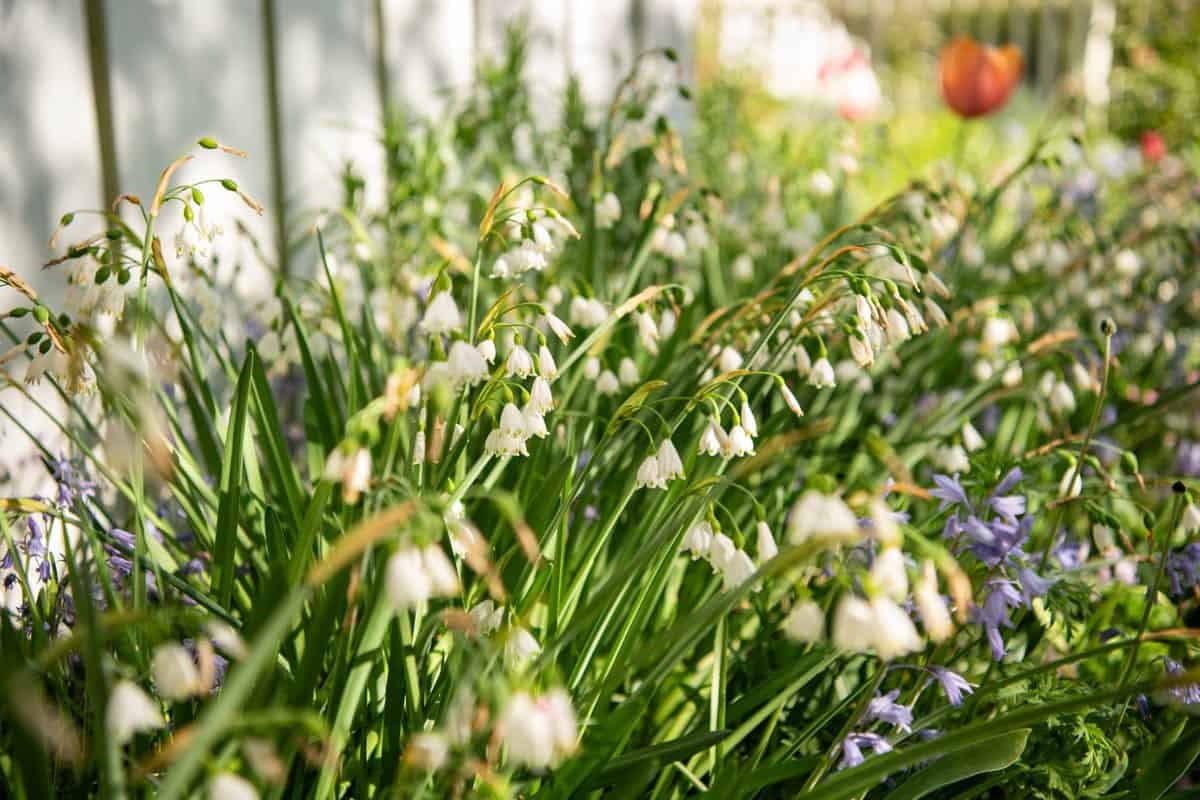
The weather in April-May and September-November is generally good for walking this historic area and enjoying the outdoor programs. We had fantastic weather in early April for our Spring Break trip and got to see all of the tulips in full bloom.
What to Do in Colonial Williamsburg
From watching historic tradesmen and women at work, exploring original buildings, listening to live music, and more, there is something for everyone here, including evening programs, which run well into the night.
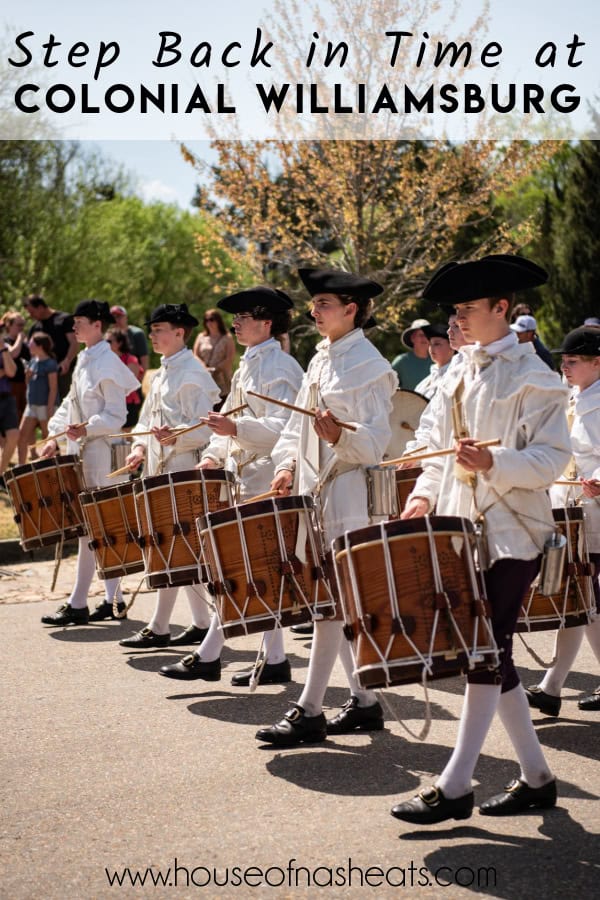
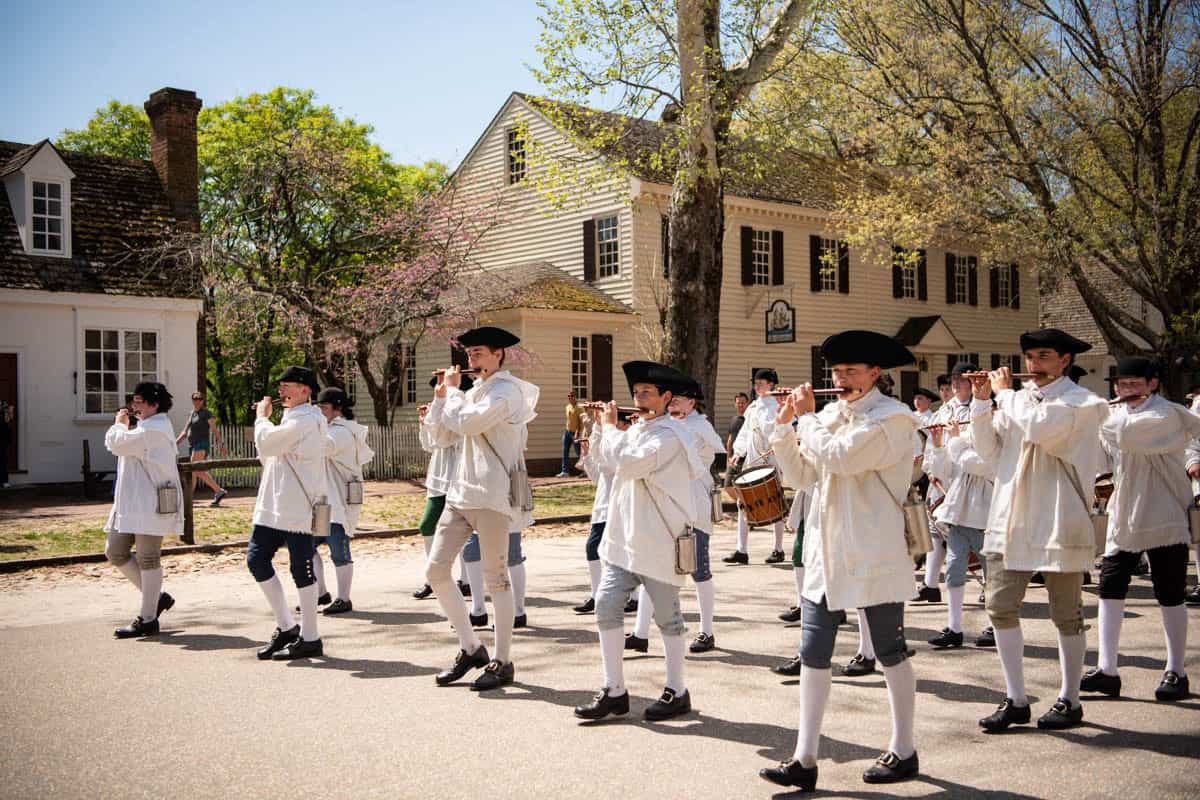
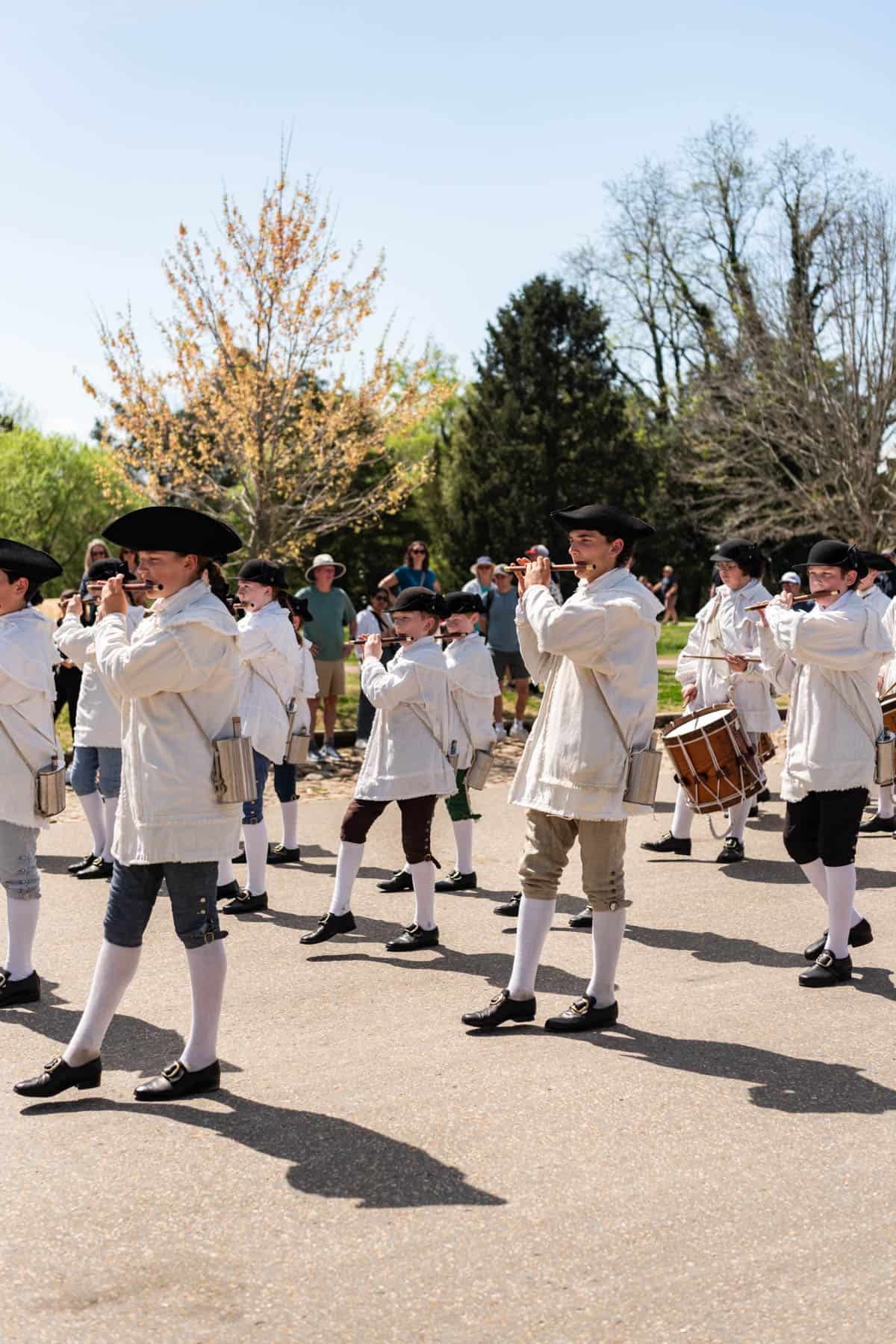
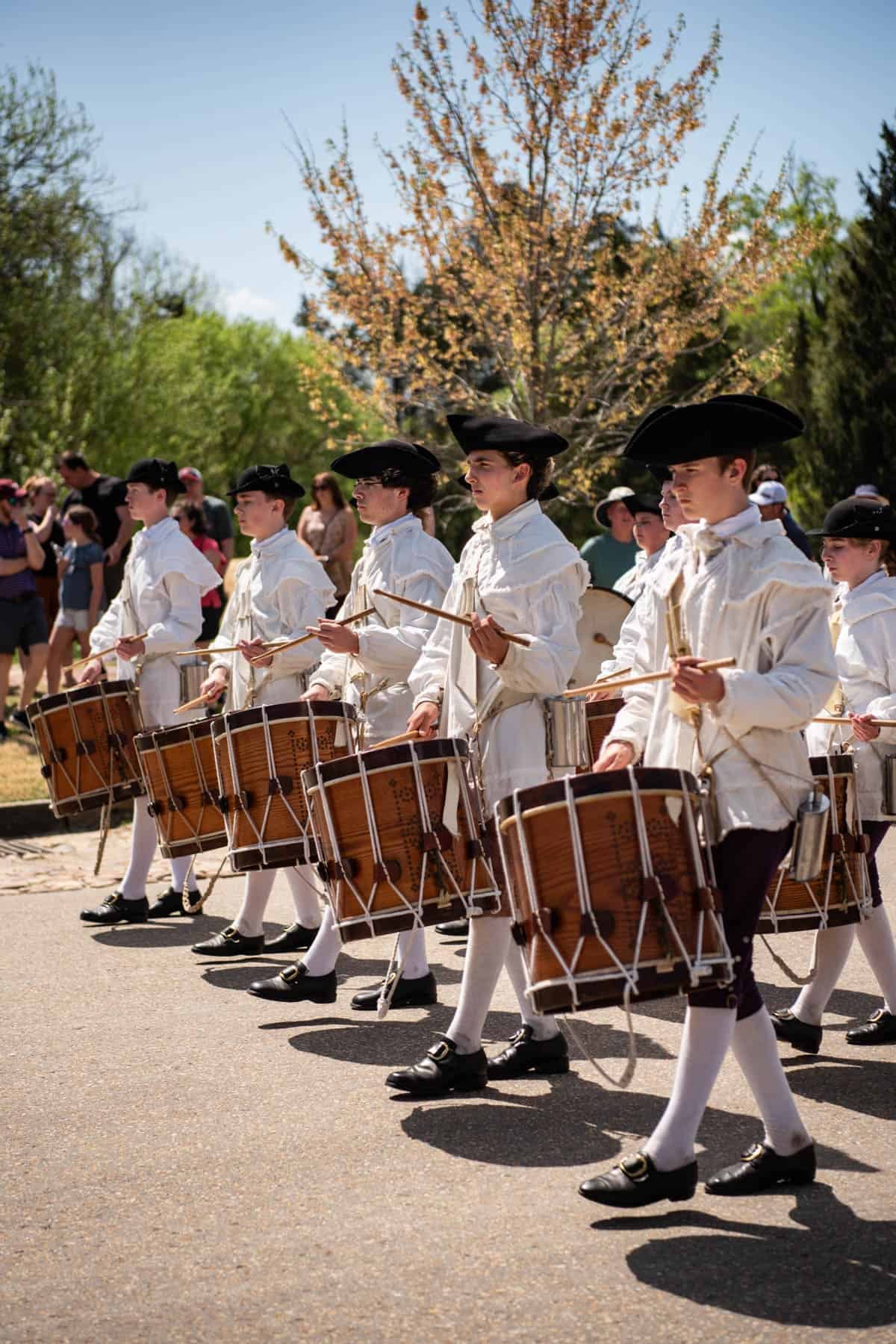
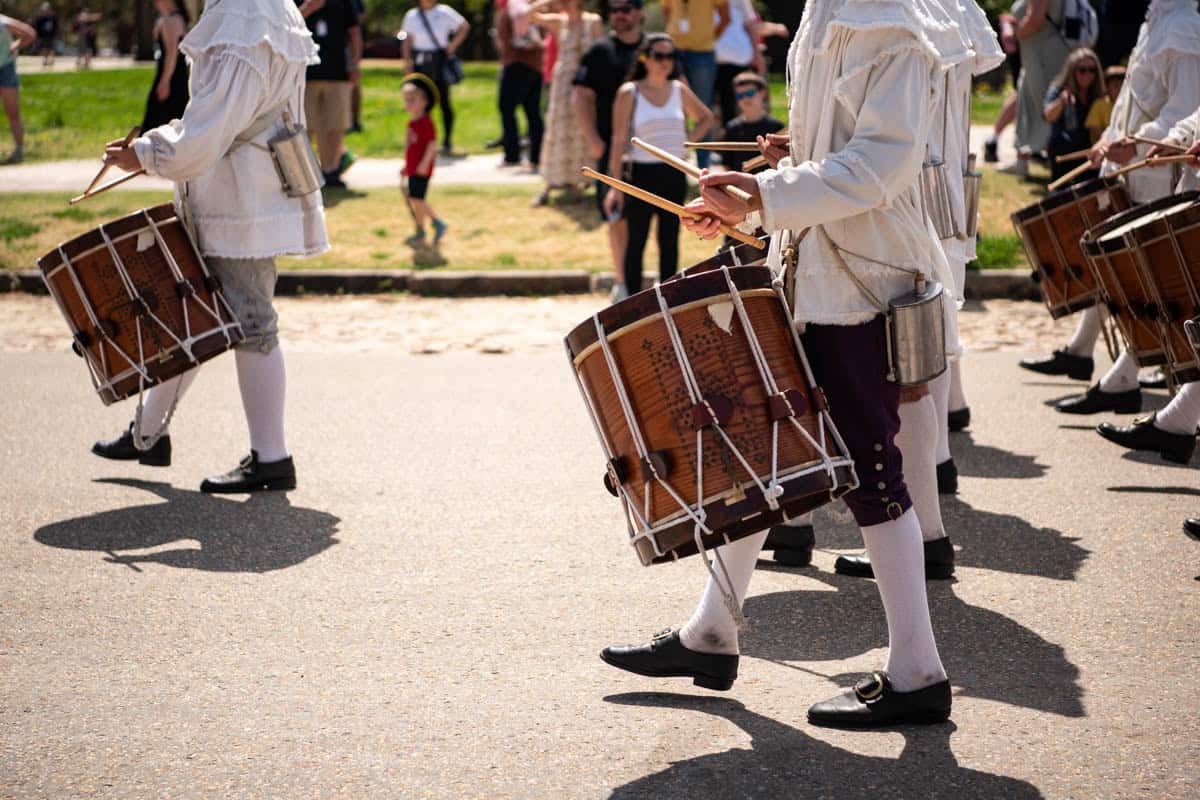
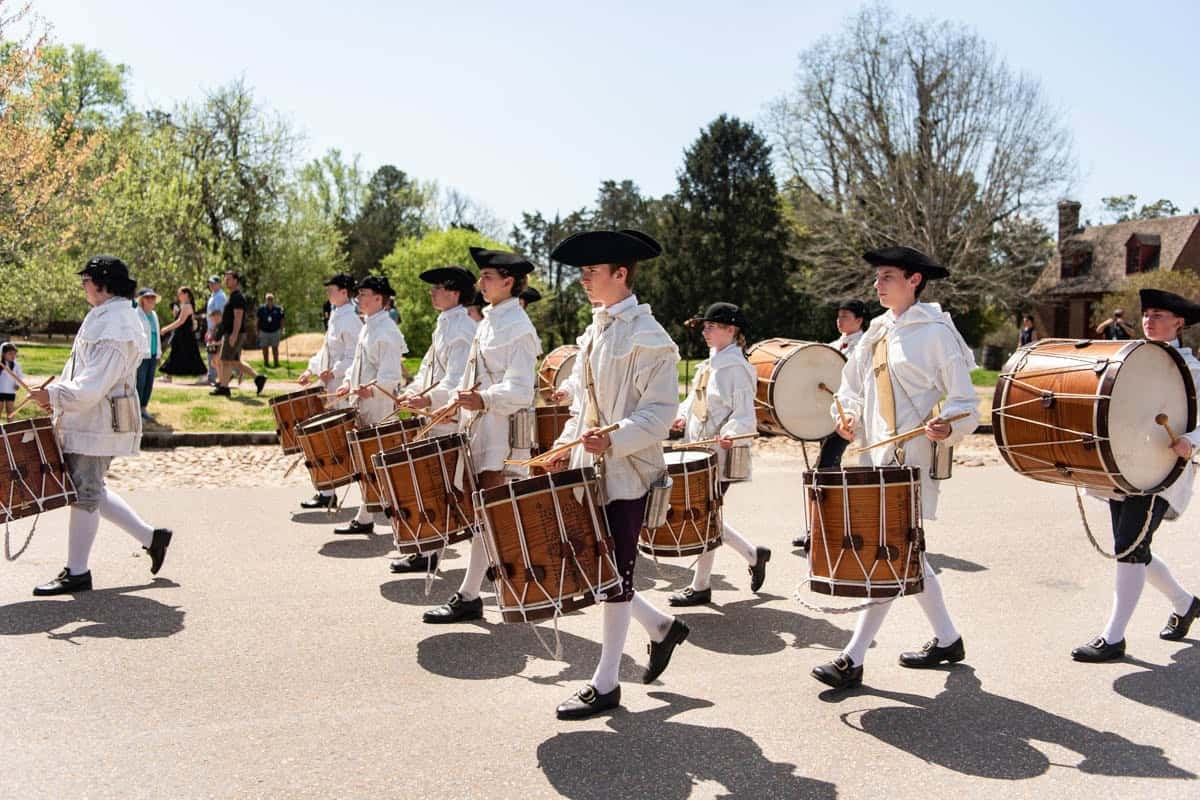
Fife & Drum Corps
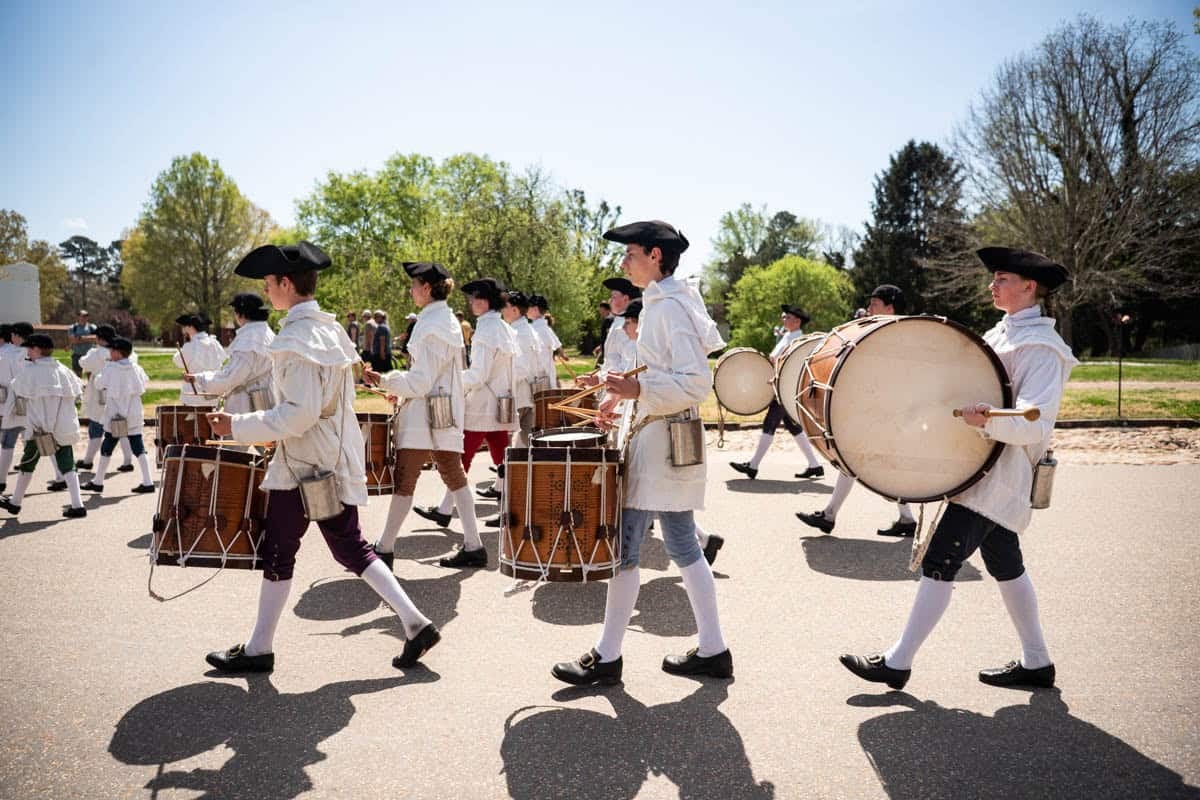
This was one of our absolute favorite experiences. The music is loud, powerful, and moving as thehe Colonial Williamsburg Fifes & Drums march through the streets. Check the schedule for the days you are visiting, because this is a can’t miss activity for us.
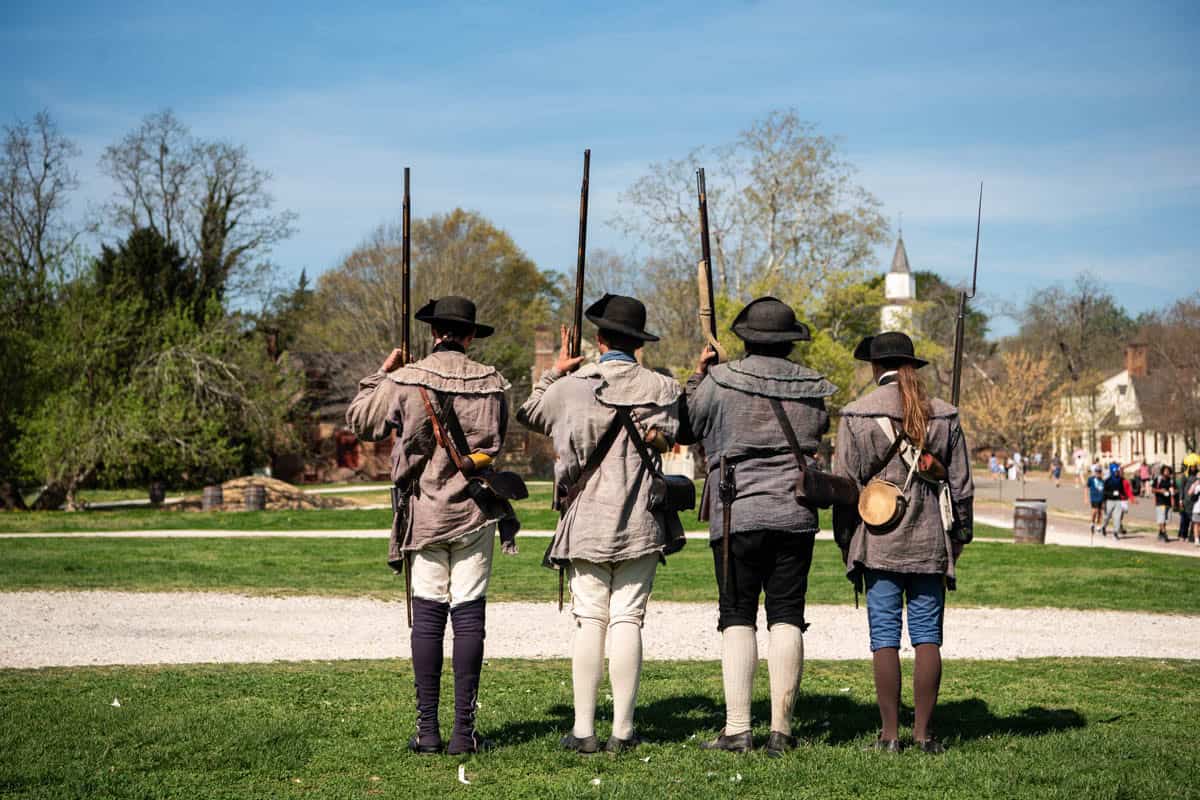
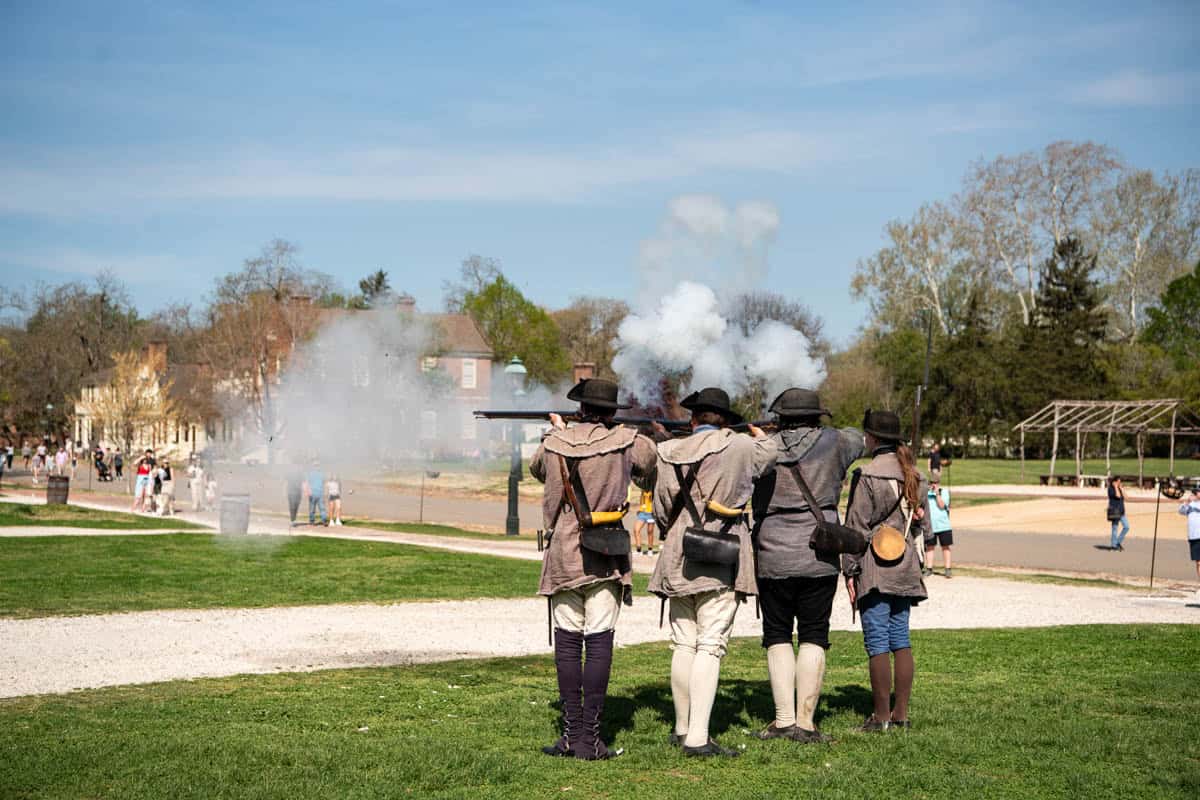
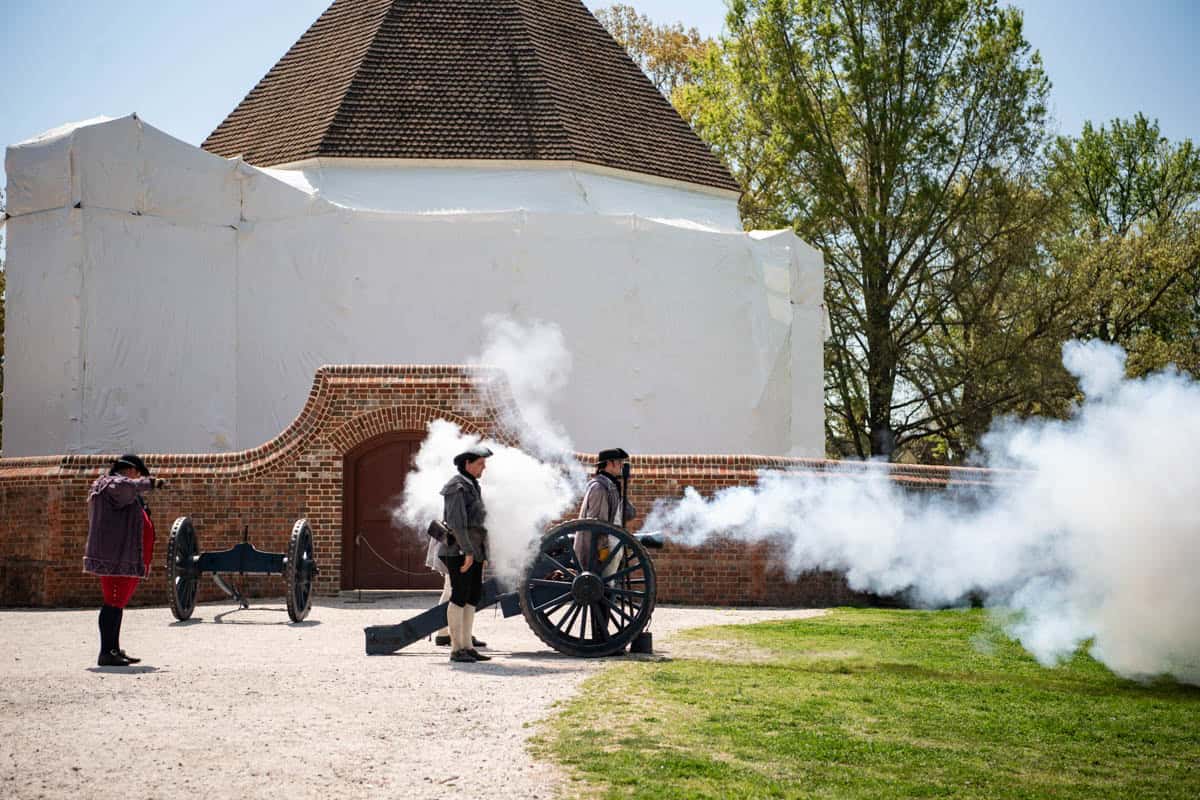
Military Demonstrations
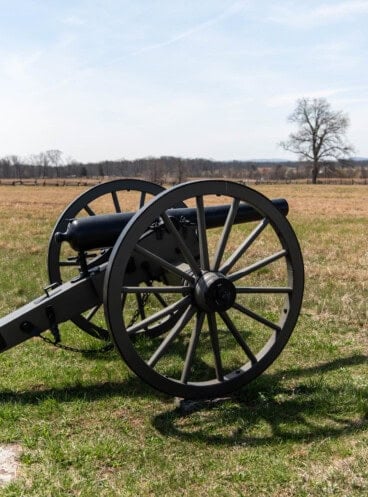
These happen on the lawn and they are loud, exciting, and extremely popular. At different times of the day, you can expect to see musket firing demonstrations, cannon demonstrations, and military drills.
Games & Everyday Life
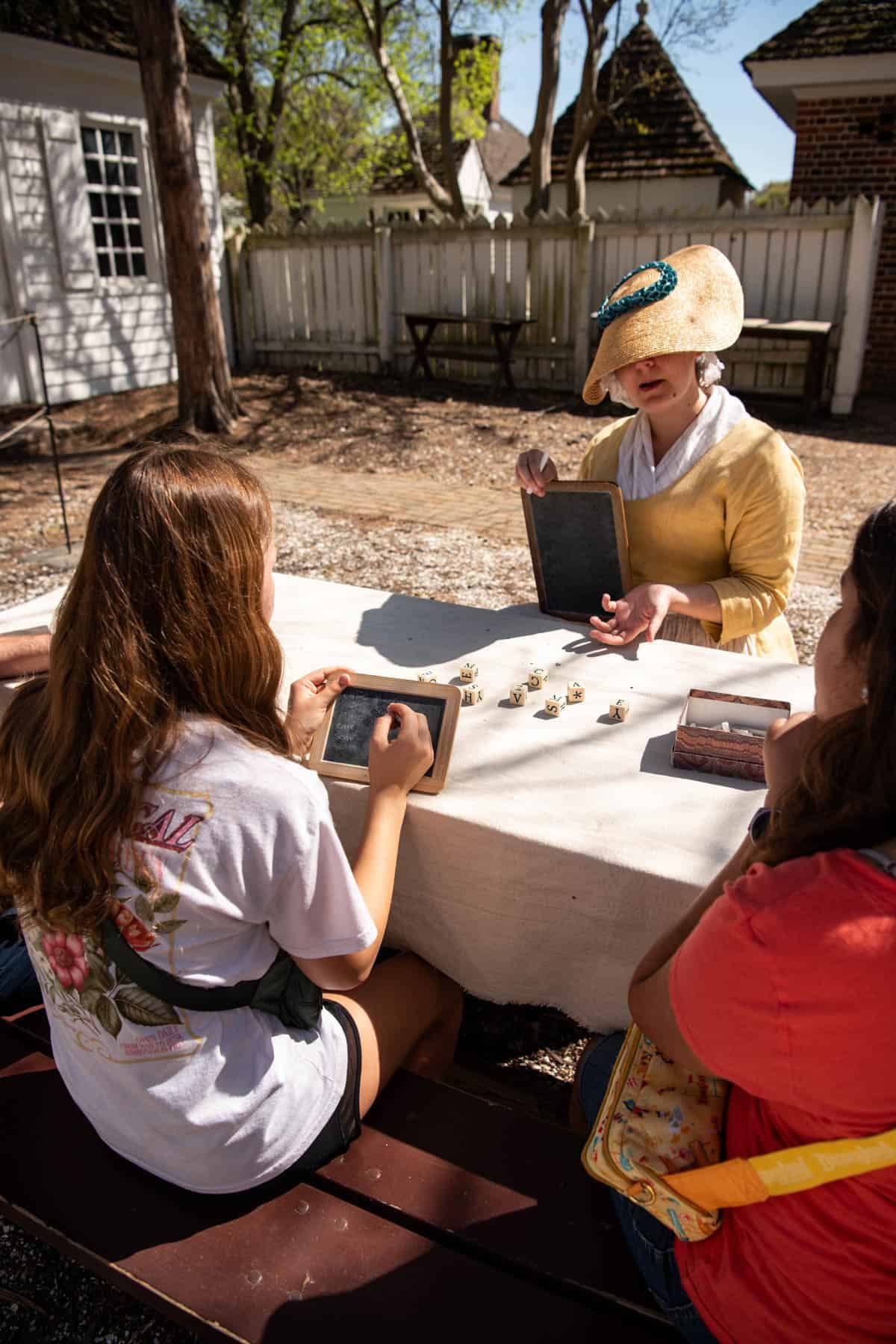
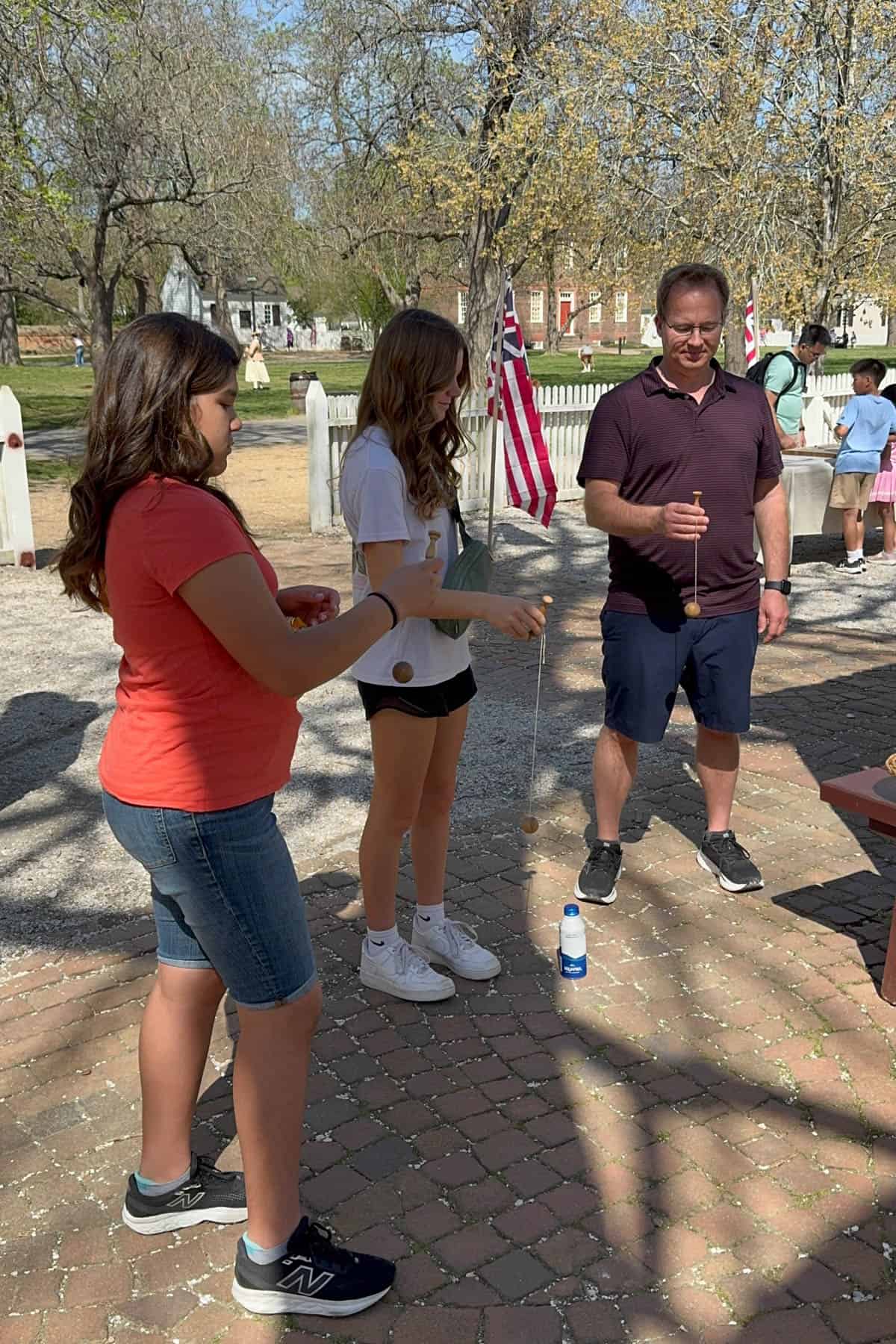
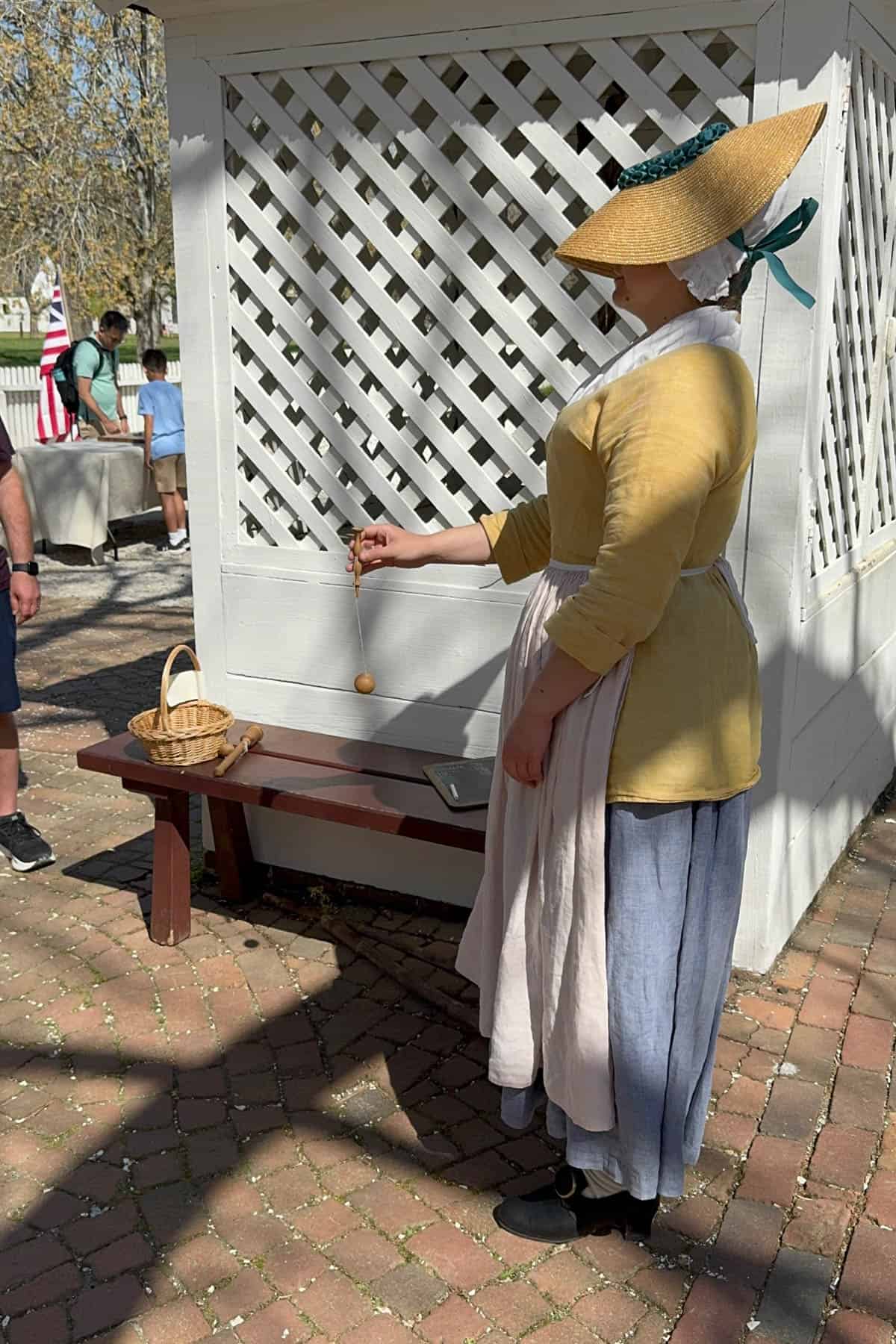
Don’t overlook the small moments! Take the time to play colonial card and dice games with a living history interpreter who will walk you through the rules and even play with you. Watch tradespeople at work and ask questions! The interpreters at Colonial Williamsburg are incredible storytellers.
Meet the Makers
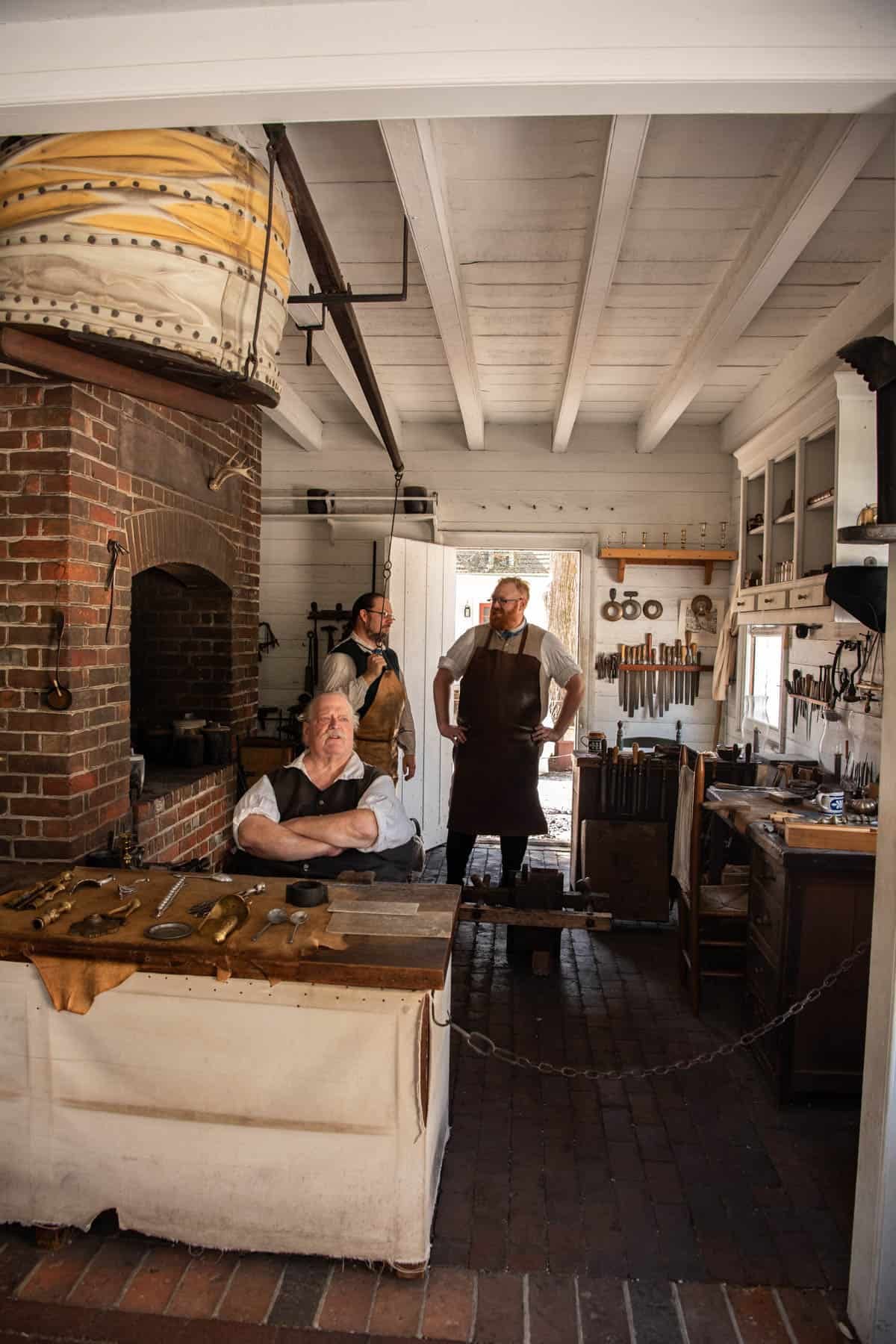
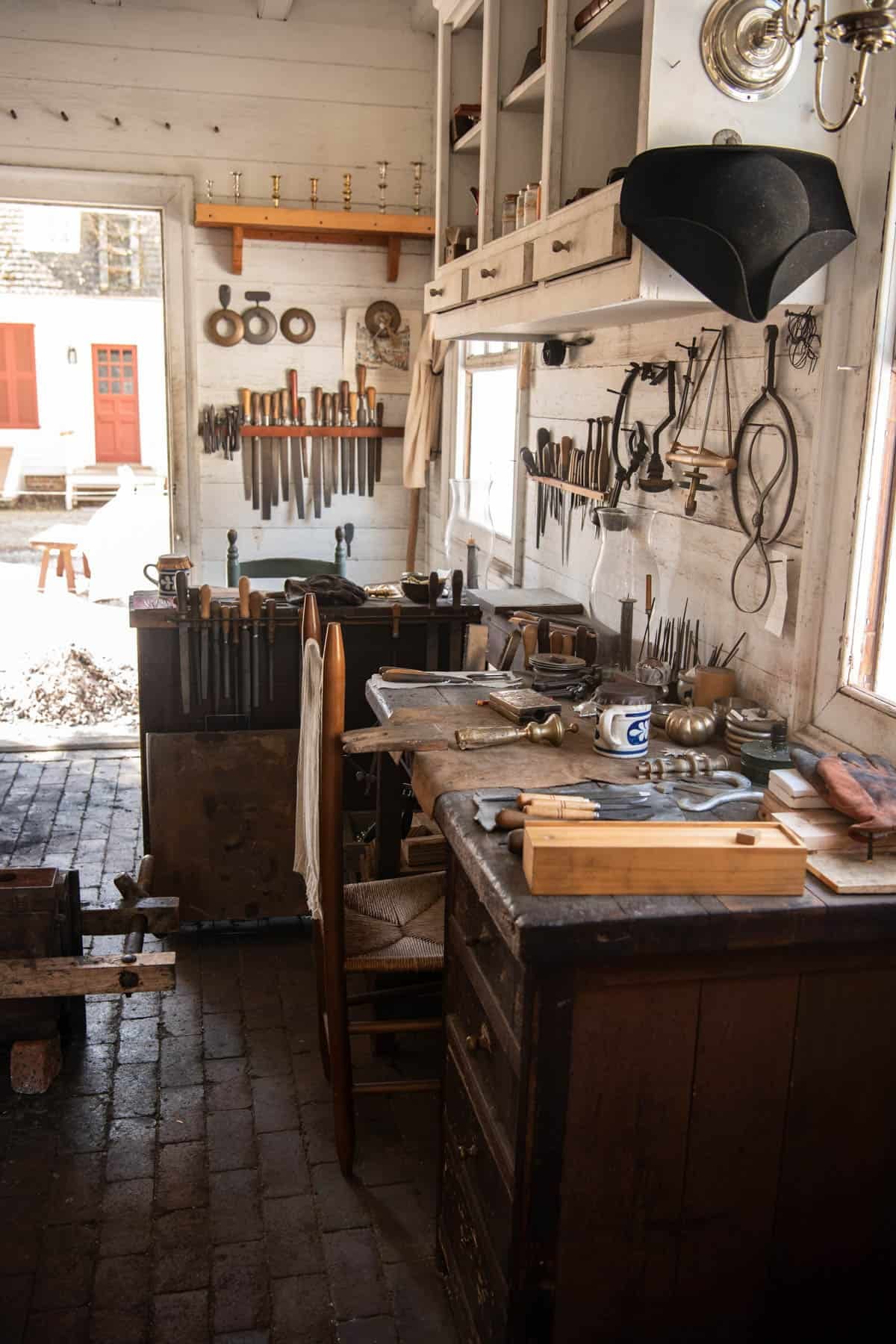
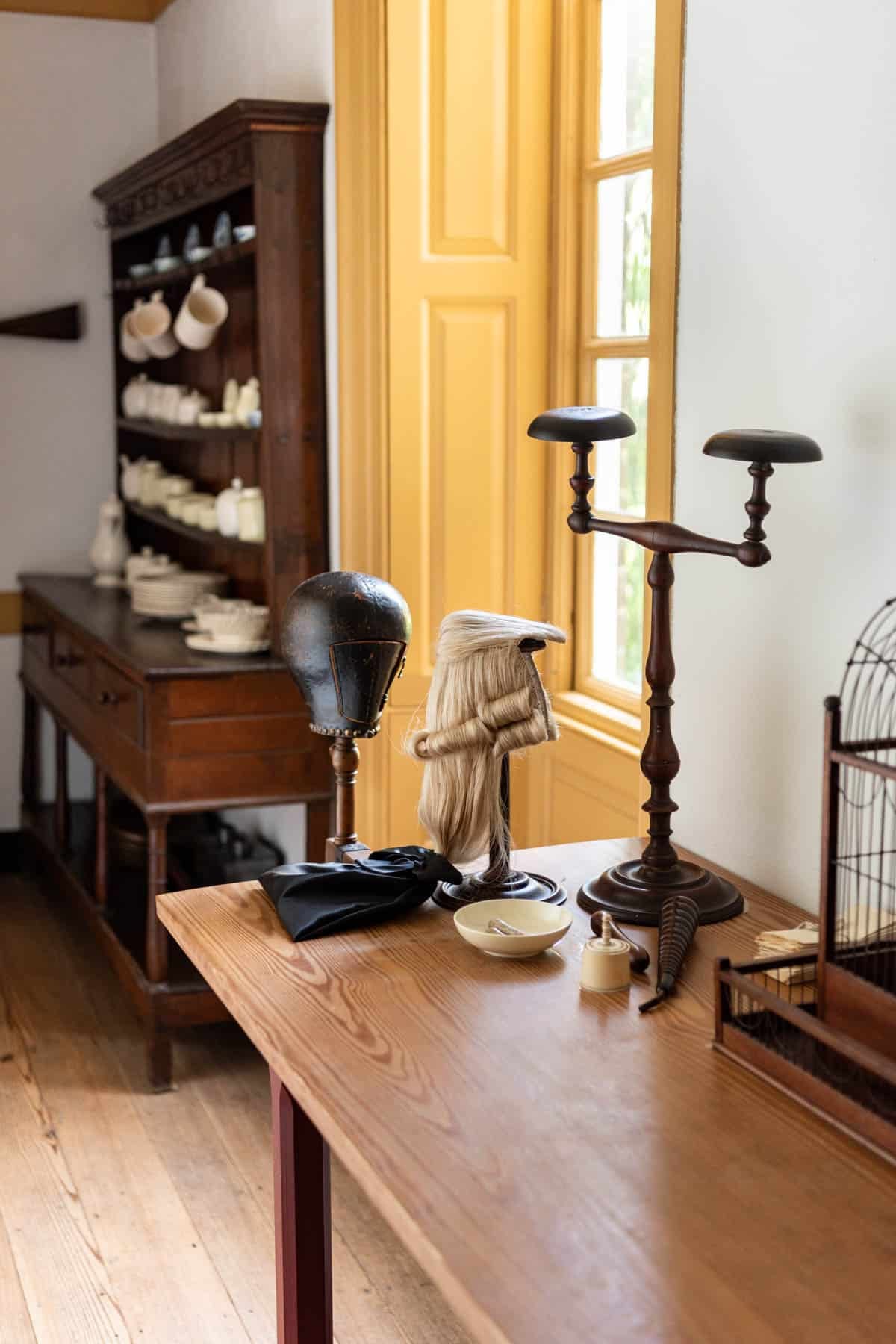
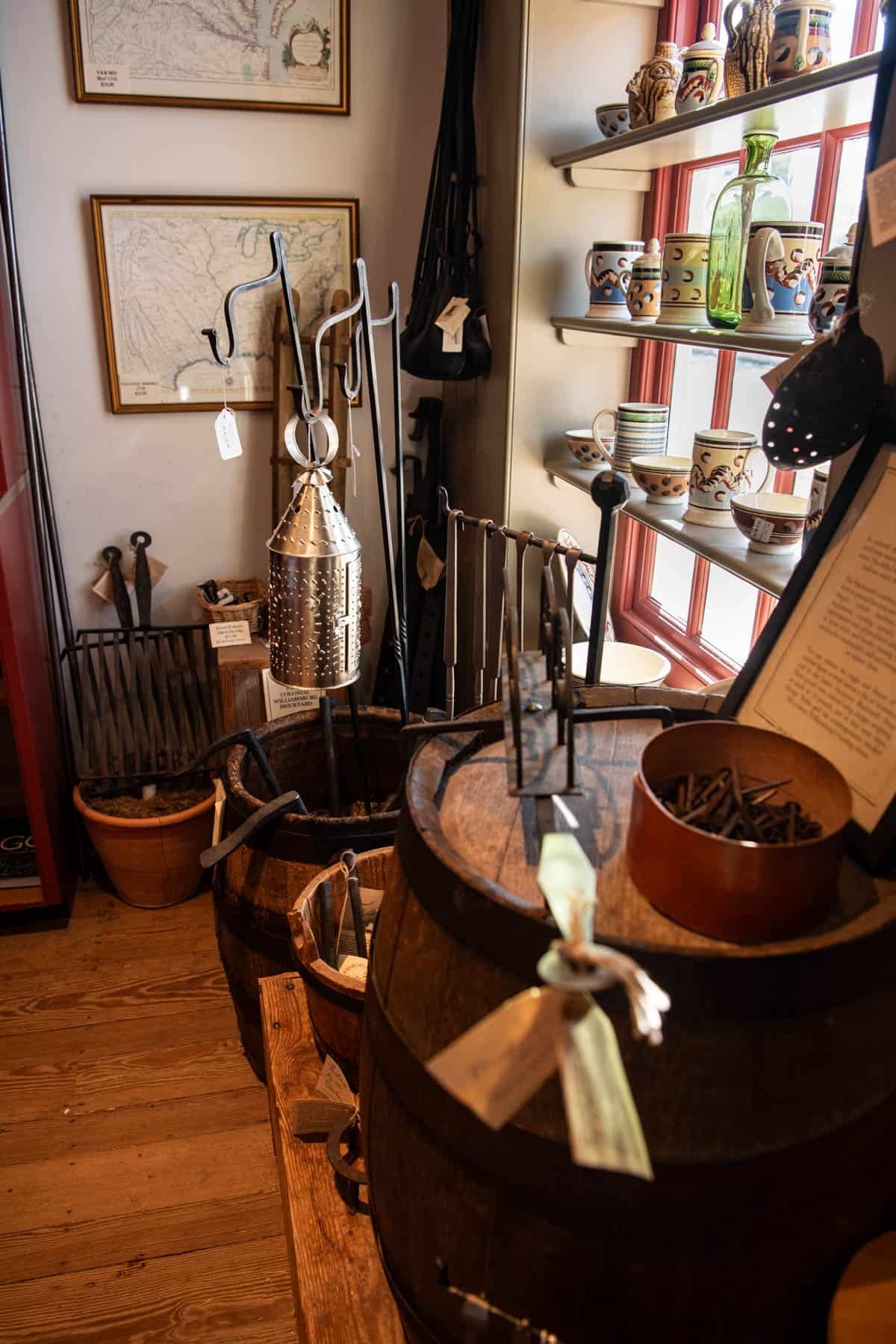
Throughout the historic area, you can interact with more than 20 kinds of craftspeople practicing historic trades and skills. It isn’t just pretend, in fact many of the tradespeople are world-renowned experts in their fields of blacksmithing, woodworking, millinery, dressmaking, and more.
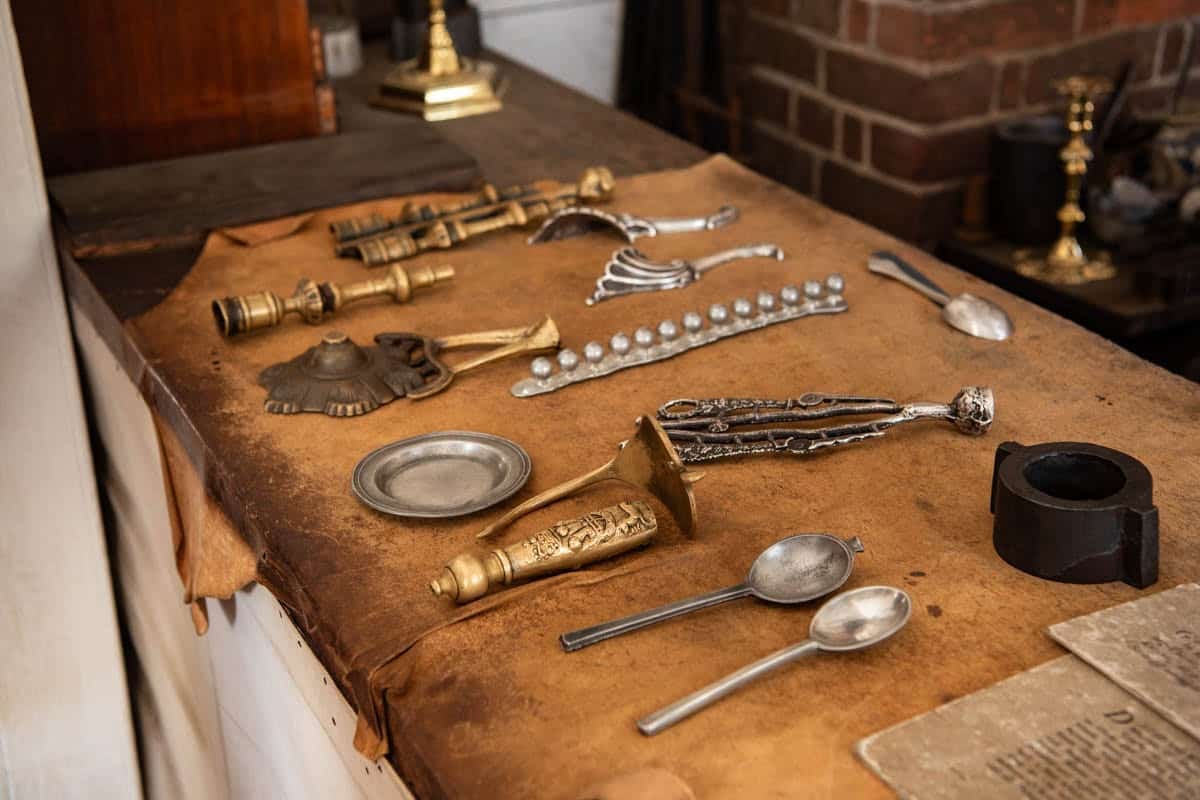
The blacksmiths forge replica door handles, hinges, candlesticks, spoons, wall sconces, horseshoes, and much, much more that is used in the historic buildings.
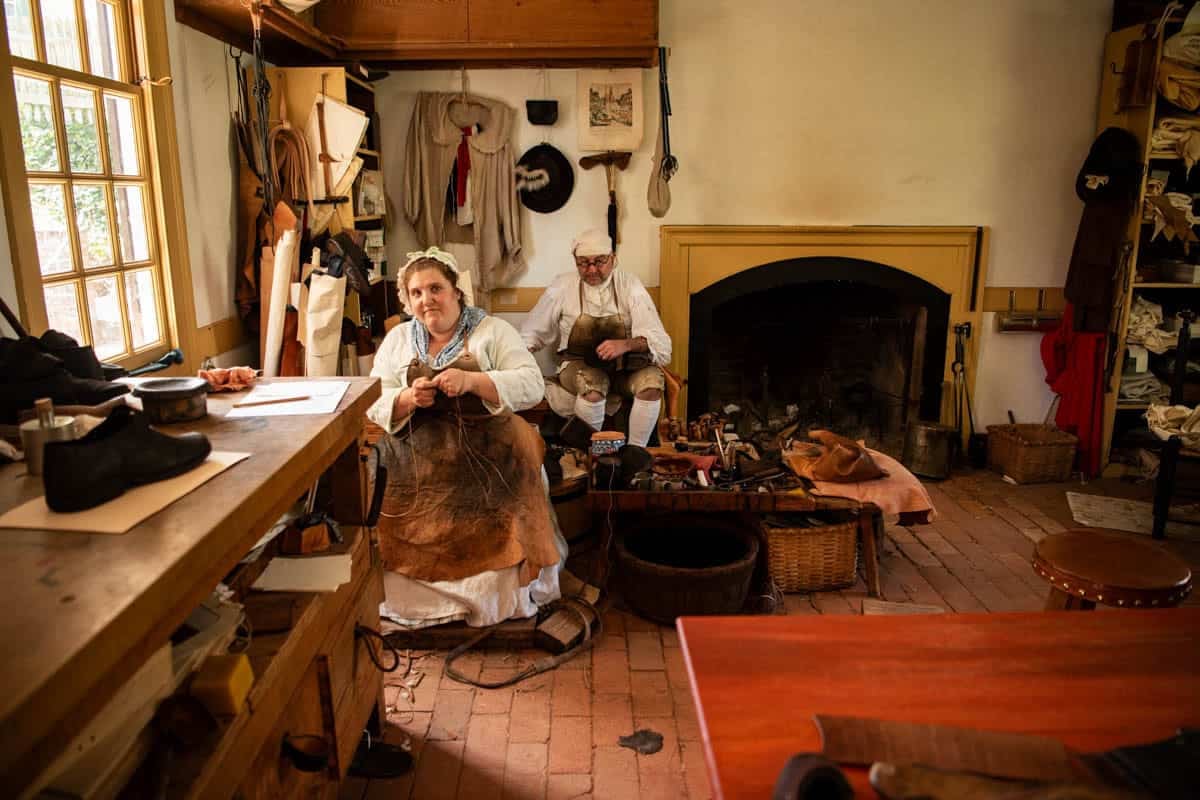
Leather workers, cobblers, and tailors make shoes and breeches that would have been worn in the time of the Revolution and have a wealth of knowledge. This couple was so friendly and talked to us for a good 10 minutes about their craft even though we were the only ones there.
Meet the Animals
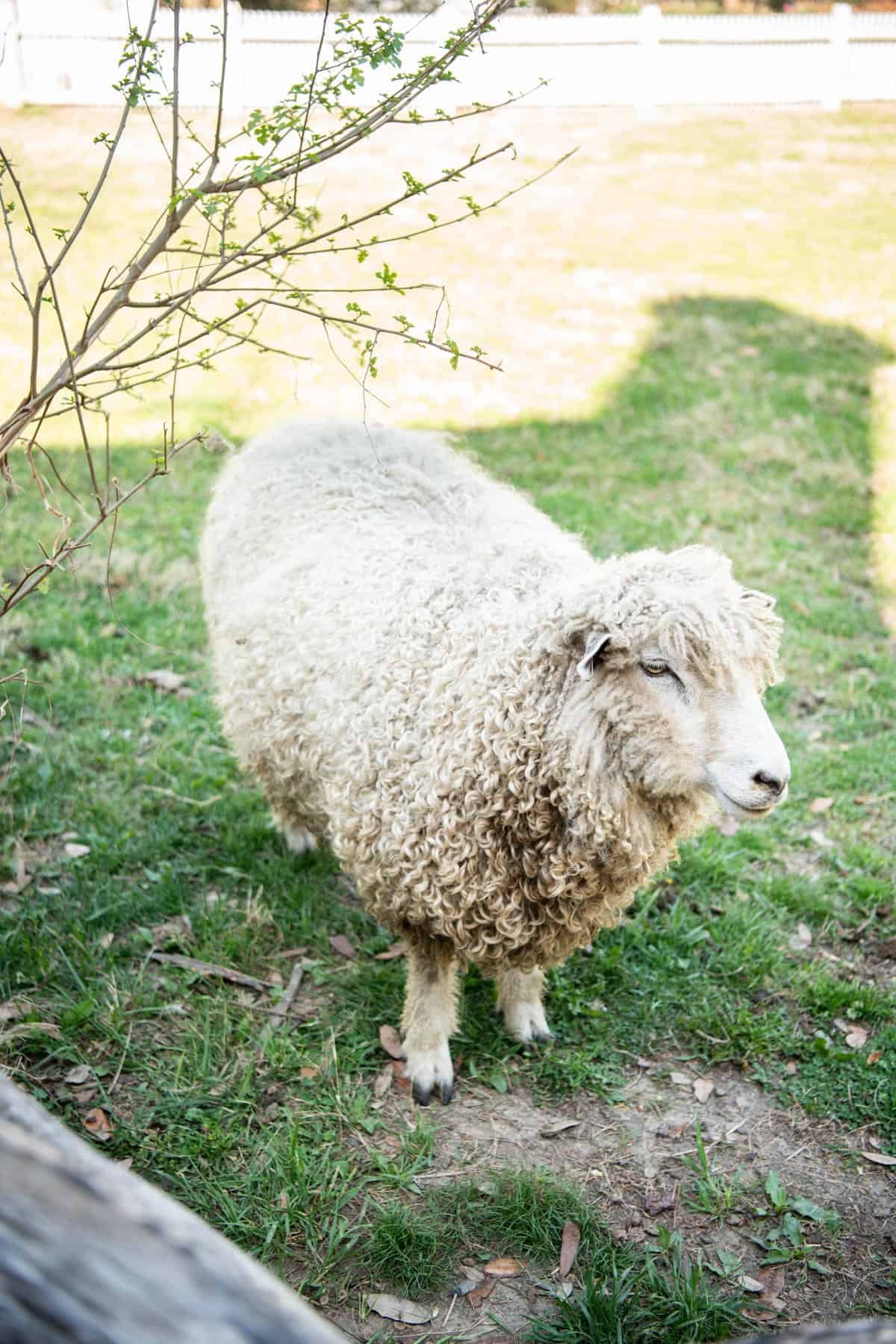
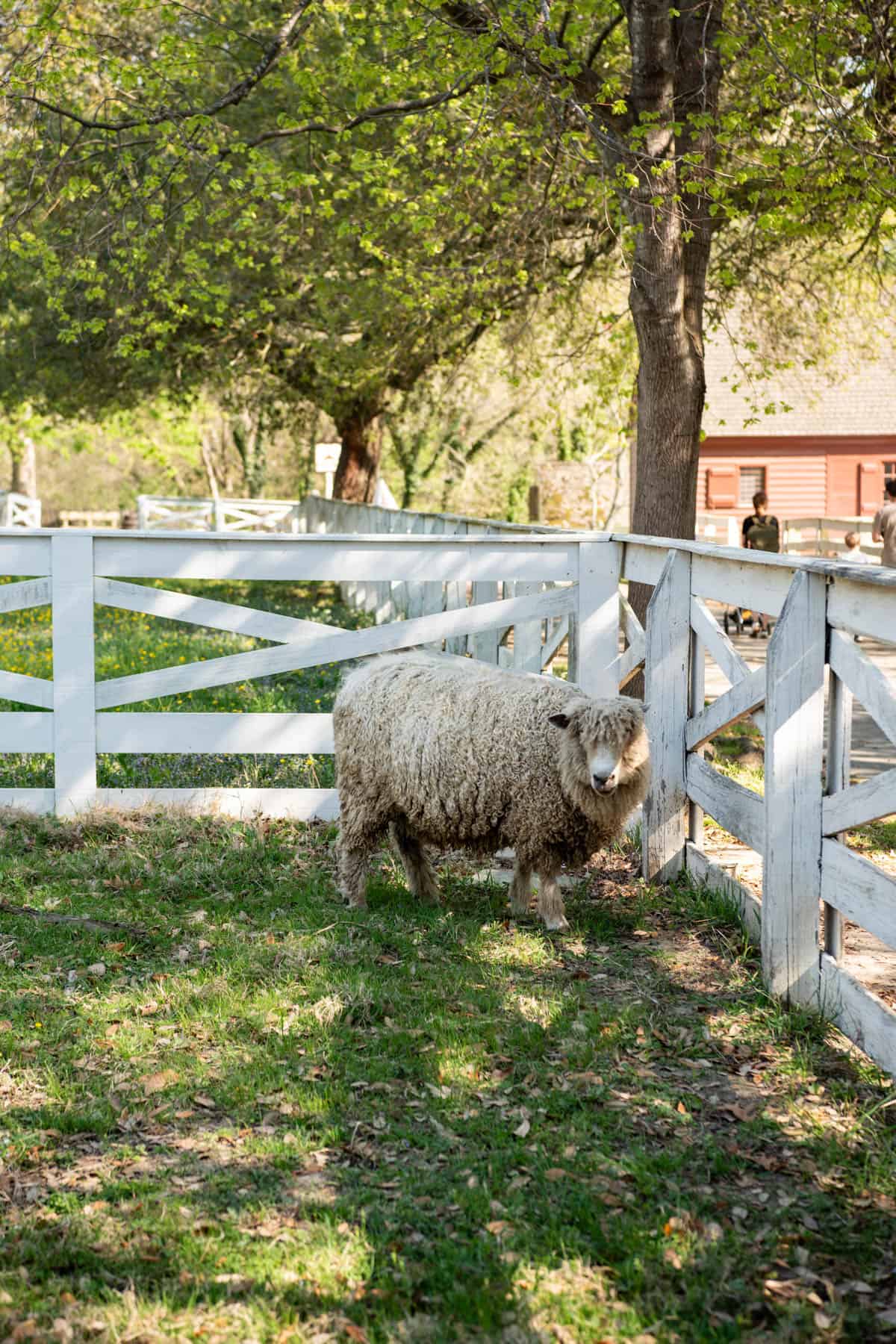
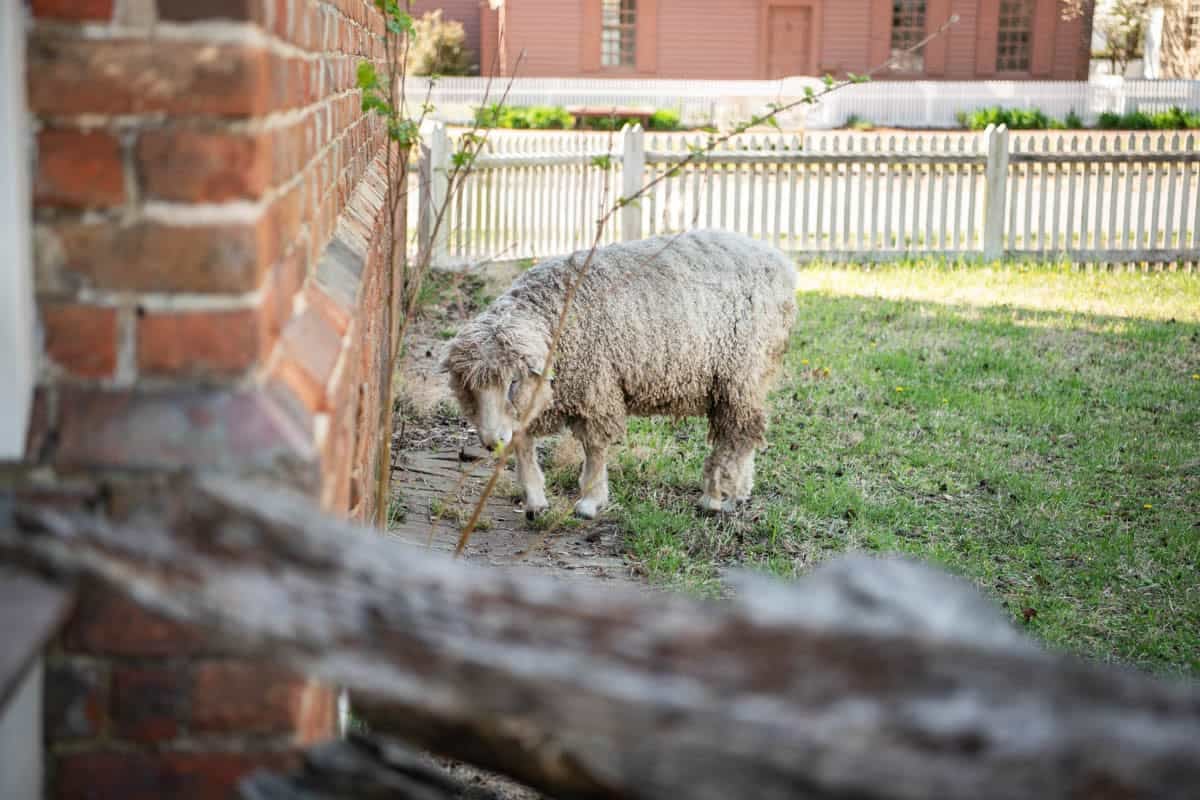
In the spring, the coach & livestock team husbands and preserves rare breeds that were common in the 18th century but are now threatened or endangered. We were there for lambing season and got to see and pet Leicester Longwool sheep and learn about how George Washington smuggled this breed in from England.
Living History Everywhere
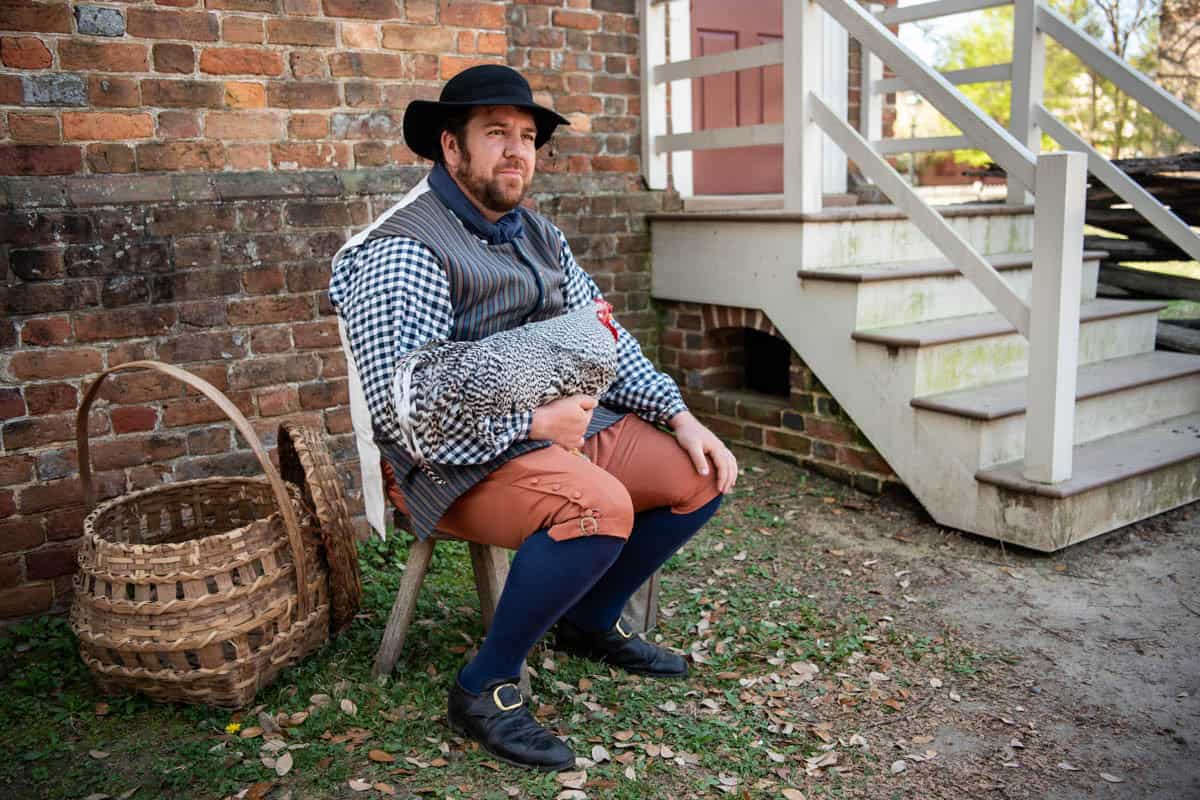
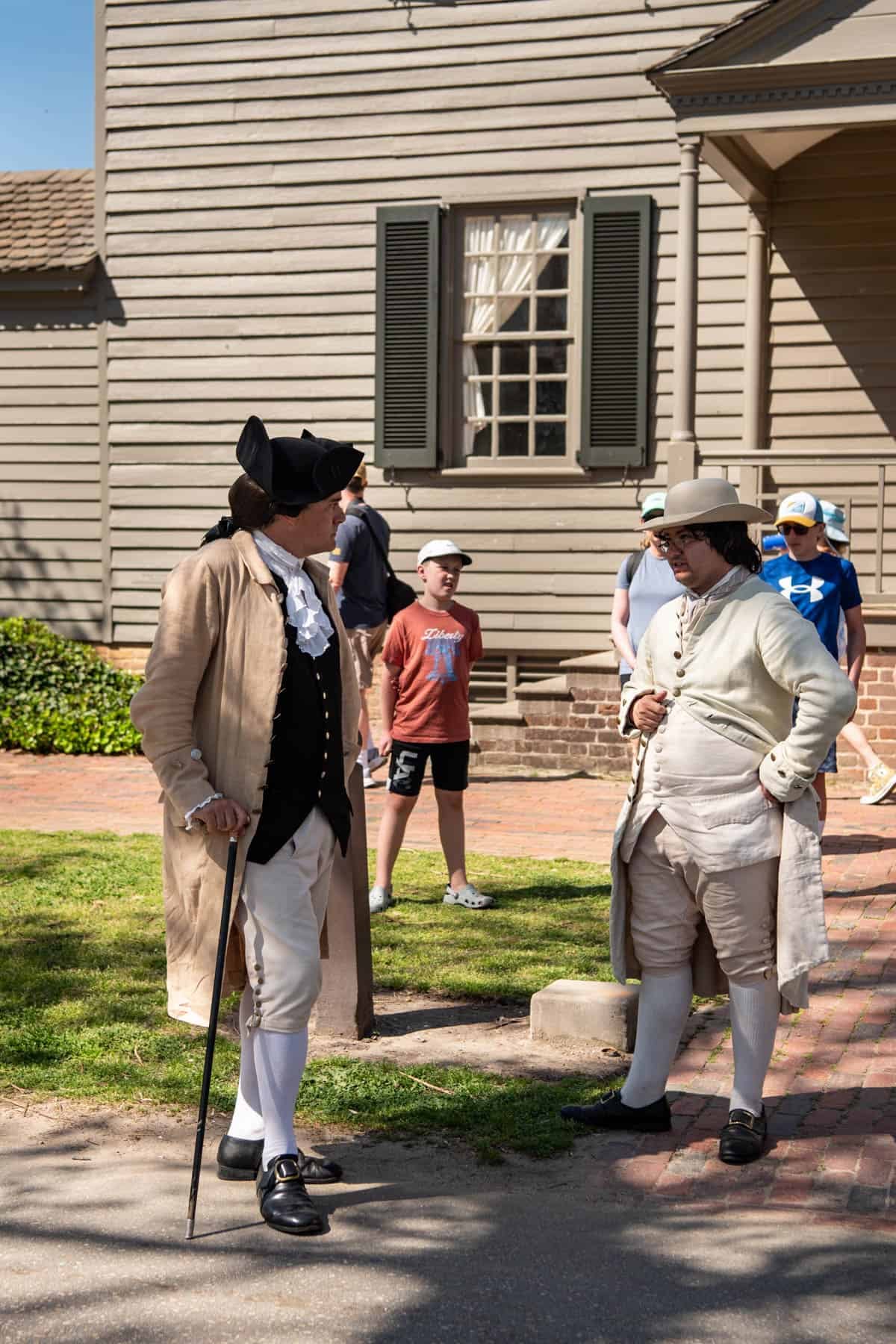
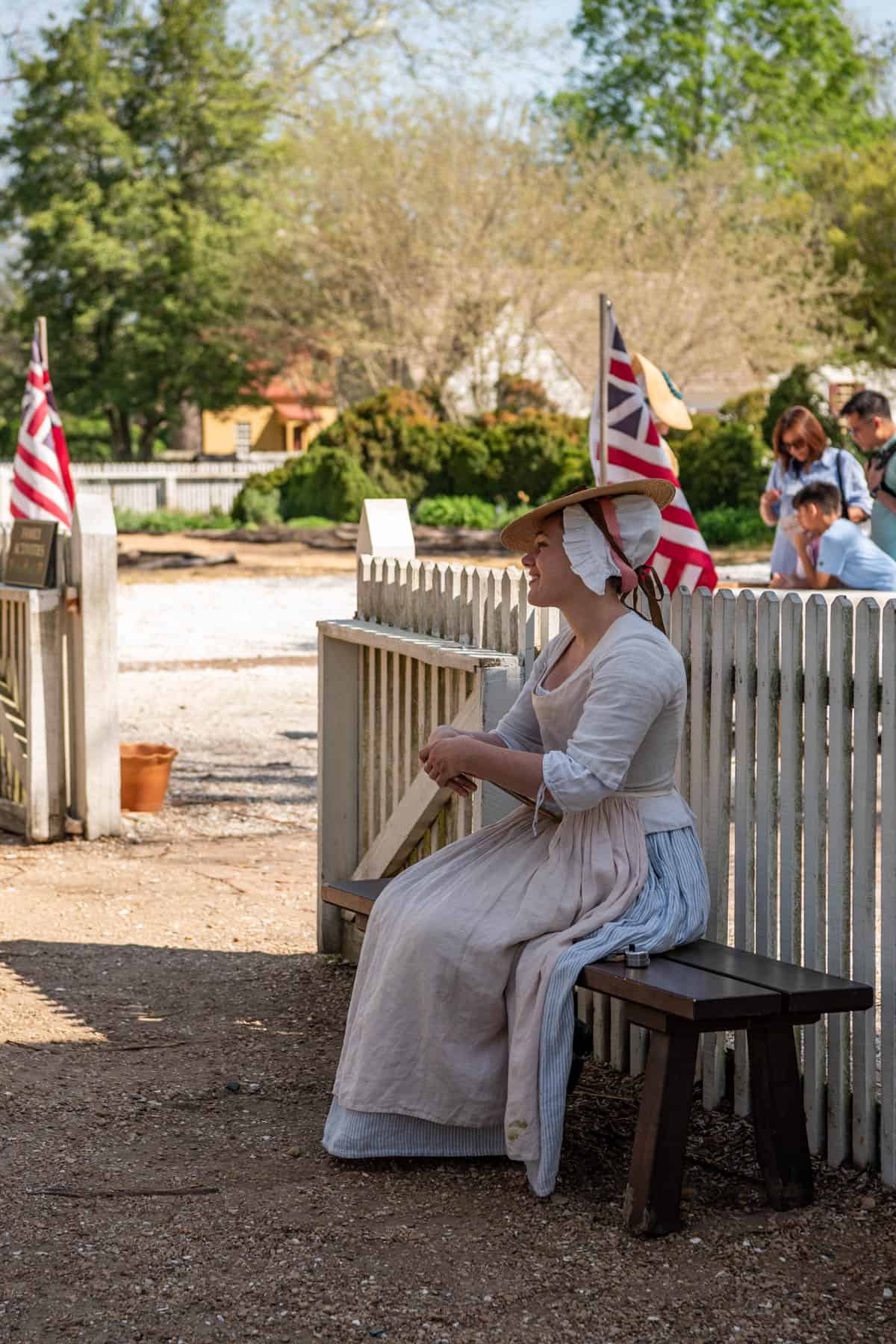
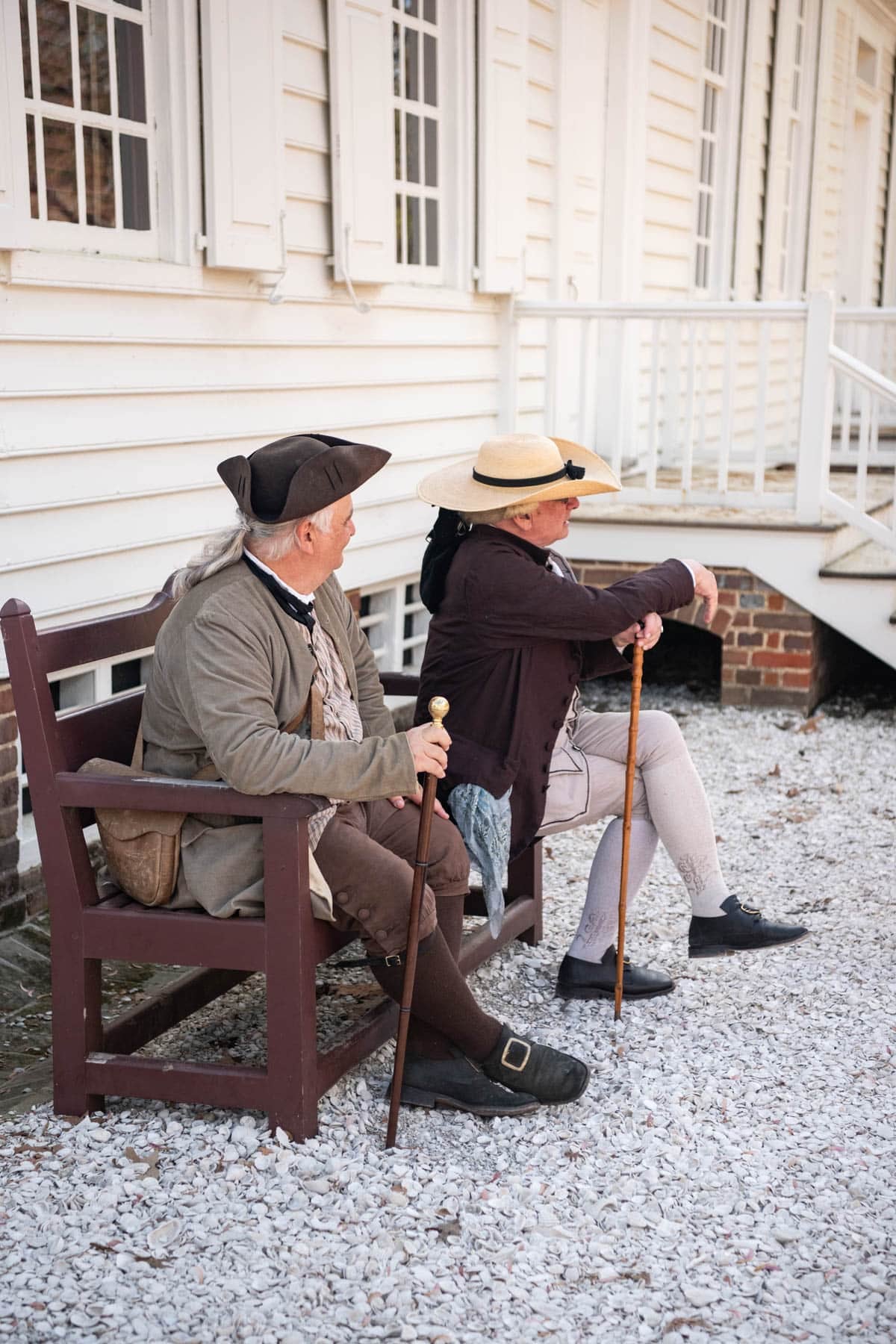
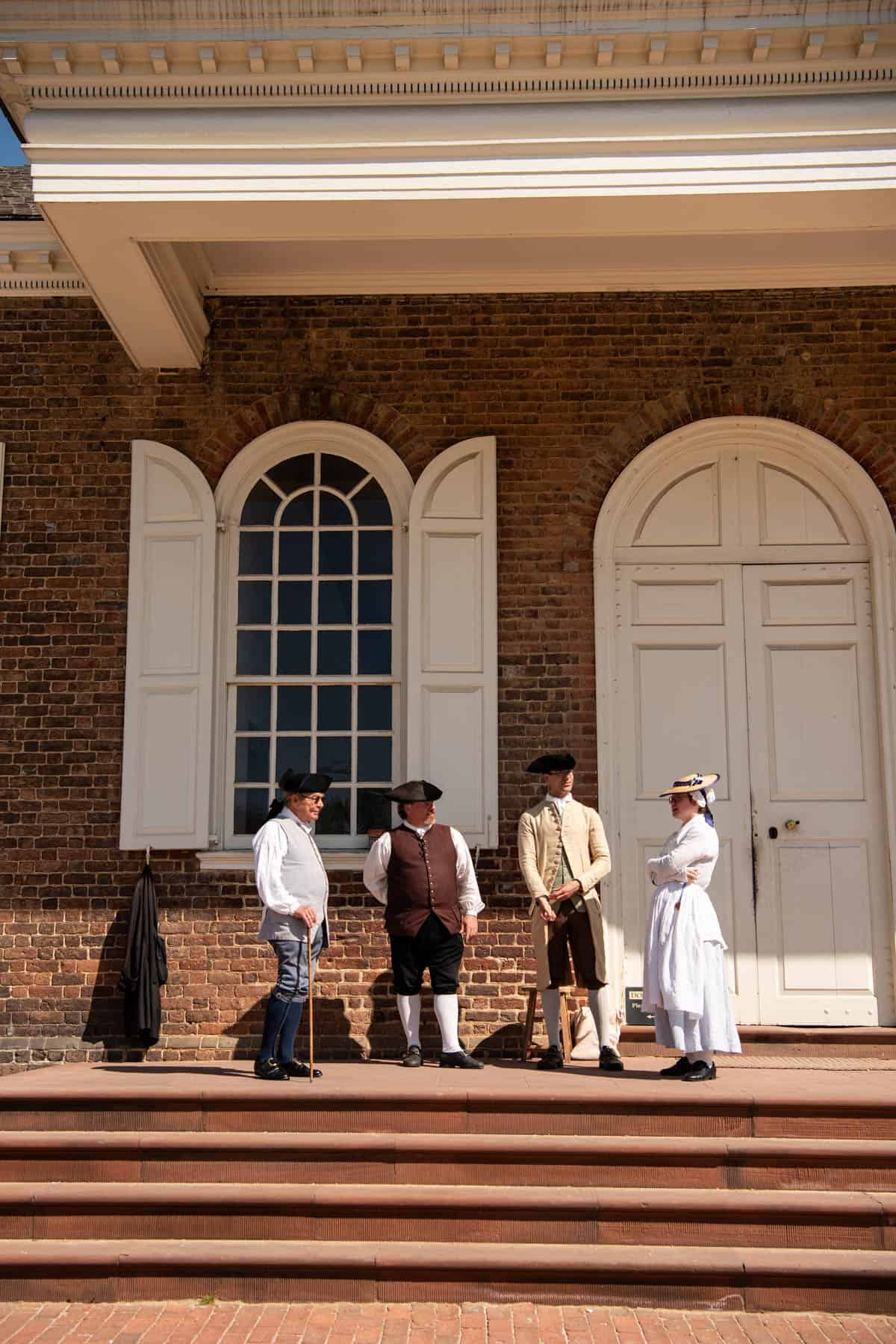
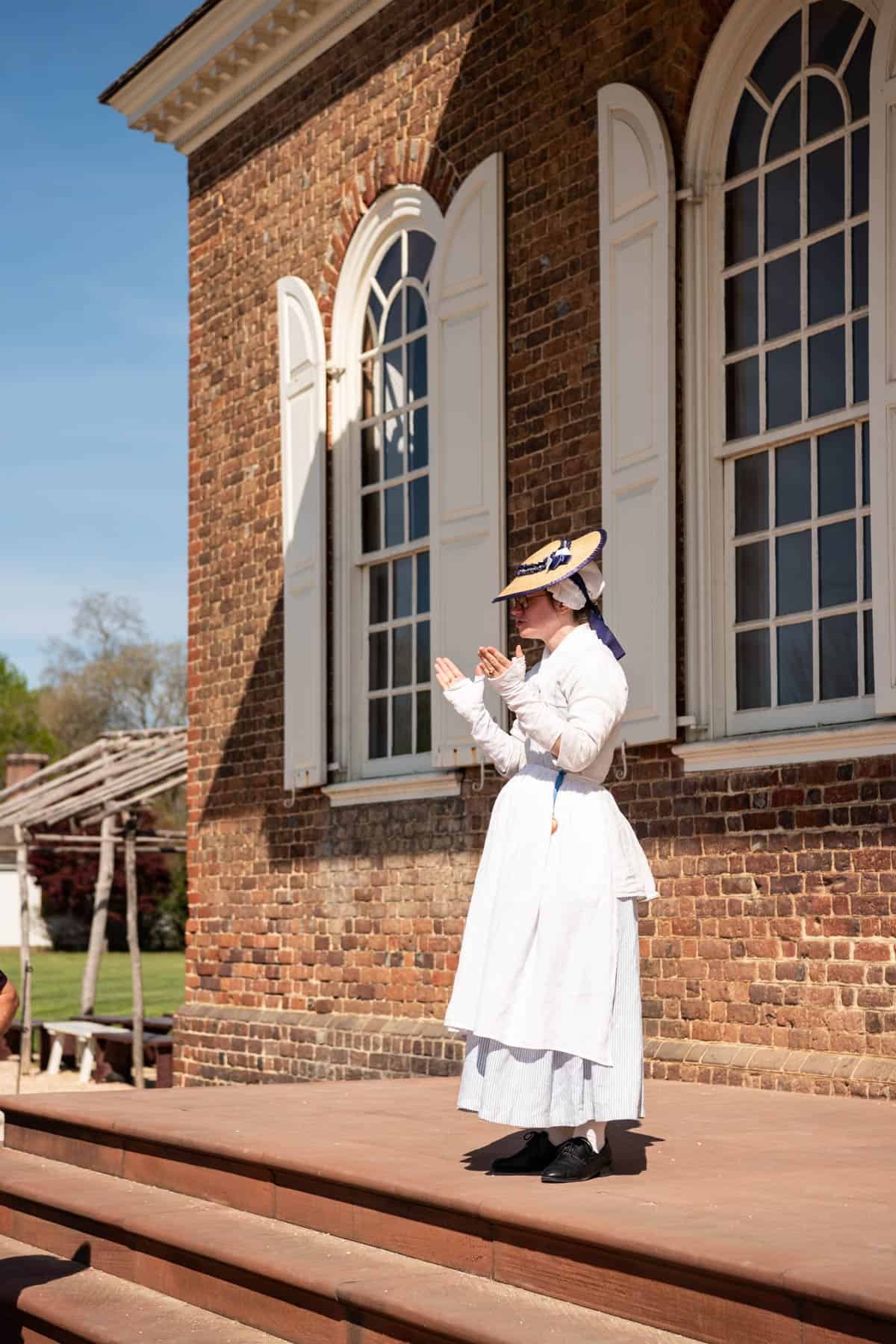
One of the best parts of Colonial Williamsburg is the people. You’ll see costumed interpreters and living history actors sitting on benches, strolling the streets, or working in buildings. Stop and talk to them! They are incredibly knowledgeable and great about answering questions.
They are more than willing to engage in dialogue with visitors or have open debates in the street about taxes and whether to break with England.
Governor’s Palace
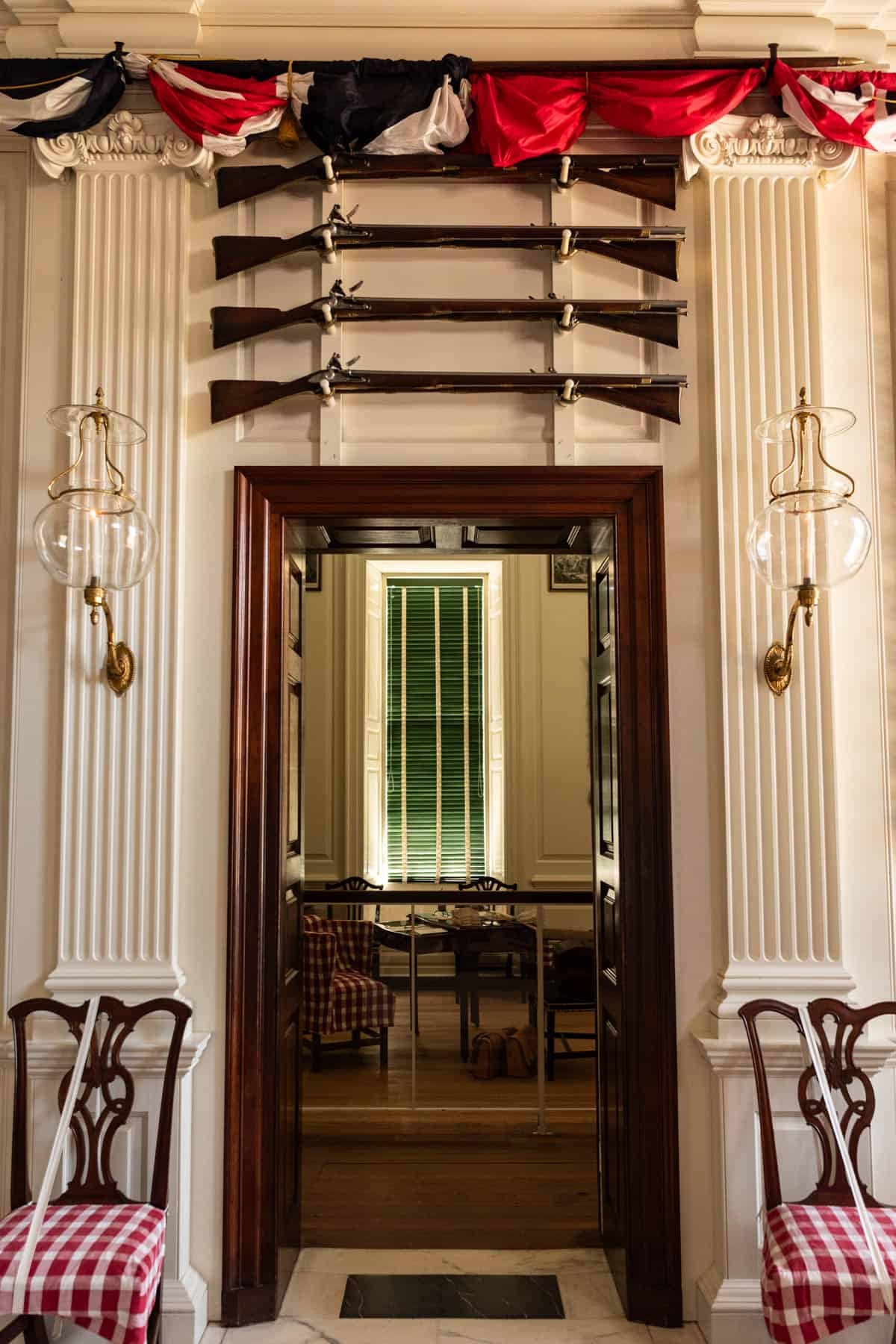
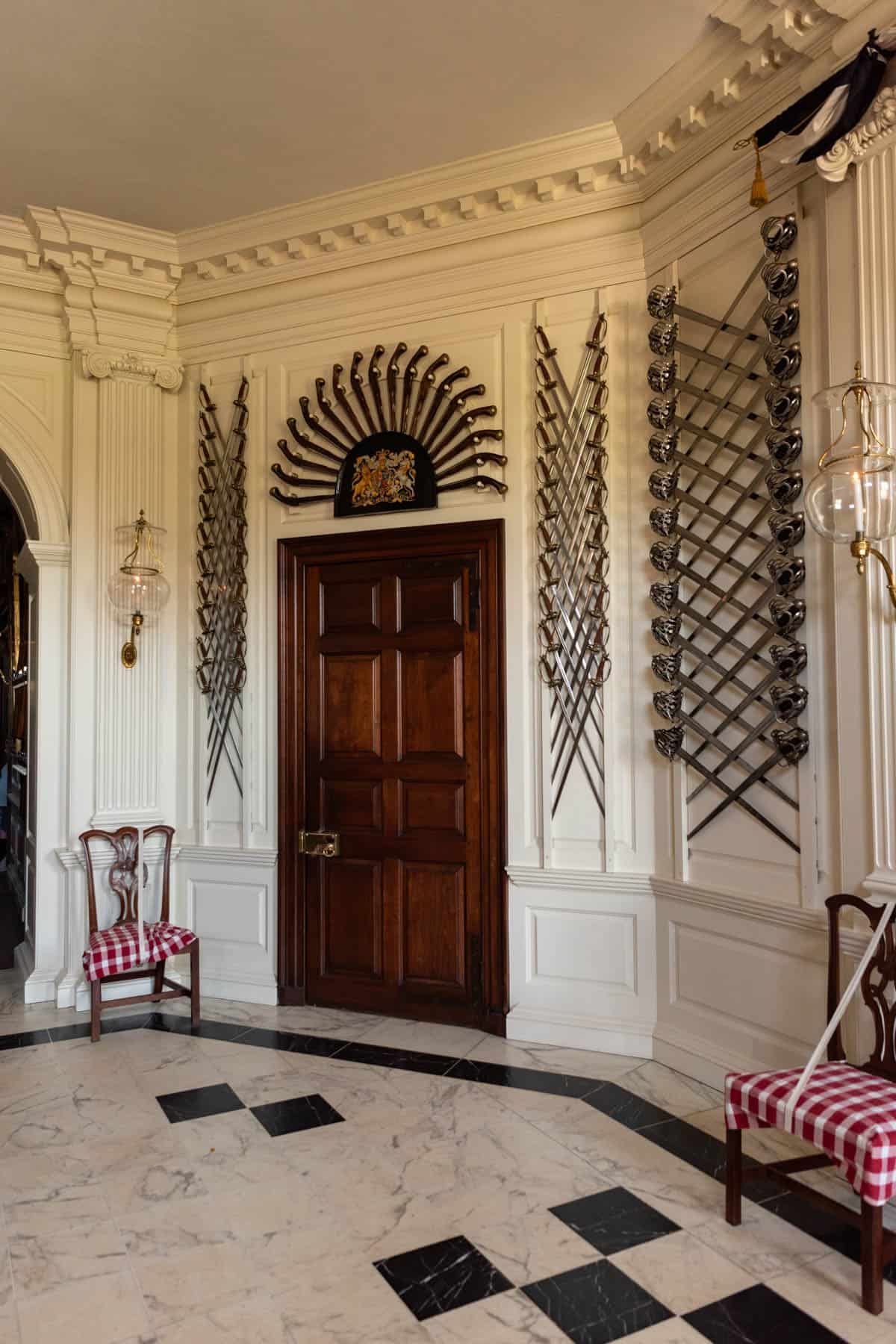
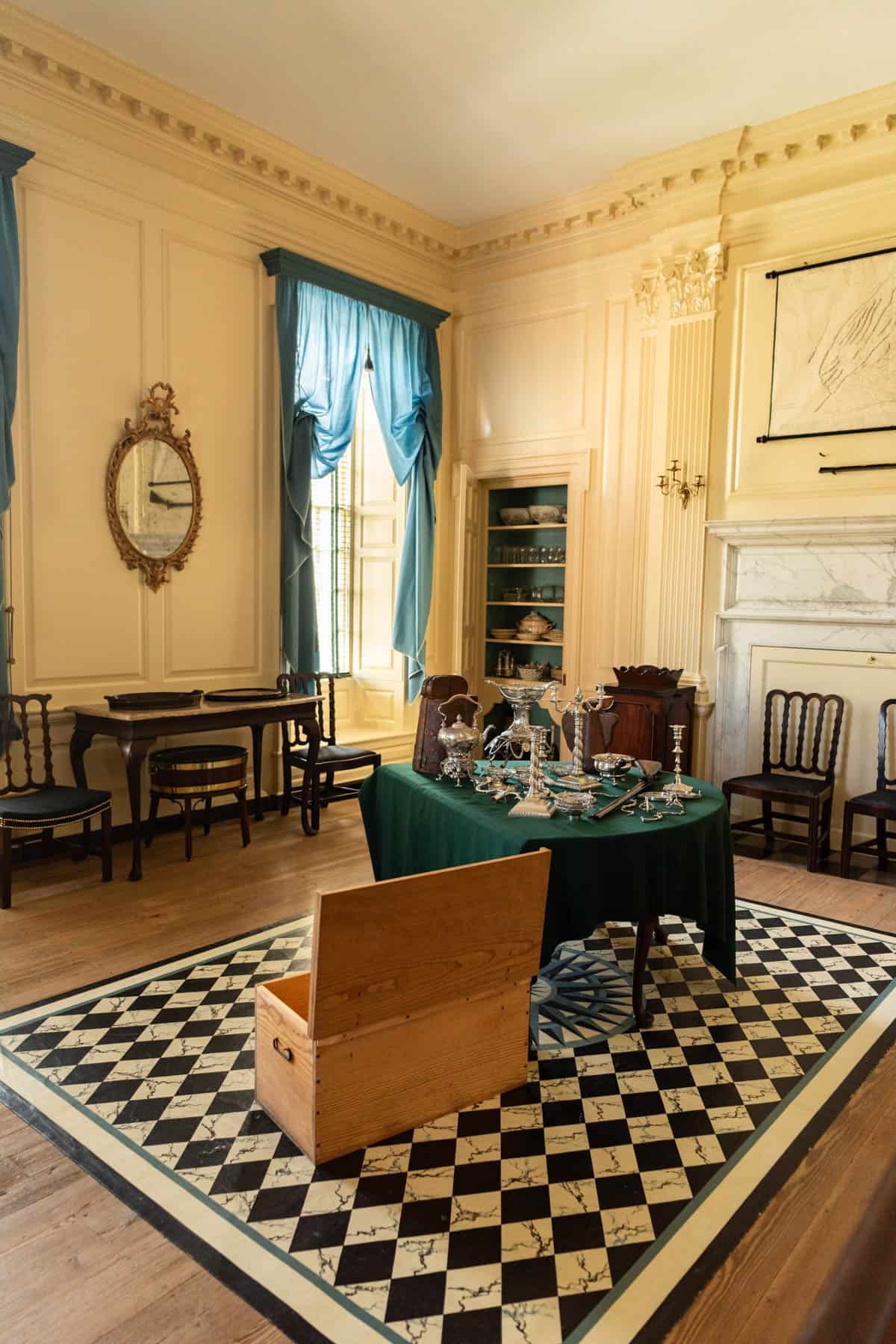
Tour the grand home of Virginia’s royal governor, complete with ornate rooms, gardens, and weapons displays. This is the most ornate building in Colonial Williamsburg and definitely worth waiting in line to enter and walk through. It is self-guided but there are costumed guides in most rooms who are there to answer questions and point out details of interest.
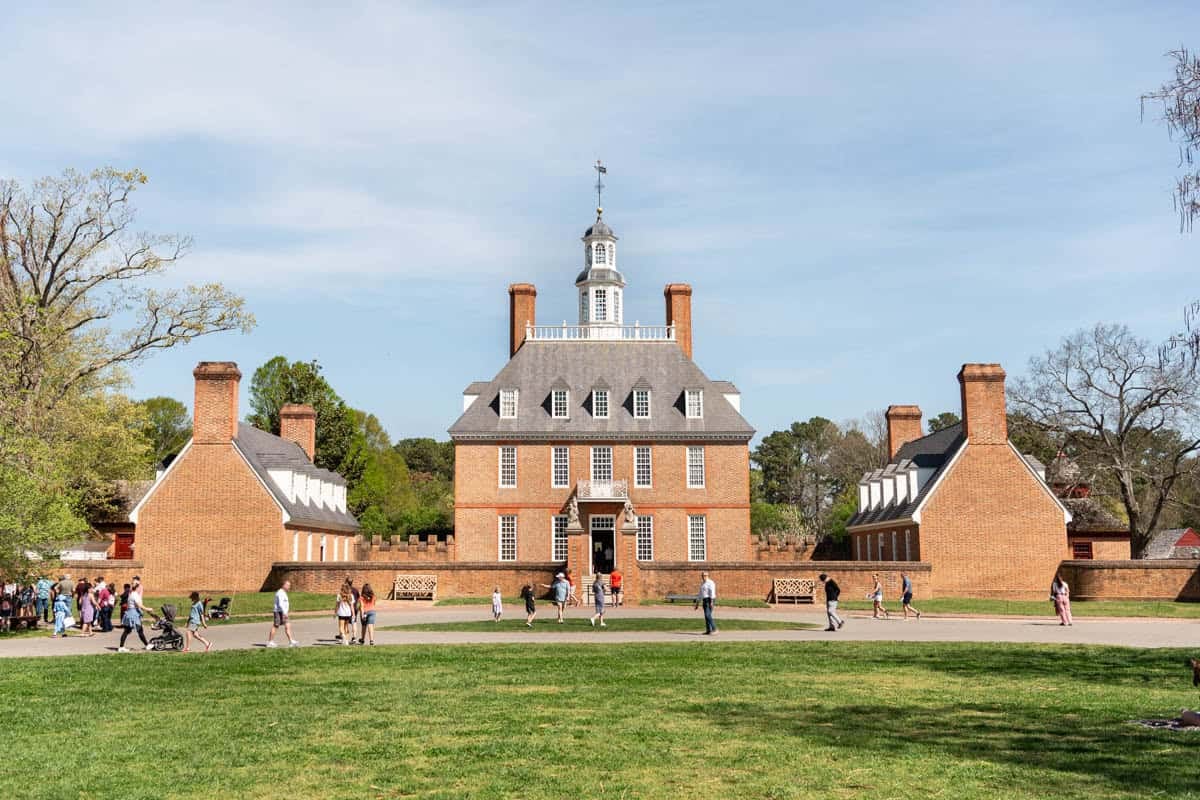
For example, the entry room is decorated with dozens of crossed swords, pistols, and rifles as an obvious show of power, but I wouldn’t have realized that the tiled stone floor was just as much a show of wealth and prestige without a guide discussing the black and white pattern and the fact that this kind of flooring had to be shipped at great cost from Europe to the colonies.
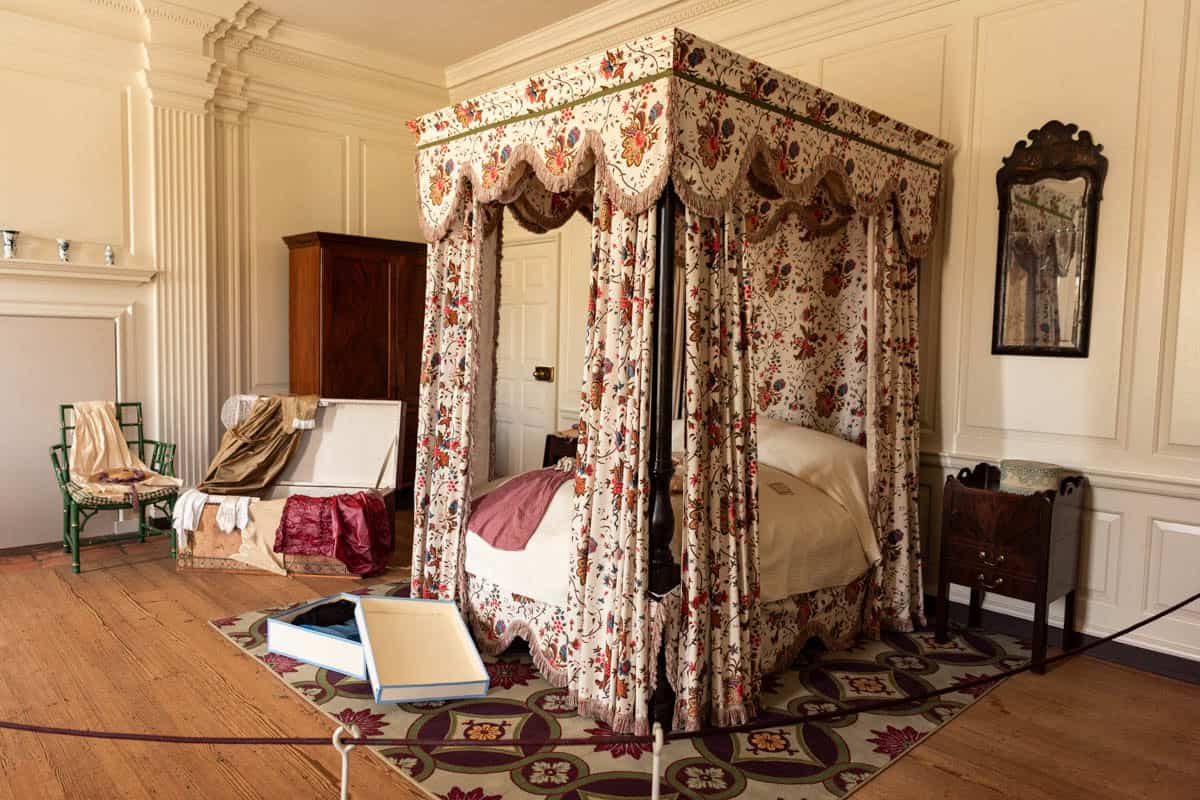
You might also notice that the mansion is staged to show that the governor was fleeing back to England for safety during the revolution, with open trunks, clothing, and other valuables strewn about.
The gardens and grounds are worth wandering as well, especially in the spring when trees and flowers are blooming and the weather is mild.
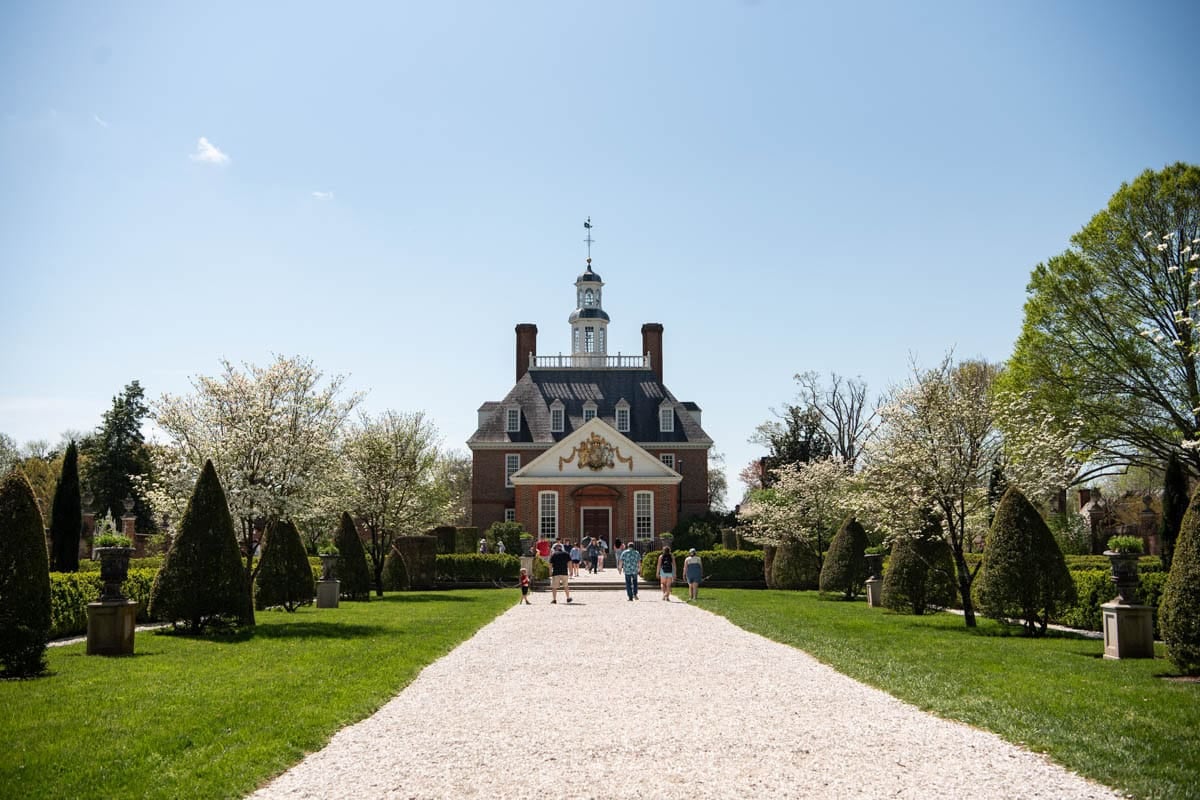
Don’t miss the hedge maze behind the Governor’s Mansion! It’s delightful and a nice change of pace, especially for kids.

Ghost Tour (Highly Recommended)
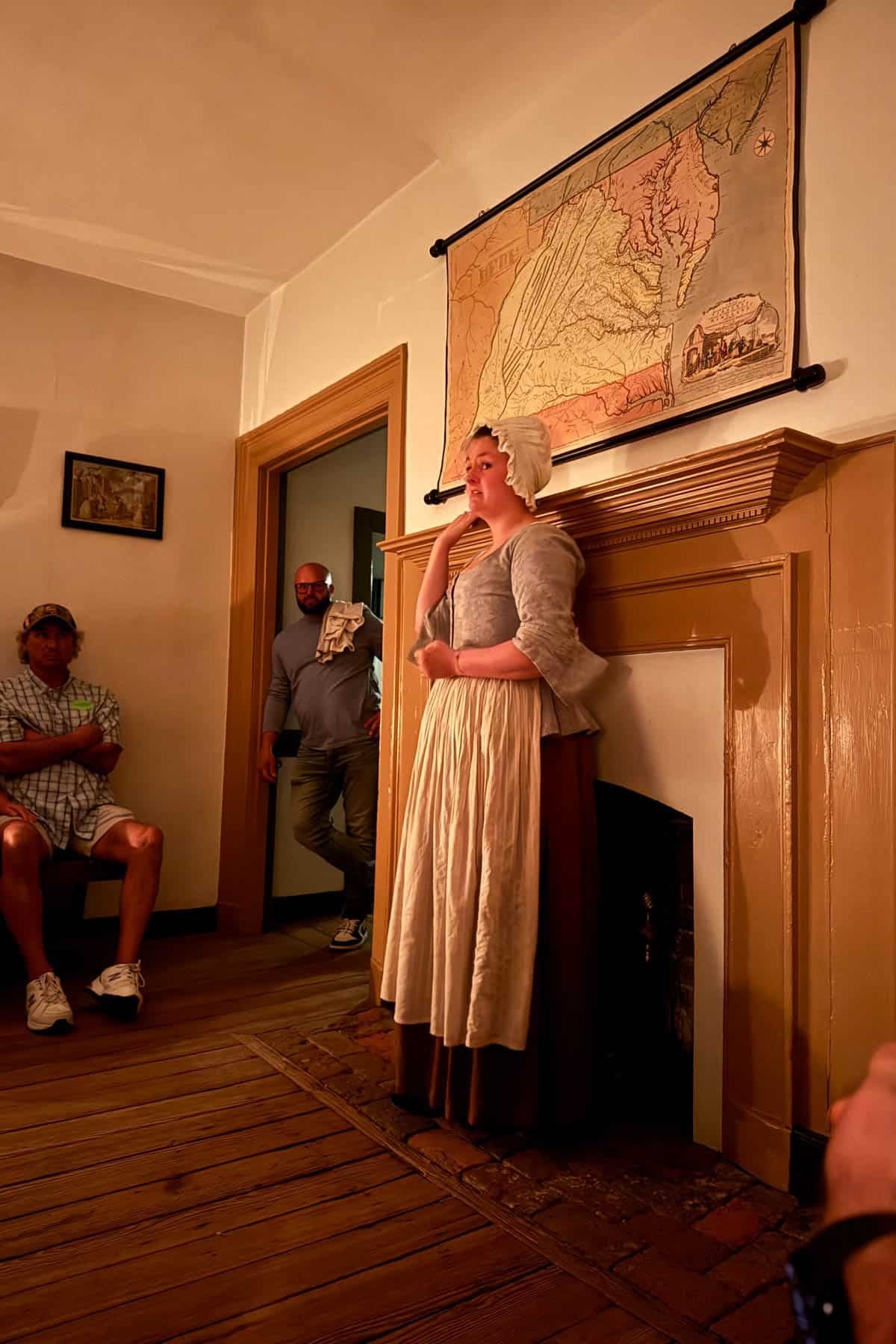
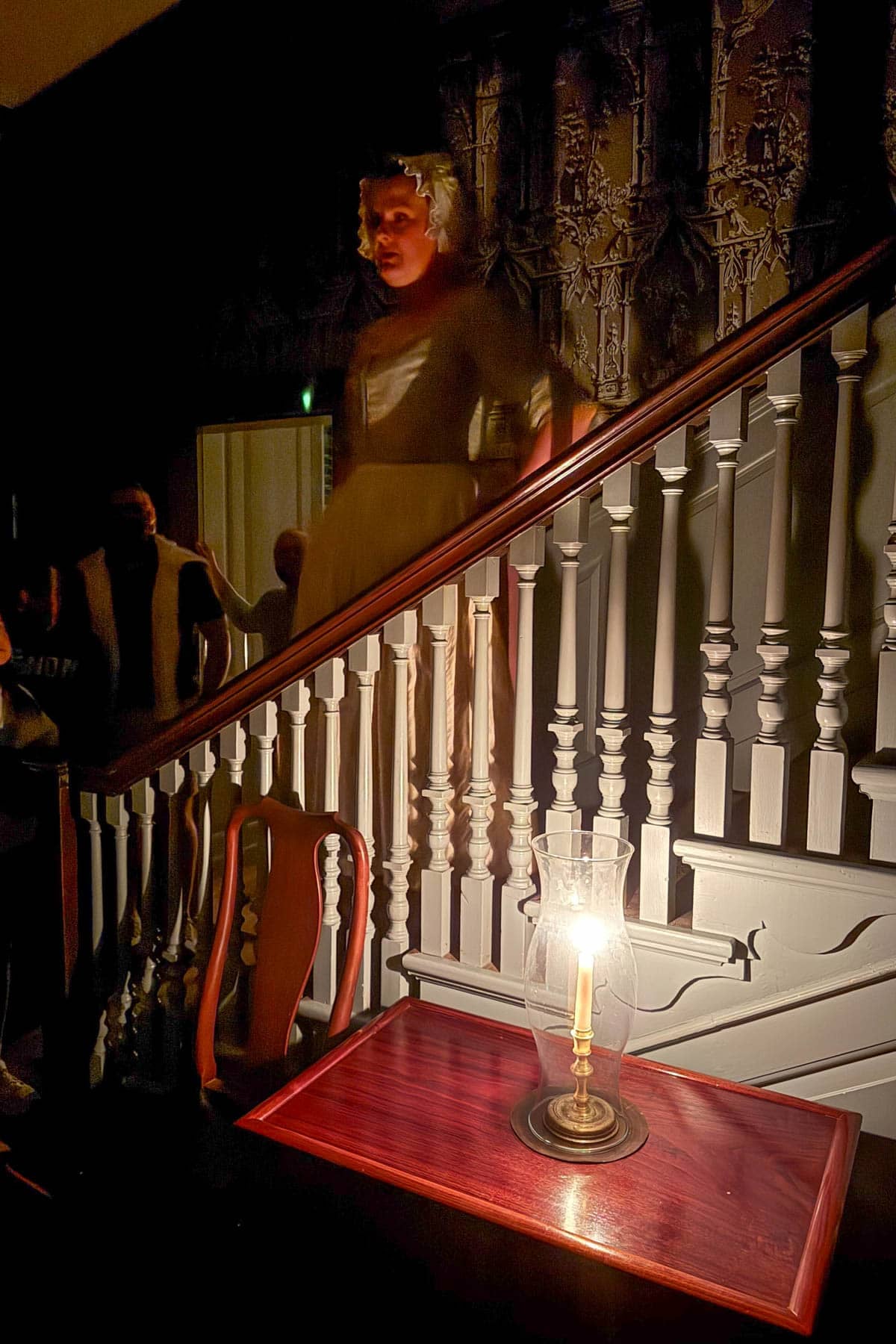
Definitely do the official Haunted Williamsburg ghost tour if you have the chance. A guide will take you through the city’s iconic buildings, gardens and squares sharing stories, personal experiences, and lore of local hauntings. The tour is done entirely by candlelight, and it’s just the right amount of spooky. Our kids are 12 and 14 and they loved it, but there were much younger kids (around 8-10) on the tour who really engaged with our storyteller.
There are outside tours that can come in and share stories in front of the buildings, but only the official Colonial Williamsburg tour takes you inside the historic buildings at night, which adds to the atmosphere and authenticity. This is another can’t miss and the thing our girls have talked about most since coming home.
Colonial Dancing Lessons (A Surprise Hit)
One of our favorite surprises was the colonial dance class. I may have coaxed (erm, bullied?) my entire family into this evening activity, and our teens initially rolled their eyes and complained. But once inside a candlelit room learning dances that people would have done in the 1700s, they ended up loving it and had a memorable time.
The candlelight, the music, and the atmosphere make it incredibly immersive.
Lighting of Duke of Gloucester Street
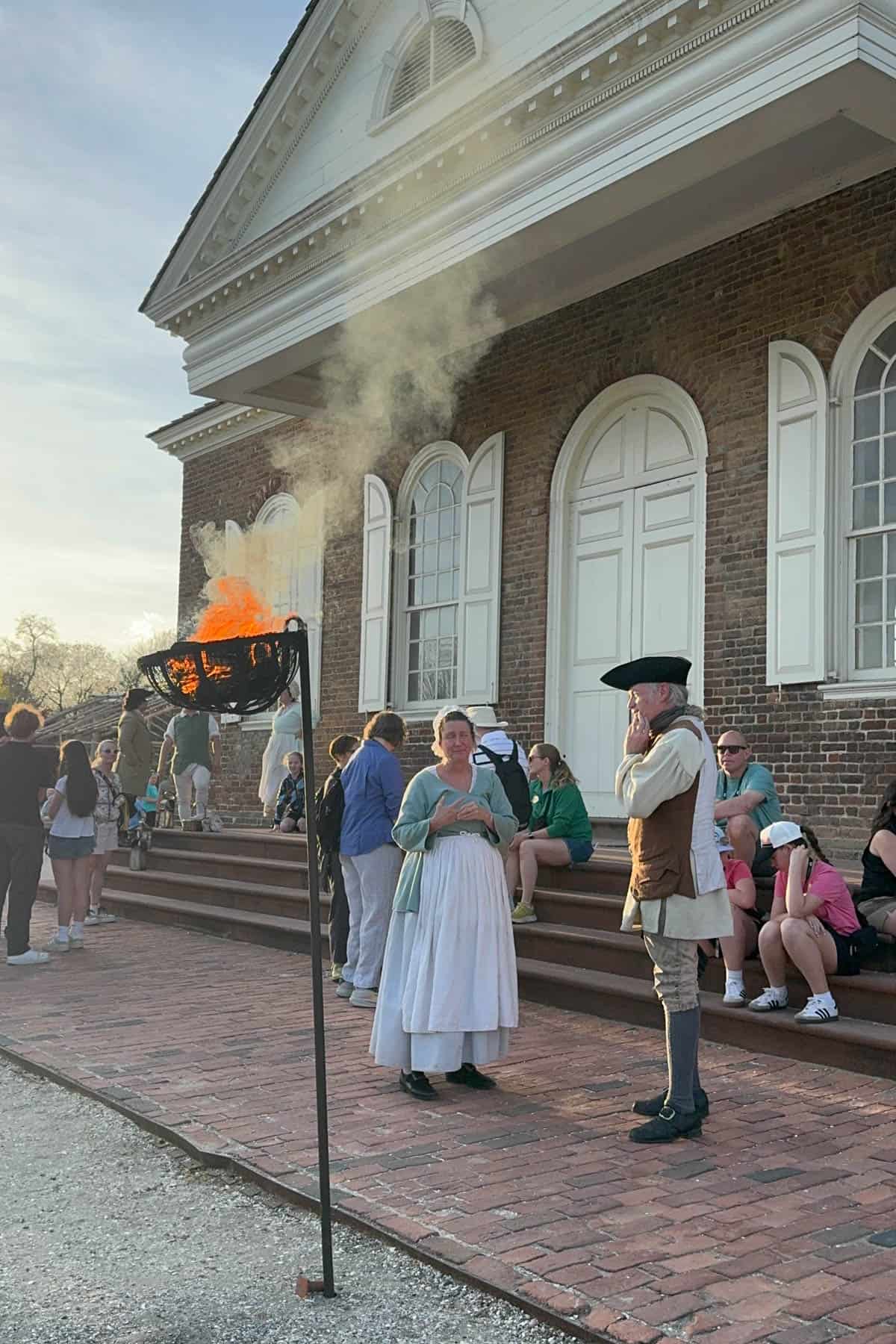
If you’re visiting on a Saturday night, don’t miss the Lighting of the Cressets on Duke of Gloucester Street. Flaming sconces are lit along the street and the whole town feels alive and atmospheric.
The streets are cast in a golden glow and there is music being sung or played by live performers in period dress. It’s significantly more magical than the standard evening lighting, and definitely worth seeing with an after dinner stroll.
We didn’t plan around it — we got lucky — but it ended up being a highlight.
Carriage Rides
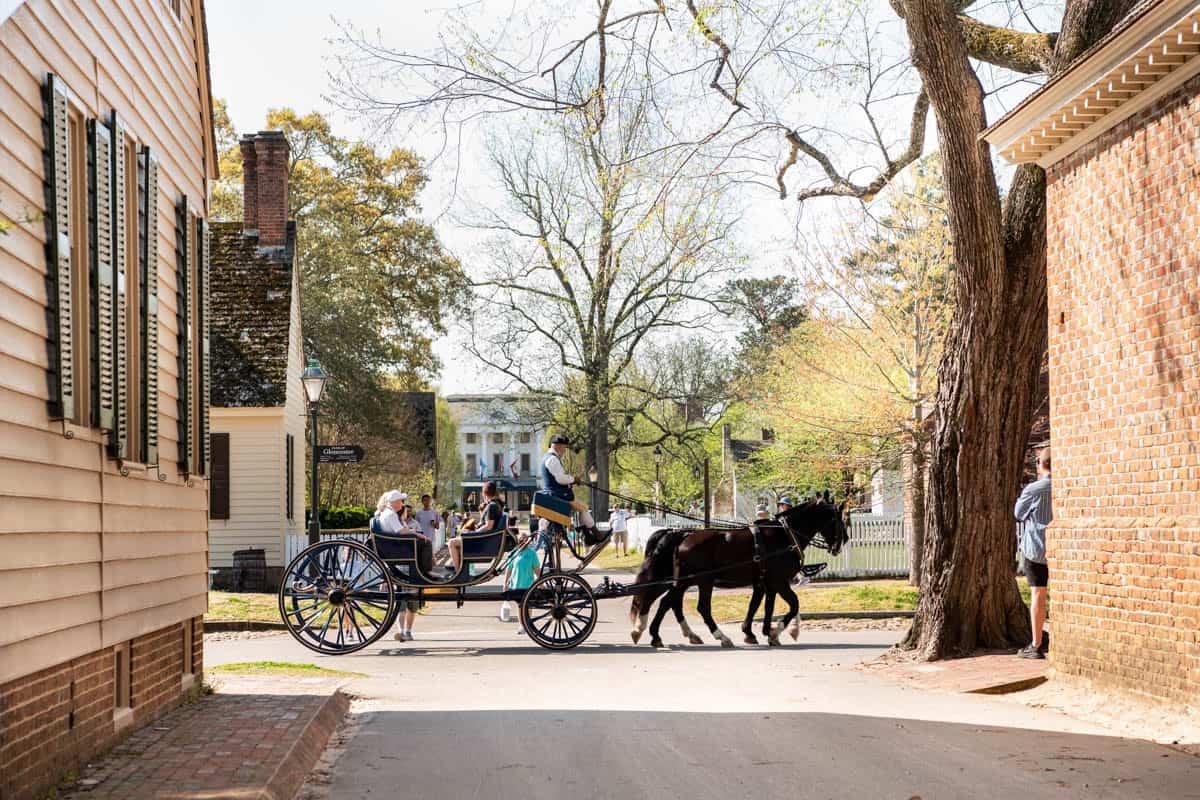
Horse-drawn carriage rides are popular and tickets are first-come, first-served. The line forms early and books quickly, so send someone in your party to snag those if it’s something you want to do. But even if you don’t get to ride in the carriage, it’s fun just seeing others drive around town in them and listen to the clip-clop of the horses hooves on the cobblestone streets.
Attend a Mock Trial
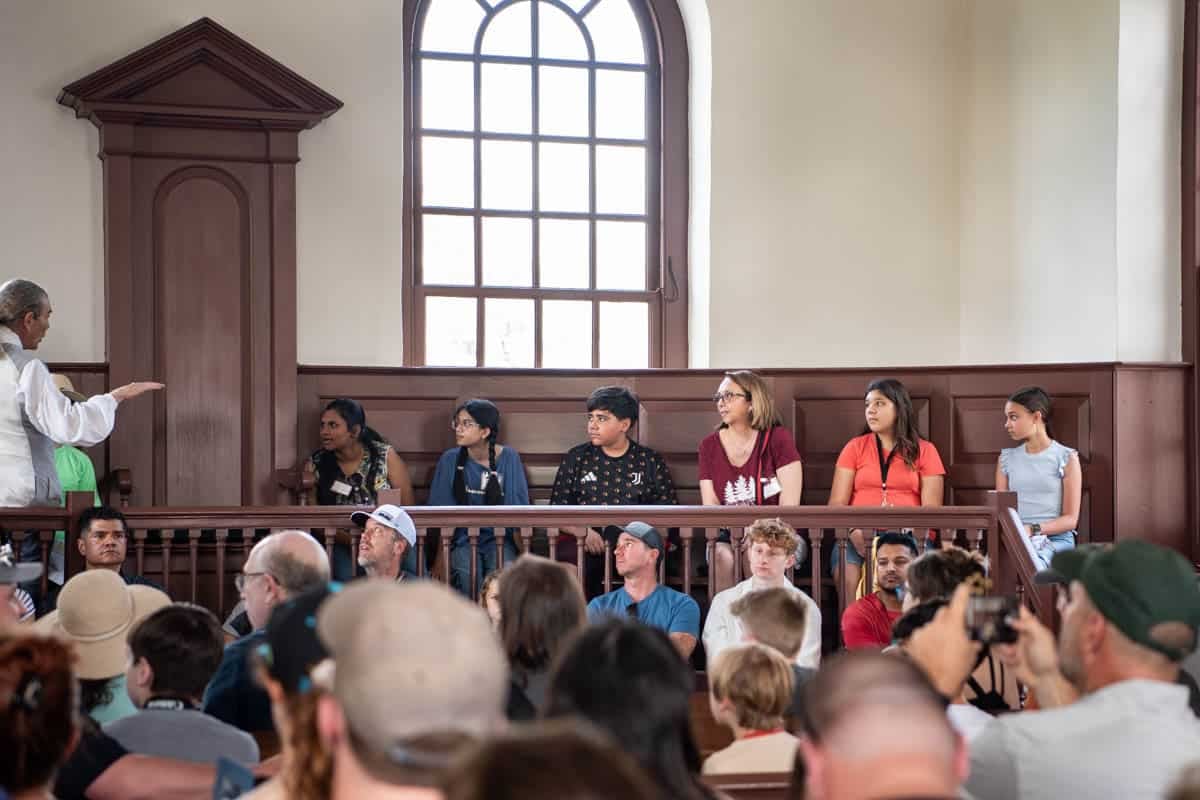
These are held in the courthouse and in the capitol building throughout the day and some focus on daily matters while others are geared toward the revolution. They are interactive and our youngest even got to sit in one of the jury seats! Both my husband and I went to law school, so possibly this was more interesting to us than our kids, but I definitely recommend!
Things We Didn’t Get to (But Wish We Had)
- Sitting and listening to live period music performances
- A visit with Martha Washington
- Seeing a dying day with the weavers
- Touring every building and house that is open to the public (there are just so many!)
There is simply more to do than fits in a single day.
Where to Stay
There are five official Colonial Williamsburg lodging options to choose from, depending on budget and style.
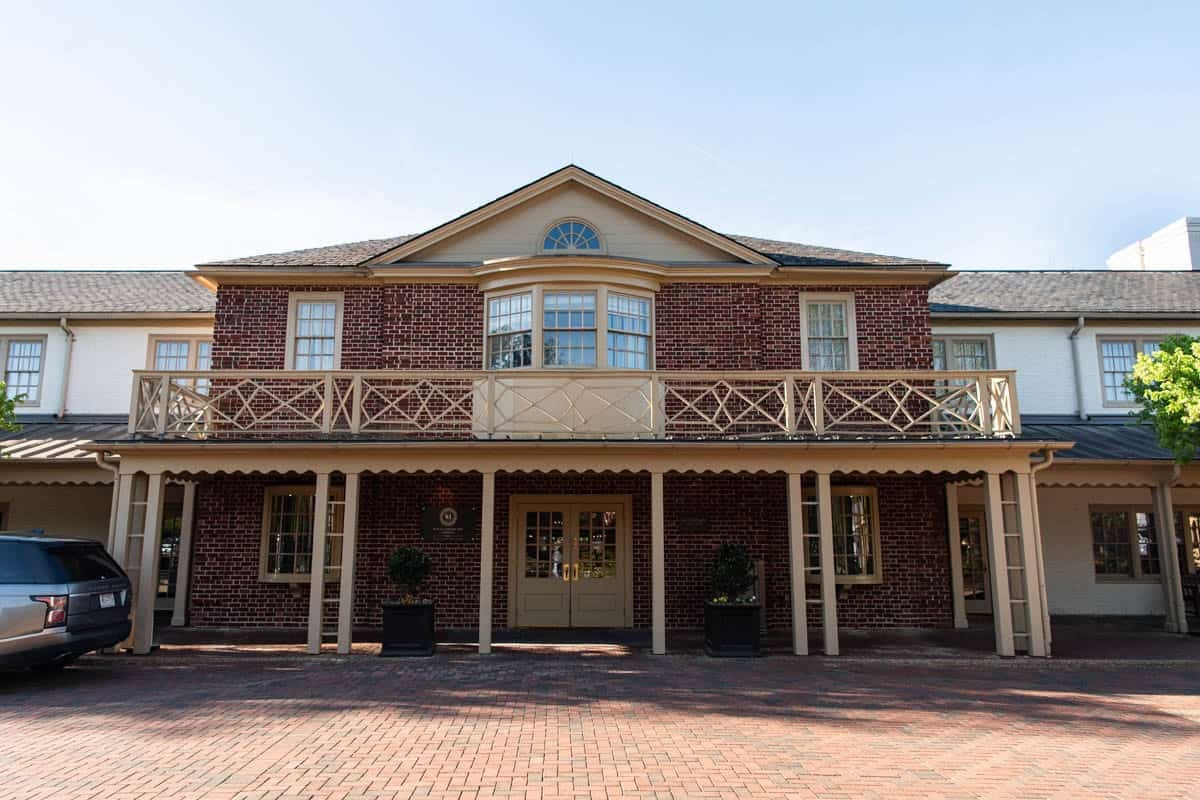
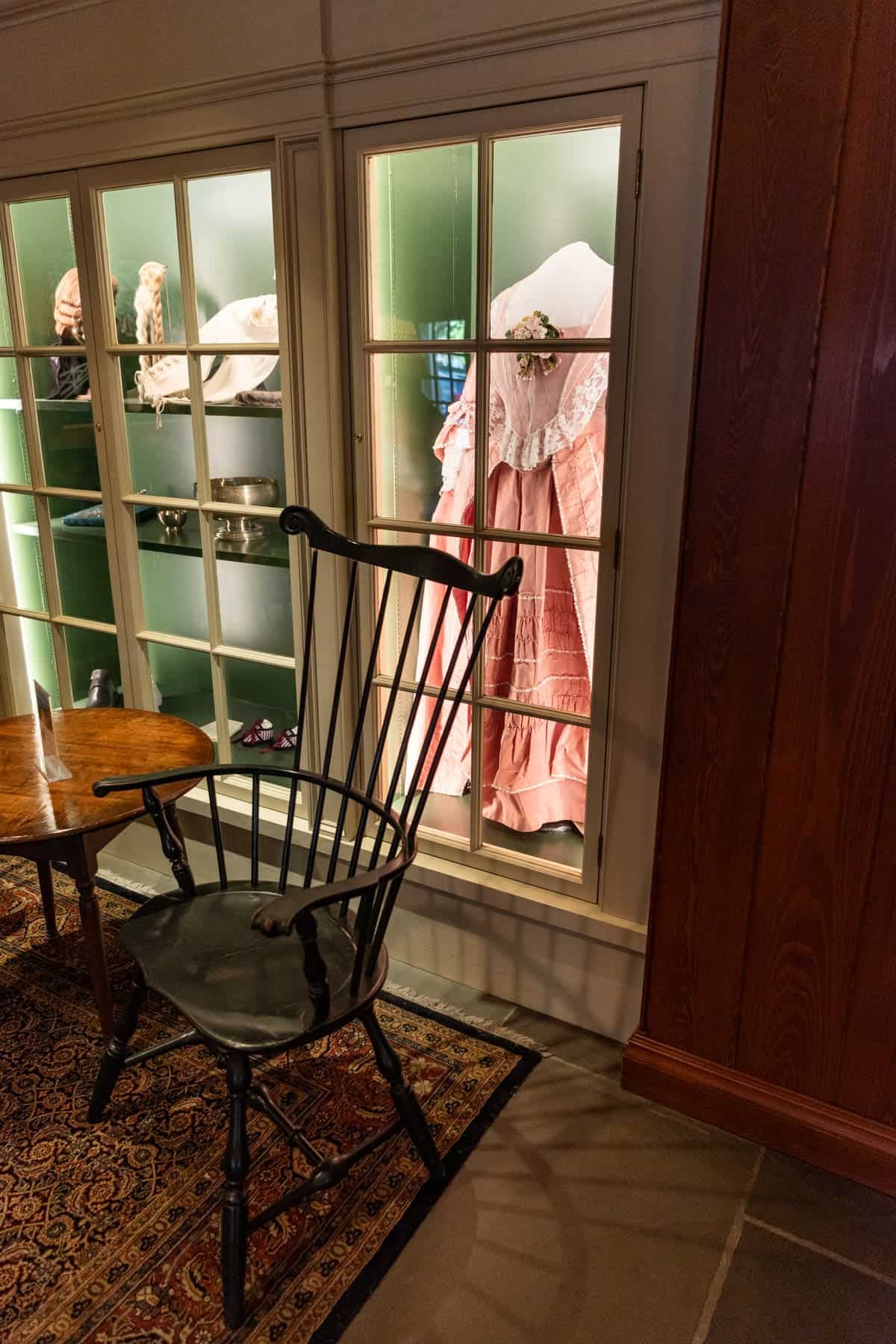
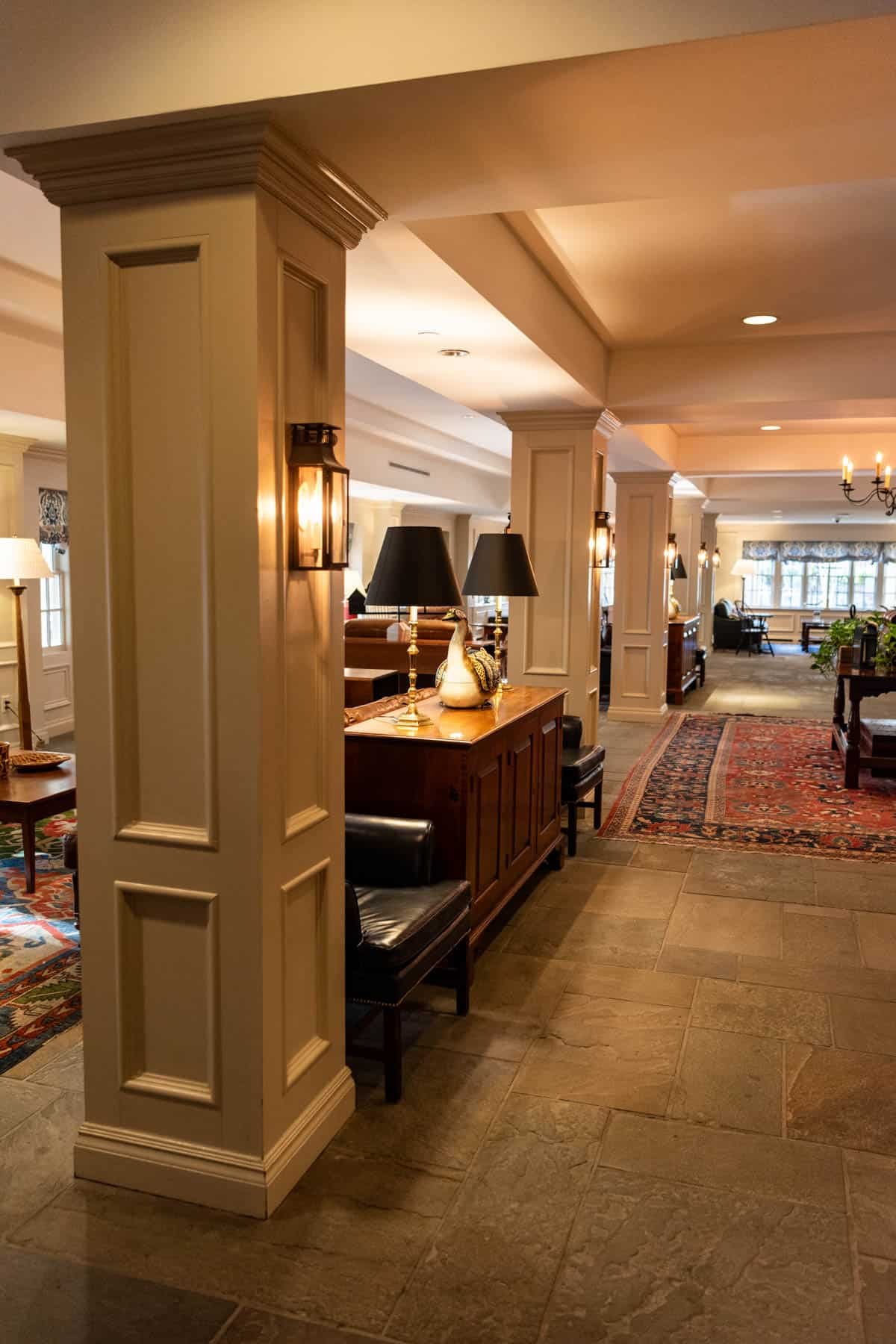
We stayed at Williamsburg Lodge and absolutely loved it. It’s a beautiful property that is within easy walking distance to everything. Plus it has excellent on-site dining options for breakfast and dinner. It’s pricey, but being inside the historic area made early mornings and evenings especially enjoyable when crowds were light.
Other lodging options include:
- The ultra-luxury Williamsburg Inn
- Historic tavern room or colonial house (our first choice, but booked up!)
- Other official Colonial Williamsburg resort options
- Modern nearby hotels & AirBnBs
Where to Eat
Eating in Colonial Williamsburg is part of the experience! Enjoy a meal or grab a snack at a historic tavern.
- Christiana Campbell’s Tavern – George Washington is known to have dined at this historical tavern, which has dishes honoring the culinary traditions of the 18th century like crab cakes, shrimp & scallops, and spoon bread. Get a reservation in advance, because this is a high-demand spot.
- King’s Arms Tavern – Servers dressed in period attire bring a menu inspired by colonial recipes, including prime rib and pork chops. This is another one that would be best to have a reservation if it is high on your list.
- Shield’s Tavern – You might enjoy live music at this more casual dining establishment.
- Chowning’s Tavern & Cider Stand – Eat savory meat pasties, a salad, an oatmeal raisin cookie, and a glass of apple cider or root beer!
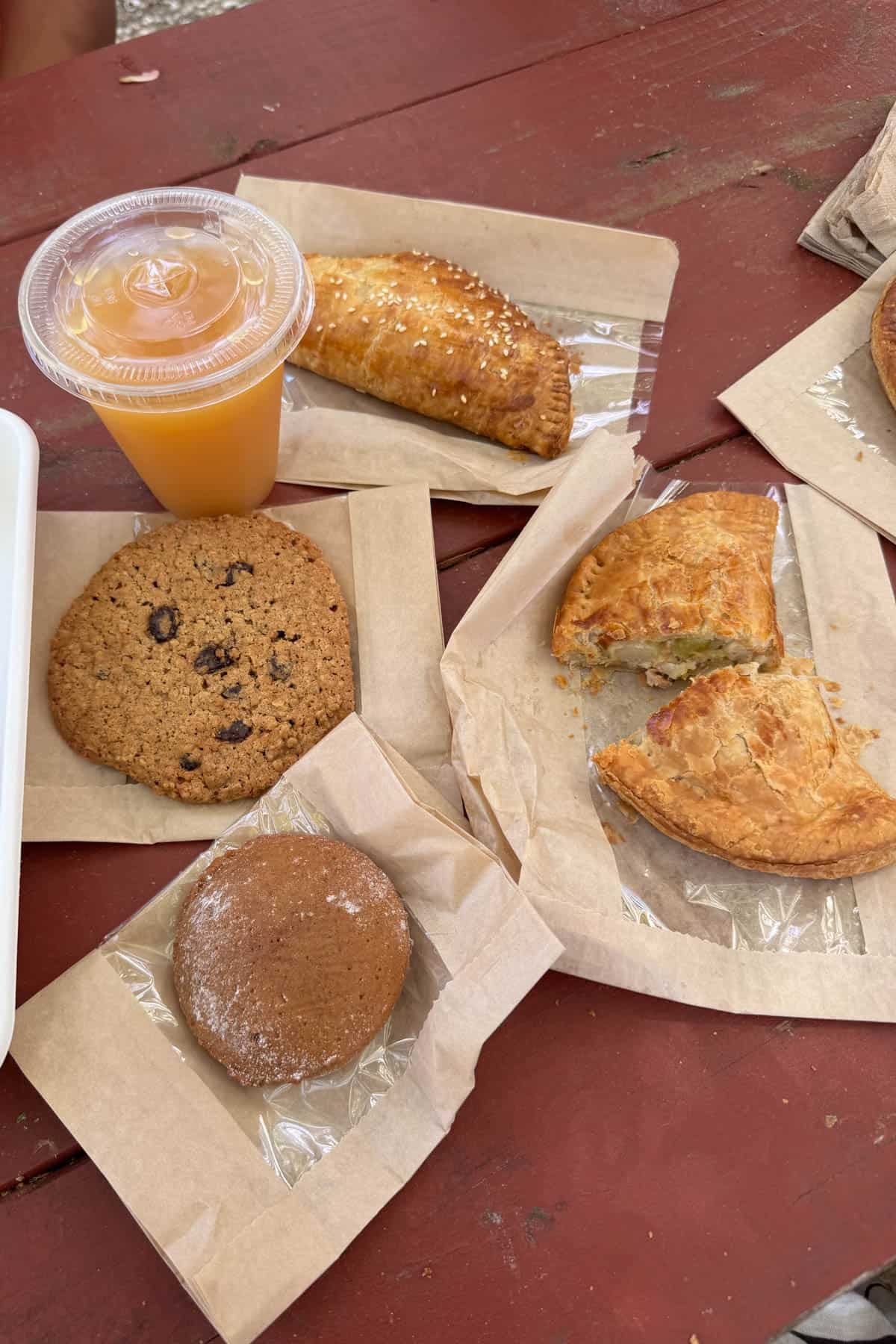
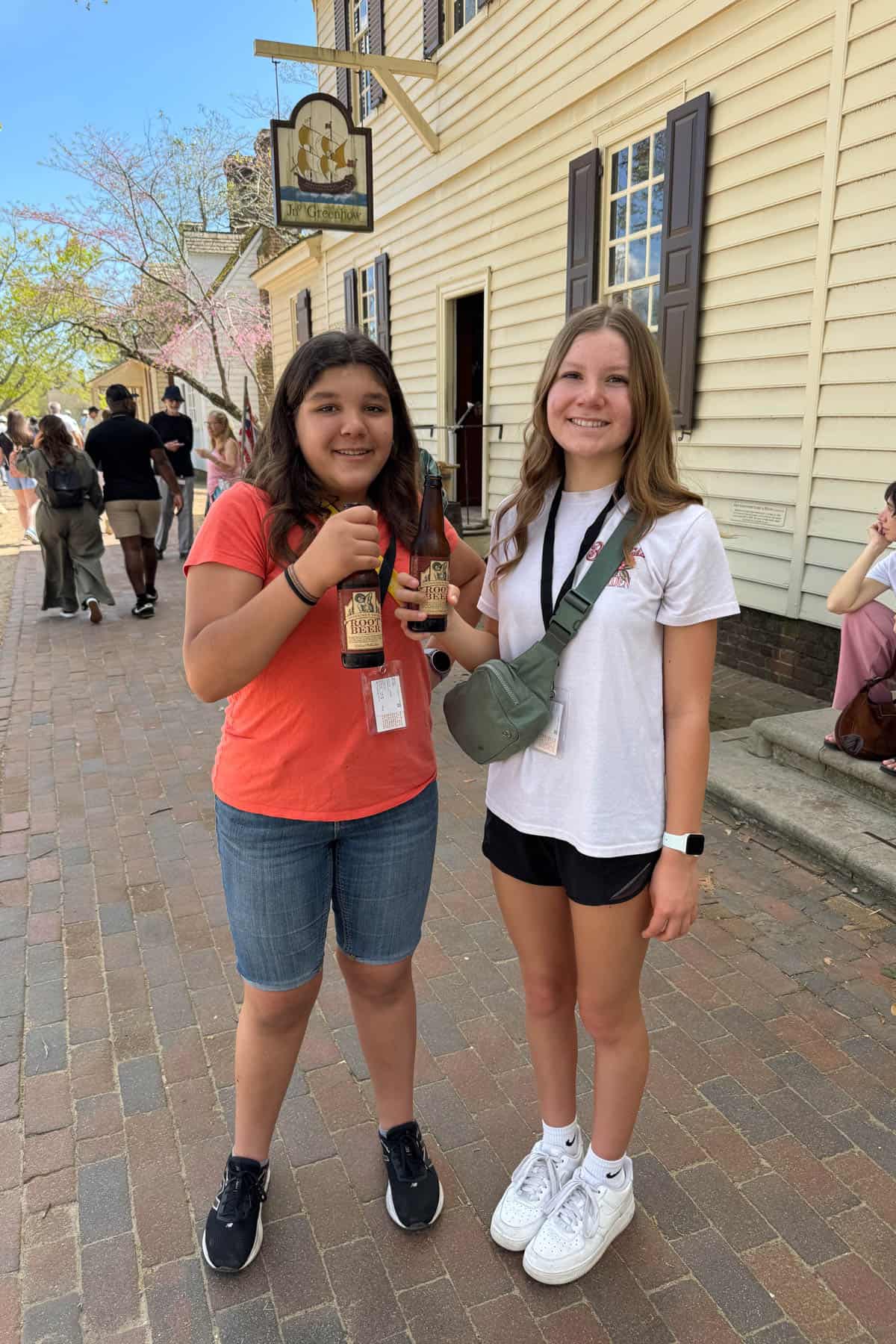
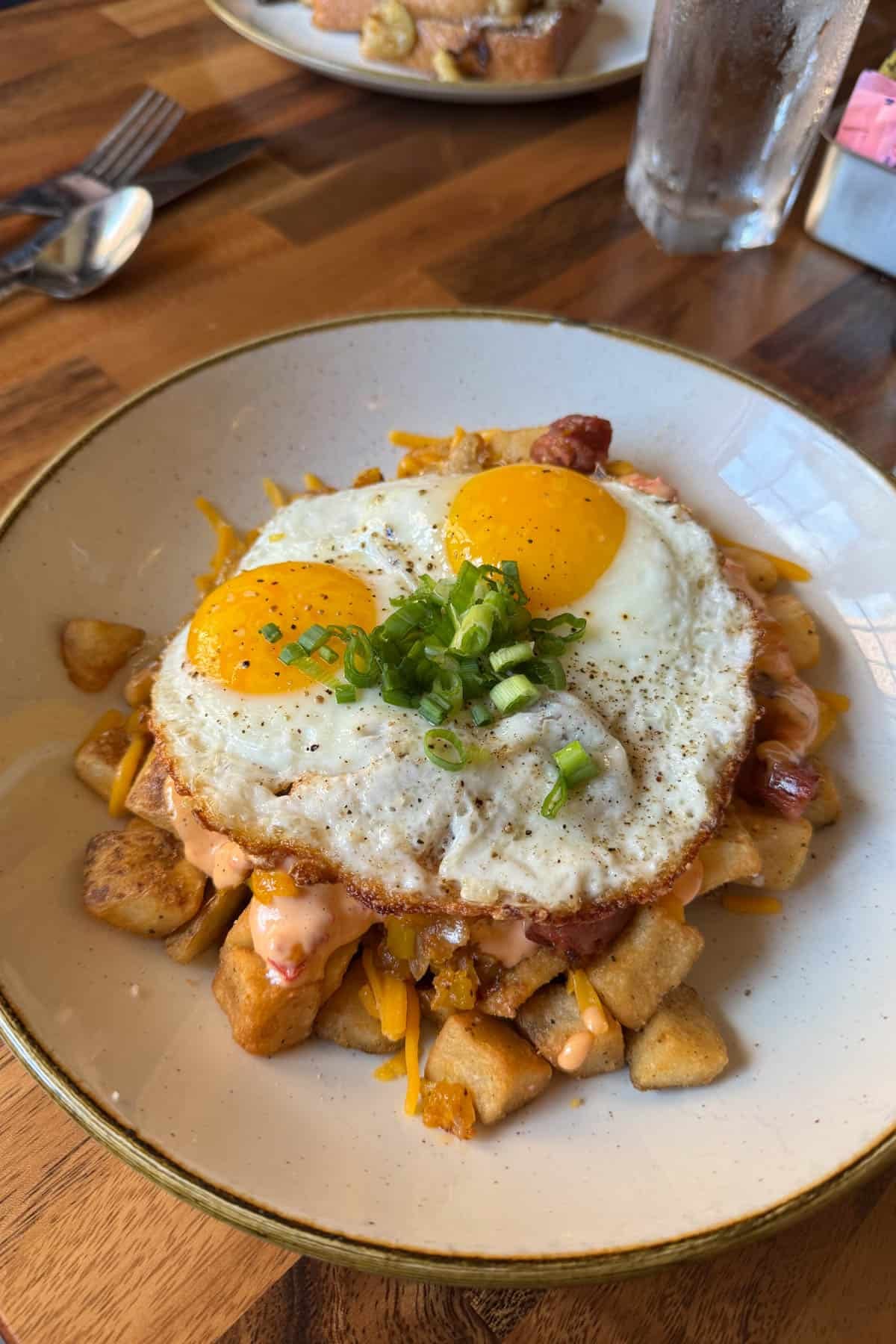
Another option is to dine at one of the resort restaurants. Standouts for us were the avocado toast with poached eggs, biscuits & gravy, and breakfast hash bowl at the Traditions Restaurant for a surprisingly excellent breakfast.
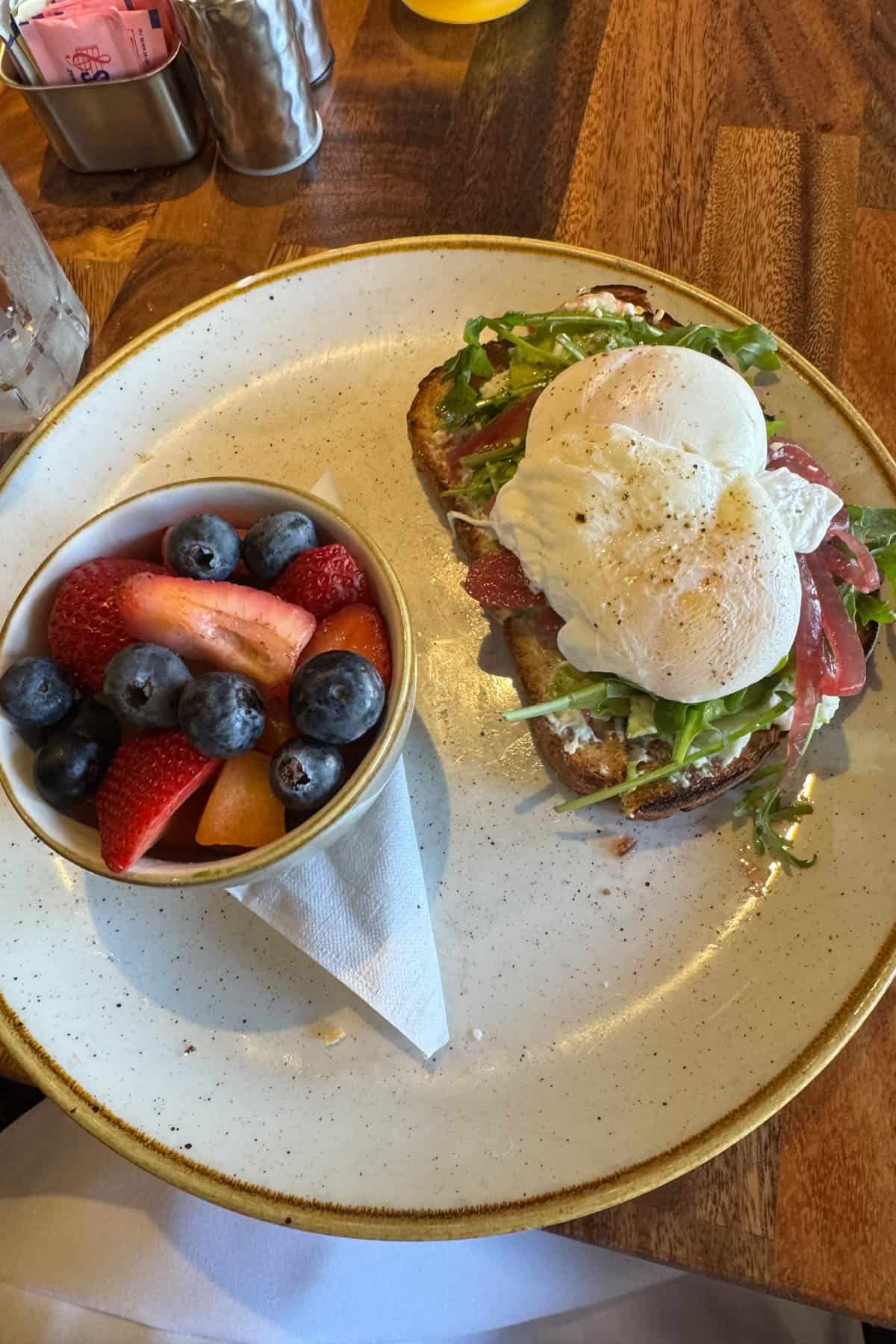
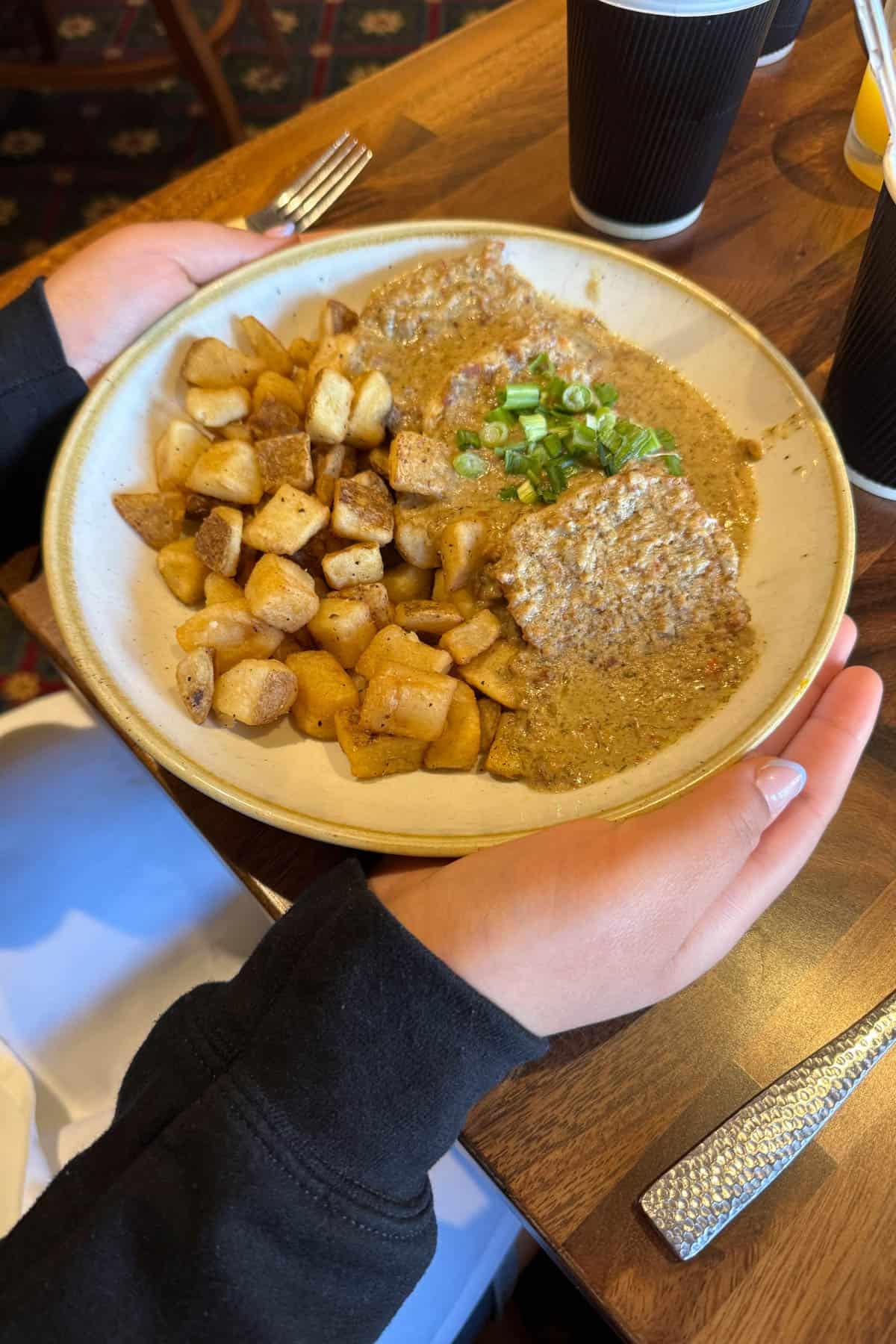
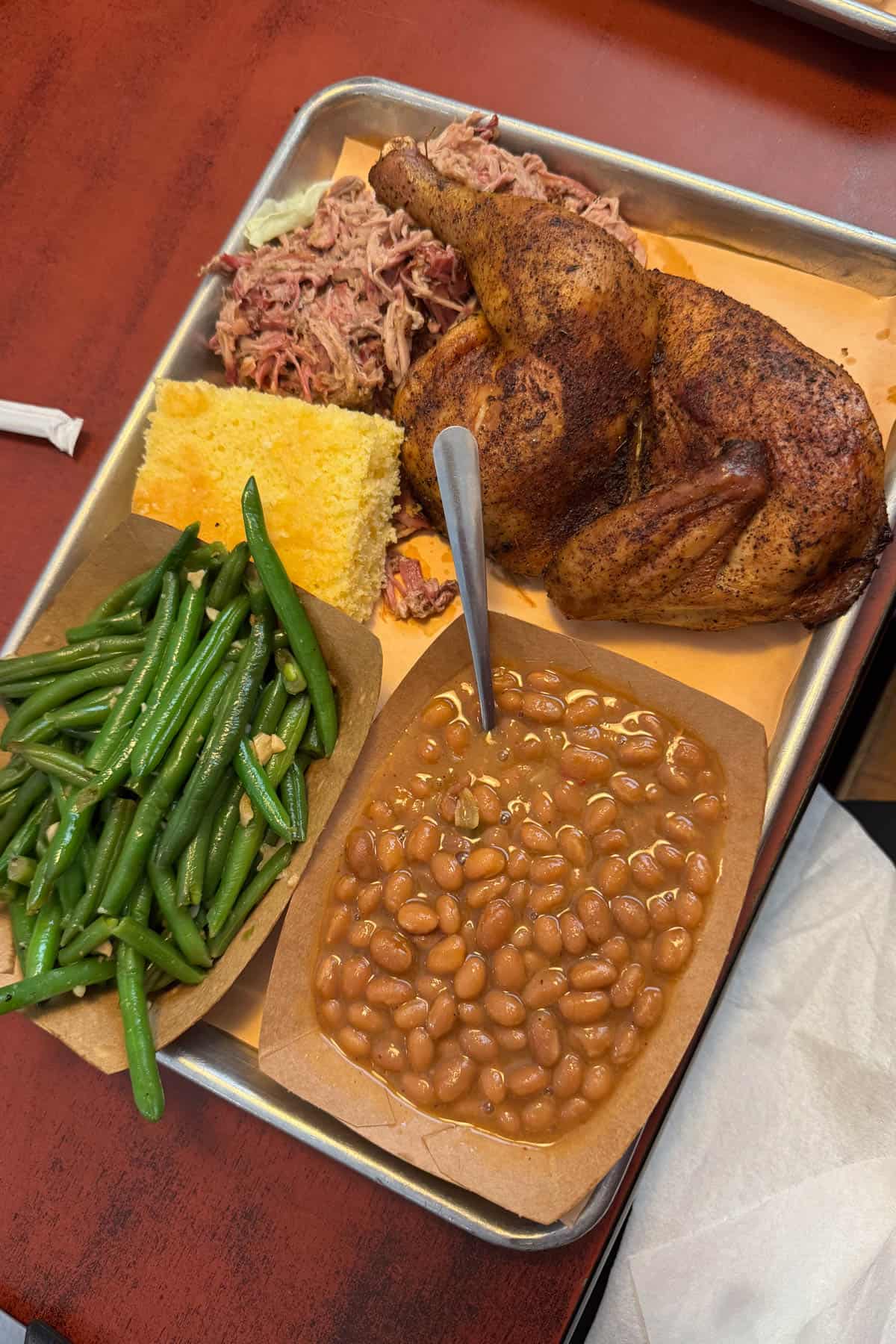
Although these recommendations are not in Colonial Williamsburg, it’s worth visiting Two Drummers Smokehouse or Old City Barbeque for some really excellent southern fare like brisket, smoked chicken, and ribs.
Final Tips for Visiting
- Plan Ahead. Make food reservations, book tickets for special events, etc. Things fill up and you don’t want to miss out.
- This is personal preference, but we intentionally avoided Busch Gardens, which our thrill seeking kids would have loved. But we wanted them to make memories of something other than roller coasters on this trip and an amusement park would have overshadowed our slower paced historical experiences so we opted to skip it this trip.
- Merchants Square is a convenient shopping and dining district right next to Colonial Williamsburg with a great candy shop.