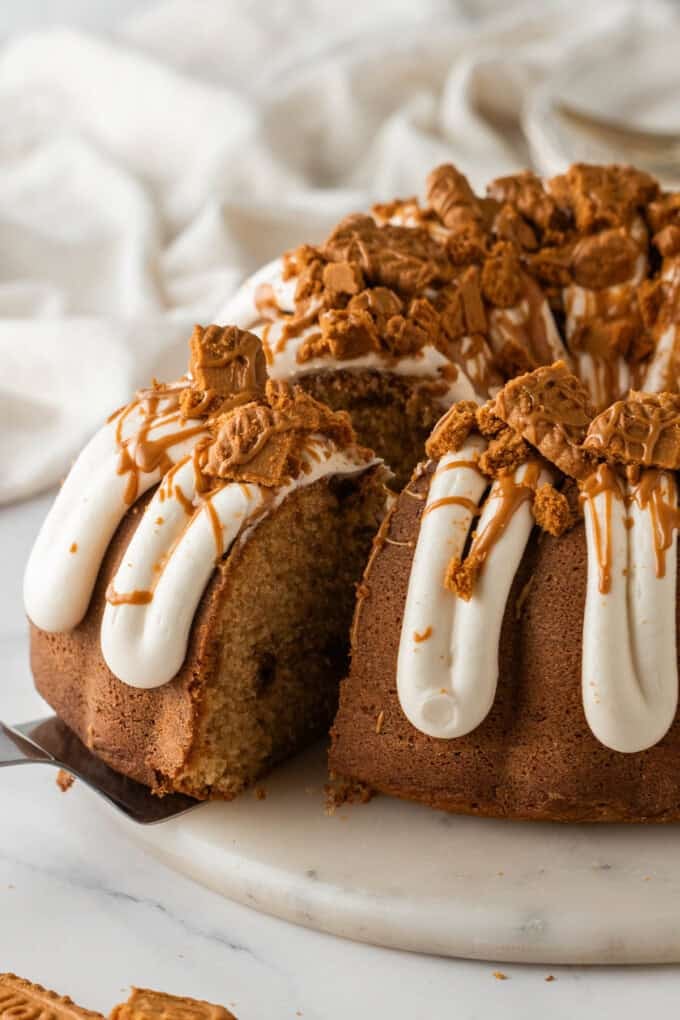
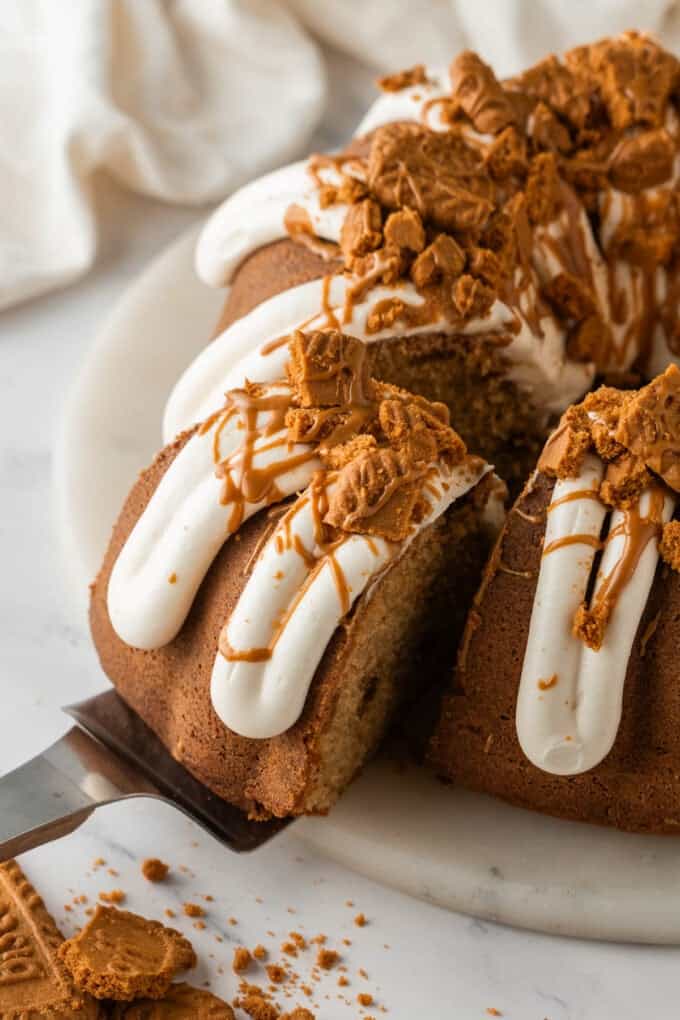
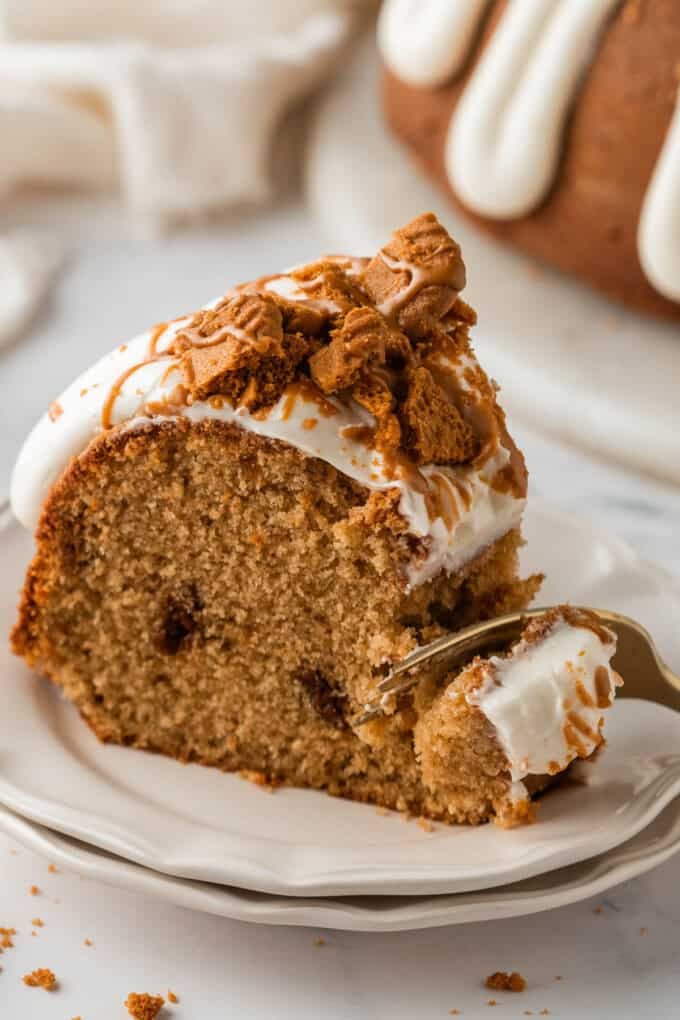
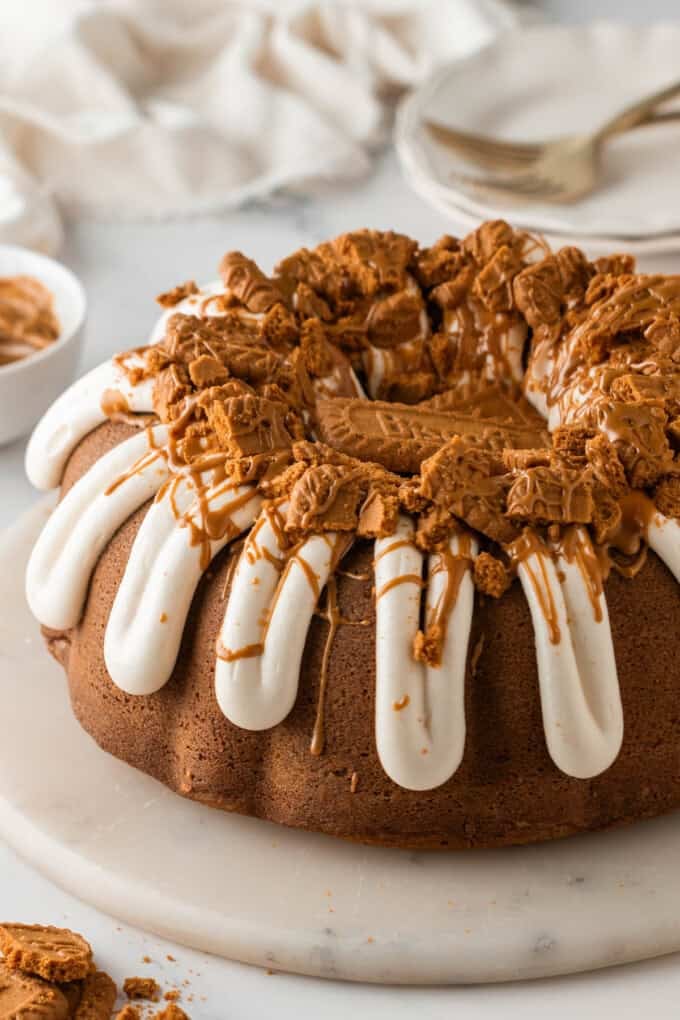
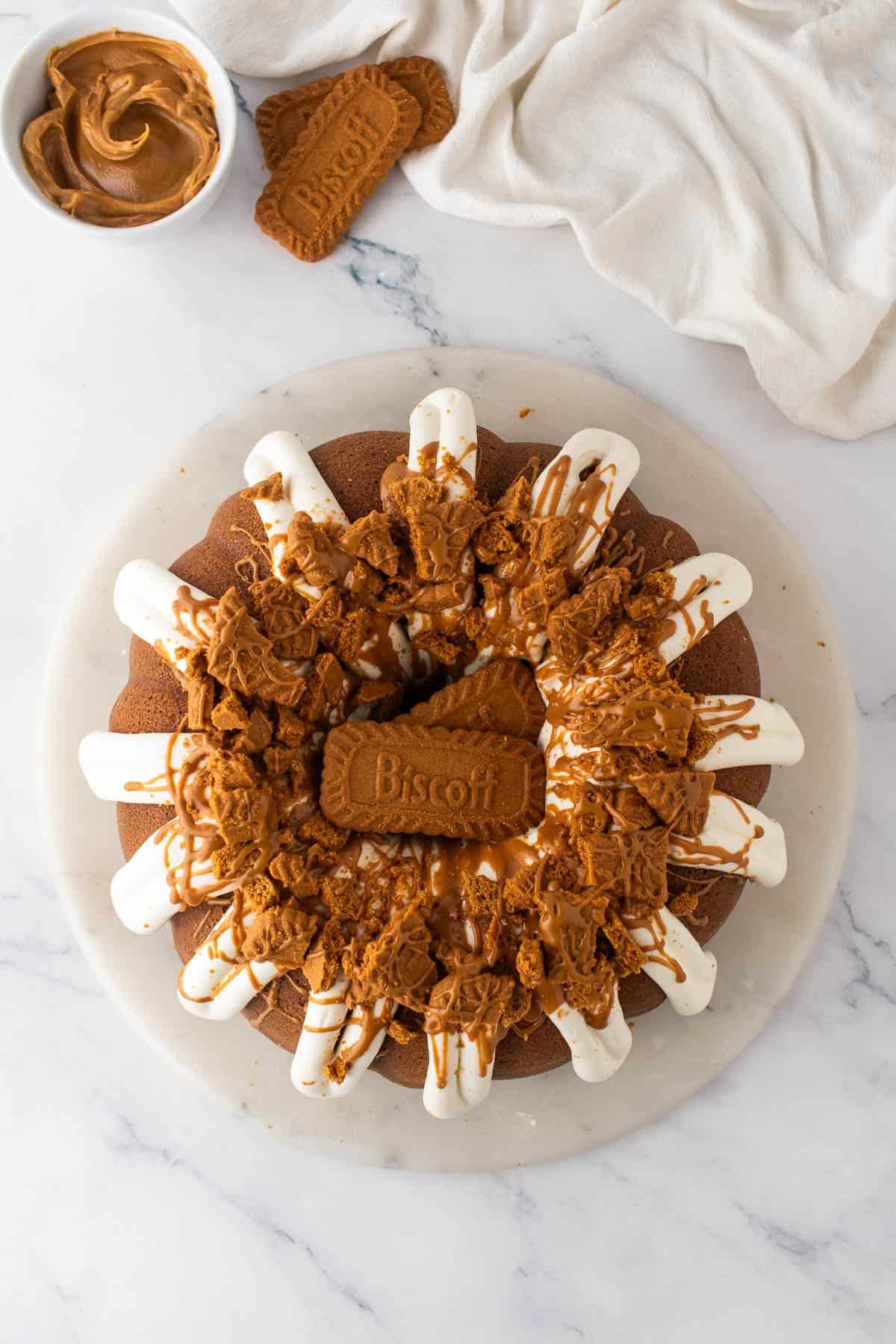
This Biscoff Bundt Cake has a warmly spiced, deliciously moist crumb finished with a tangy cream cheese frosting and a Biscoff drizzle. It is an absolute showstopper for anything from a low-key weekend gathering to a full-on holiday party.
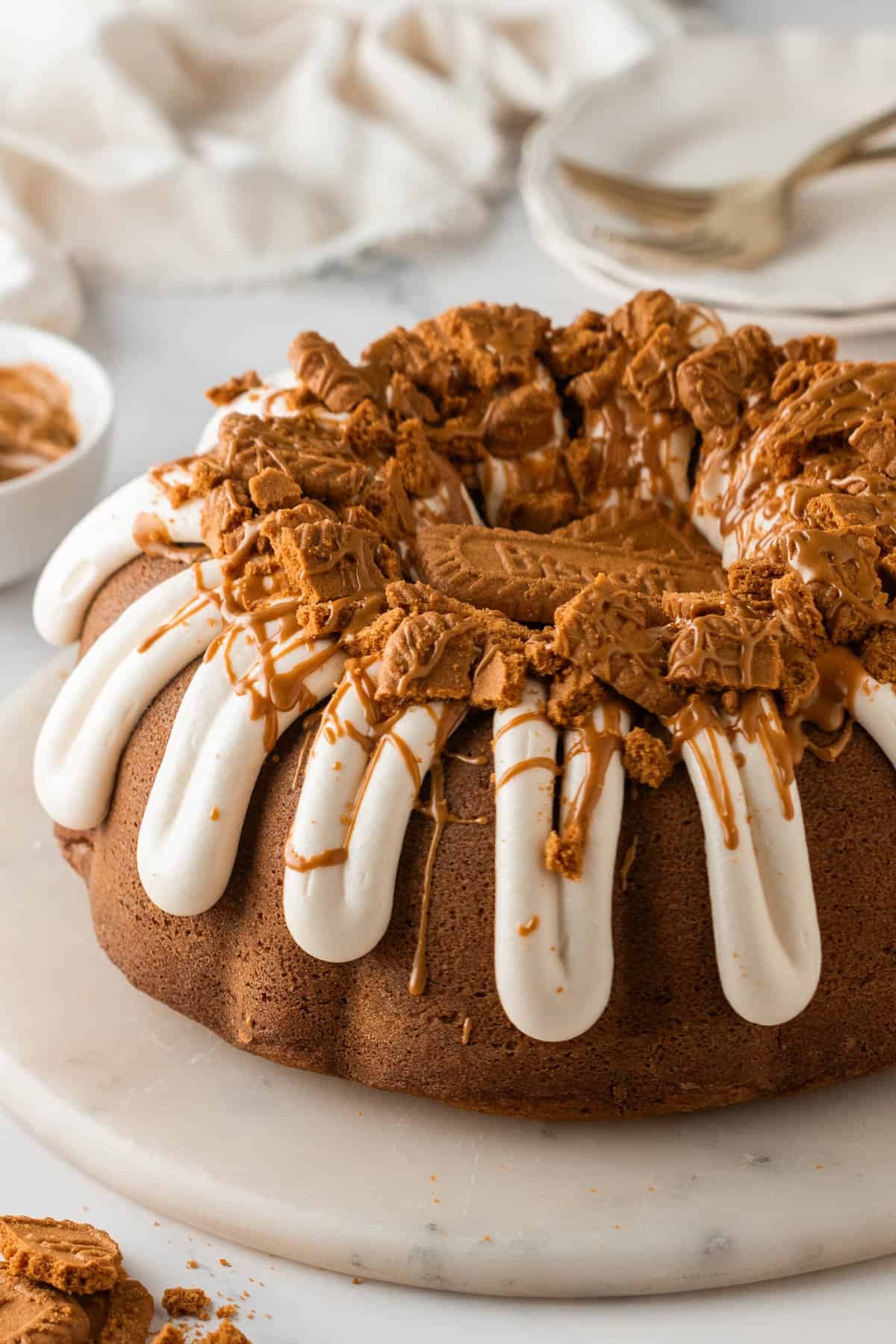
If you love cookie butter, then you are definitely in the right place. If not, might I suggest my chocolate bundt cake instead?
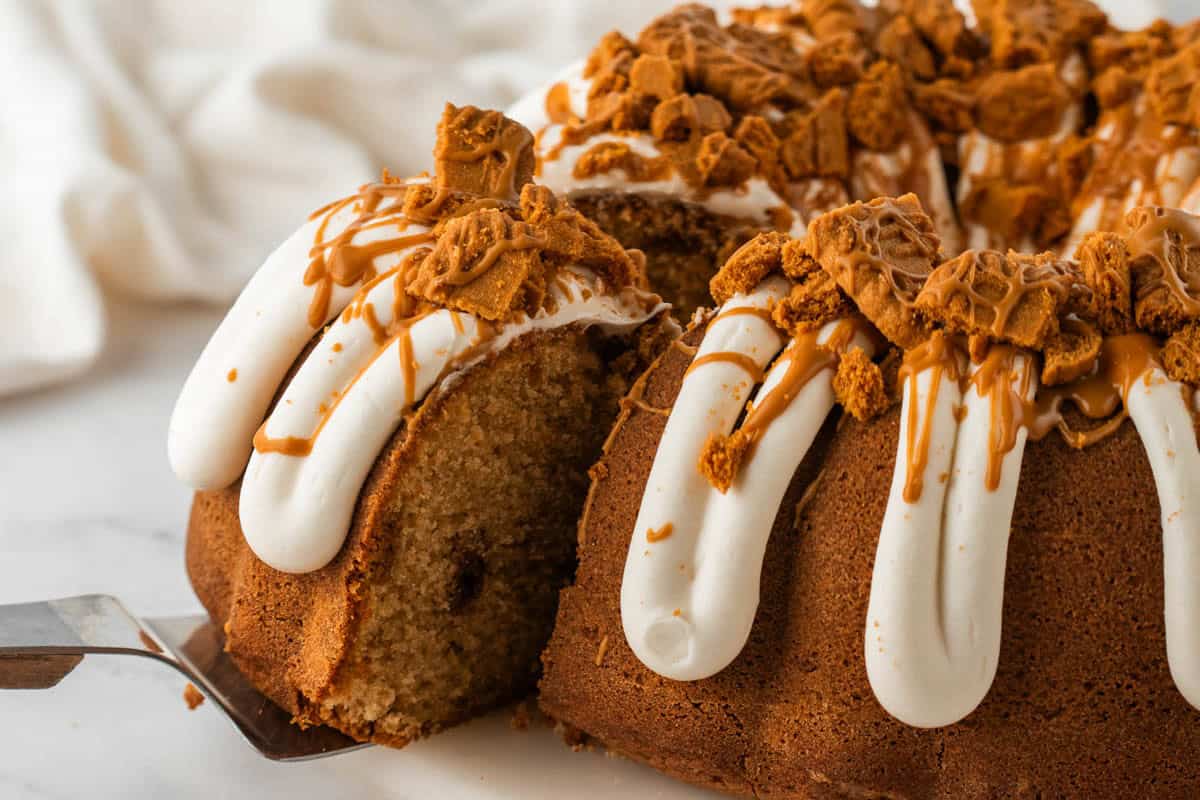
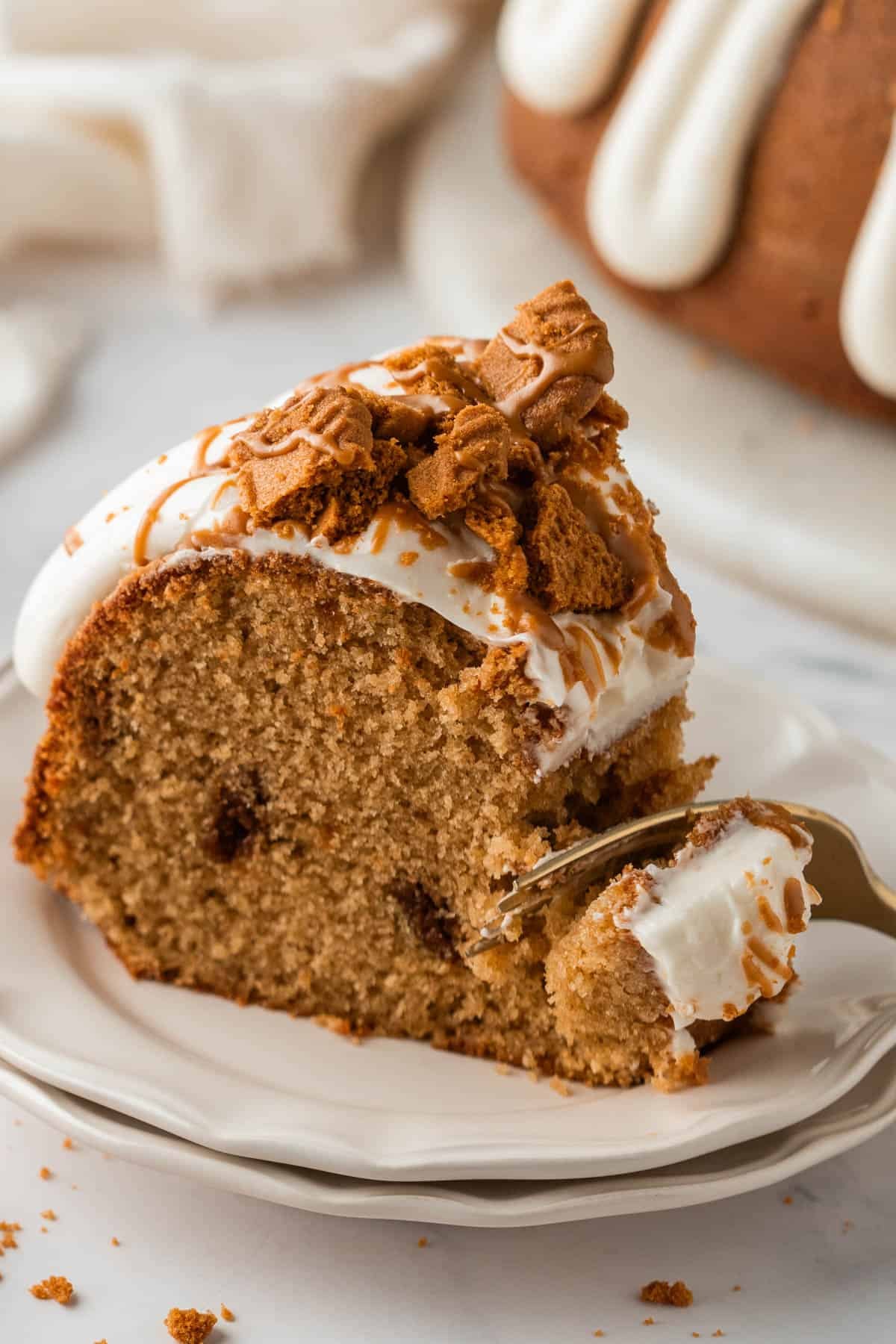
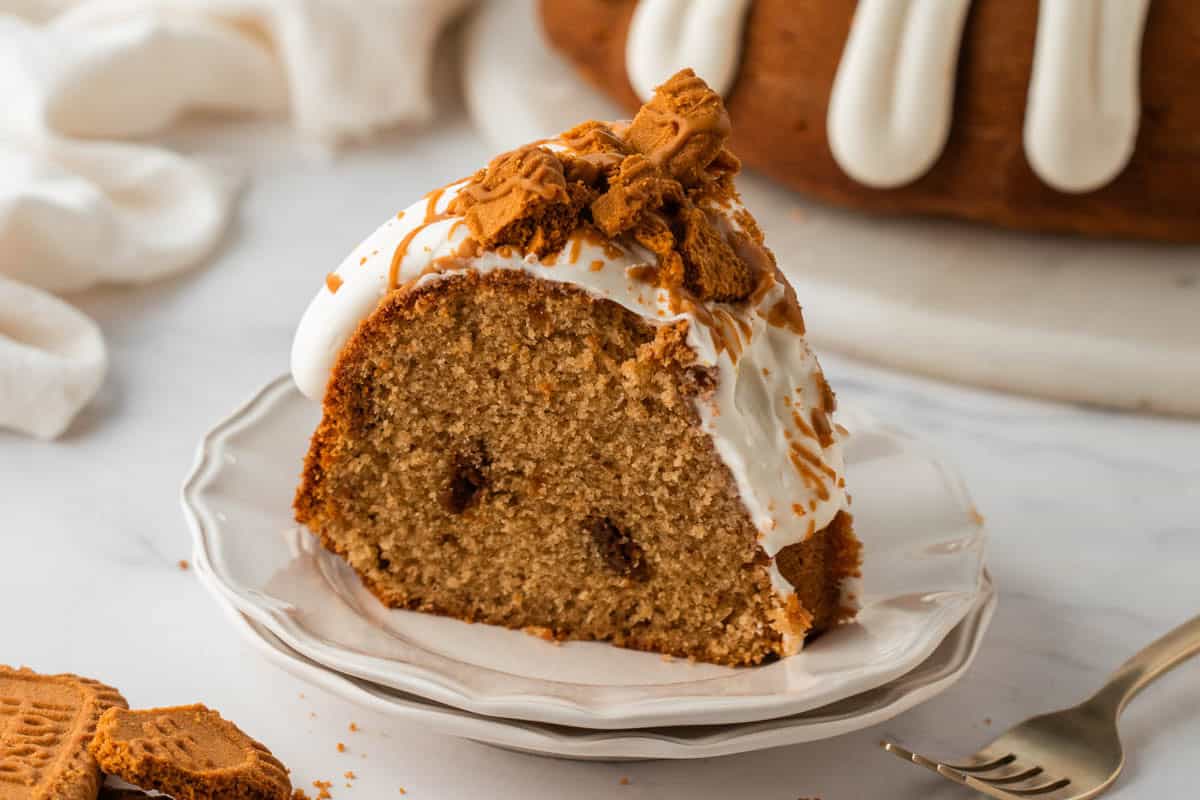
I absolutely love Biscoff cookie butter and it shows up three times here: worked into the batter, the frosting, and the warm drizzle on top, so the caramelized flavor runs through the whole cake instead of stopping at the surface. And chopped cookies folded into the batter turn up as unexpected pockets of texture against all that soft, spiced crumb.
Biscoff cookies got their start in 1932 in a small bakery in Lembeke, Belgium, where baker Jan Boone Sr. created a caramelized cookie made with natural ingredients and a cinnamon flavor that paired well with coffee. The cookie kept the Lotus name until 1986, when it was rebranded as Biscoff, a blend of “biscuit” and “coffee”. So interesting, right?
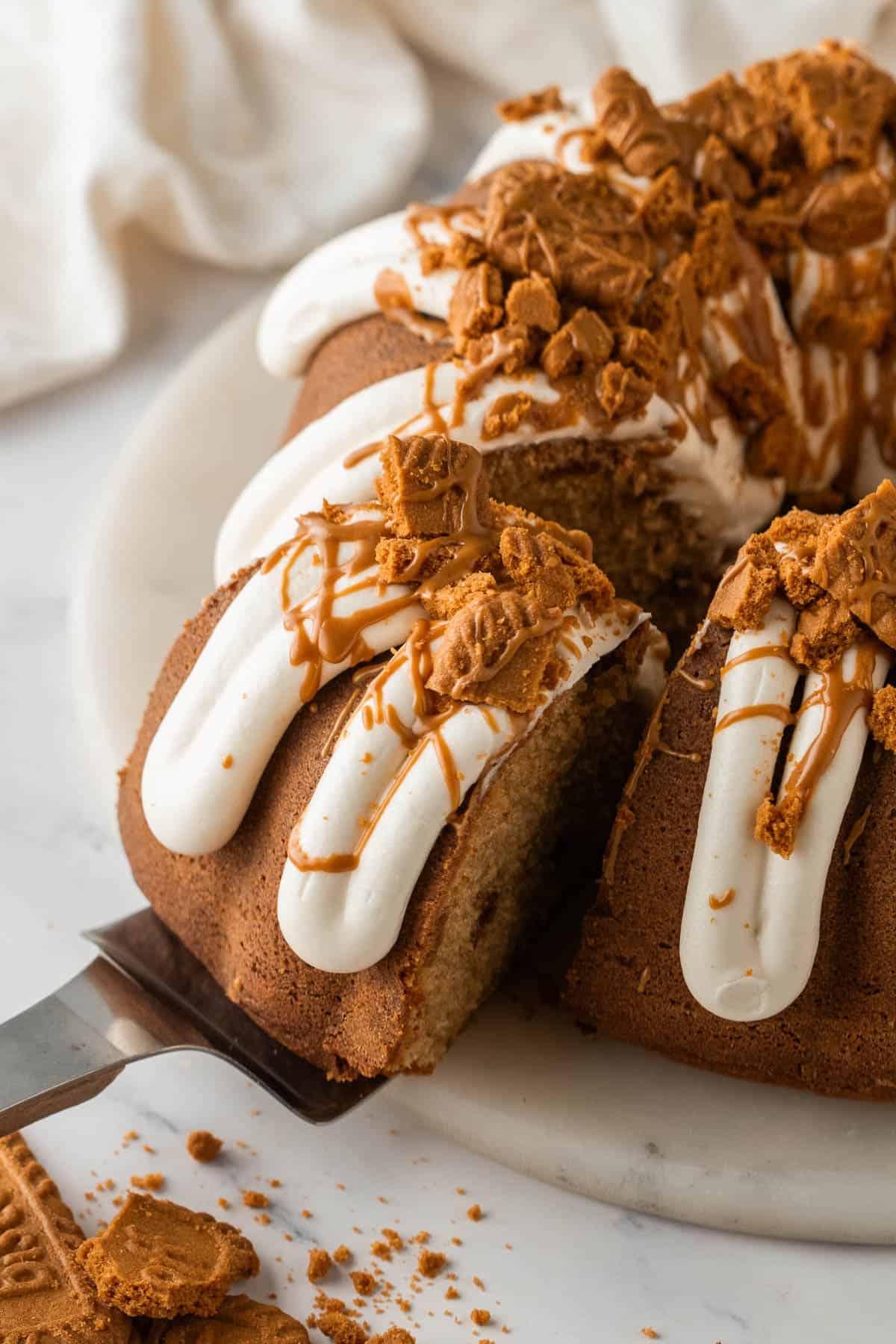
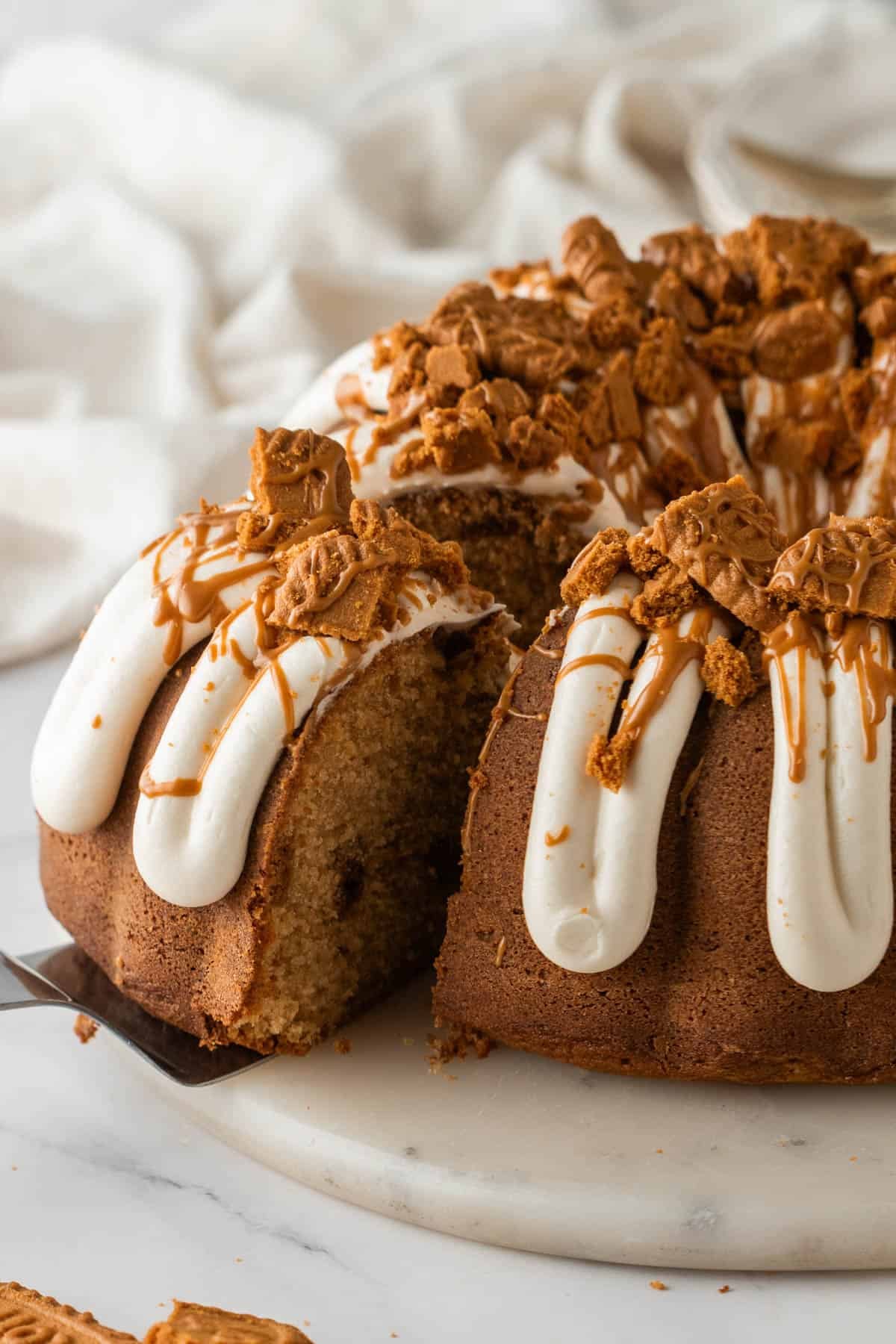
The ridged bundt shape does most of the visual work on this cake, so a few piped lines of frosting (Nothing Bundt Cake style) and a warm cookie drizzle are all it takes to make it look like real effort went in, even when it didn’t. The tangy cream cheese frosting cuts through all that sweetness, giving the cake something else to hold onto so it doesn’t turn into one big, undefined Biscoff blur.
For more cinnamon and caramel desserts, check out my Cinnamon Roll Cheesecake, Copycat Crumbl Cinnamon Swirl Cookies, Caramel Apple Cheesecake Bars, Biscoff Cookie Butter Milkshake, and Caramel Oreo Fudge Ripple Ice Cream!
Why you’ll love this family favorite recipe!

- Biscoff shows up three different ways here: mixed into the batter, drizzled over the frosting, and scattered as crushed cookies on top, so the flavor comes at you from every angle.
- The bundt shape alone makes this cake look impressive before you’ve decorated a single thing.
- There’s chopped bits of cookies hidden inside the batter itself, so every slice has little pockets of crunch waiting under that soft crumb.
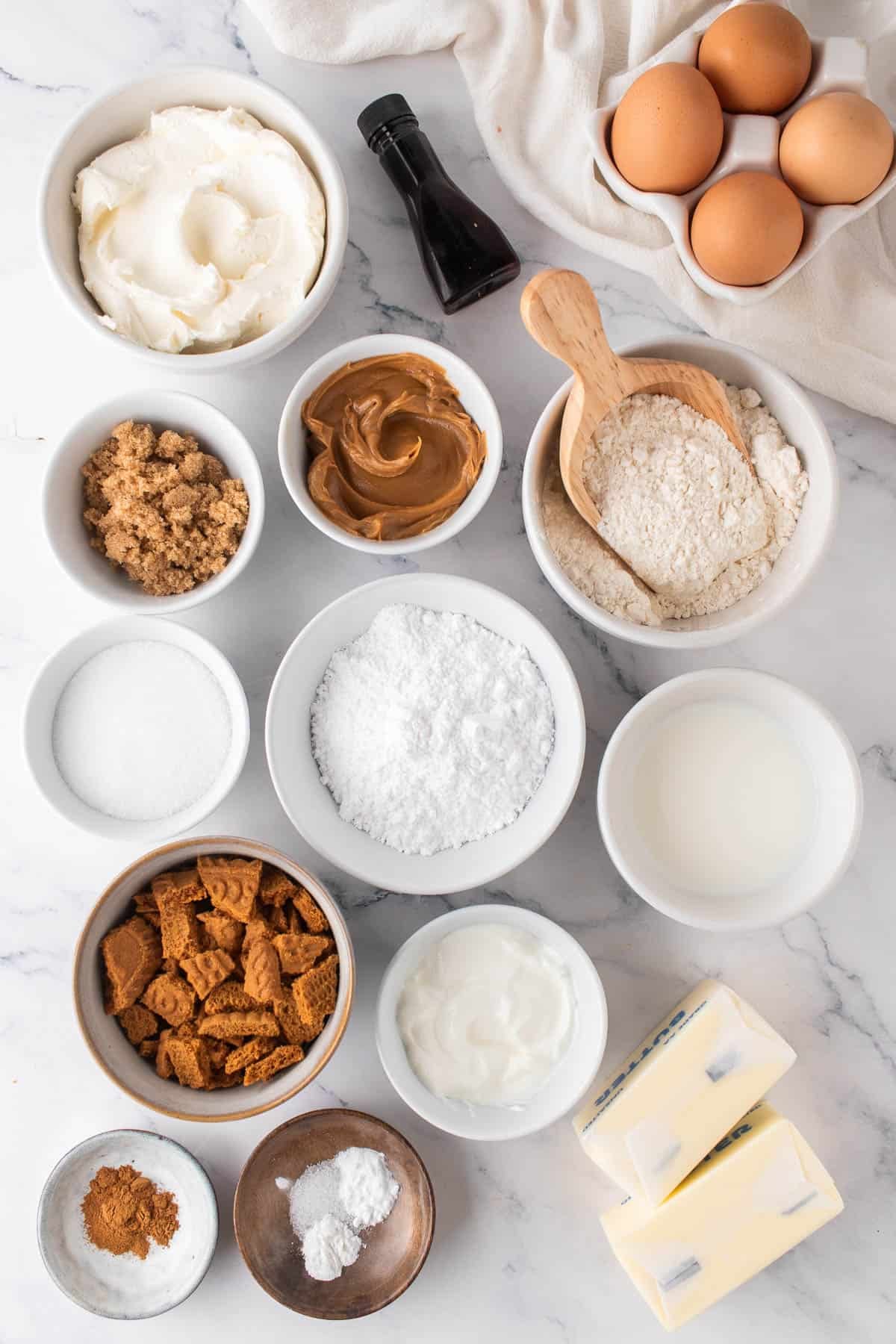
What You’ll Need
Scroll down to the recipe card below this post for ingredient quantities and full instructions.
- All-Purpose Flour: Gives the cake its structure. Don’t swap in bread flour here, it’ll make the crumb tougher than you want.
- Baking Powder: Works alongside the baking soda to give the cake its lift.
- Baking Soda: Reacts with the sour cream to help the cake rise and gives it a slightly tender crumb.
- Salt: Keeps all that sweetness from Biscoff and brown sugar in check.
- Ground Cinnamon: Backs up the warm spice already in the Biscoff itself. If you’re a cinnamon fanatic, feel free to add a little more.
- Salted Butter: Adds richness to the batter and the frosting. If you only have unsalted on hand, add a small pinch of extra salt.
- Biscoff Cookie Butter Spread: The star of the show, giving the batter that signature caramelized cookie flavor, and drizzled over the frosting for a final hit of Biscoff. Stick with the smooth version here, the crunchy version will leave small bits throughout the entire cake rather than the smooth base you want.
- Light Brown Sugar: Adds sweetness and moisture, and its molasses note plays well with the cinnamon. Dark brown sugar also works, but will give the cake a deeper, more molasses-forward flavor. If it’s all you’ve got, you can swap half of it for granulated sugar to bring it closer to light brown sugar.
- Granulated Sugar: Rounds out the sweetness and helps the cake hold its texture.
- Eggs: Binds everything together and adds richness. Make sure they’re at room temperature so they blend in smoothly.
- Vanilla Extract: Rounds out the flavor in both the cake and the frosting.
- Sour Cream: Adds moisture and a bit of tang. Full-fat Greek yogurt works as a swap if that’s what you have.
- Whole Milk: Thins the batter to the right consistency. Lower-fat milk will work in a pinch, though the cake won’t be quite as rich.
- Chopped Biscoff Cookies: Folded into the batter for pockets of crunch throughout the cake, and scattered over the frosting to finish the look with extra crunch.
- Cream Cheese: The base of the frosting, adding tang that balances the sweetness of the cake. Use a block, not the spreadable kind in a tub.
- Powdered Sugar: Sweetens and thickens the frosting so it holds its shape when piped.
How to Make Biscoff Bundt Cake
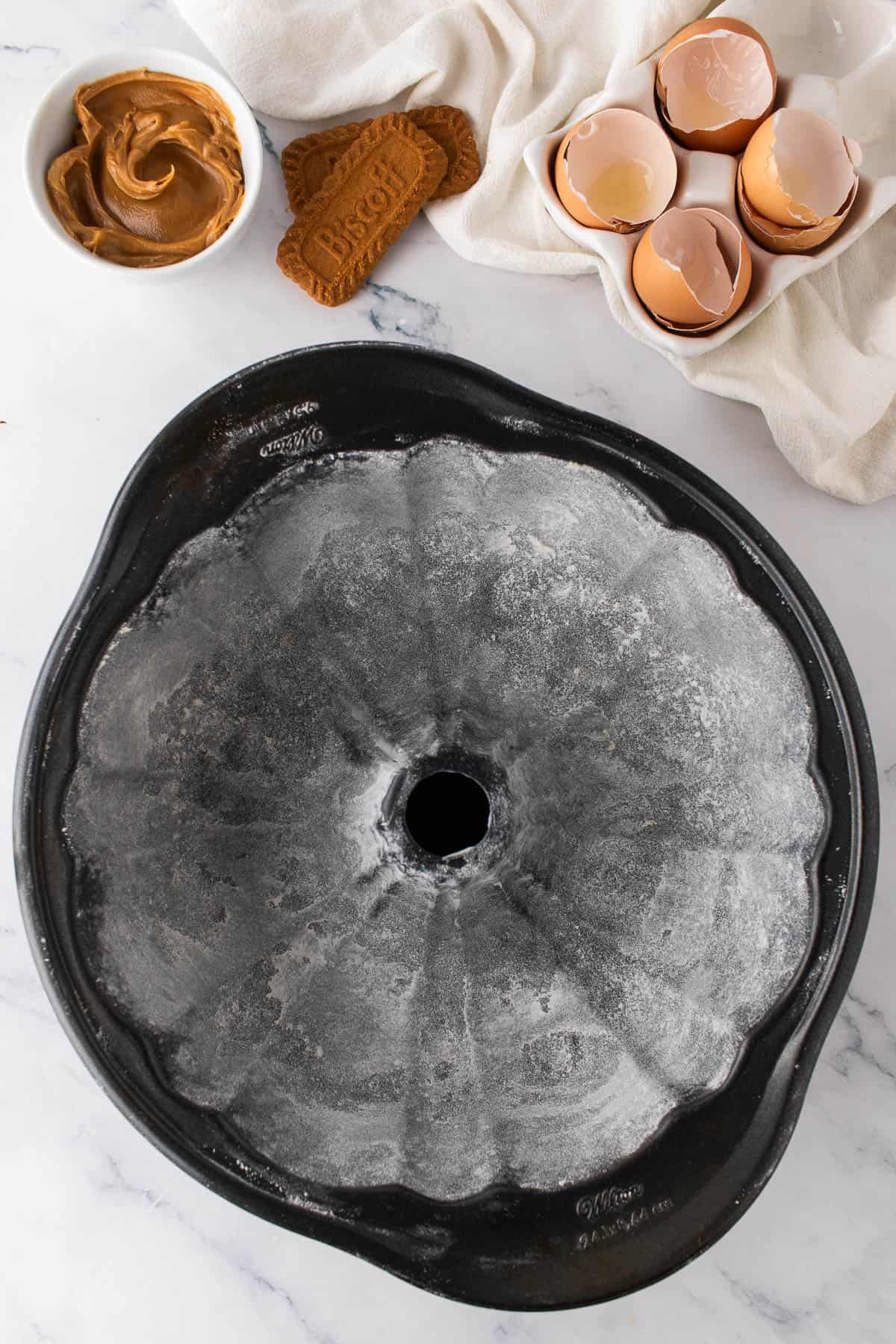
- Prep pan. Grease a 10-12 cup bundt pan generously, working butter or baking spray into every groove, then dust with flour and tap out the extra. This step matters more than any other for getting a clean release later.
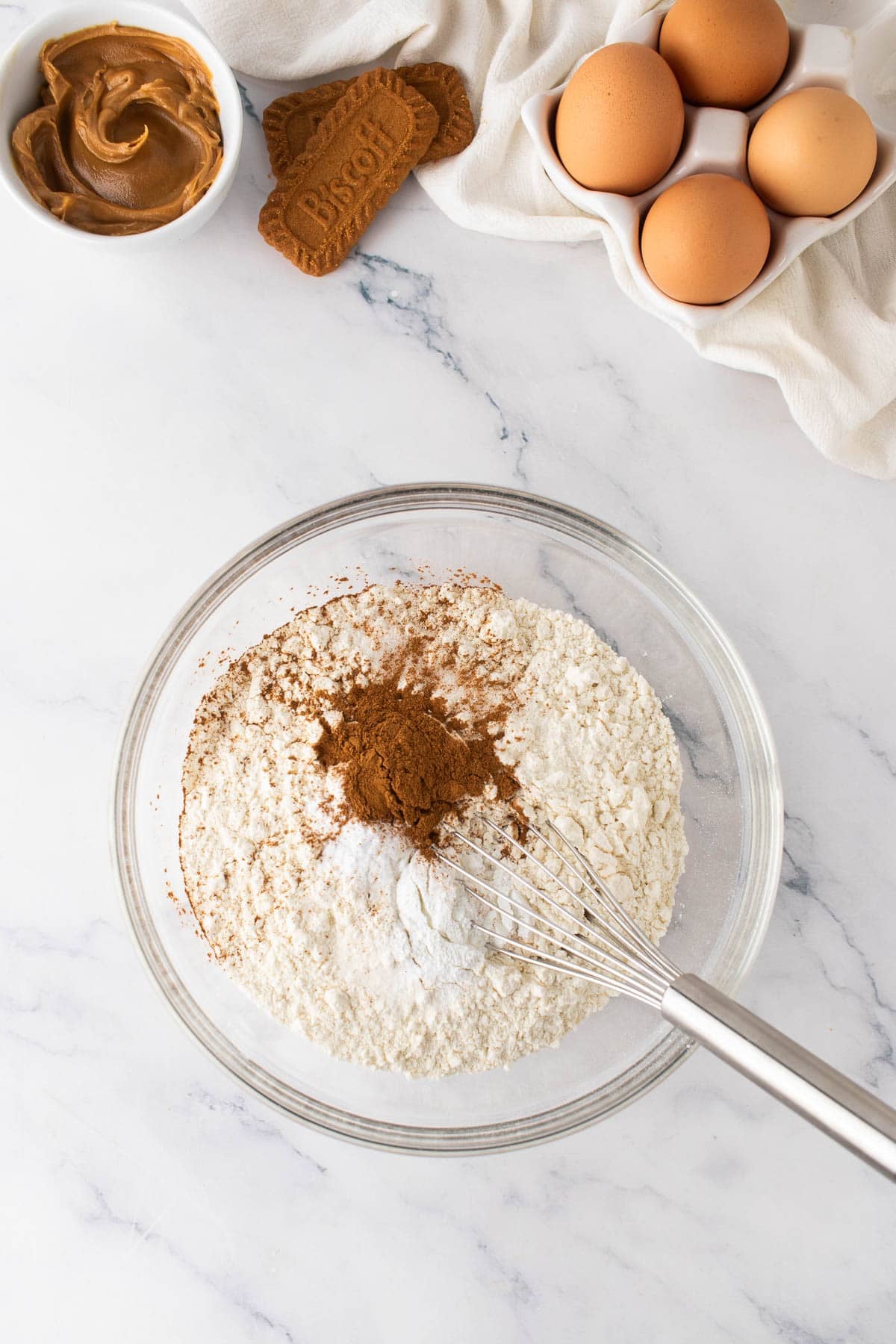
- Whisk dry ingredients. Combine the flour, baking powder, baking soda, salt, and cinnamon in a bowl and set aside.
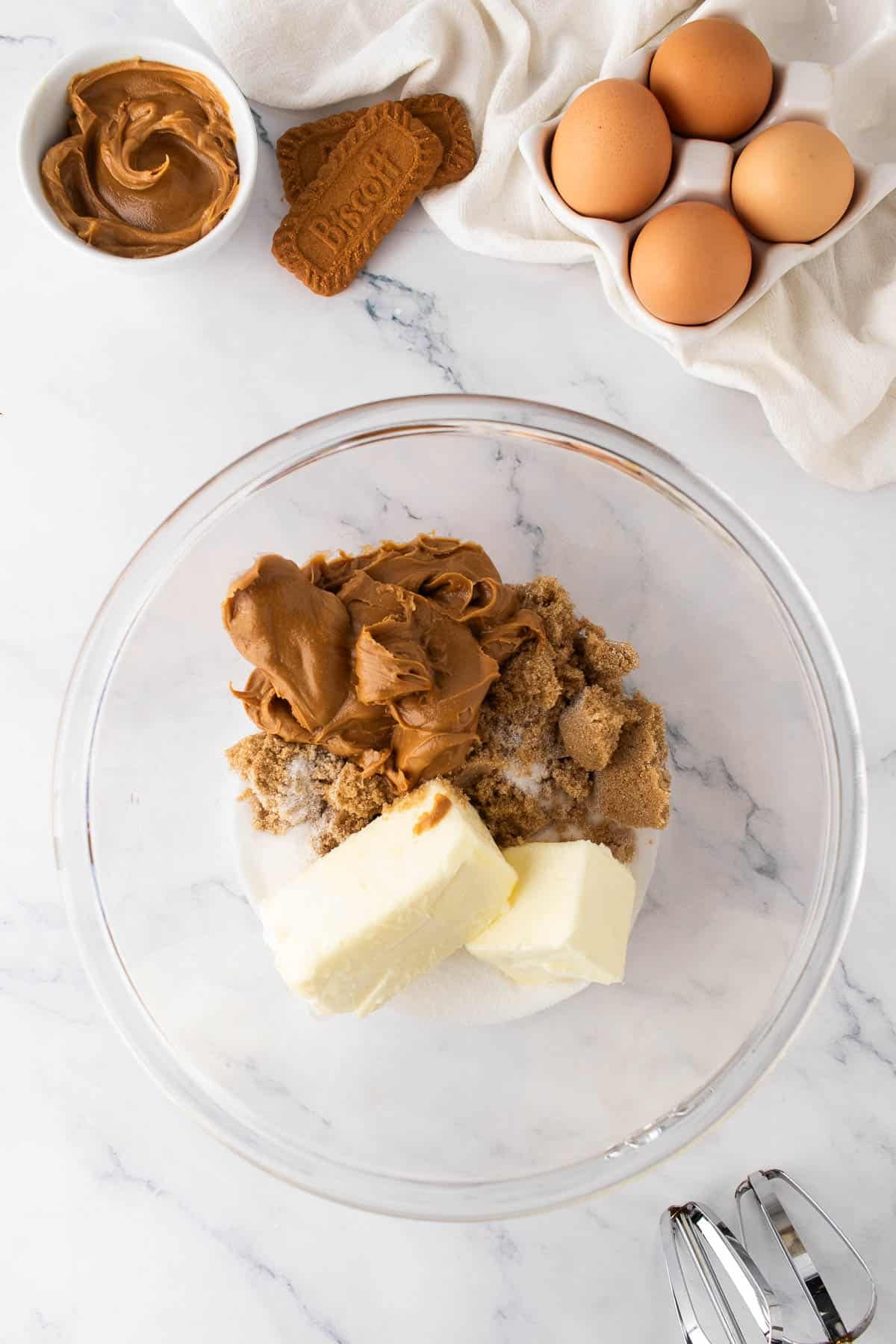
- Cream butter and Biscoff. Beat the butter, Biscoff spread, brown sugar, and granulated sugar together until light and creamy, about 2 to 3 minutes.
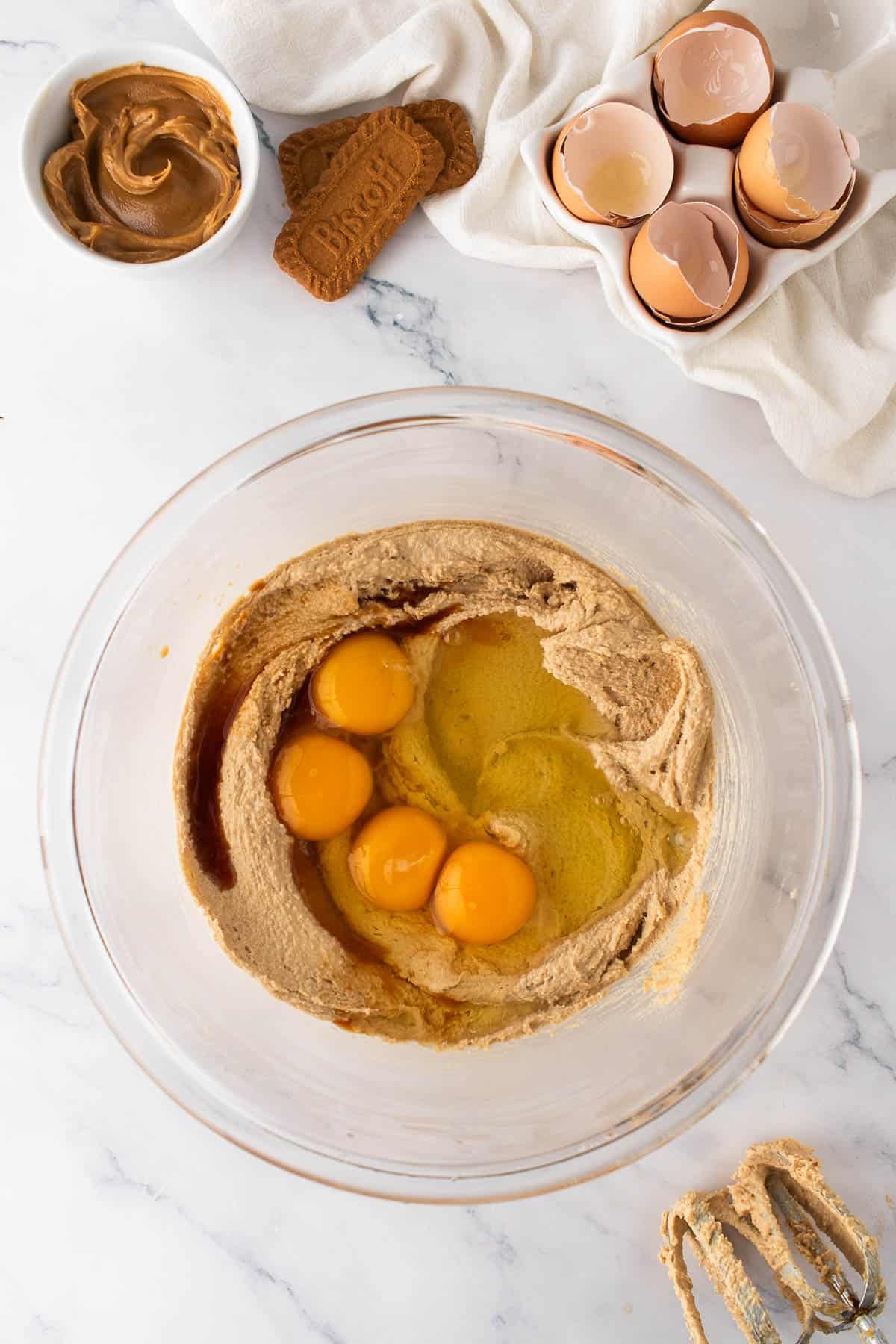
- Add eggs. Mix in the eggs one at a time, then beat in the vanilla.
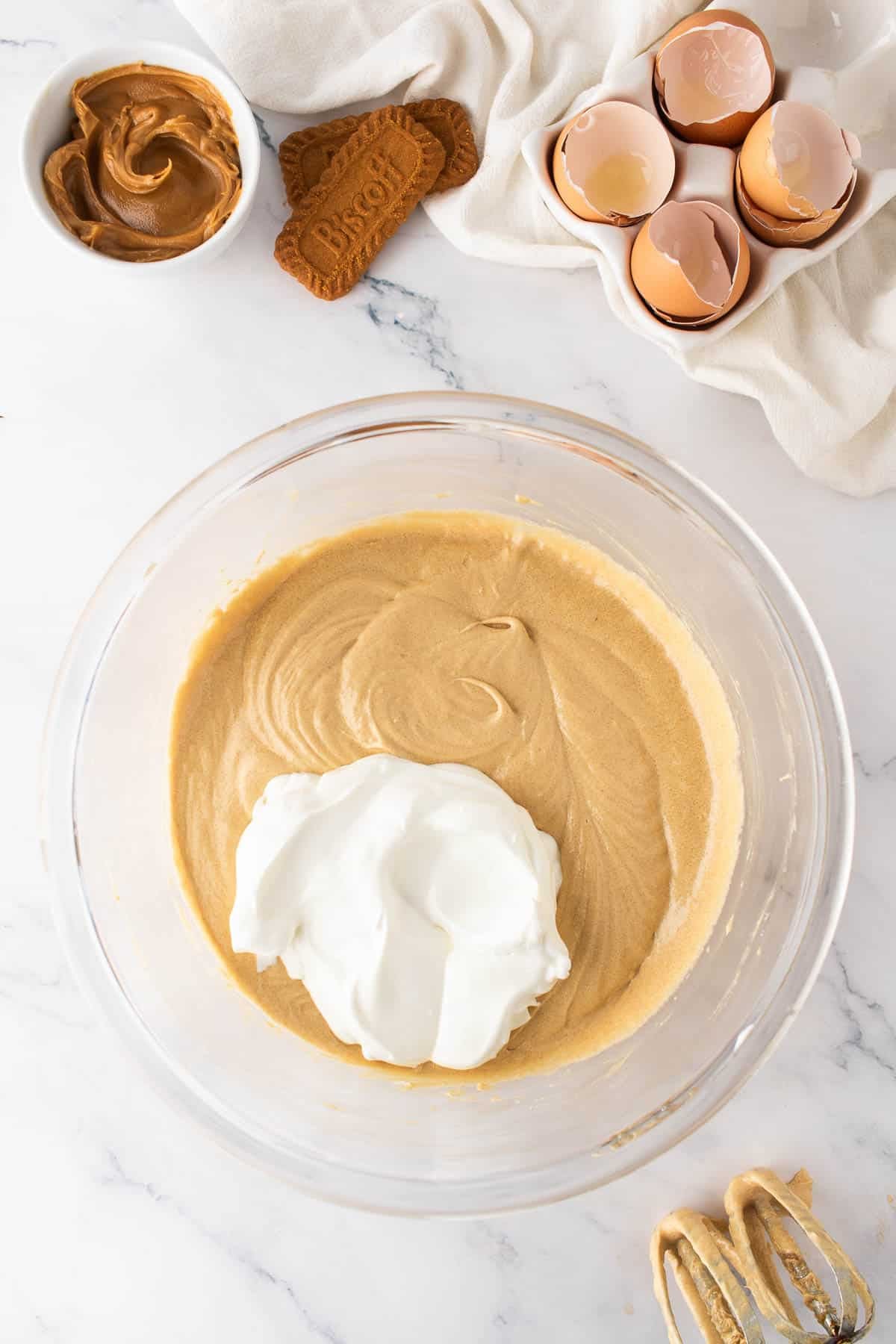
- Mix in sour cream. Add the sour cream and mix until fully combined.
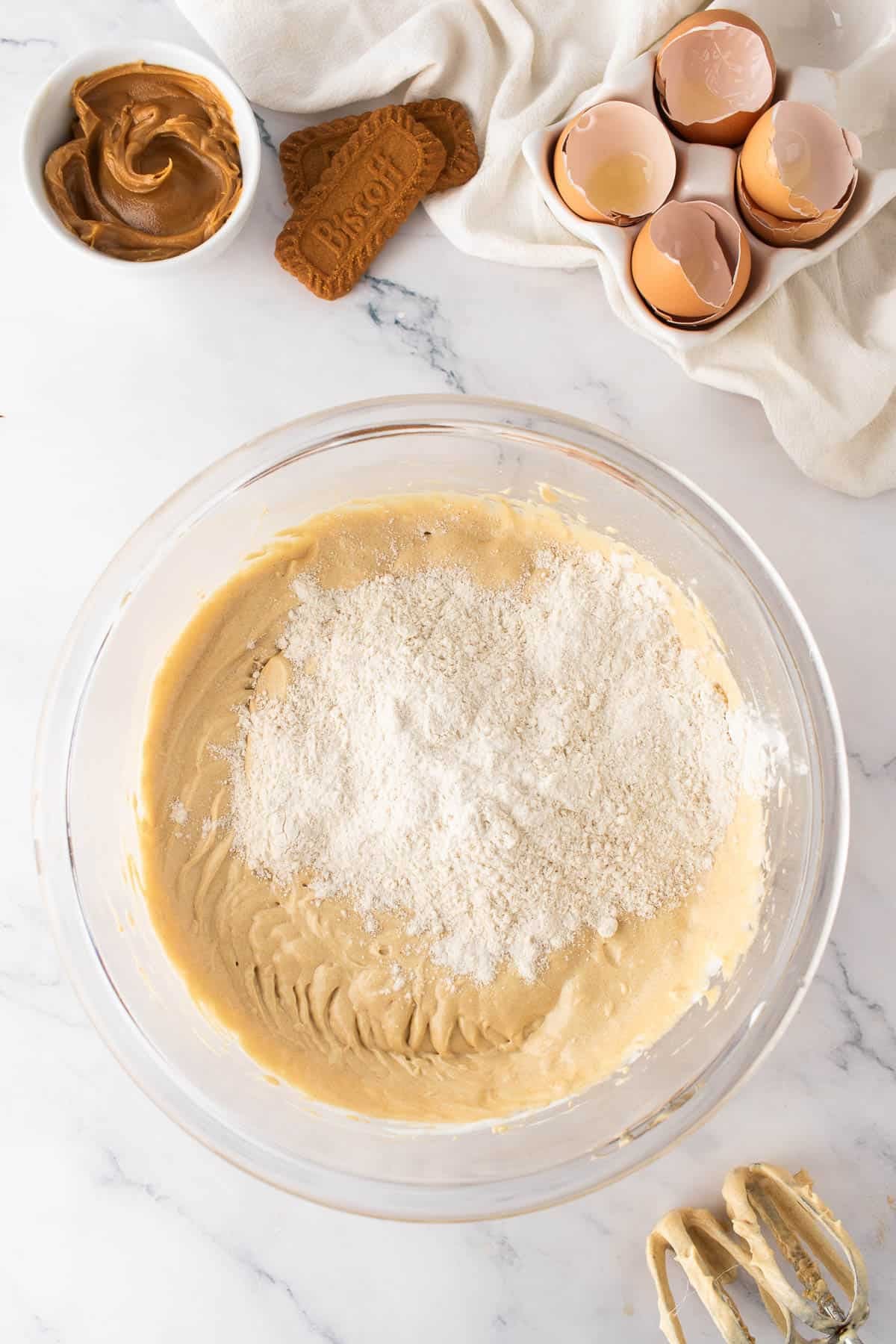
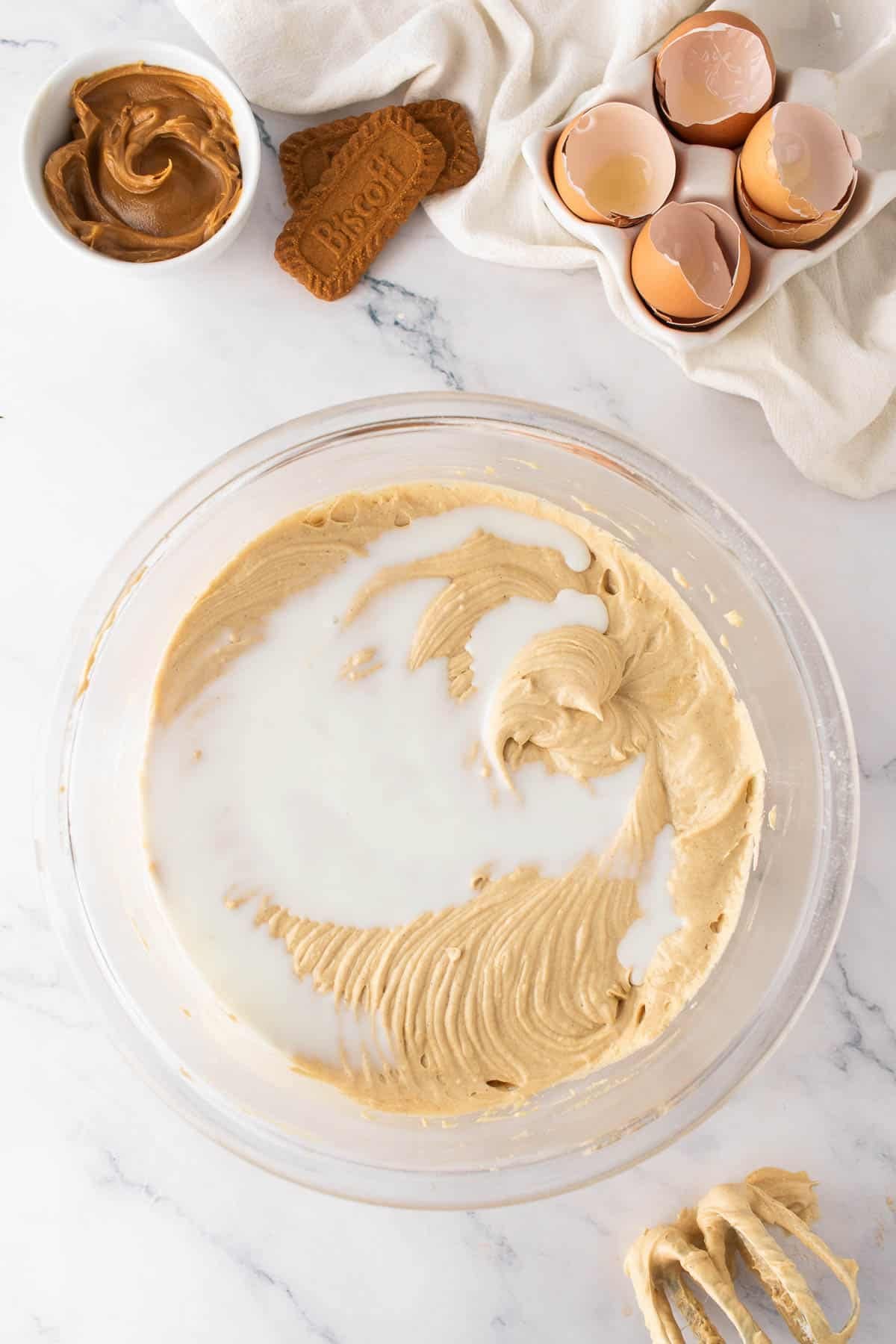
- Combine wet and dry. Add the dry ingredients to the batter gradually, alternating with the milk, and mix just until no streaks of flour remain.
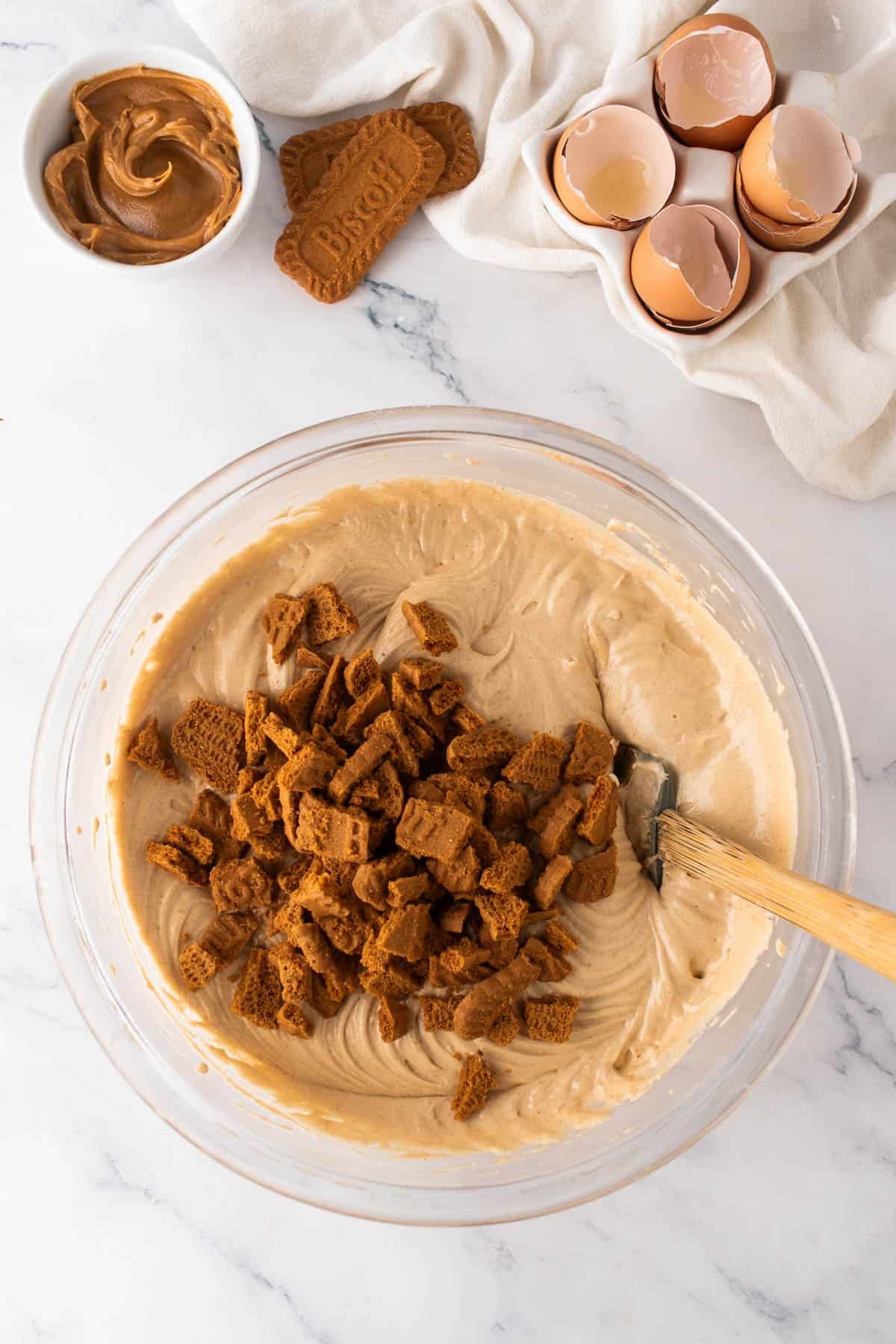
- Fold in cookies. Gently fold the chopped Biscoff cookies through the batter with a spatula.
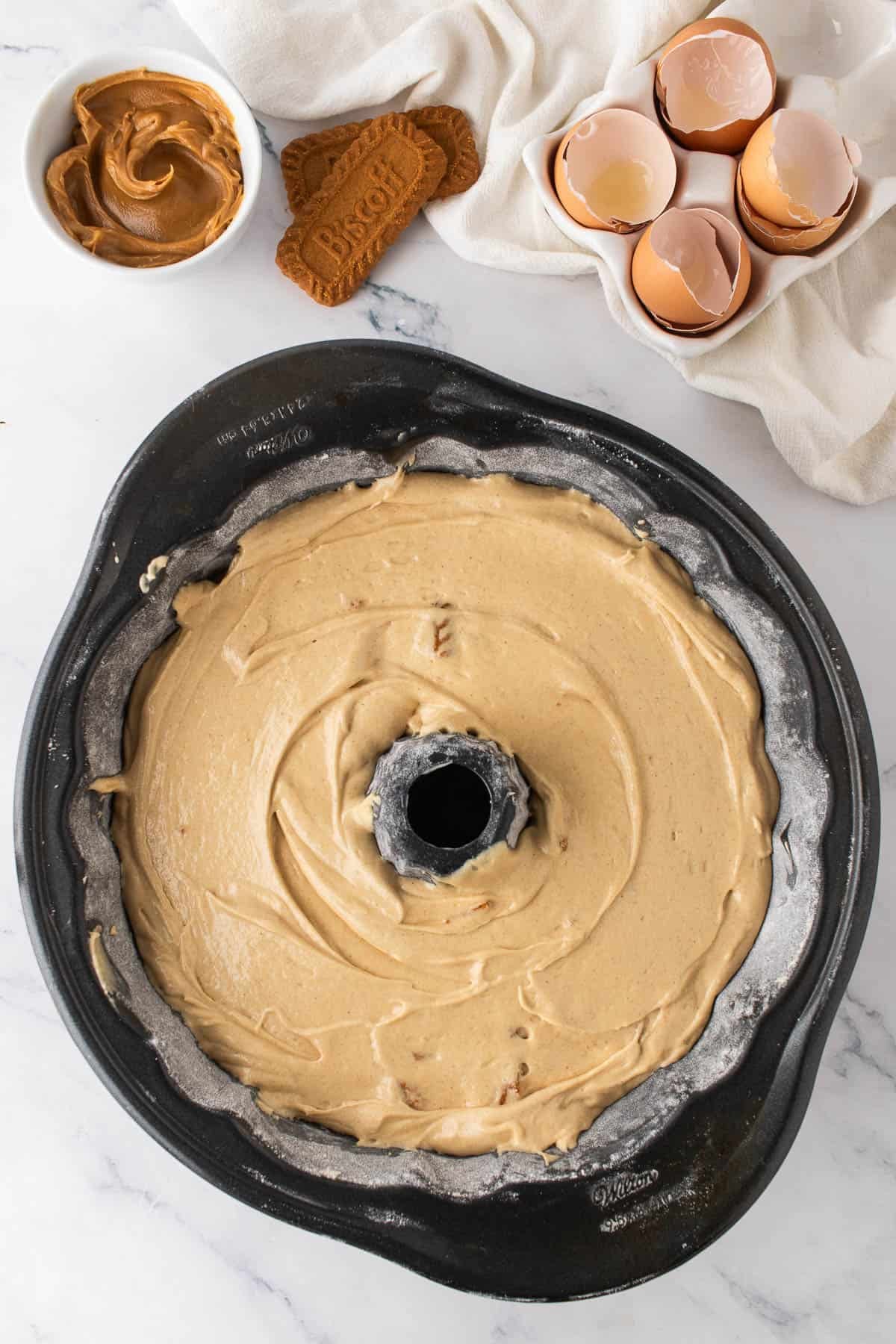
- Fill pan and bake. Spoon the batter into the prepared pan, smooth the top, and bake for 45 to 55 minutes, until a toothpick comes out clean or with a few moist crumbs.
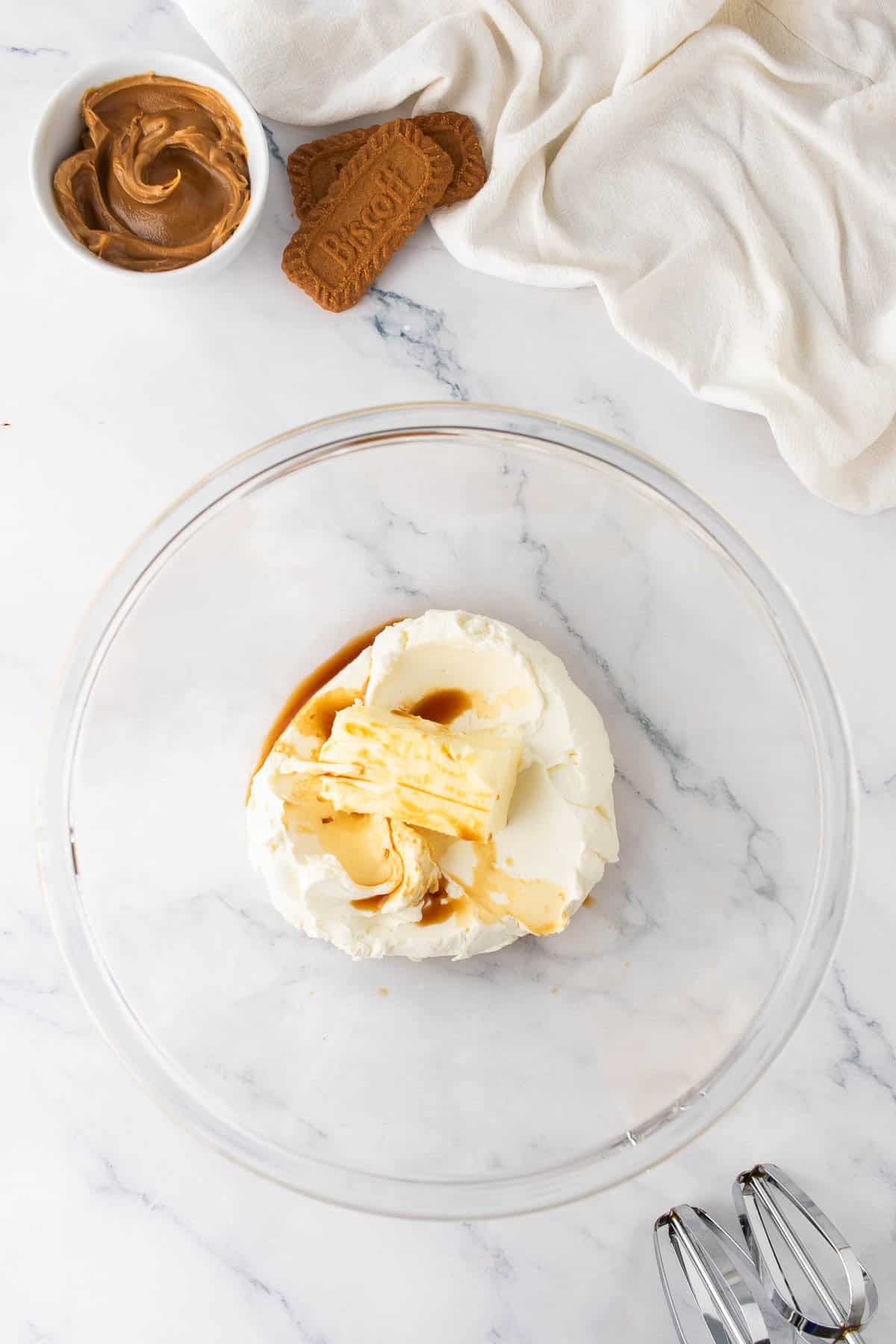
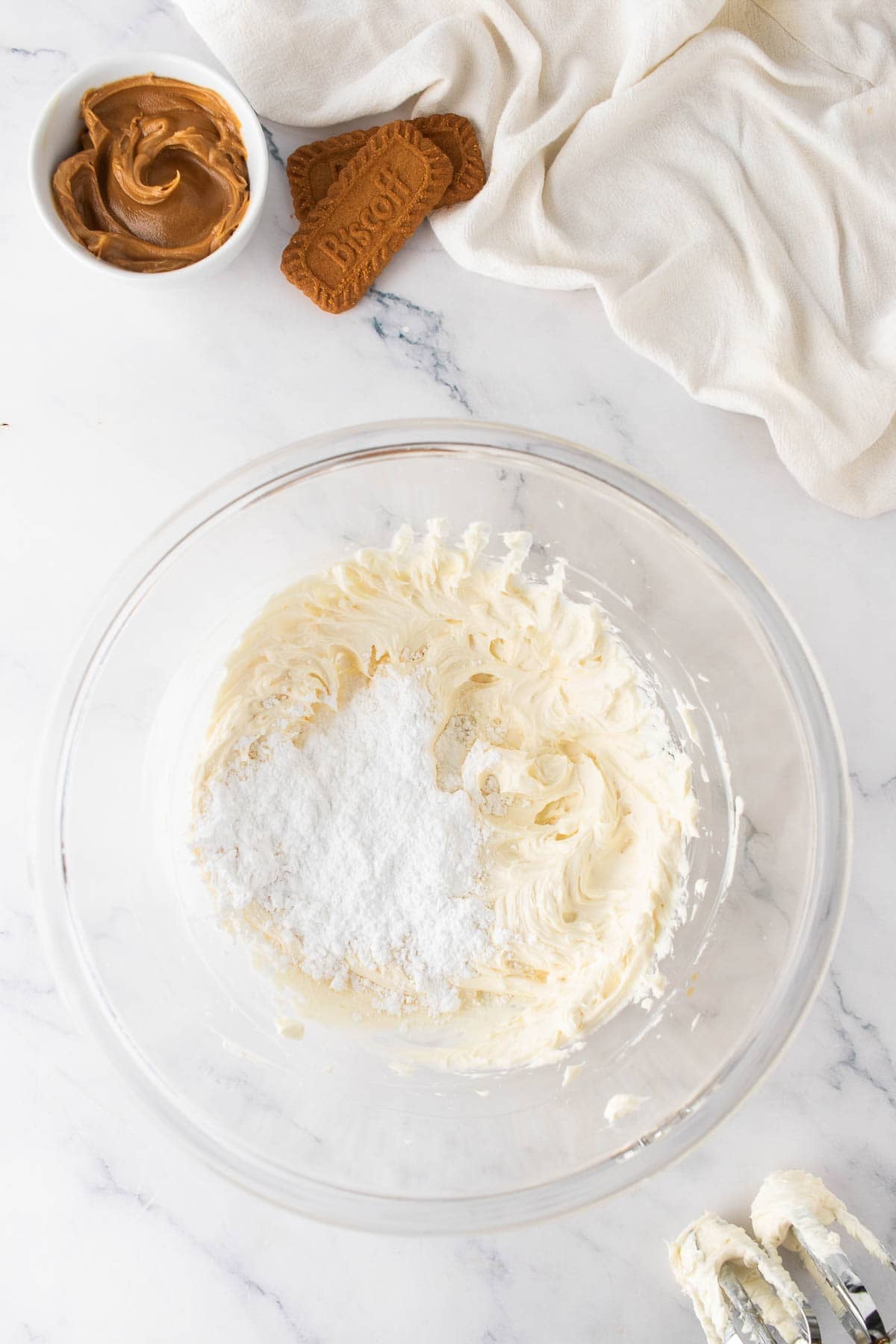
- Make frosting. Beat the cream cheese, butter, and vanilla together until smooth, then add the powdered sugar gradually and beat until light and fluffy.
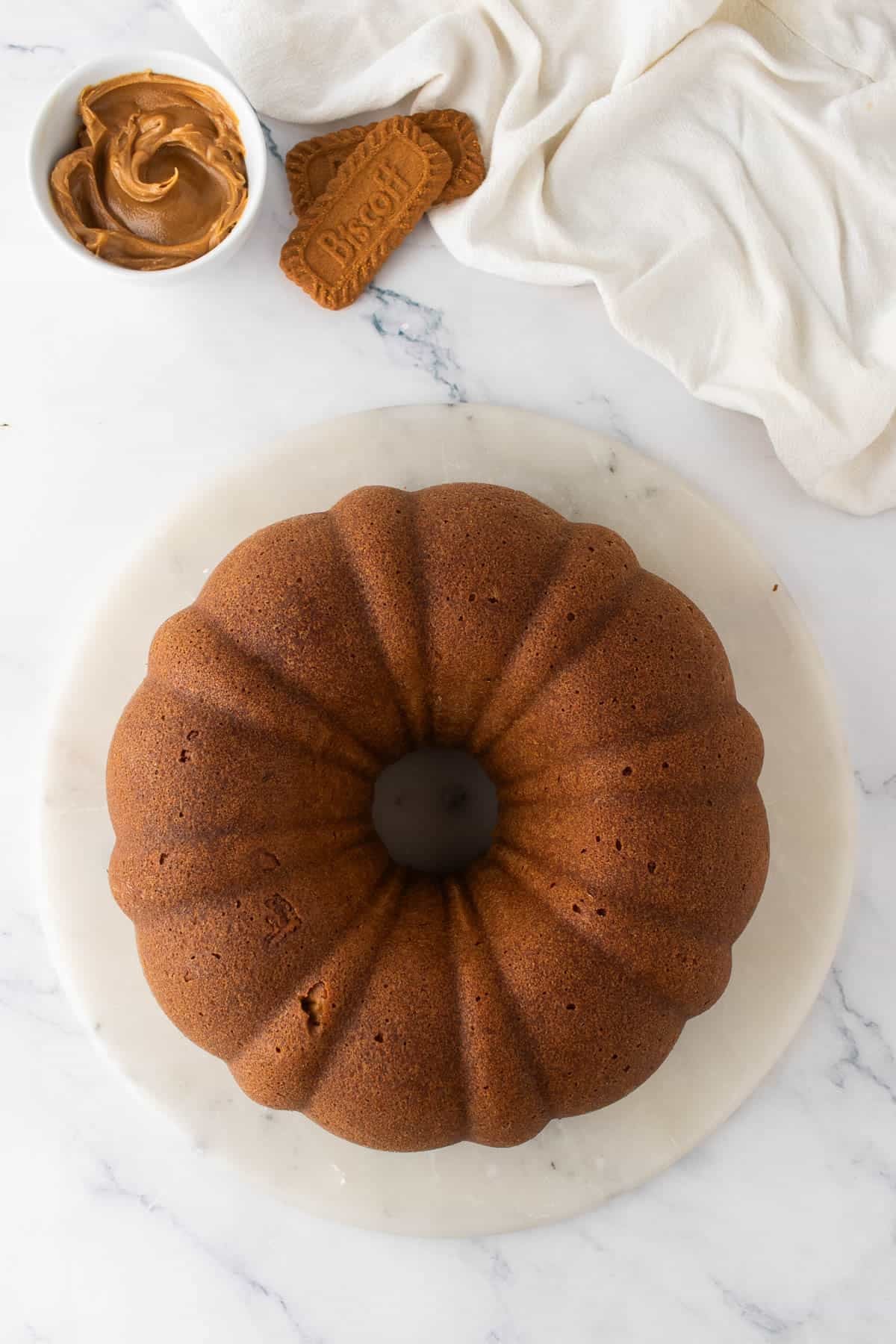
- Cool and invert. Let the cake cool in the pan for 15 minutes, then invert it onto a wire rack and cool completely before decorating.
- Pipe frosting. Transfer the frosting to a piping bag fitted with a large round tip and pipe thick lines along the ridges of the cake, letting them fall slightly down the sides.
- Drizzle Biscoff. Warm the Biscoff spread until pourable, let it cool slightly, then drizzle it over the frosting.
- Finish with cookies. Sprinkle the chopped and crushed Biscoff cookies generously over the top.
Recipe FAQ’s
Yes. Biscoff is the brand name for these caramelized Belgian cookies, but other brands make speculoos too.
Biscoff spread firms up quickly once it starts cooling, so warm it just until pourable and work quickly to drizzle it over the frosting right away.
Yes, you can bake and frost the cake up to a day in advance and keep it covered in the refrigerator, then add the Biscoff drizzle and cookie topping closer to serving so they stay looking fresh.
Store the cake covered in the refrigerator for up to 4 days, and let individual slices sit at room temperature for 15 to 20 minutes before serving so the crumb softens back up. For longer storage, wrap unfrosted cake layers tightly and freeze for up to 3 months, then thaw overnight in the refrigerator before frosting and decorating.
Tips for Success
- Use room temperature butter, eggs, sour cream, and milk so everything blends together smoothly and bakes up with an even, tender crumb.
- Once the flour goes in, mix only until everything is combined, overmixing at this stage is the fastest way to end up with a tougher, denser cake.
- Let the cake cool completely on a wire rack before decorating, a warm cake will melt the cream cheese frosting and send it sliding down the sides instead of holding its shape.
- Sprinkle the crushed Biscoff cookies over the drizzle while it’s still soft, wait too long and they won’t stick.
- Work grease into every groove of the bundt pan before dusting with flour, since this is what determines whether the cake releases cleanly once it’s baked.
Substitutions and Variations
- Stir a handful of white chocolate chips or mini chocolate chips into the batter along with the chopped cookies for pockets of melty sweetness.
- Add chopped pecans or walnuts to the batter for extra crunch and a nuttier flavor alongside the Biscoff.
- Skip the cream cheese frosting and finish the cake with a simple powdered sugar glaze instead for a lighter, less rich topping.
More Bundt Cakes You’ll Love
- The Best Chocolate Bundt Cake
- Southern Pecan Praline Bundt Cake
- Pumpkin Bundt Cake
- Caramel Chocolate Pecan Turtle Bundt Cake
- Coconut Bundt Cake
- Raspberry White Chocolate Bundt Cake
- Lemon Bundt Cake
- Blueberry Sour Cream Coffee Cake
Biscoff Cookie Butter Bundt Cake
Ingredients
Cake
- 2 ¾ cup (388g) all-purpose flour
- 2 teaspoons baking powder
- ½ teaspoon baking soda
- ¼ teaspoon salt
- 1 ½ teaspoons ground cinnamon
- ¾ cup (170g) salted butter softened
- ¾ cup (177g) Biscoff cookie butter spread
- 1 cup (200g) packed light brown sugar
- ½ cup (100g) granulated sugar
- 4 large eggs room temperature
- 2 teaspoons pure vanilla extract
- 1 cup (230g) sour cream room temperature
- ½ cup (118ml) whole milk room temperature
- 1 cup chopped Biscoff cookies (about 8 cookies)
Frosting
- 8 ounces cream cheese softened
- ¼ cup (57g) salted butter softened
- 2 cups (240g) powdered sugar
- 1 teaspoon pure vanilla extract
Topping
- ½ cup (118g) Biscoff cookie butter spread
- 5-6 Biscoff cookies chopped
- 2 Biscoff cookies finely crushed
Instructions
- Preheat the oven to 350℉ (177℃). Generously grease and flour a 10–12 cup Bundt pan, making sure to coat all of the crevices. Tap out the excess flour.
- In a medium bowl, whisk together the flour, baking powder, baking soda, salt, and cinnamon.2 ¾ cup (388g) all-purpose flour, 2 teaspoons baking powder, ½ teaspoon baking soda, ¼ teaspoon salt, 1 ½ teaspoons ground cinnamon
- In a large mixing bowl with a hand mixer, beat the softened butter, Biscoff spread, brown sugar, and granulated sugar until light and creamy, about 2–3 minutes.¾ cup (170g) salted butter, ¾ cup (177g) Biscoff cookie butter spread, 1 cup (200g) packed light brown sugar , ½ cup (100g) granulated sugar
- Add the eggs one at a time, mixing well after each addition. Mix in the vanilla extract.4 large eggs, 2 teaspoons pure vanilla extract
- Add the sour cream and mix until combined.1 cup (230g) sour cream
- Gradually add the dry ingredients to the wet mixture, alternating with the milk. Mix just until combined and no dry flour streaks remain. Gently fold in the chopped Biscoff cookies with a spatula.½ cup (118ml) whole milk, 1 cup chopped Biscoff cookies
- Spoon the batter evenly into the prepared Bundt pan and smooth the top.
- Bake for 45–55 minutes, or until a toothpick inserted into the thickest part of the cake comes out clean or with a few moist crumbs.
- Let the cake cool in the pan for 15 minutes, then carefully invert it onto a wire rack. Allow the cake to cool completely before decorating.
- In a medium bowl with a hand mixer, beat the cream cheese, vanilla, and butter until smooth and creamy.8 ounces cream cheese, ¼ cup (57g) salted butter, 1 teaspoon pure vanilla extract
- Add the powdered sugar gradually and beat until light and fluffy.2 cups (240g) powdered sugar
- Transfer the frosting to a piping bag with a large round tip. Pipe thick lines of frosting back and forth over the Bundt cake, following the ridges and allowing the frosting to fall slightly down the sides.
- Add the Biscoff spread to a microwave-safe bowl and microwave for about 15 seconds, then stir until smooth and pourable. Let cool slightly, then drizzle the melted Biscoff mixture over the cream cheese frosting.½ cup (118g) Biscoff cookie butter spread
- Sprinkle the chopped and crushed Biscoff cookies generously over the top.5-6 Biscoff cookies, 2 Biscoff cookies
Notes
Storage & Make Ahead
- Store: Keep the cake covered in the refrigerator for up to 4 days. Let slices sit at room temperature for 15 to 20 minutes before serving so the crumb softens back up.
- Freeze: Wrap the cake tightly without the frosting, drizzle, or cookie topping and freeze for up to 3 months. Thaw overnight in the refrigerator before frosting and decorating.
- Reheat: This cake is best enjoyed at room temperature, but a slice can be warmed for 10 to 15 seconds in the microwave if you want that just-baked feel.
- Make Ahead: Bake and frost the cake up to a day in advance and keep it covered in the refrigerator. Add the Biscoff drizzle and cookie topping closer to serving so they stay looking fresh.