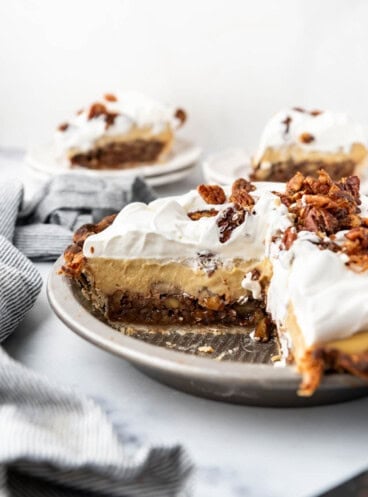
This Old-Fashioned Butterscotch Pie is made with a rich, buttery brown sugar custard filling in my famous flaky homemade pie crust, topped with a generous layer of fluffy whipped cream. It’s smooth, creamy, and full of deep caramel-like flavor with just a hint of molasses and vanilla. If you love old-fashioned cream pies, this homemade butterscotch pie deserves a spot on your dessert table!
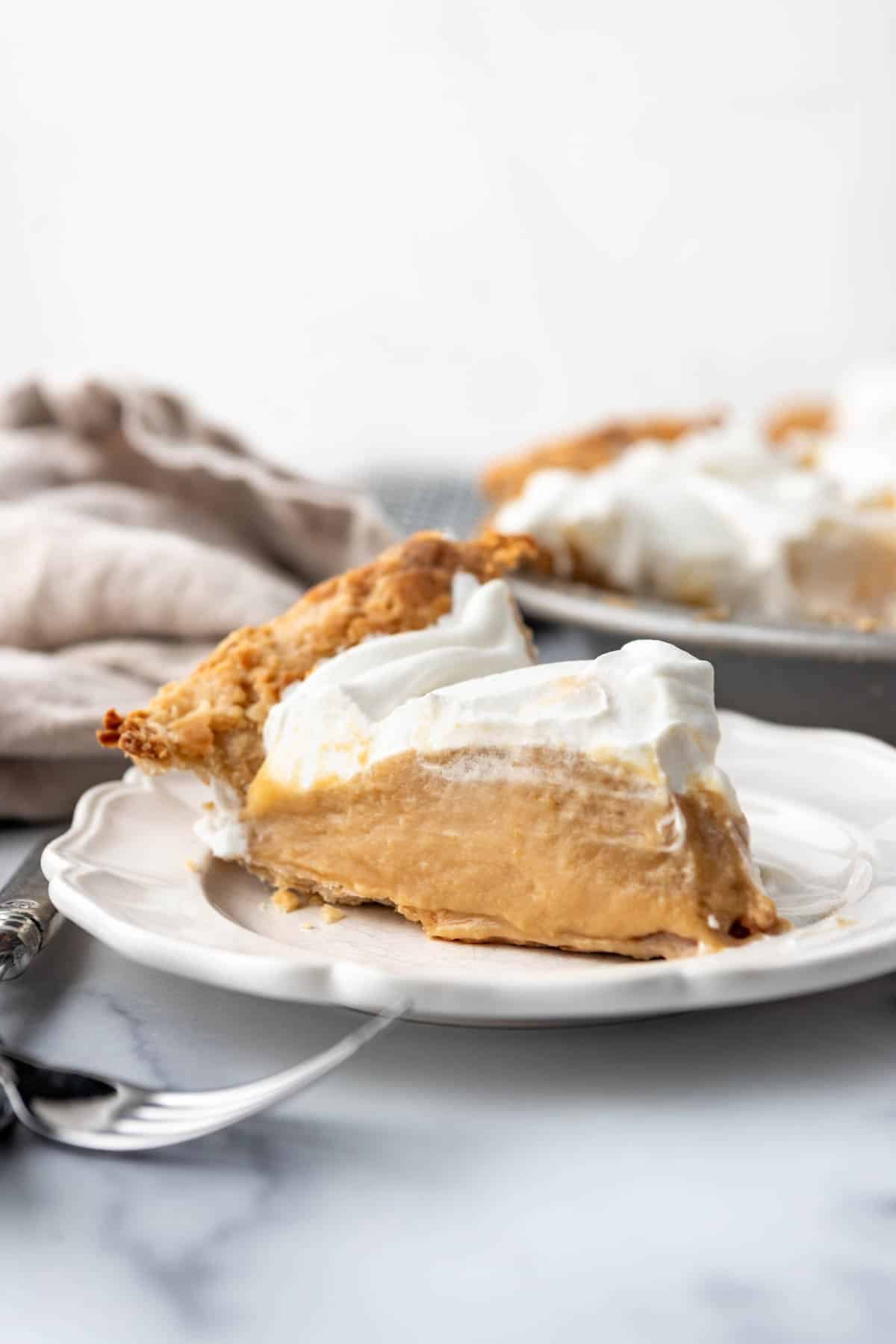
When was the last time you had a really good butterscotch pie? Or even saw one on a dessert menu? Chocolate cream pie gets all the attention. Banana cream pie has its devoted fans. Coconut cream pie is practically a Southern institution. But somehow, butterscotch pie seems to have been left behind with the church cookbooks and handwritten recipe cards from our grandmothers’ kitchens.
I think that’s a shame because a good butterscotch pie is absolutely wonderful!
It’s one of those desserts that feels nostalgic even if you didn’t actually grow up eating it. I like to think of it as one of those classic homemade pies at a small-town diner that you stumble into and leave wondering how to recreate that delicious dessert.
Sure you could make a shortcut version with a box of butterscotch pudding mix, but I really think making the filling from scratch is worth it. The flavor is so much richer and more complex, with real buttery, caramelized brown sugar notes that you just don’t get from a powdered mix.
My version is essentially a homemade butterscotch pudding made with real butter, dark brown sugar, cream, milk, and egg yolks. It’s cooked on the stovetop until thick and silky, then poured into a flaky, buttery pie crust and chilled until set.
Traditionally, butterscotch pie is often finished with a billowy layer of toasted meringue, but after testing it both ways, my family and I all preferred it with freshly whipped cream. The cool, lightly sweetened cream balances the rich butterscotch filling beautifully without competing with its flavor.
What Does Butterscotch Taste Like?
Real homemade butterscotch is similar to caramel, but with a deeper, richer, buttery flavor and warm molasses notes from the brown sugar. There’s a little hint of toffee, a subtle saltiness, and plenty of vanilla to round everything out.
The biggest difference between caramel and butterscotch is the type of sugar used. Traditional caramel is made with white granulated sugar, while butterscotch is made with brown sugar and butter. That brown sugar gives butterscotch its distinctive depth of flavor.
For this recipe, I use dark brown sugar because it has more molasses than light brown sugar. It makes the filling especially rich and gives it that beautiful, deep golden-brown color.
Ingredients You’ll Need
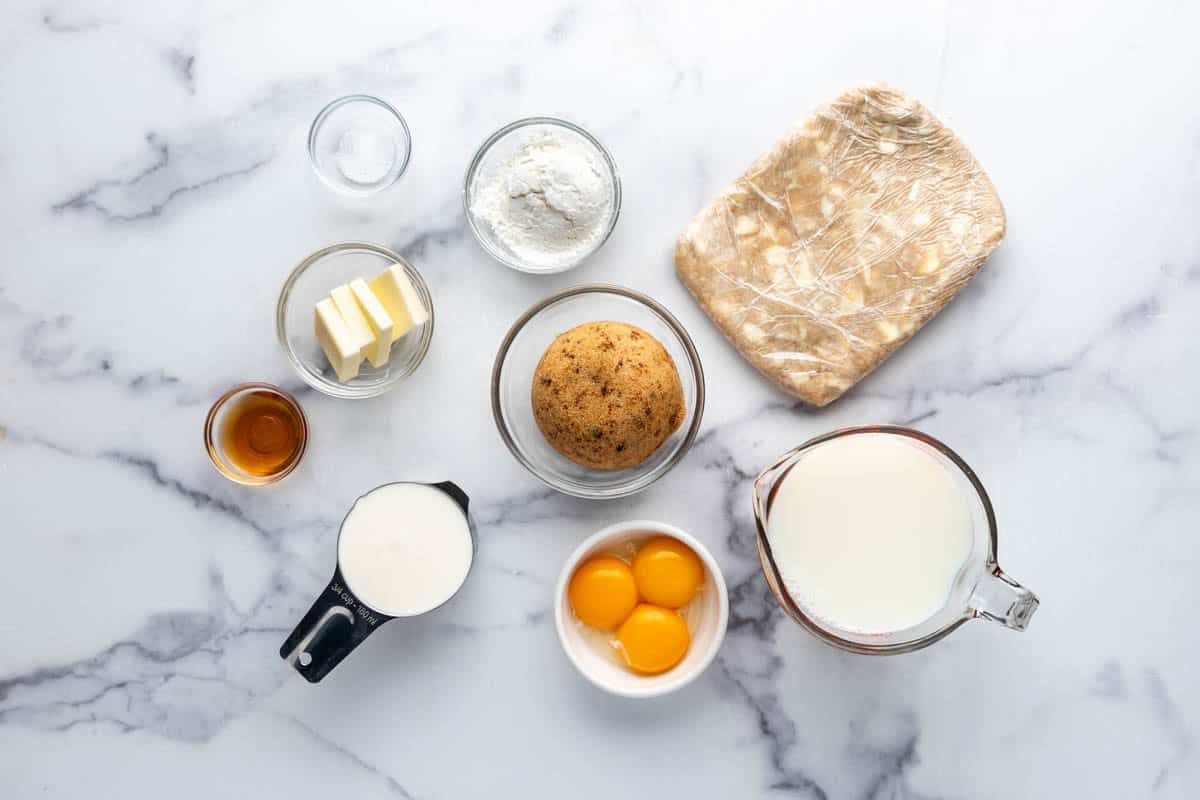
You don’t need anything fancy to make homemade butterscotch pie! Most of these are basic baking ingredients you probably already have in your pantry and refrigerator.
- Pie Crust: You can also use my favorite homemade pie crust recipe (included below) or even a store-bought crust if you’re short on time. Just be sure to fully bake it before adding the filling since the pie won’t go back into the oven. You could even make this one with a graham cracker crust if you prefer.
- Salted butter: Real butter is essential for that classic butterscotch flavor. I use salted butter for a little extra balance against the sweet brown sugar.
- Dark brown sugar: This is the star ingredient! Dark brown sugar has a higher molasses content than light brown sugar, which gives the filling a deeper, richer butterscotch flavor. If you only have light brown sugar, you can use it and add 1–2 teaspoons of molasses for a similar depth of flavor.
- Heavy cream: Adds richness and gives the filling a luxurious, silky texture.
- Whole milk: Keeps the filling creamy without making it overly heavy. I recommend whole milk rather than a lower-fat option for the best consistency.
- Egg yolks: Help thicken the custard and give it a rich, smooth texture. Save the egg whites for another recipe or use them to make a traditional meringue topping!
- Cornstarch: Thickens the filling so it sets up beautifully and holds its shape when sliced.
- Salt: An important ingredient that balances the sweetness and brings out the buttery, caramel-like flavor.
- Pure vanilla extract: Rounds out the flavor and adds warmth. I always prefer real vanilla extract over imitation vanilla, especially in a recipe like this where the flavors are so simple.
- Homemade Whipped Cream: So much better than a tub of Cool Whip for topping the pie.
How to Make Butterscotch Pie
This homemade butterscotch pie is easier than you might think! The filling comes together in one saucepan, and most of the time involved is simply waiting for the pie to chill and set.
Step 1: Make and Bake the Pie Crust
Combine the flour, sugar, and salt in a large bowl, then cut in the cold butter and shortening until the mixture resembles coarse crumbs. Gradually add ice water just until the dough comes together. Shape the dough into a disc, wrap it in plastic wrap, then refrigerate it for 1 hour to allow the flour to evenly hydrate and the fats to firm up.
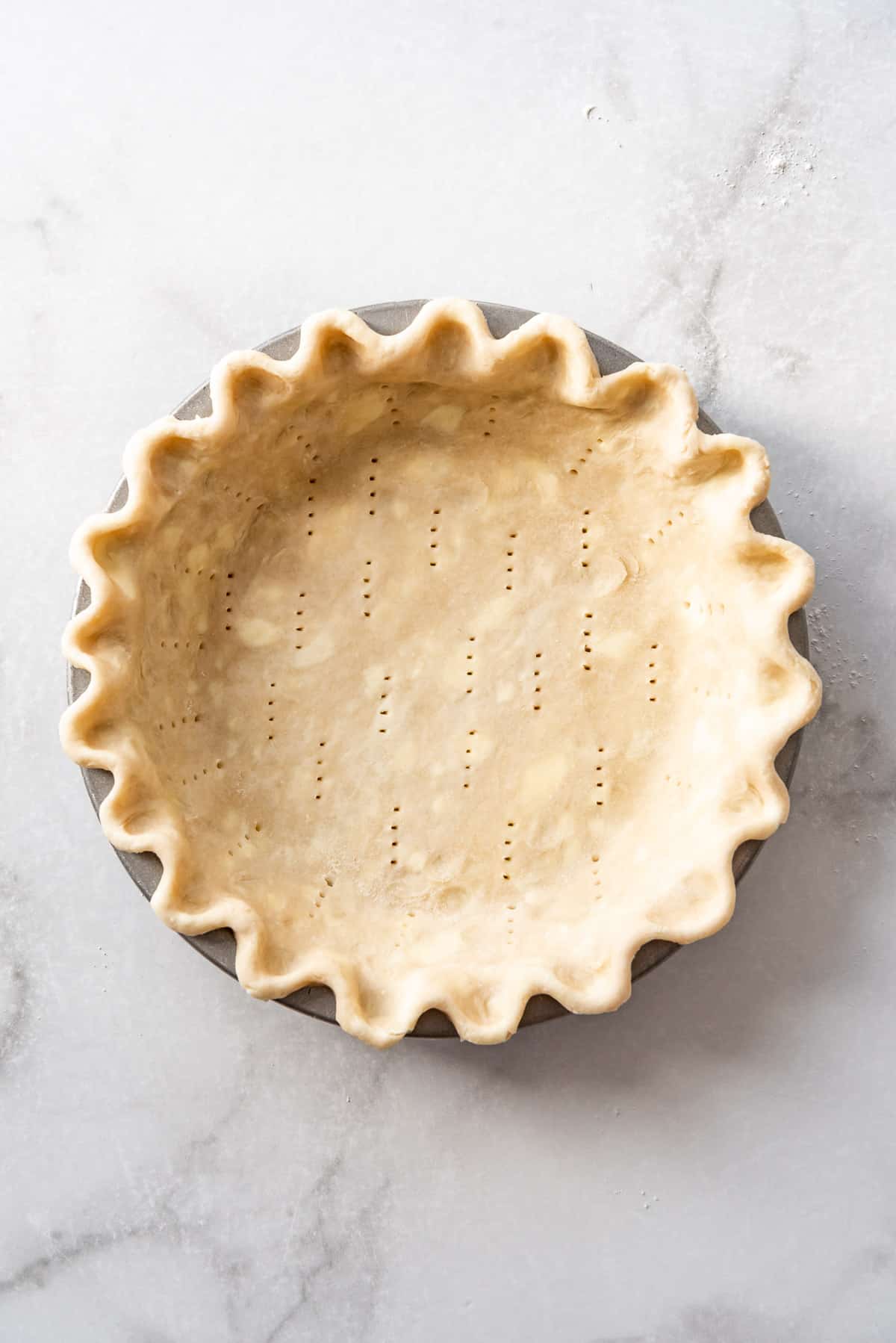
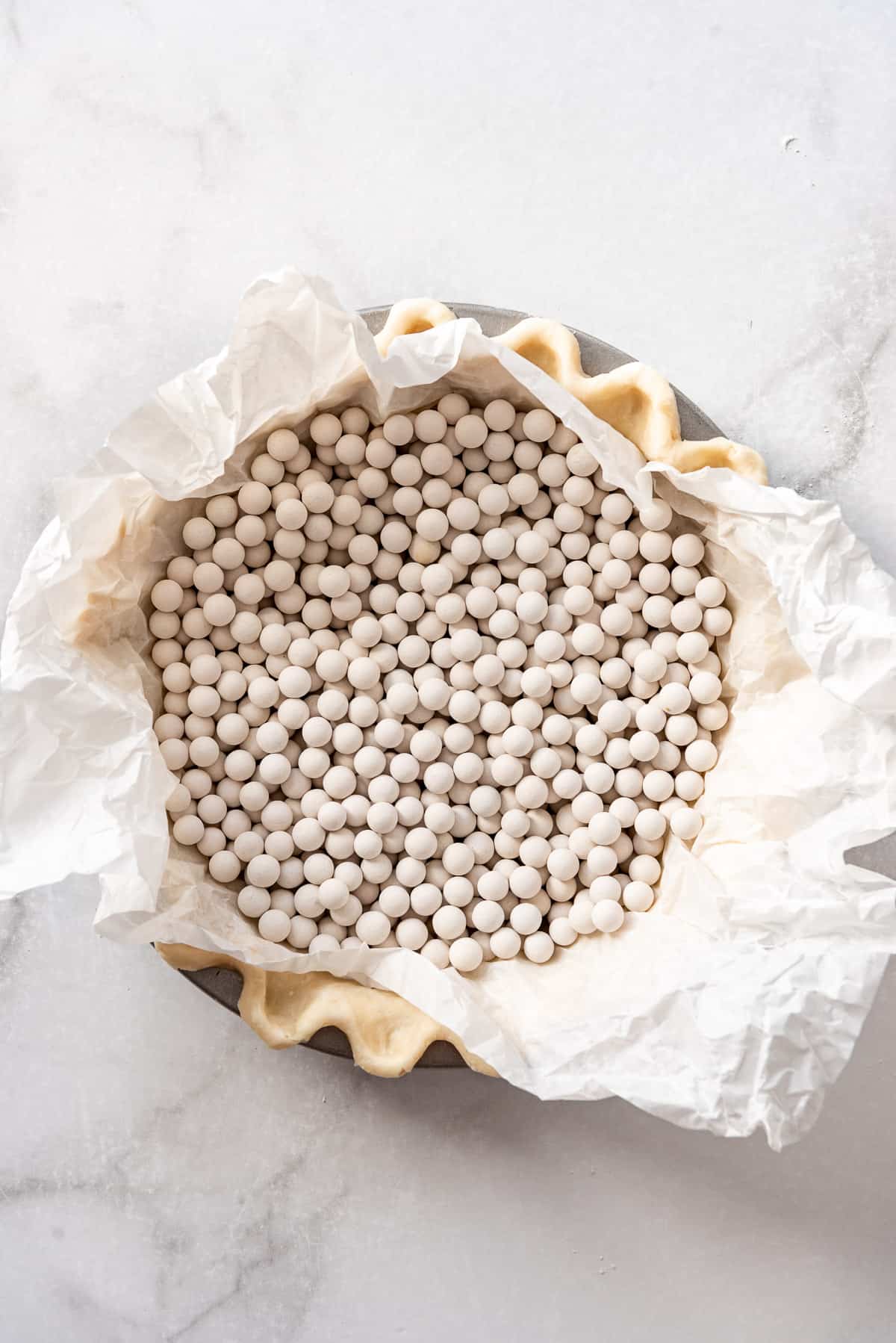
When ready to bake, roll out the pie crust on a floured surface, transfer it to a 9-inch pie plate (affiliate link), and crimp the edges. Poke it all over with the tines of a fork, then line the crust with parchment paper and pie weights. Blind bake at 375°F for 15–17 minutes. Remove the weights and parchment and continue baking for about 15 minutes, or until the crust is golden brown and fully baked. Let cool while preparing the filling.
Step 2: Cook the Butter and Brown Sugar
Combine the butter and dark brown sugar in a heavy-bottomed saucepan over medium heat. Cook, stirring frequently, for about 3–4 minutes until the butter is melted and the mixture is bubbling and fragrant. The mixture may still look a little grainy or separated at this point, and that’s completely normal so there is no need to worry!
Slowly whisk in the heavy cream and 1 ½ cups of the milk. Continue heating until the mixture is steaming hot, with small bubbles forming around the edges.
Step 3: Temper the Egg Yolks
In a separate bowl, whisk together the egg yolks, cornstarch, salt, and remaining ½ cup of milk until smooth. Slowly whisk about 1 cup of the hot butterscotch mixture into the egg yolk mixture. This gently warms the eggs so they don’t scramble when added to the hot saucepan.
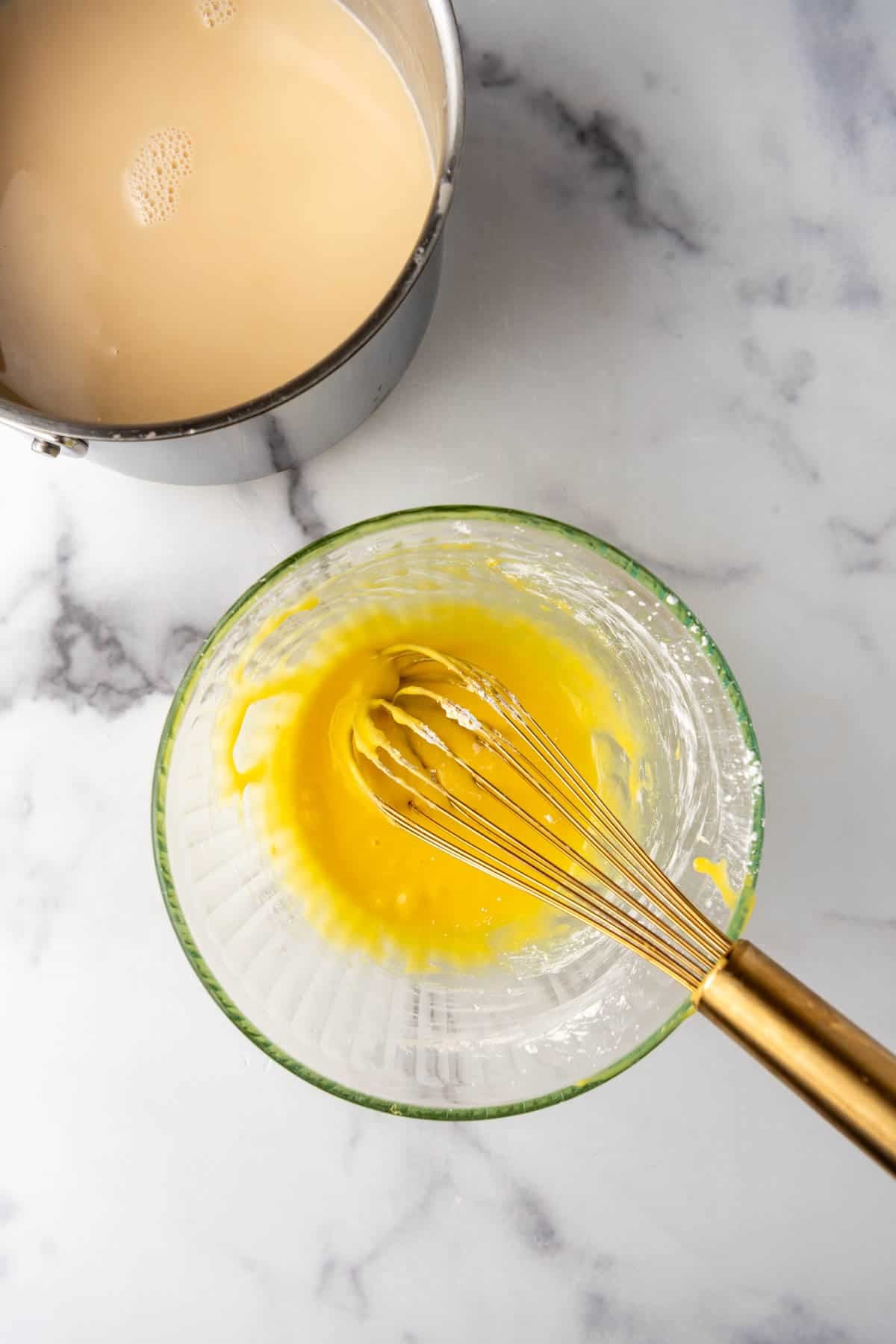
Step 4: Thicken the Filling
Pour the tempered egg mixture back into the saucepan, whisking constantly. Continue cooking over medium heat until the filling thickens to a pudding-like consistency and large bubbles begin to break the surface. Cook for another 1–2 minutes, whisking continuously, to fully thicken the filling and eliminate any starchy flavor. Remove from the heat and stir in the vanilla extract.
Step 5: Fill and Chill the Pie
Pour the hot butterscotch filling into the fully baked pie crust and smooth the top.
Press plastic wrap directly against the surface of the filling to prevent a skin from forming. Let cool slightly, then refrigerate for at least 4 hours, or until completely chilled and set. For the cleanest slices, I recommend chilling the pie for 6 hours or overnight.
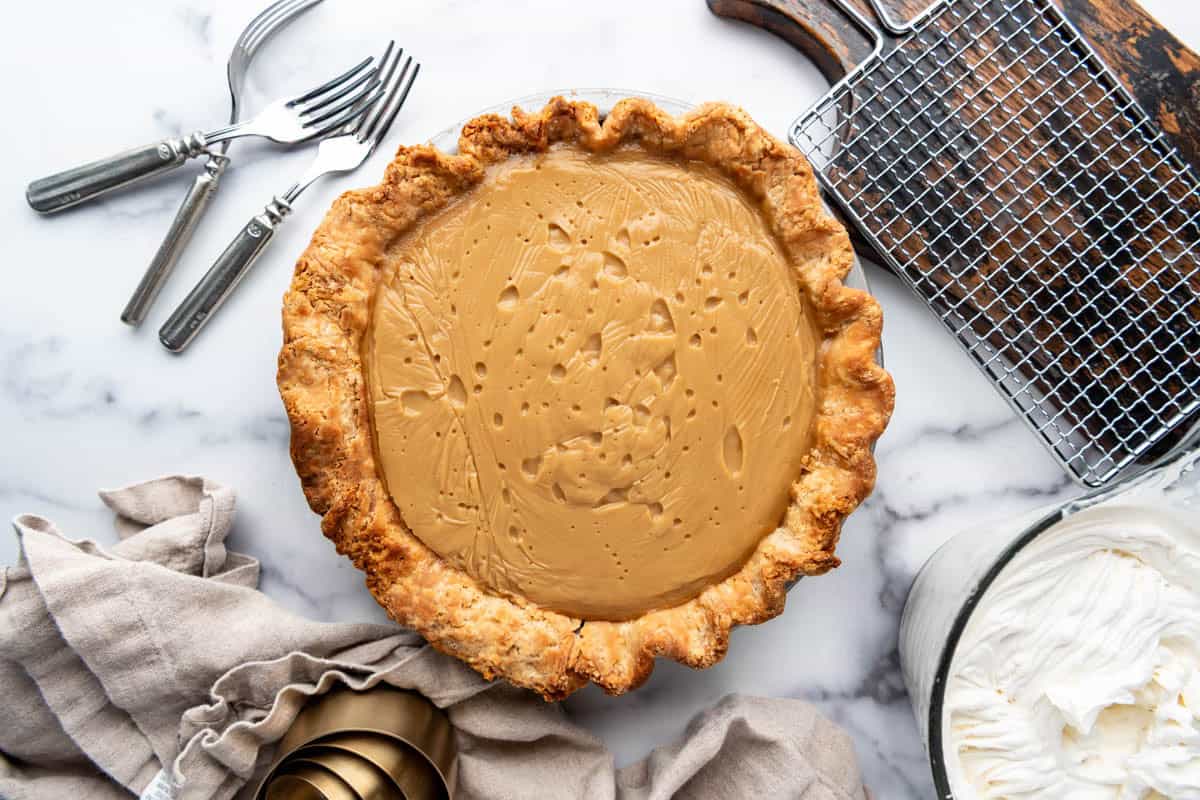
Step 6: Add the Whipped Cream
Beat the heavy cream, powdered sugar, and vanilla extract together until medium peaks form.
Spread or pipe the whipped cream over the chilled butterscotch filling. Slice and serve!
Tips for the Best Homemade Butterscotch Pie
- Use dark brown sugar for the richest flavor. Light brown sugar works, but dark brown sugar gives the filling a more pronounced butterscotch flavor thanks to its higher molasses content.
- Don’t rush the butter and brown sugar. Let them cook together for a few minutes until bubbling and fragrant. This helps develop the buttery, toasted brown sugar flavor that makes homemade butterscotch so good. You don’t need to cook it to a specific temperature, and you definitely don’t want to burn it.
- Don’t worry if the sugar mixture looks grainy. Brown sugar doesn’t dissolve into butter the same way it dissolves into water. Once you add the cream and milk, the sugar will dissolve as the mixture heats.
- Temper the egg yolks slowly. Adding the hot liquid a little at a time while whisking constantly helps prevent the eggs from scrambling and keeps the filling silky smooth.
- Keep whisking as the filling thickens. The cornstarch mixture can thicken quickly once it gets hot. Whisk continuously, especially around the bottom and corners of the saucepan, to prevent lumps and scorching.
- The filling should be quite thick before pouring. Don’t remove it from the heat as soon as it starts to thicken. Let it reach the point where large bubbles break the surface, then continue whisking and cooking for another 1–2 minutes. Look for a consistency similar to thick homemade pudding. It will firm up further as it cools.
- Press plastic wrap directly onto the filling. This prevents a rubbery skin from forming on the surface of the custard as it cools.
- Give the pie plenty of time to chill. Four hours is the minimum, but I prefer at least 6 hours or overnight for a firmer filling and cleaner slices.
- Wait to add the whipped cream. For the prettiest presentation, I like adding the whipped cream after the filling is completely chilled, preferably shortly before serving.
Why Didn’t My Butterscotch Pie Set?
This is the biggest problem folks seem to have with cream pies and it’s usually one of two reasons. Either an ingredient was forgotten or mismeasured (too much liquid gets added or the egg yolks or cornstarch gets left out) or the filling wasn’t cooked long enough on the stove (the most likely culprit). If your butterscotch pie filling is too soft or runny, it’s most likely one of those two things.
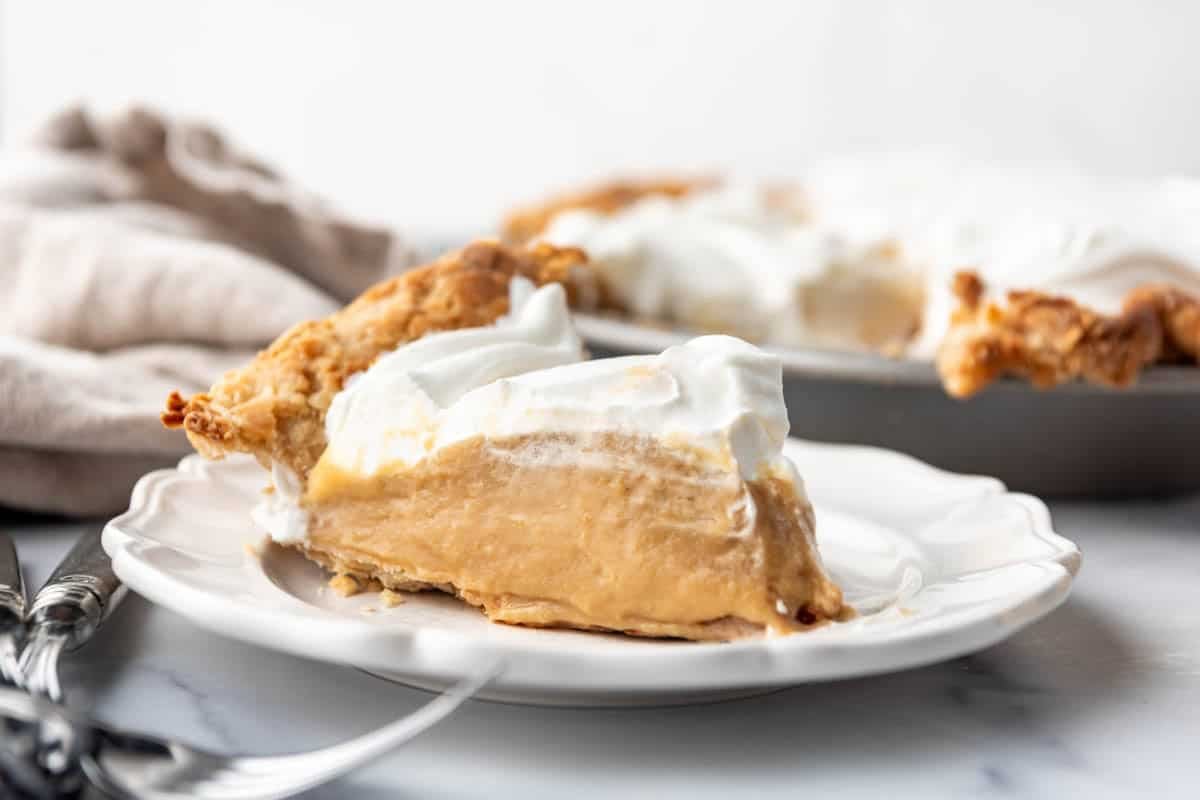
More Old-Fashioned Pies You’ll Love
If you love this homemade butterscotch pie, be sure to try some of my other favorite old-fashioned cream pies!
Butterscotch Pie
Ingredients
Pie Crust
- 1 1/4 cups (176g) all-purpose flour
- 1 Tablespoon granulated sugar
- 1/2 teaspoon salt
- 6 Tablespoons cold salted butter cubed
- 4 Tablespoons vegetable shortening
- 3-4 Tablespoons ice water
Butterscotch Pudding Layer
- 6 Tablespoons salted butter cut into pieces
- 1 cup (200g) packed dark brown sugar
- 3/4 cup heavy cream
- 2 cups whole milk divided
- 3 large egg yolks
- 1/4 cup cornstarch
- 1/4 teaspoon salt
- 2 teaspoons pure vanilla extract
Whipped Cream
- 1 cup heavy cream
- 3 Tablespoons powdered sugar
- 1 teaspoon pure vanilla extract
Instructions
Make the Crust
- In a large bowl, stir together the flour, sugar, and salt. Use a pastry cutter to cut the butter and shortening into the flour until the mixture resembles coarse crumbs.1 ¼ cups (176g) all-purpose flour, 1 Tablespoon granulated sugar, ½ teaspoon salt, 6 Tablespoons cold salted butter, 4 Tablespoons vegetable shortening
- Sprinkle 1 tablespoon of ice water over the mixture. Using a fork, gently stir the water into the flour mixture. Repeat with the remaining water, adding only 1 tablespoon at a time, until the flour is just evenly moistened and the dough starts to come together.3-4 Tablespoons ice water
- Turn the pie dough onto a sheet of plastic wrap and flatten it into a disc. Tightly wrap in the plastic wrap and refrigerate for 1 hour, before rolling it out on a floured surface.
- Gently transfer the pie crust to a 9-inch pie plate (affiliate link), then fold the edges under and finish them with a decorative crimp. Prick all over with the tines of a fork, then line with a crumpled piece of parchment paper and fill with pie weights, dried beans, rice, or sugar.
- Blind bake in a preheated oven at 375℉ (191℃) for 15-17 minutes with weights, then lift the parchment paper out of the crust to remove the pie weights and bake again for another 15 minutes until golden brown.
Make the Filling
- Combine the butter and dark brown sugar in a medium, heavy-bottomed saucepan over medium heat. Cook, stirring frequently, until the butter has melted and the mixture is bubbling, about 3–4 minutes. The sugar may not dissolve completely at this stage, which is normal. Be careful because the mixture can scorch if the saucepan is thin or the heat is too high. You are not trying to make a dark caramel here.6 Tablespoons salted butter, 1 cup (200g) packed dark brown sugar
- Slowly whisk in the heavy cream and 1 ½ cups of the milk. Be careful since the mixture may bubble up as you add the liquid. Don't worry if the sugar mixture starts to seize a bit. It will dissolve into the milk as you stir and the mixture heats through.¾ cup heavy cream, 1.5 cups whole milk
- Meanwhile, whisk together the eggs yolks, cornstarch, the remaining ½ cup of milk, and salt in a separate bowl.0.5 cups whole milk, 3 large egg yolks, ¼ cup cornstarch, ¼ teaspoon salt
- Continue to heat the milk and sugar mixture until it is hot and steaming with small bubbles starting to appear around the edges of the pan. Whisk about 1 cup of the hot liquid into the egg yolk mixture. This helps to gently raise the temperature of the eggs without immediately cooking them and getting bits of scrambled egg in the filling.
- Whisked the tempered egg yolk mixture back into the saucepan with the remaining hot butterscotch mixture. Continue cooking over medium to medium-high heat, whisking continuously and scraping the bottom and corners of the pan, until the filling thickens to a pudding-like consistency and large bubbles begin to break the surface. Once bubbling, continue cooking and whisking for 1–2 minutes to fully activate the cornstarch and cook out any starchy flavor.
- Remove the saucepan from the heat and stir in the vanilla until combined. Immediately pour the hot butterscotch filling into the prepared, fully baked pie crust, smoothing the top with a spatula.2 teaspoons pure vanilla extract
- Cover the pie with plastic wrap pressed directly against the surface of the butterscotch filling to prevent it from forming a skin, then let it cool slightly before refrigerating for at least 4 hours to set up.
- To make the whipped cream topping, combine the heavy cream, powdered sugar, and vanilla in a medium bowl. Beat with an electric mixer until medium peaks form, then spread the whipped cream evenly over the pie.1 cup heavy cream, 3 Tablespoons powdered sugar, 1 teaspoon pure vanilla extract
Notes
- Make-Ahead: You can prepare the pie crust and butterscotch filling a day ahead, cover the filling directly with plastic wrap, and refrigerate overnight. I recommend waiting until the day you plan to serve the pie to add the whipped cream topping for the freshest flavor and fluffiest texture. You can also make the pie crust dough up to 3 days ahead and keep it wrapped in the refrigerator, or freeze it for up to 3 months.
- Storage: Because the filling contains milk, cream, and eggs, butterscotch pie needs to be refrigerated and shouldn’t sit out on the counter for more than 2 hours. Store the pie loosely covered in the refrigerator for up to 3–4 days. The filling holds up well, although the crust may soften slightly over time and the whipped cream may begin to lose some of its volume.
- Freezing: I don’t recommend freezing this pie once assembled. Cornstarch-thickened custards can become watery or grainy after thawing, and the whipped cream may separate.
- Serving: Butterscotch pie is best served chilled, straight from the refrigerator. For neat slices, use a sharp knife and wipe the blade clean between cuts.
- Meringue variation: To make a traditional meringue topping, beat the 3 reserved egg whites with ¼ teaspoon cream of tartar until foamy. Gradually add 6 tablespoons granulated sugar, beating until the mixture forms stiff, glossy peaks and the sugar is dissolved. Spread the meringue over the butterscotch filling while it is still hot, making sure to seal the edges against the crust. Bake at 350°F for about 10–15 minutes, or until the meringue is lightly golden brown and reaches 160°F in the center. Cool, then refrigerate until the filling is completely set before slicing.