Just a short drive from Colonial Williamsburg, you can step even further back in time to where America’s story began and where it was ultimately won by following America’s Historic Triangle to Jamestown and Yorktown.
In a single day (or two, if you want to slow down and really take it in), visiting Jamestown and Yorktown gives you something rare: the chance to both stand on the actual ground where history happened and then see it brought vividly to life through immersive, hands-on experiences. One moment you’re walking through archaeological ruins at Historic Jamestowne, imagining the struggles of the first English settlers. The next, you’re climbing aboard replica ships and exploring a recreated fort at Jamestown Settlement.
Then, just down the road, you find yourself on the quiet fields of Yorktown Battlefield, where the Revolutionary War came to an end, followed by a visit to the American Revolution Museum at Yorktown, where those events come to life through stories, demonstrations, and living history.
What makes this combination so powerful is the contrast. It’s not just reading about history or walking through exhibits. It’s seeing it, imagining it, and then experiencing it in a way that sticks, especially for families with kids.
Visiting Jamestown: Historic Jamestowne vs. Jamestown Settlement
If you’re visiting the birthplace of English America, there are actually two different Jamestown experiences, and they’re not the same. You’ll want to know the difference before you go, because they offer very different kinds of history. One is grounded in archaeology and original site preservation, and the other is designed to bring history to life through immersive living history.
Historic Jamestowne
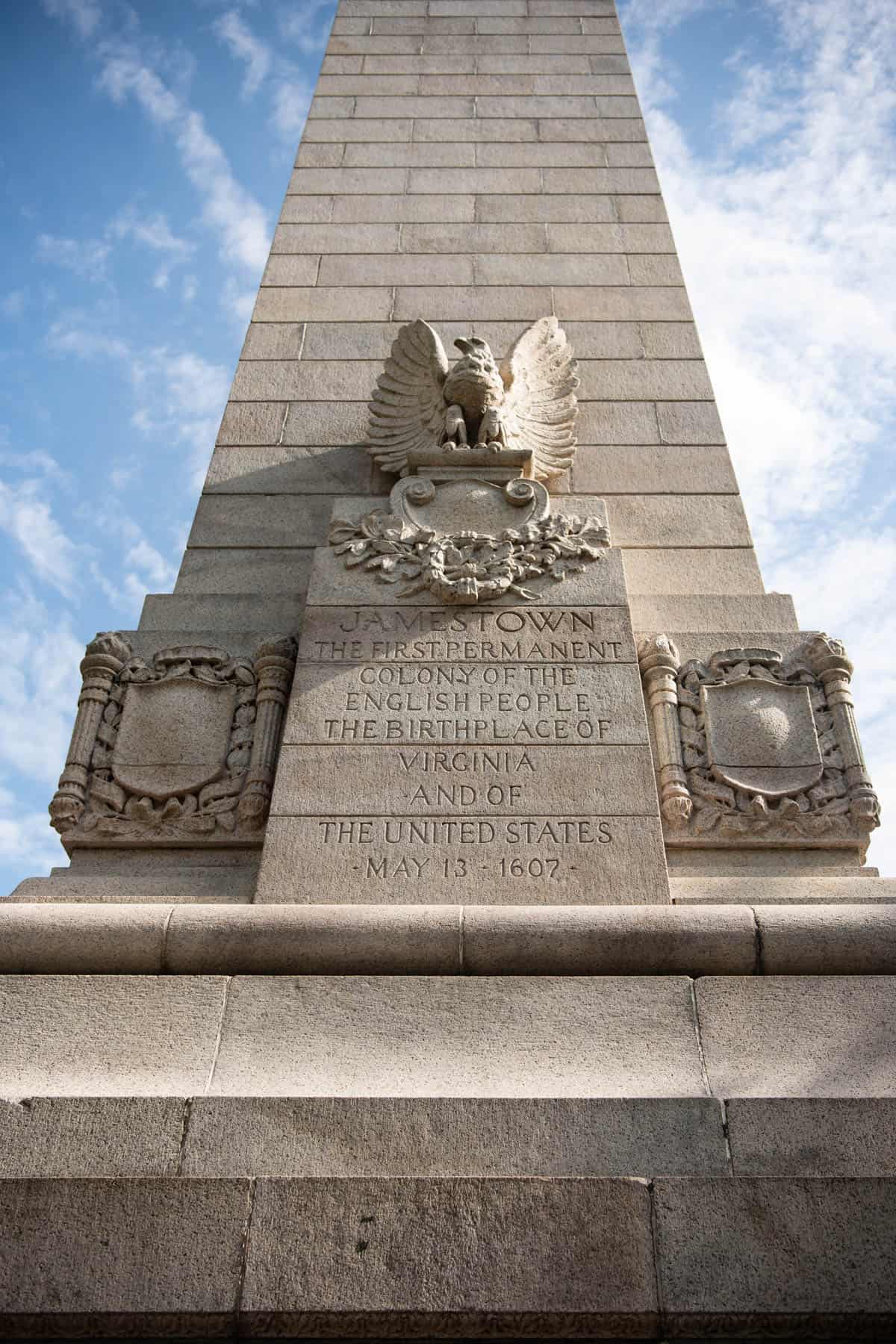
Historic Jamestowne is the actual archaeological site where the first permanent English settlement began in 1607. Instead of reenactors and replicas, you’ll find:
- The real footprint of the original fort
- Active archaeological digs
- Ruins of the original church tower
- Exhibits with artifacts uncovered from the site
Walking the grounds feels like standing on top of a story still being uncovered. Archaeologists still work here, and you can literally watch them sift through layers of earth that once held the hopes and hardships of early colonists.
You will also learn a lot more about Pocahontas, John Smith, and other notable characters involved in the first British settlement in the new world here than at Jamestown Settlement, just down the road.
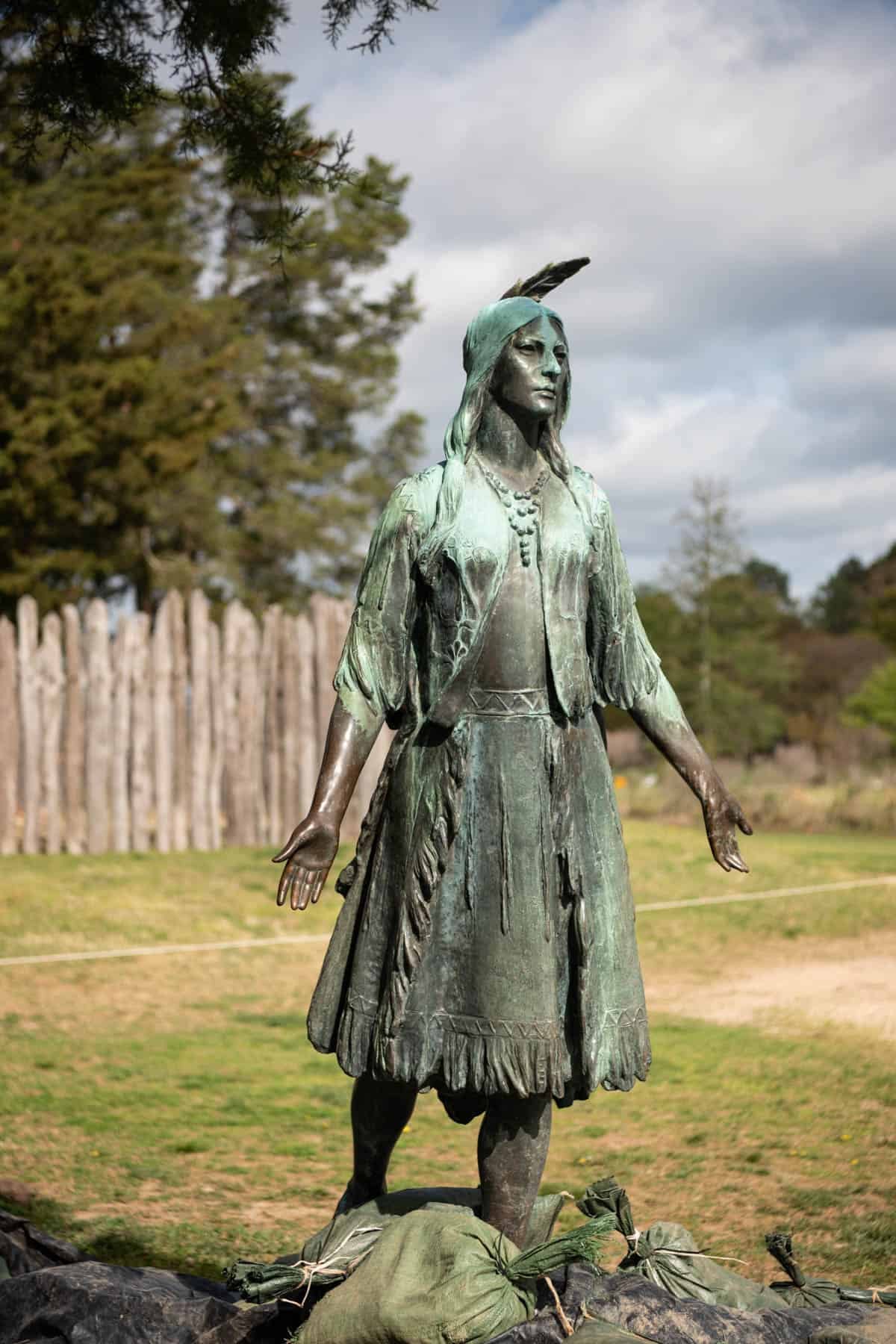
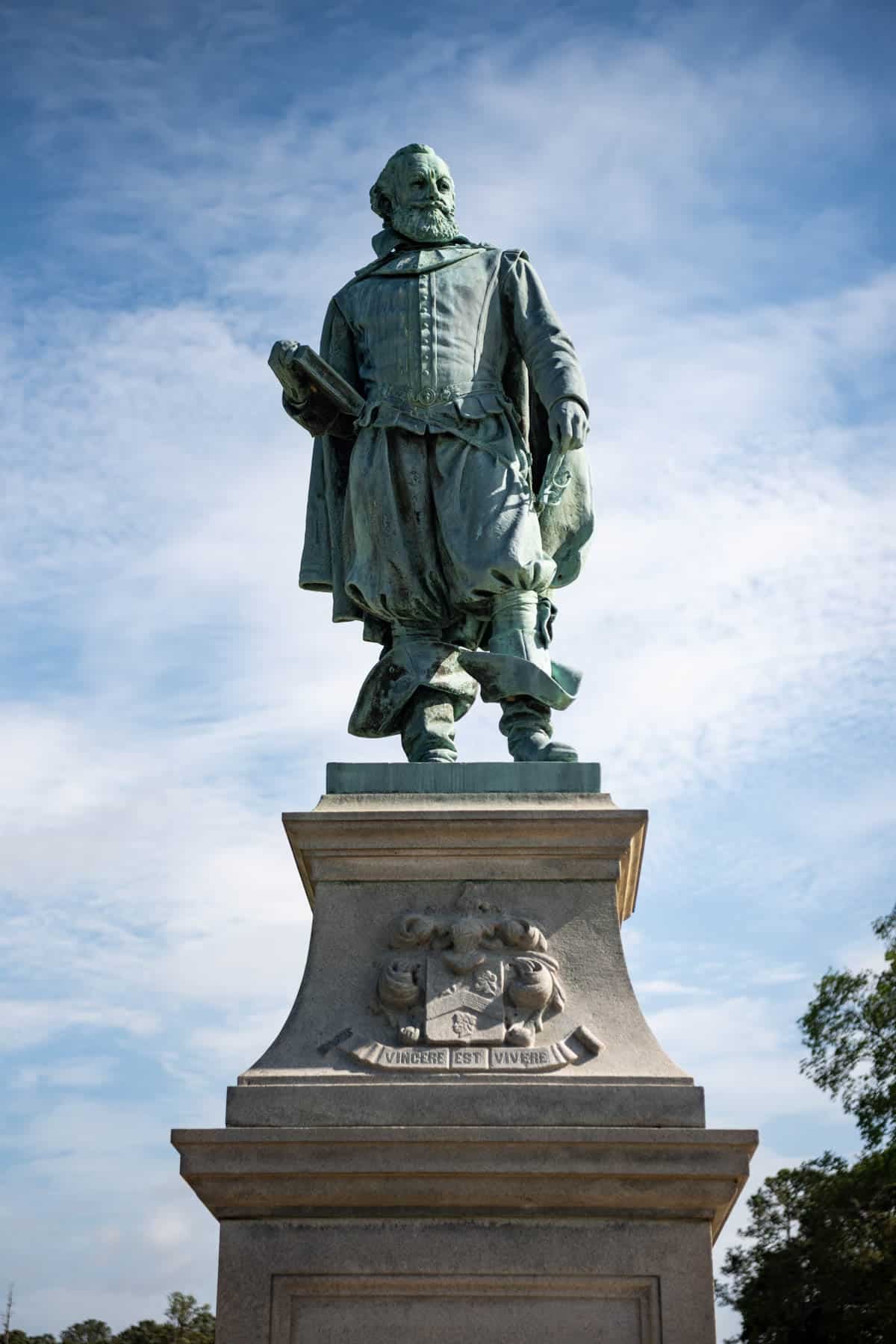
Plan on 1-2 hours, depending on your level of interest in archaeology and early American history. There is a museum that you can visit with lots of artifacts along with great exhibits for learning more about important people associated with Jamestowne in its early years.
This site is best for history lovers, older kids, and adults who appreciate the authenticity of being on the original ground.
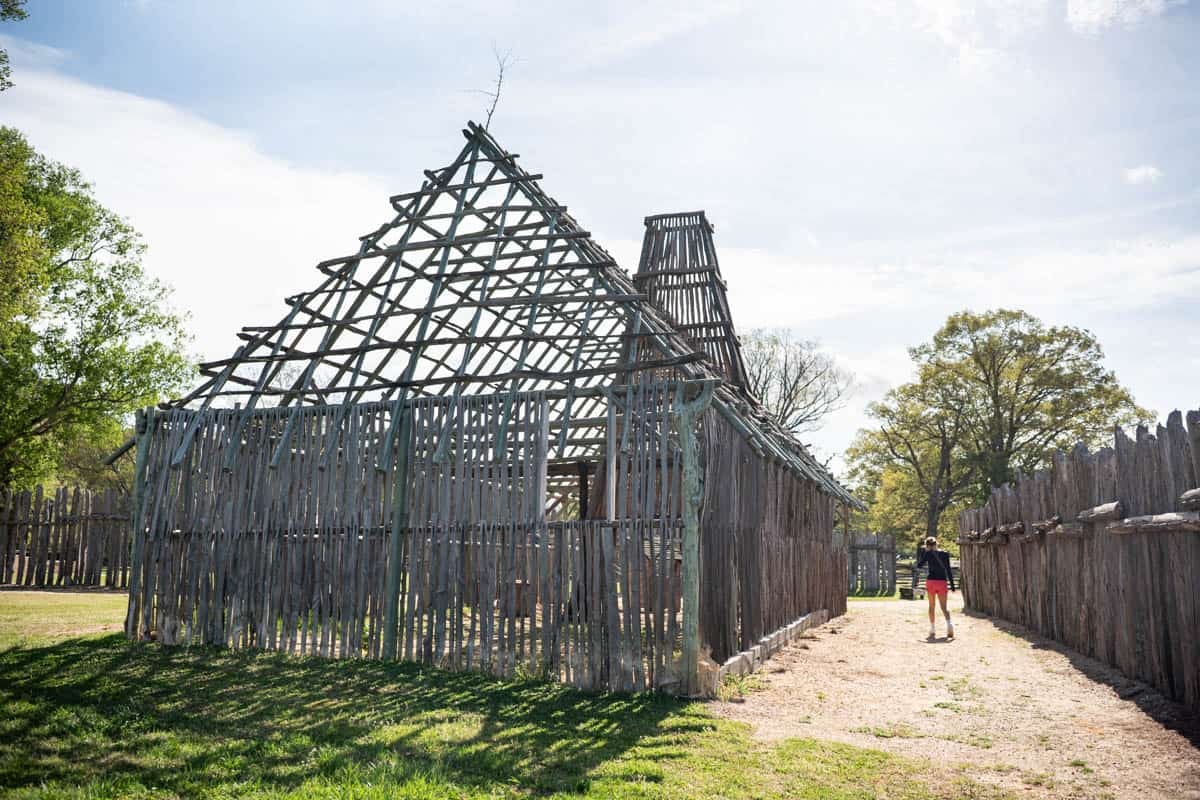
Jamestown Settlement (Living History Museum)
Just a short drive away from historic Jamestowne is the living history museum known as Jamestown Settlement, and this is where history becomes hands-on and interactive. It’s also where you are going to run into more crowds and tour buses filled with middle and high school groups touring historic sites from other states.
Don’t let that deter you, though, because overall we enjoyed the Jamestown Settlement location even more than historic Jamestowne.
Tour the fort
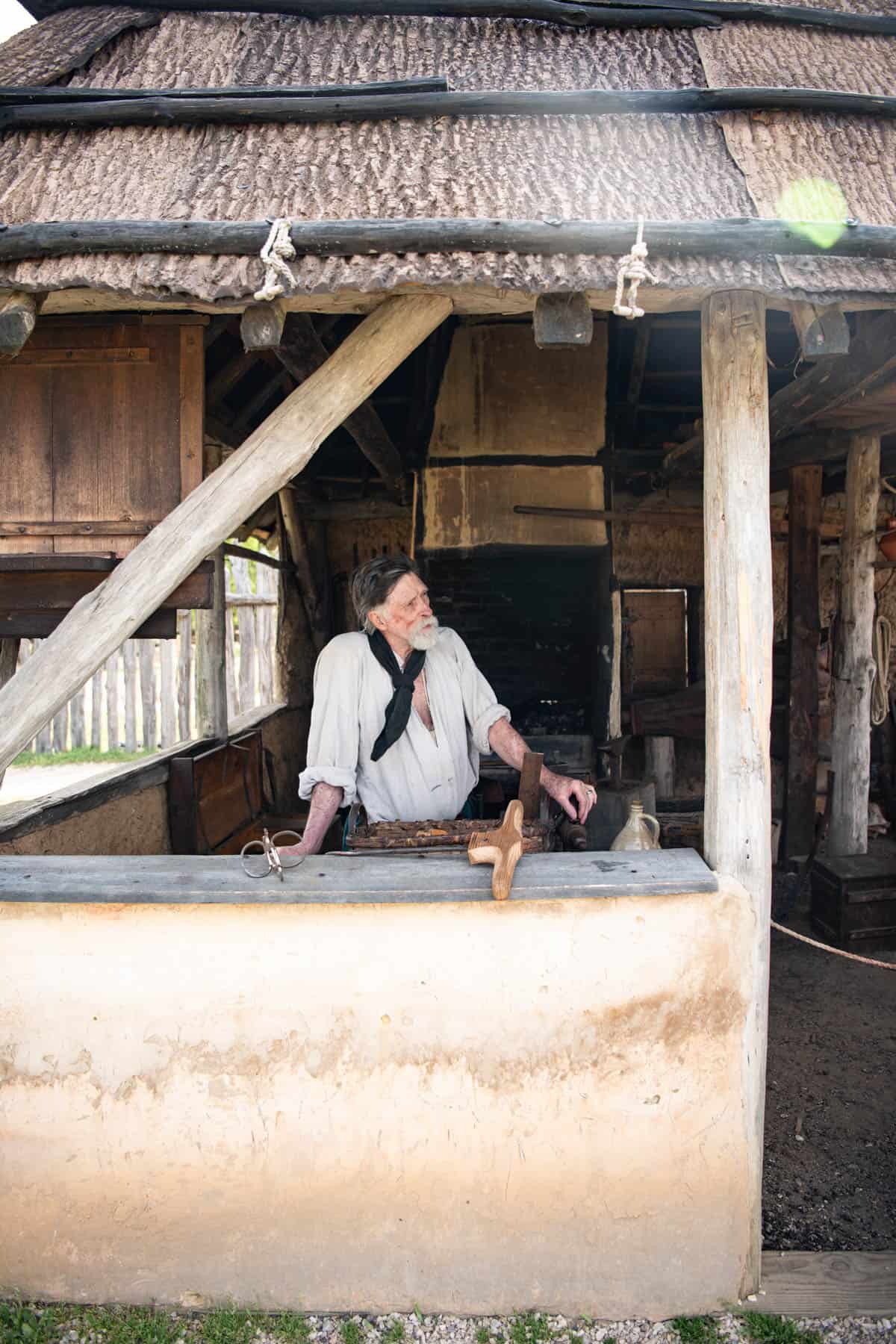
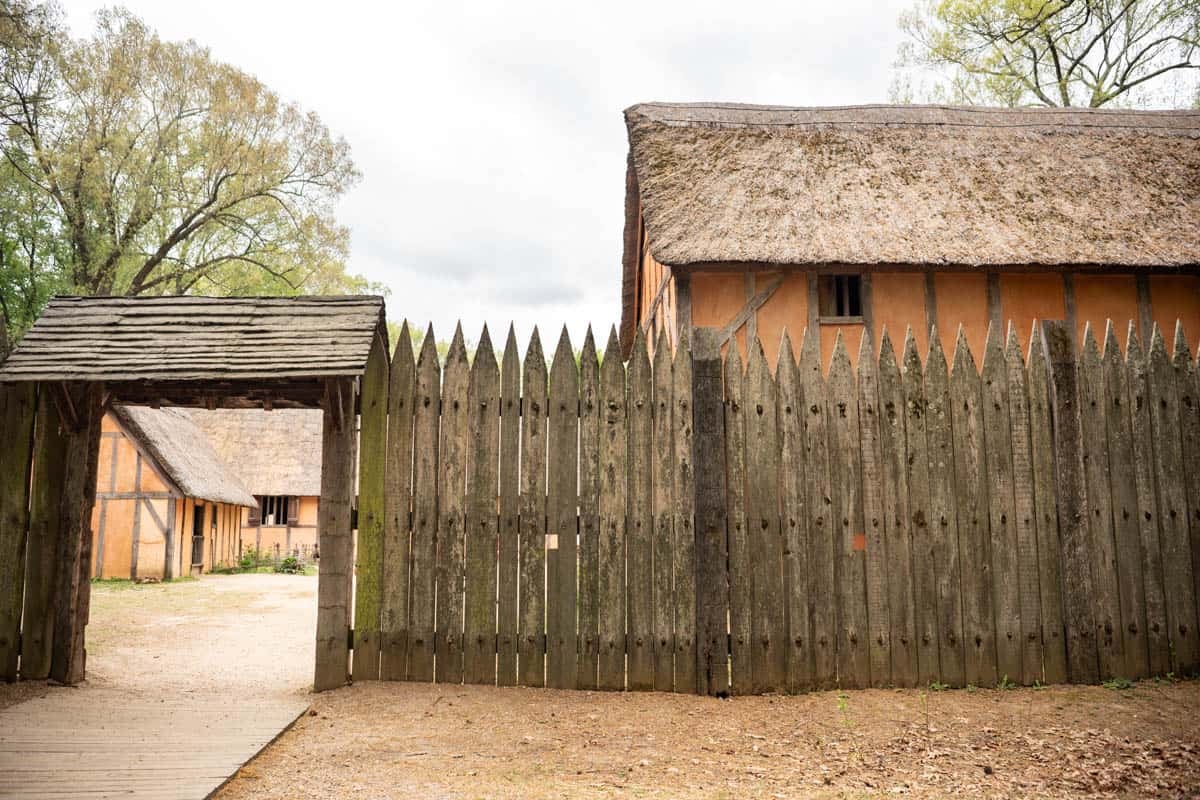
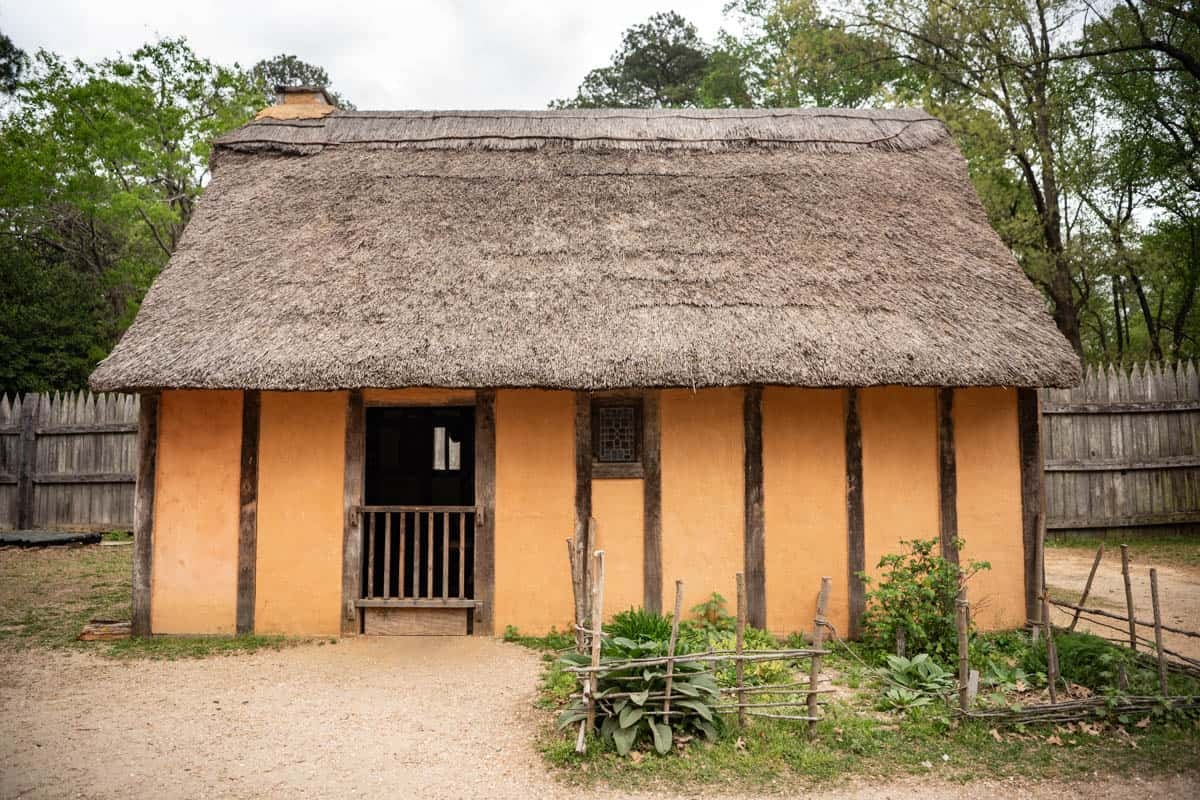
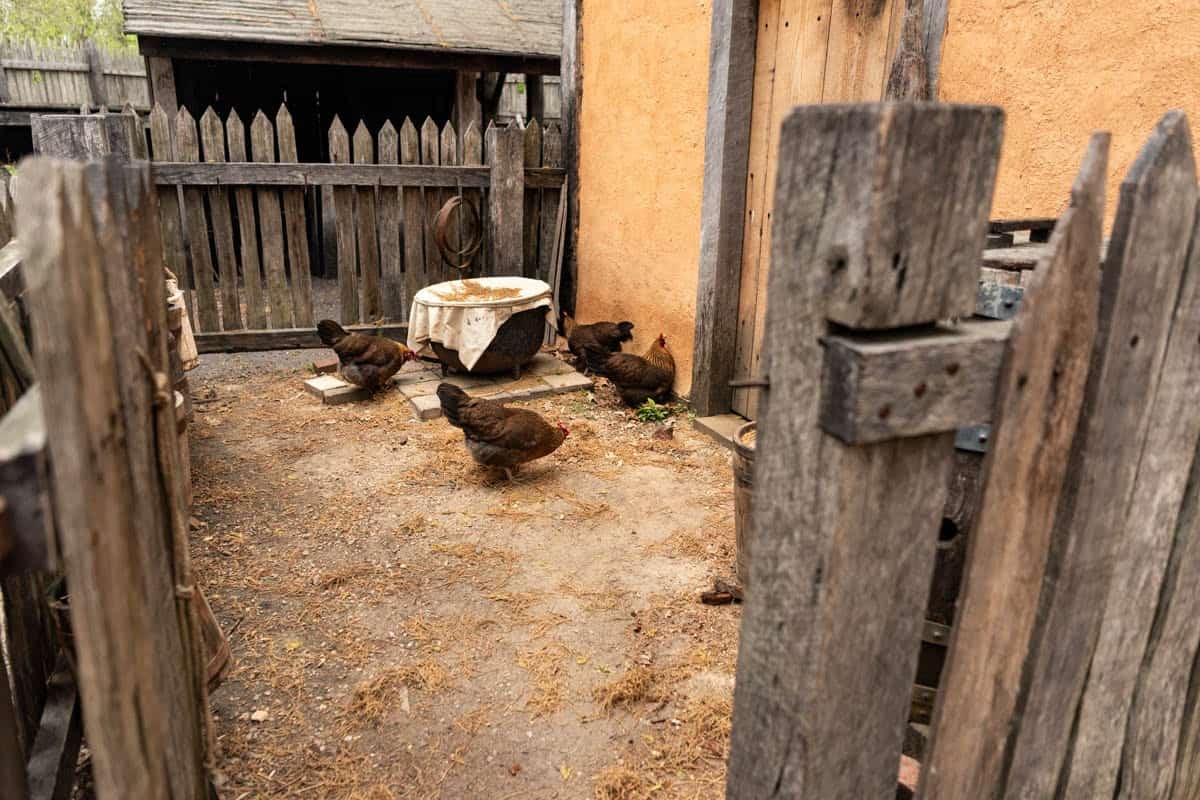
For starters, you can walk inside a recreated 1610–1614 English fort, complete with homes, small garden plots, chickens, a church, and occasional military demonstrations. Costumed interpreters share stories, demonstrate daily life, and answer questions, making it feel like stepping into the early 1600s.
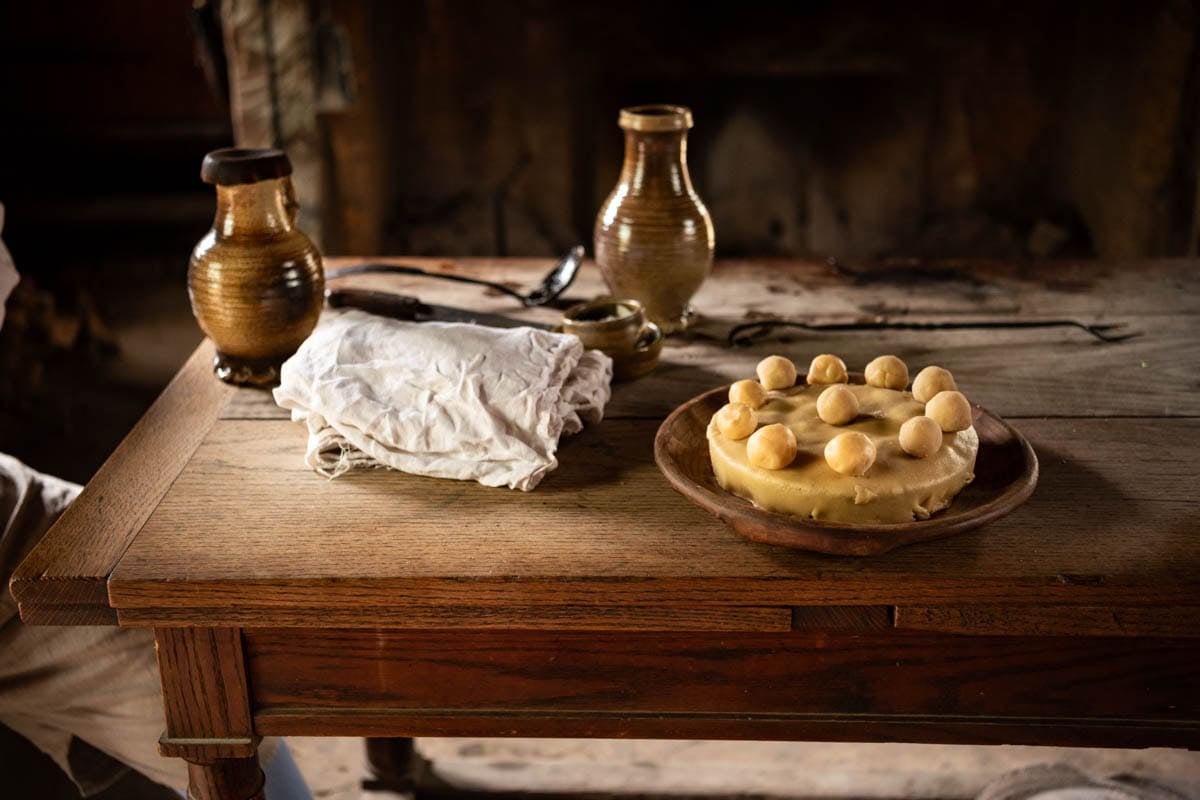
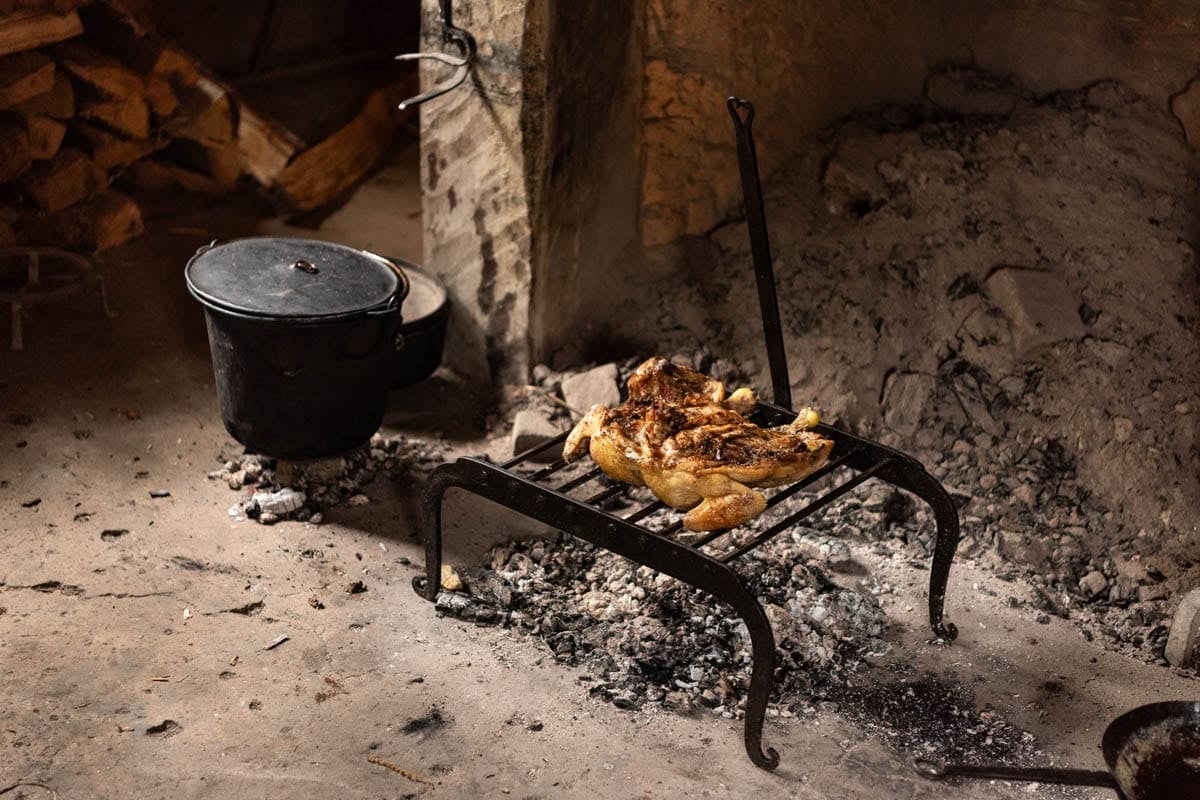
We were there over Easter weekend and one of the living history actors was roasting a chicken over coals, making pottage, and had this marzipan cake on display to talk about what a holiday meal would have looked like using these historical recipes. The smell of chicken roasting over coals made this a particularly immersive and interesting exhibit.
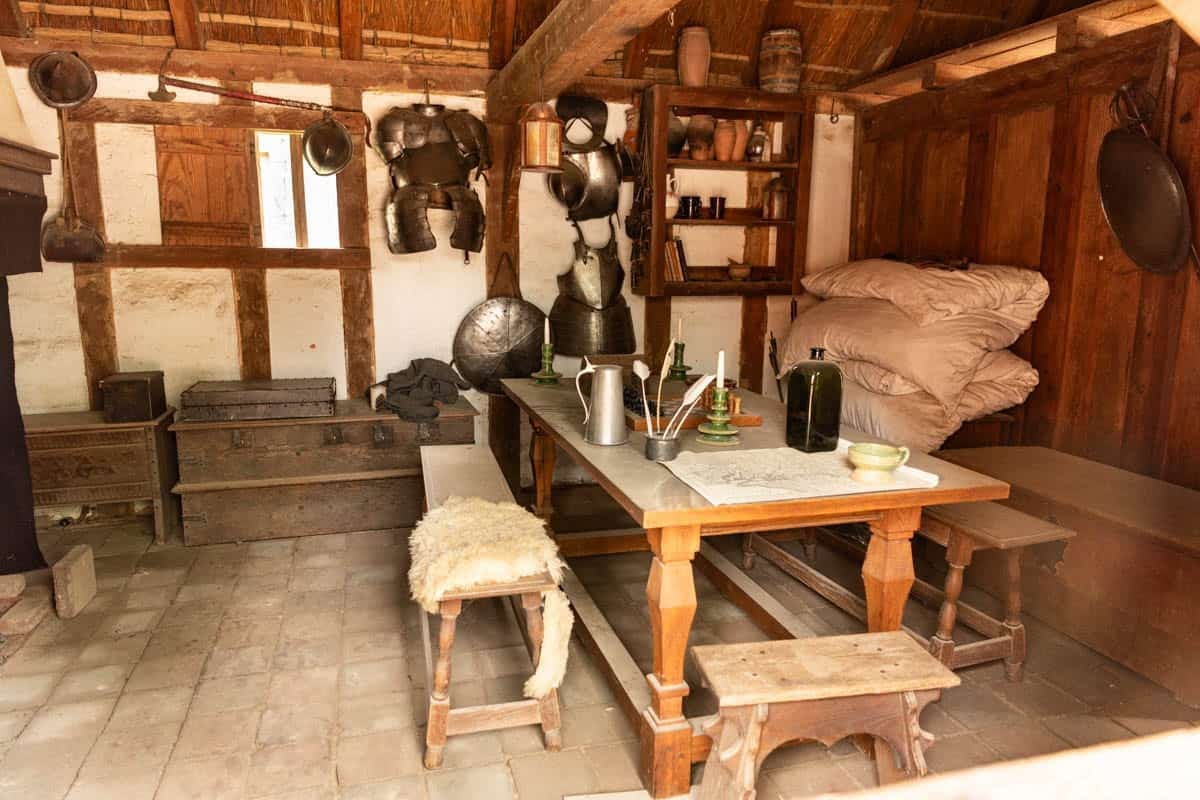
There was also metal armor with breastplates and helmets hanging from posts outside homes that are there to be tried on, which was interesting and fun.
You can also hear chickens clucking and scratching as they roam about the grounds, adding an authentic feel to the concept of this being a fort that real people lived and worked in hundreds of years ago.
Step on board a ship
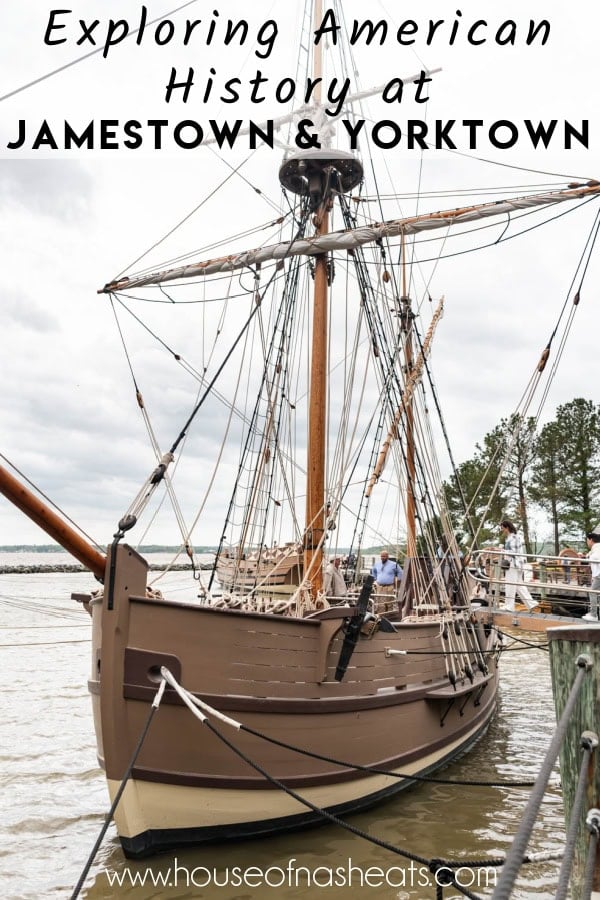
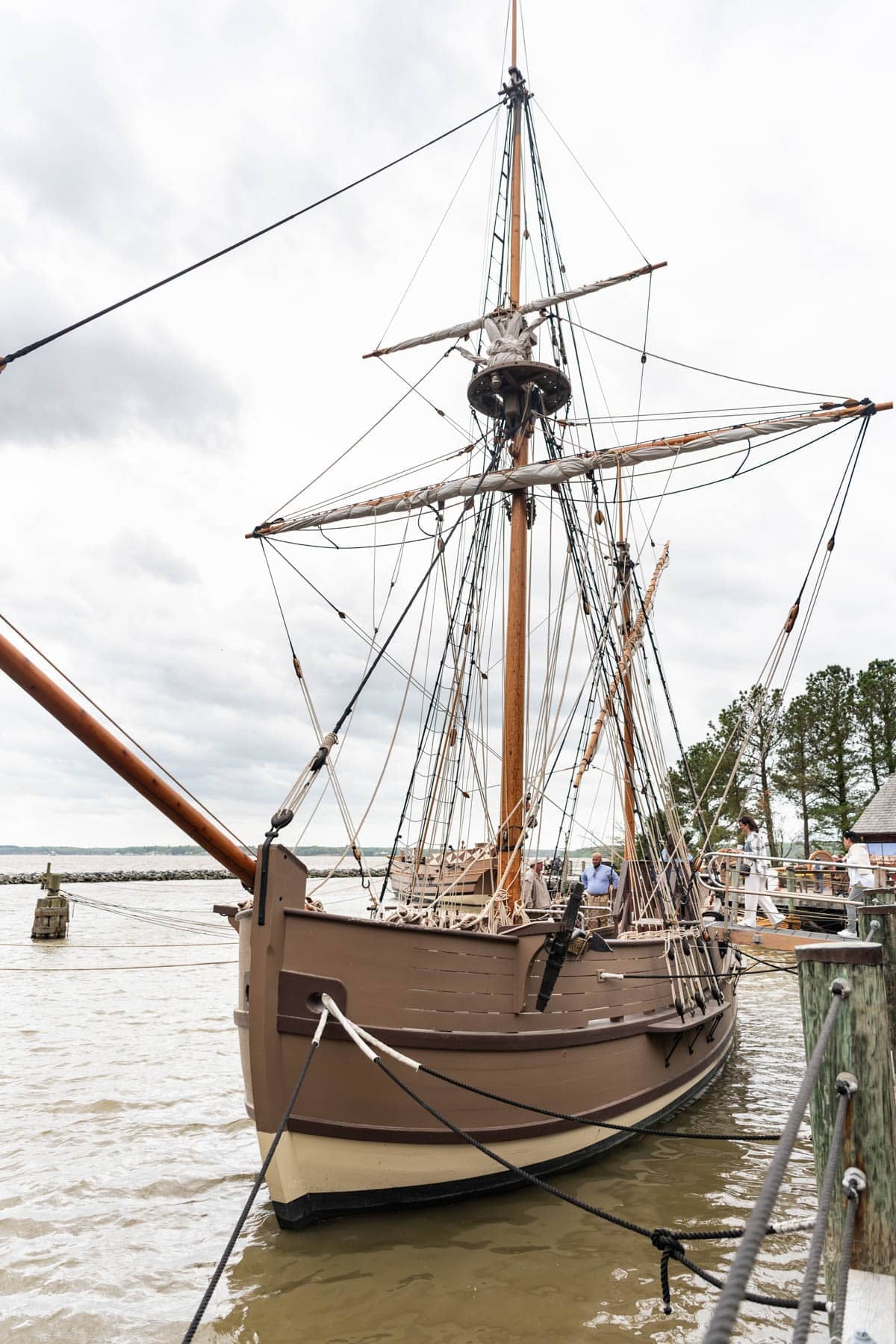
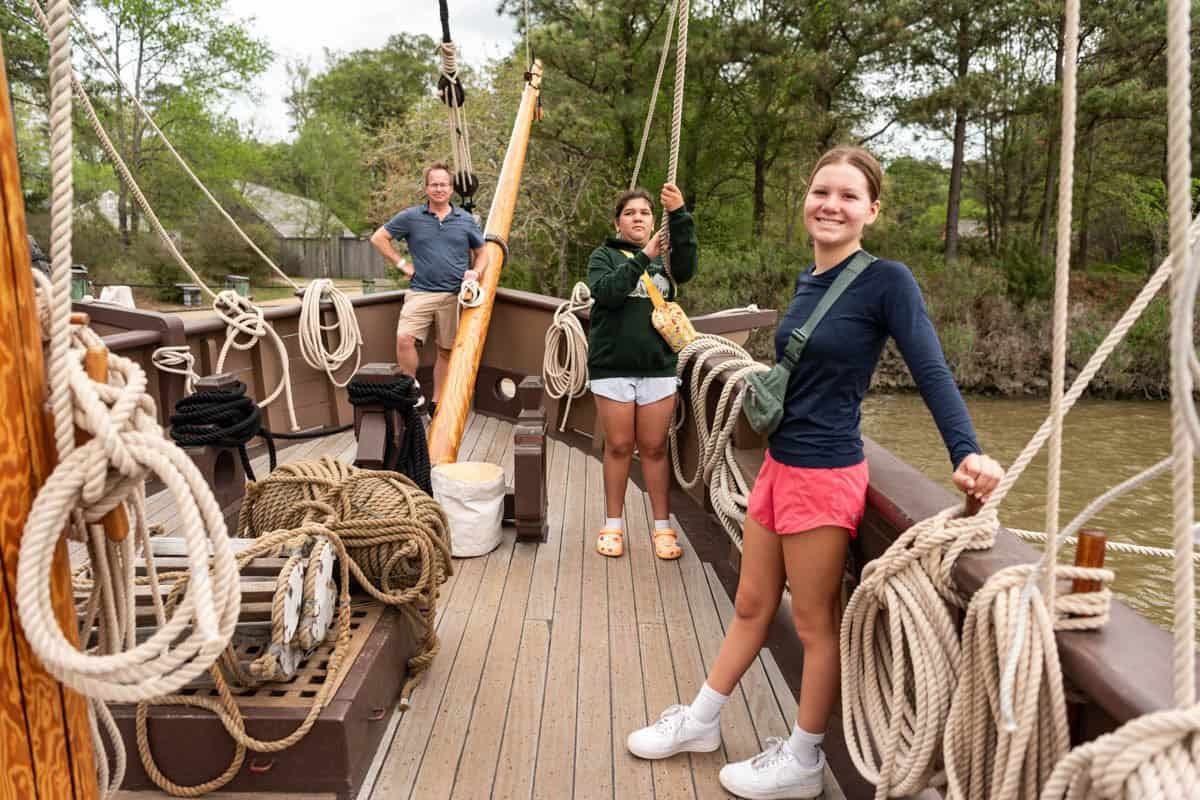
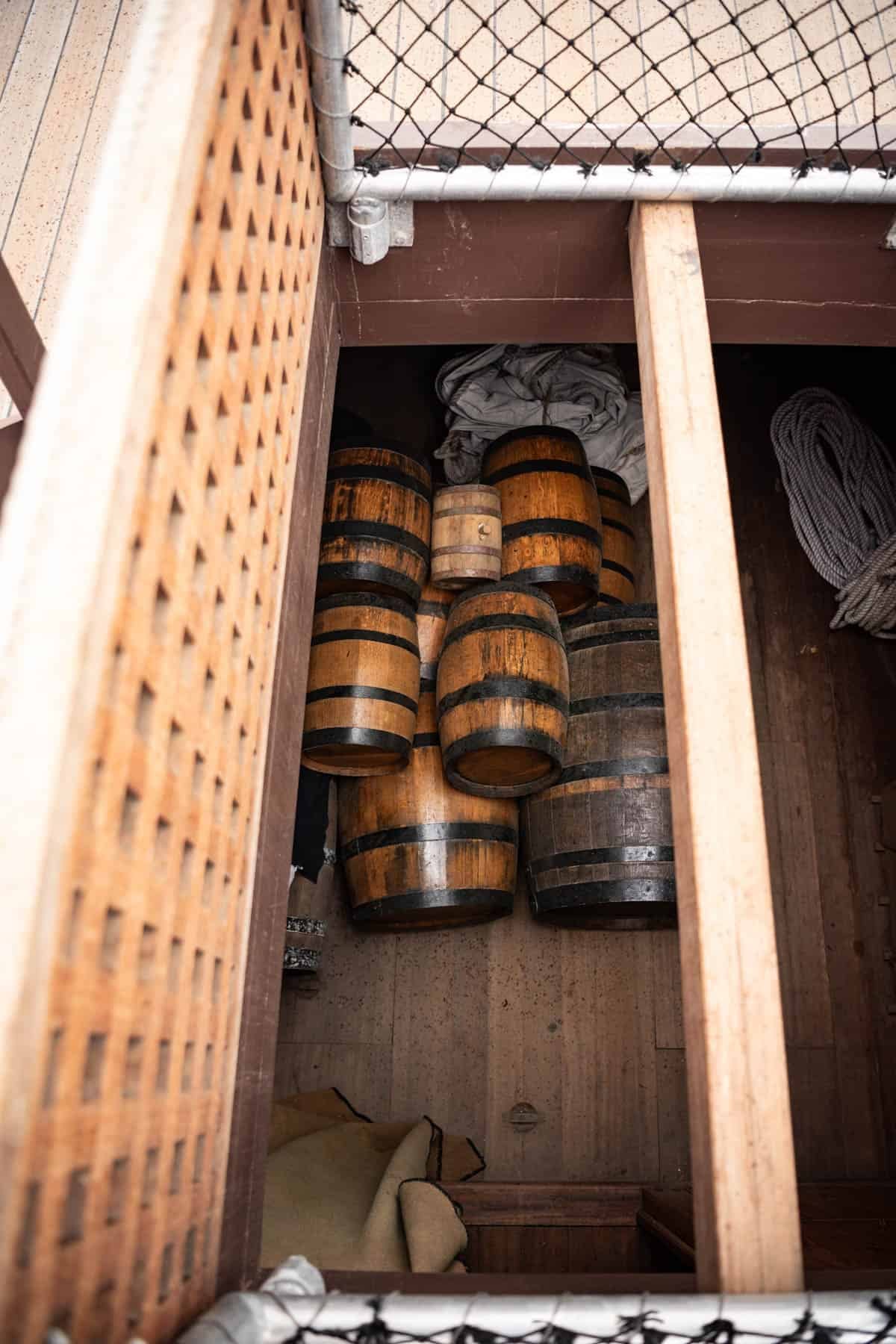
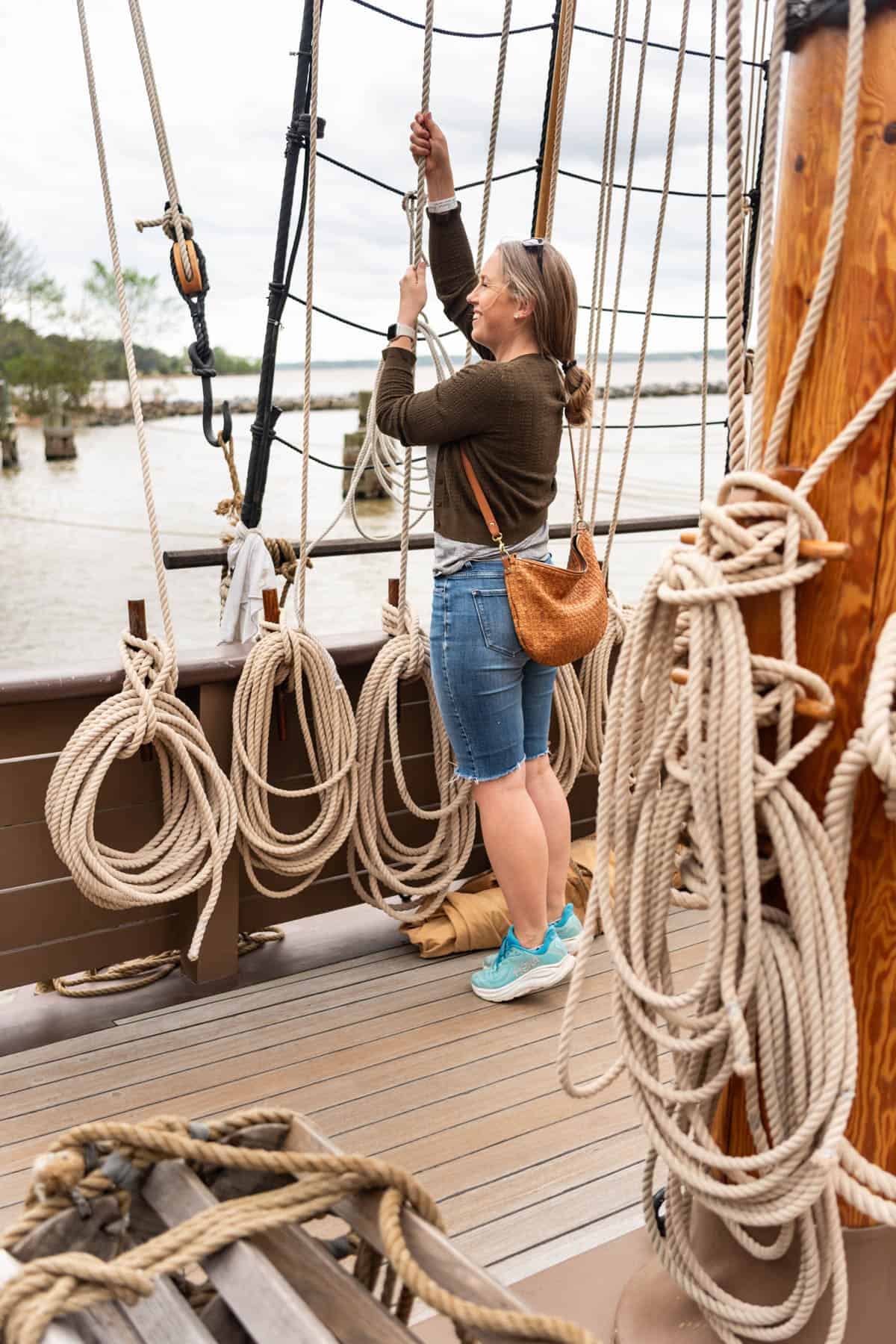
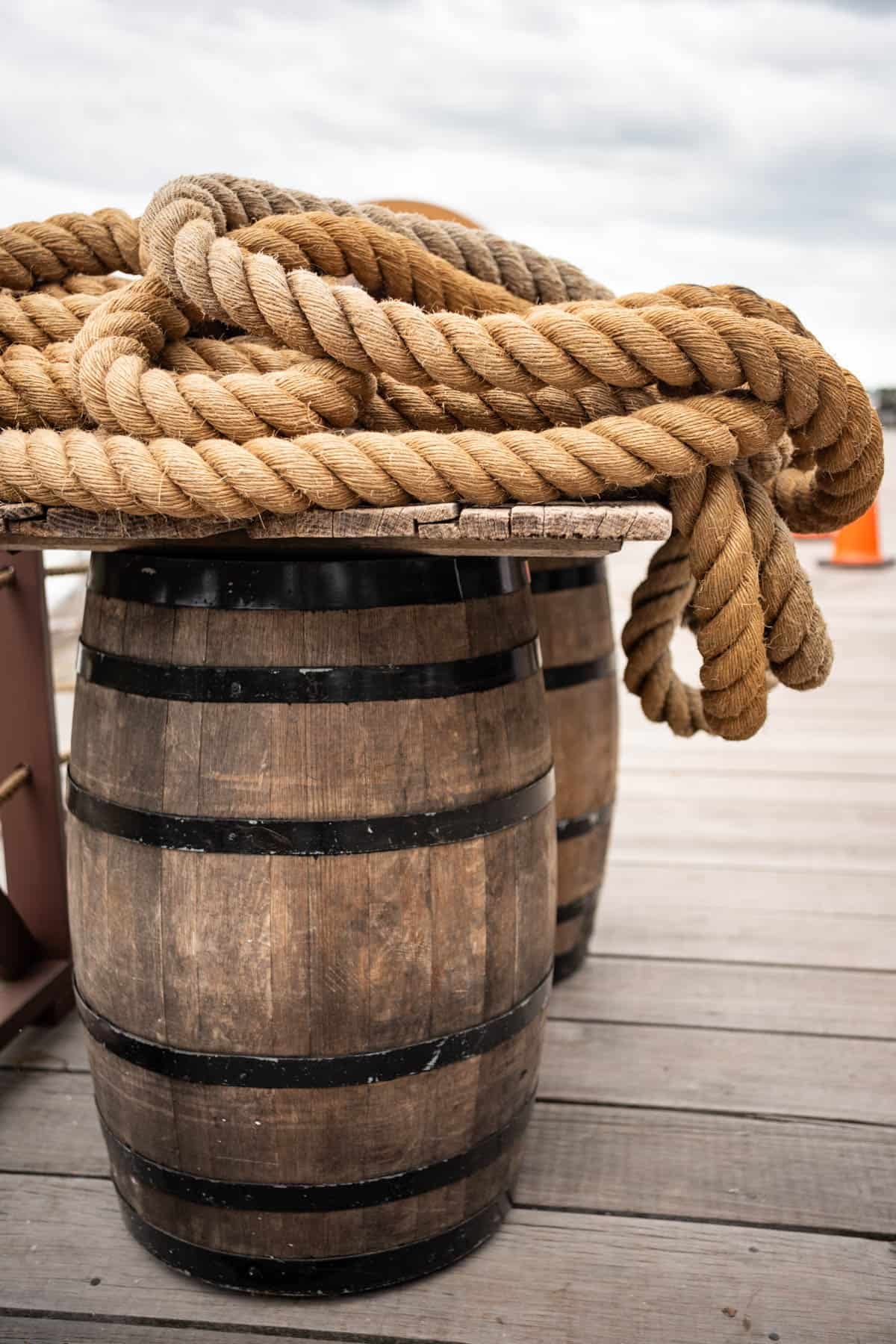
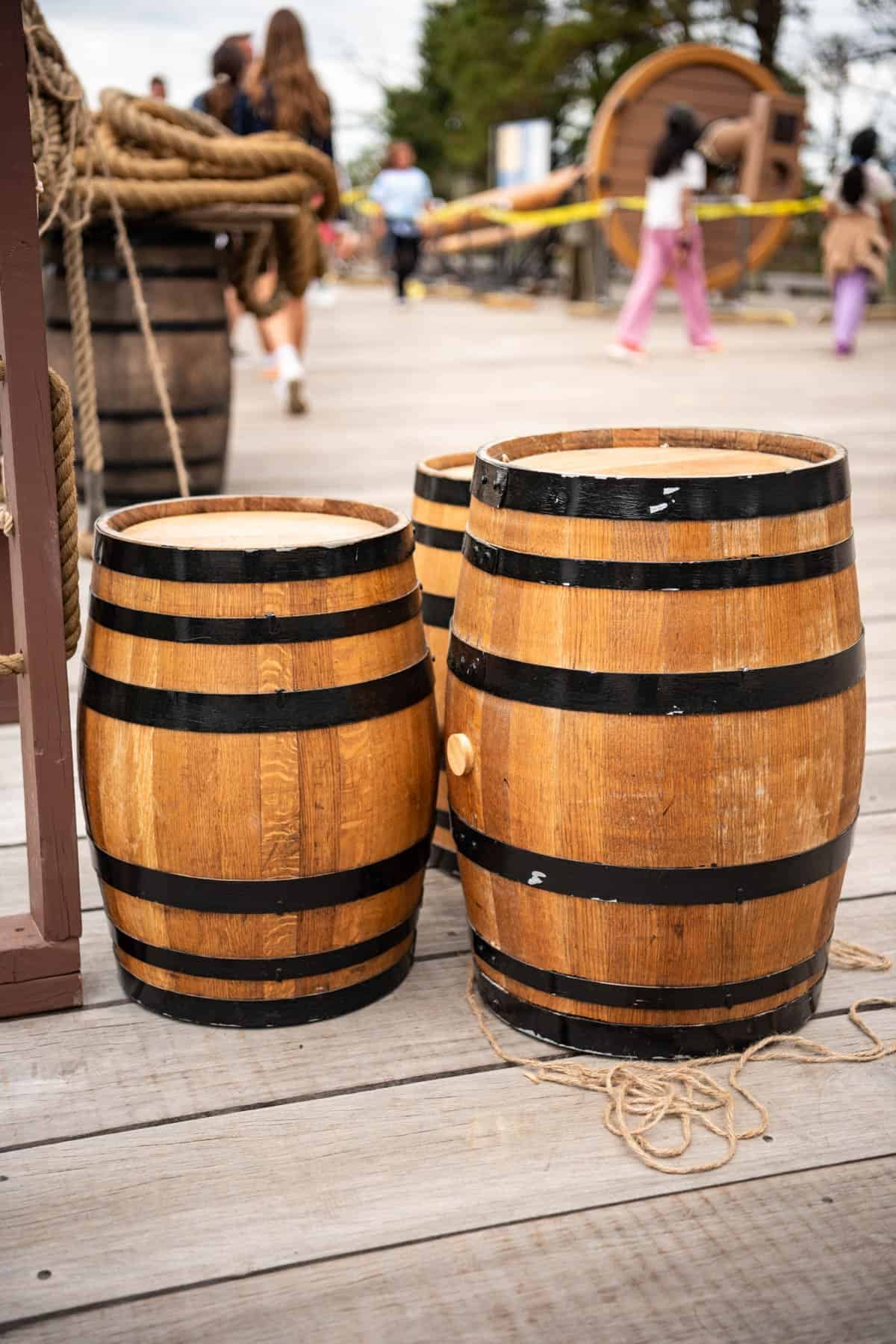
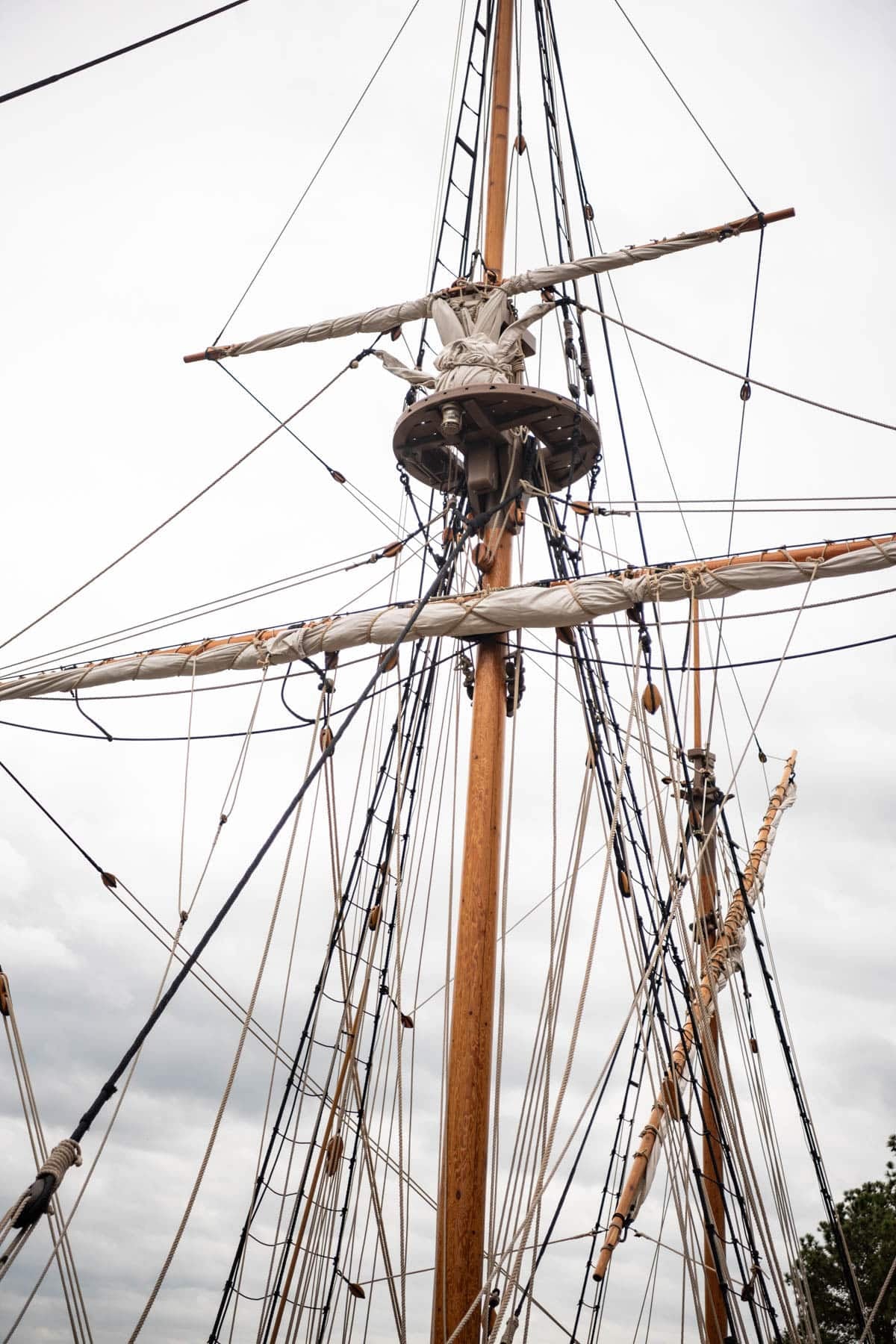
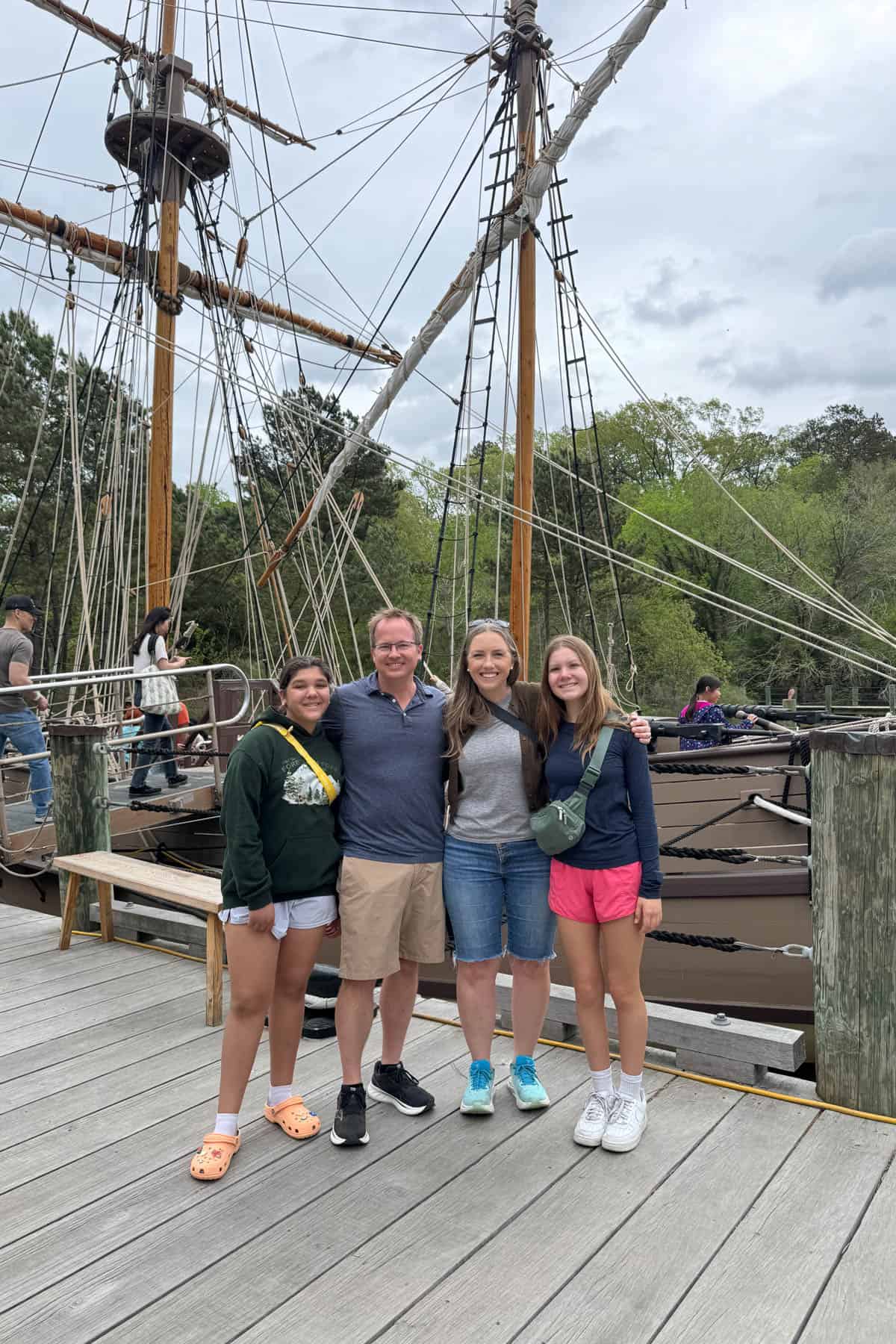
The replicas of the three ships that brought English settlers to Virginia were one of my favorite experiences. You can step on board, climb below decks, and imagine yourself sailing across the Atlantic Ocean. You are allowed to touch and examine, so it is very hands-on and a fun way to learn and engage.
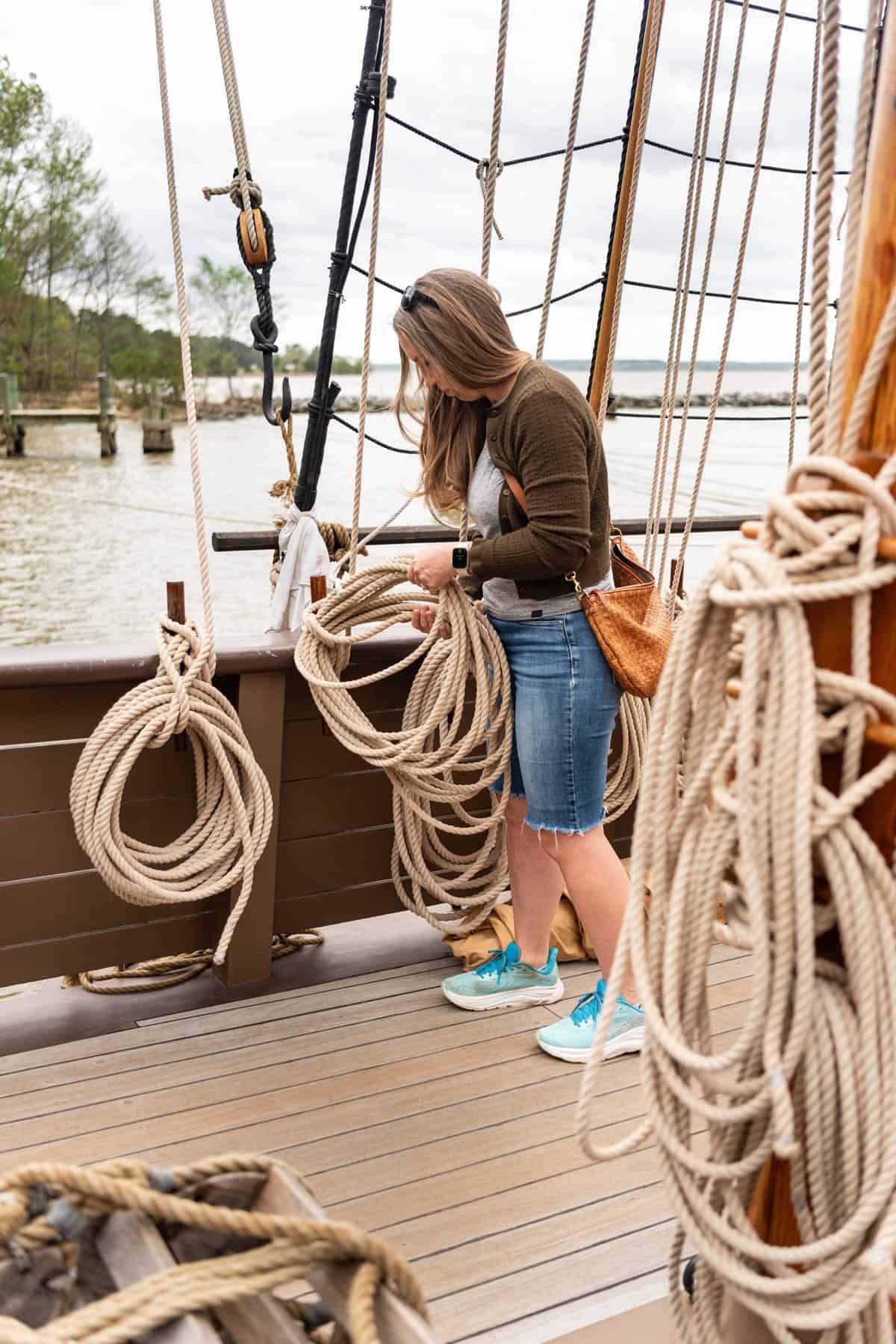
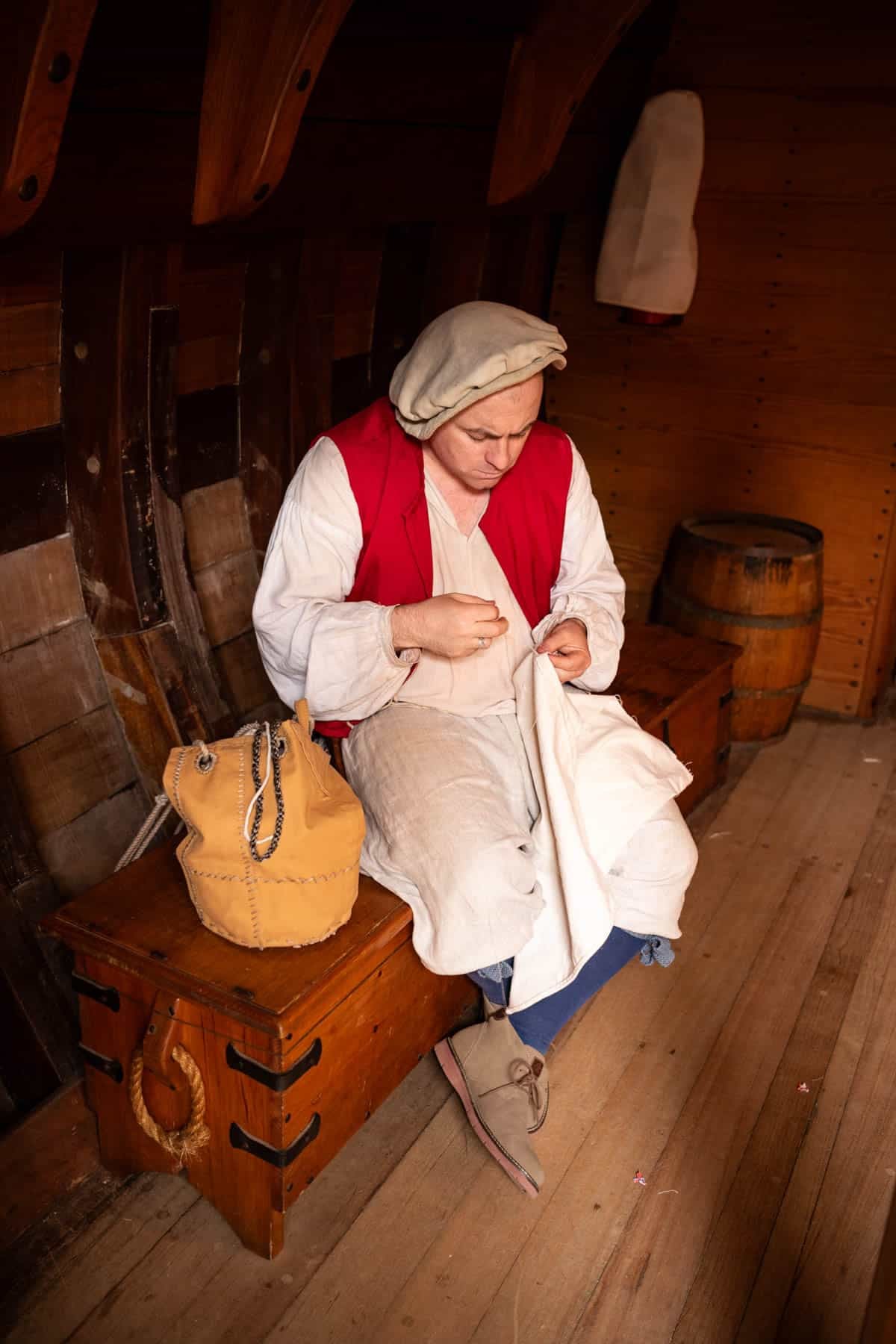
This interpreter was demonstrating how to patch a sailcloth in the hold of one of the ships and talking about some of the duties of the sailors and passengers who came over to the Jamestown colony.
Explore a recreated Powhatan village
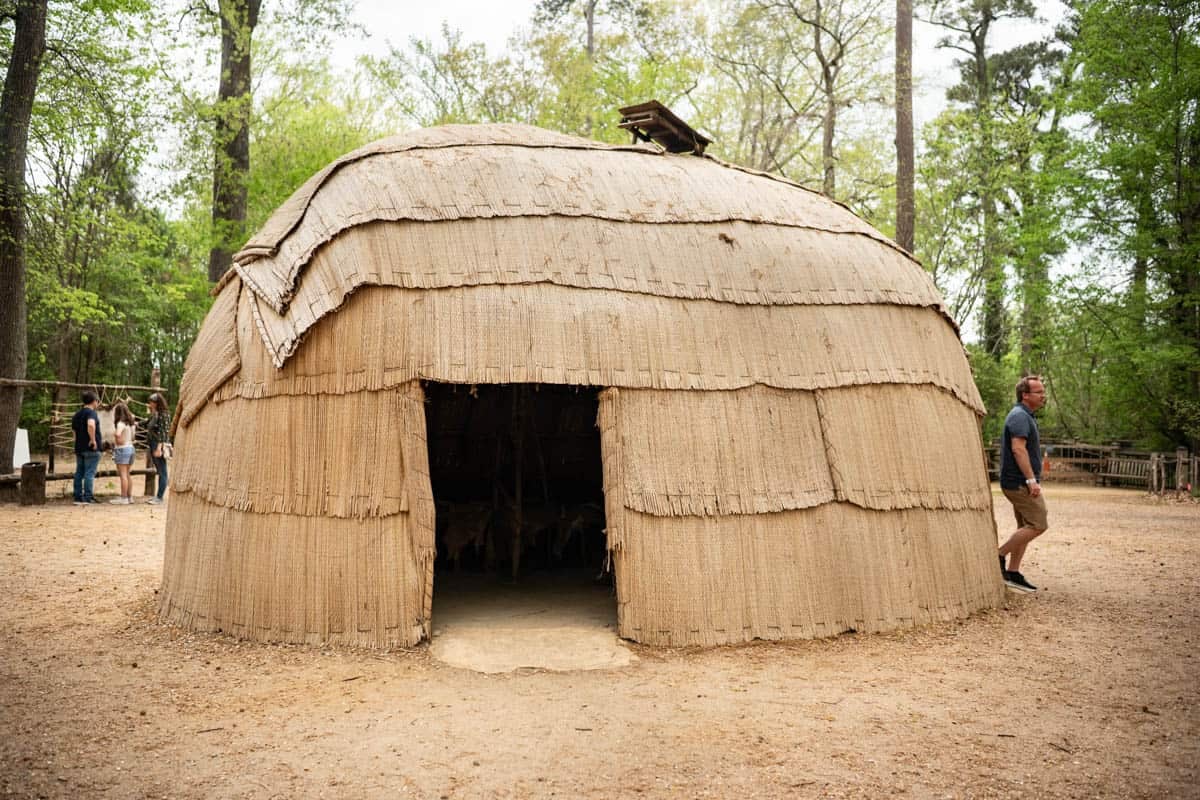
Another highlight was learning about the Indigenous cultures of Virginia by wandering through a recreated Powhatan village. Paul did this trip way back in 8th grade and this was the thing he remembered and looked forward to most.
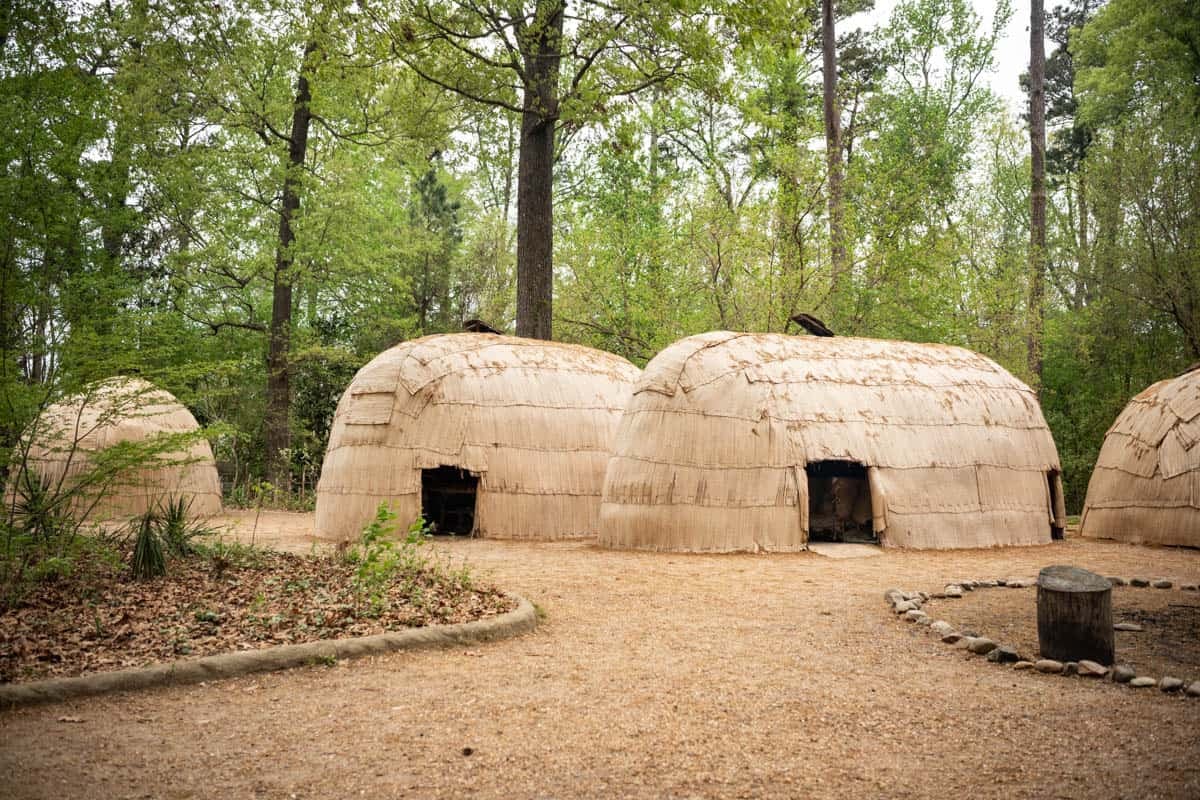
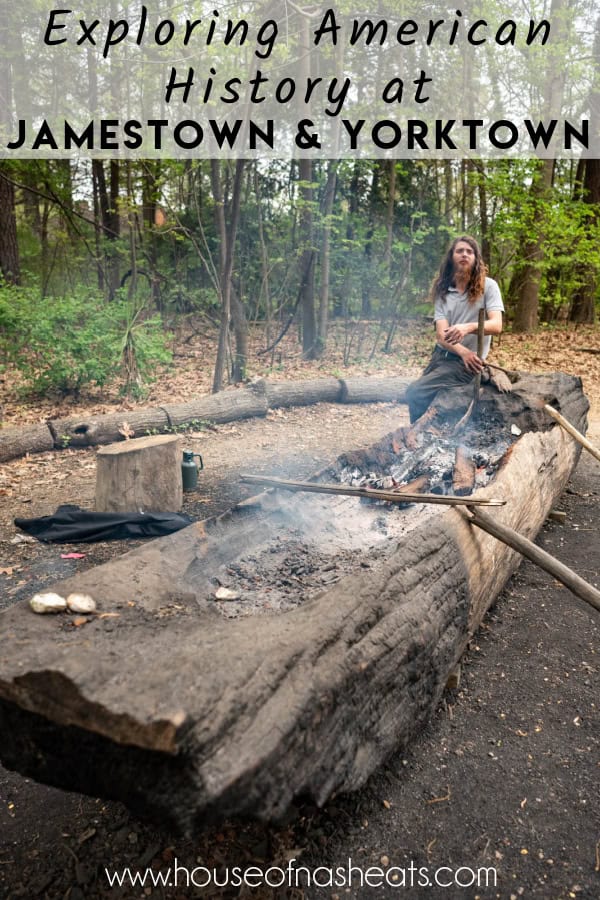
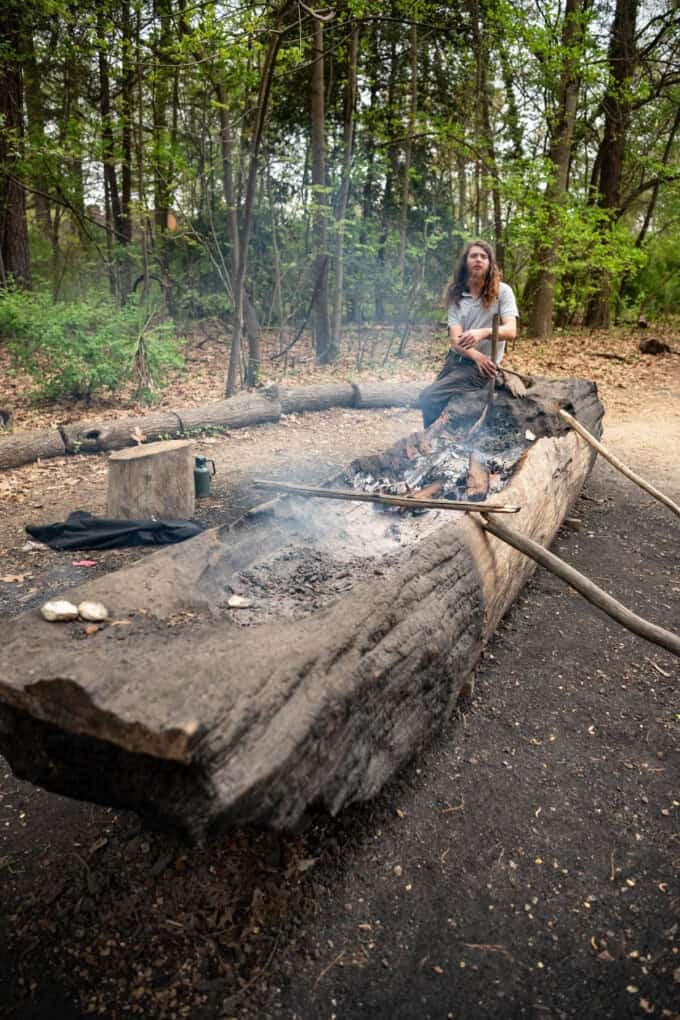
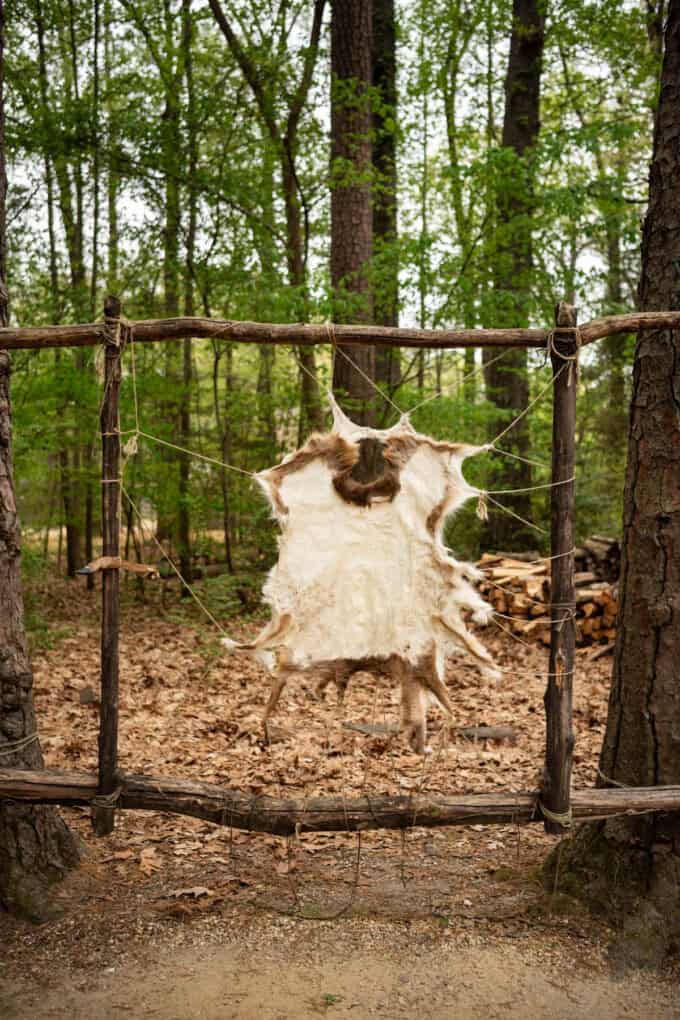
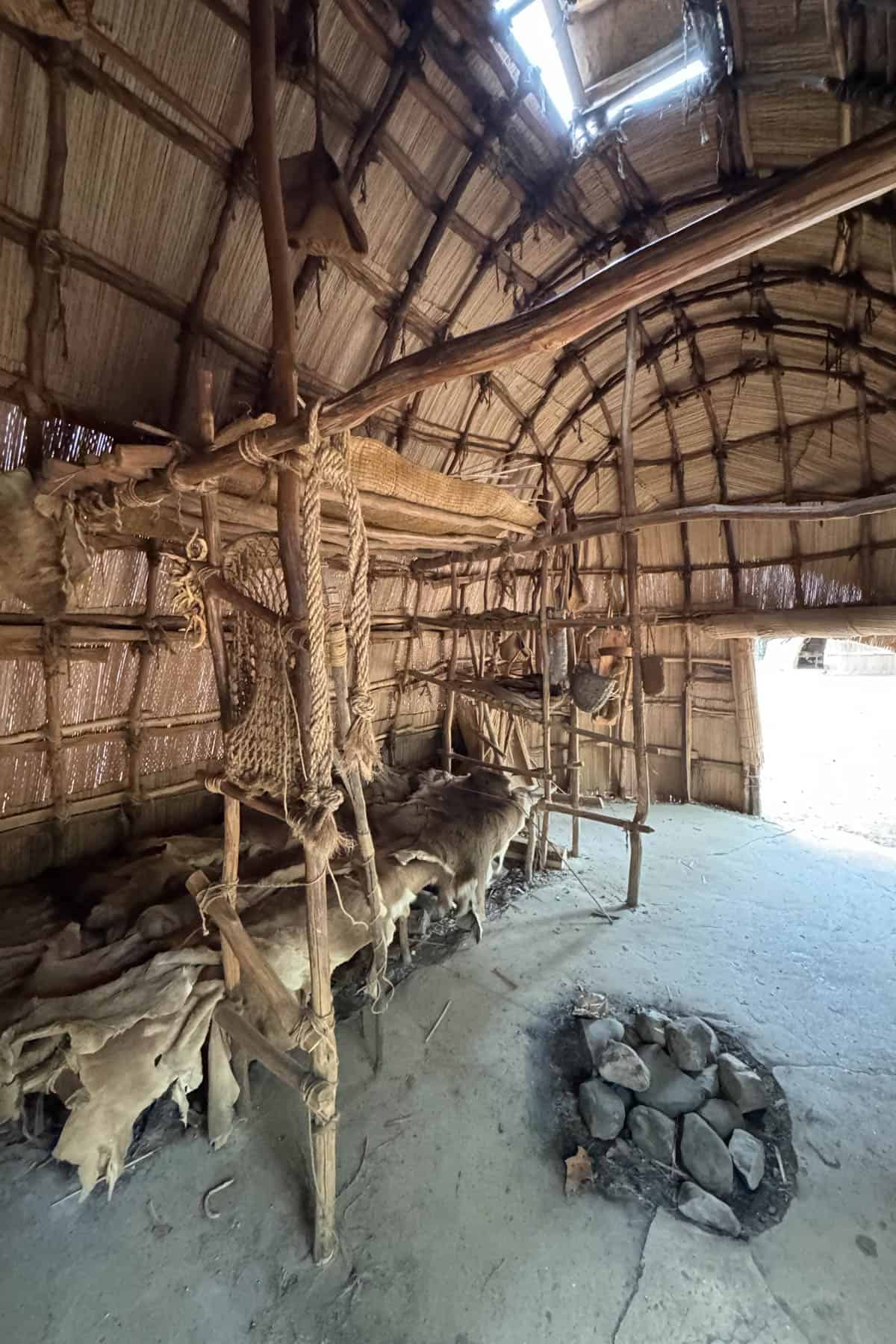
We learned from an interpreter about burning out logs to create canoes, smoking meat and fish, and the structures themselves that were far better at keeping the Powhatan warm during the winters than the homes the settlers built.
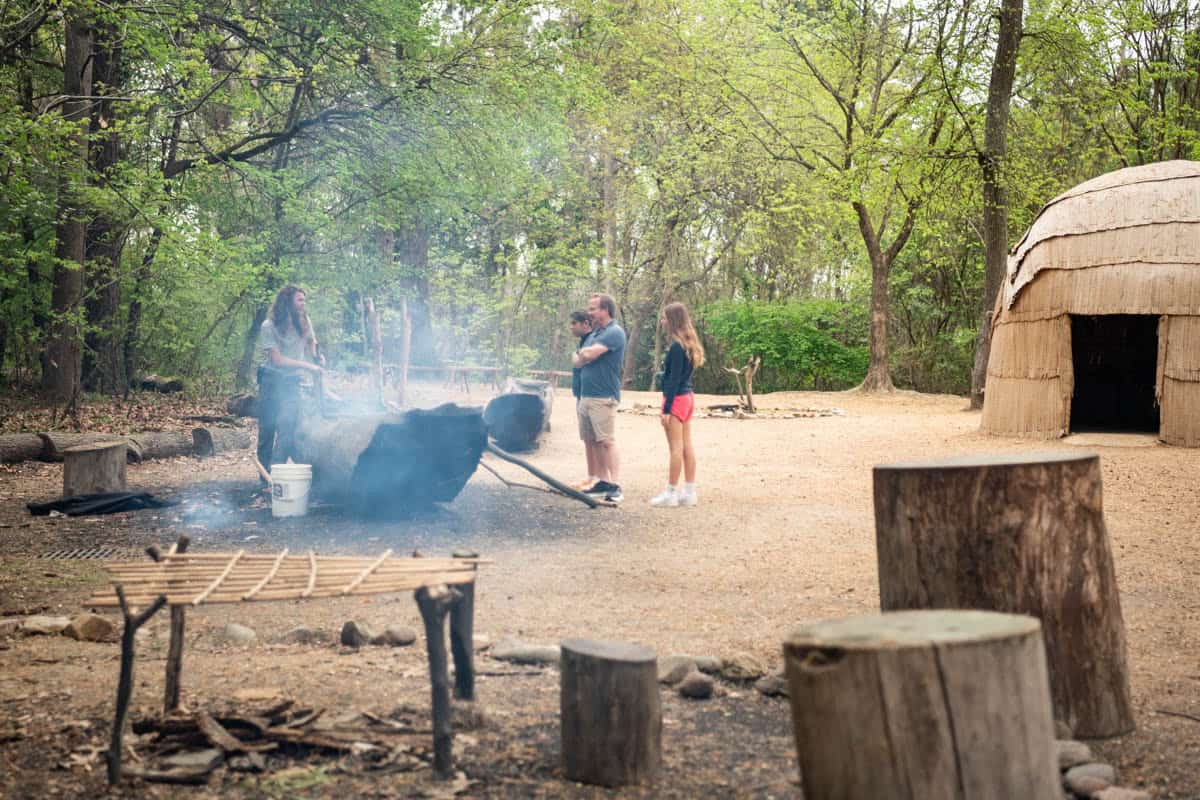
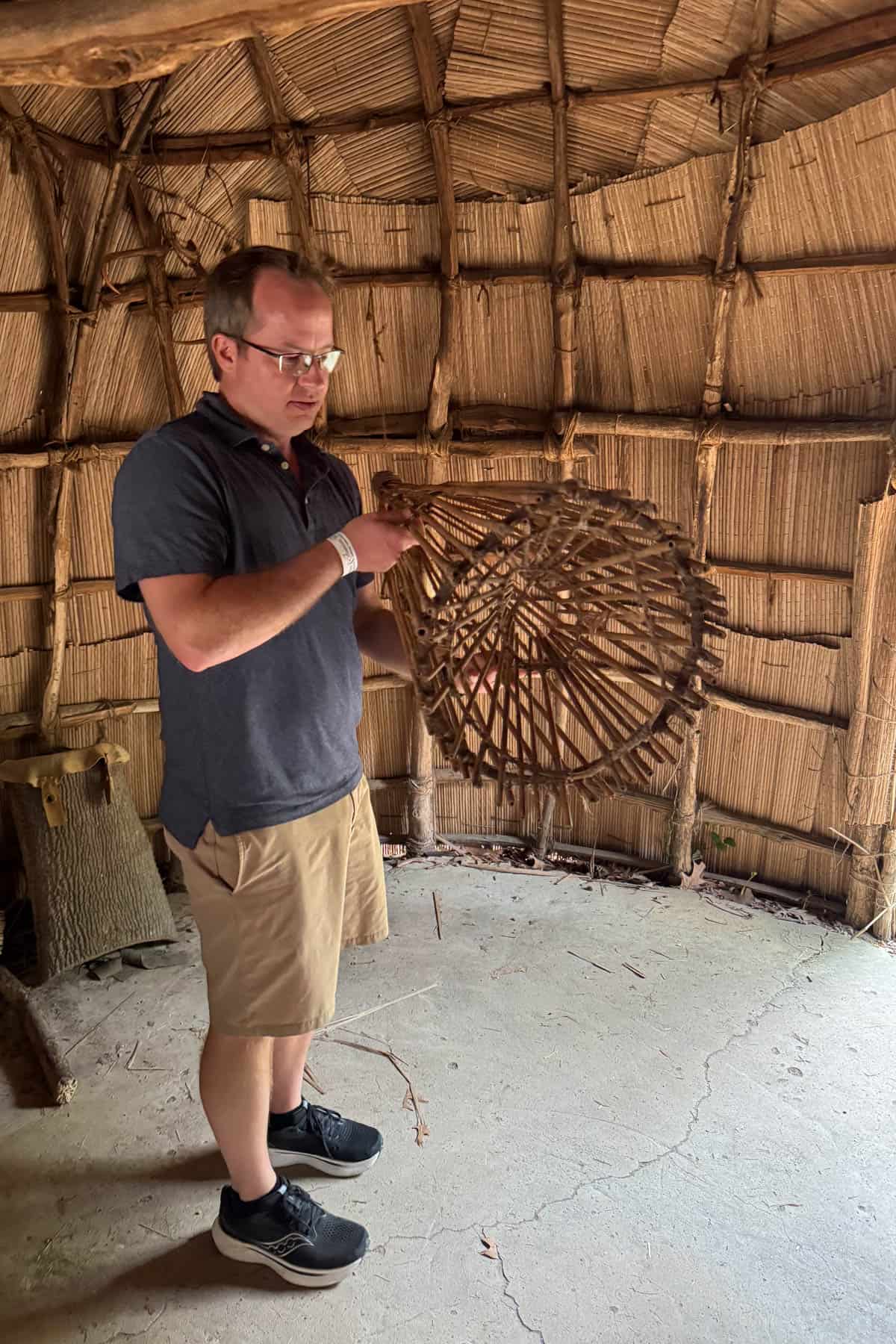
Paul showed the girls a fish trap that he found in one of the dwellings and explained how it was used to catch fish from the nearby rivers and harbor.
I would plan on spending 2 to 3 hours here (or more), especially if you want to explore the ships, fort, village, and talk with interpreters.
In addition to all of the outdoor exhibits, there is a large museum inside with plenty of signs and displays to read. There is also a cafeteria where you can purchase food if you did historic Jamestowne first and find yourself ready for lunch or a snack!
So Which Should You Choose?
Honestly? Both, if you can. They complement each other beautifully with Historic Jamestowne giving a very authentic feel being on the ground where history happened, while Jamestown Settlement helps you to better visualize what life looked and felt like at the time.
They are very close to each other (less than a 5 minute drive) and we spent about 4 hours between the two locations.
If you only have time for one and are traveling with kids or teens, I would recommend doing Jamestown Settlement simply because it is more engaging.
Yorktown: Battlefield & Historic Sites vs. Living History Museum
Yorktown is best known as the site where the final major battle of the American Revolution was fought in 1781, effectively ending the war and securing American independence. When you visit, there are two very different ways to experience the story.
Yorktown Battlefield (Historic Battlefield & Visitor Center)
This is the actual ground where the British forces under Charles Cornwallis surrendered to the combined American and French forces led by George Washington in 1781.
The landscape still looks much like it did during the siege with open fields, strategic ridgelines, and earthworks that let you visualize troop movements. With a little imagination, it’s easy to picture the tense final days of the Revolutionary War unfolding across these quiet fields.
We used the National Parks Service App to follow an audio tour as we drove around the battlefield. You can stop at each spot, get out, explore, then resume the route. It was super helpful to know what you are looking at while you drive the 7 mile route through the battlefield.
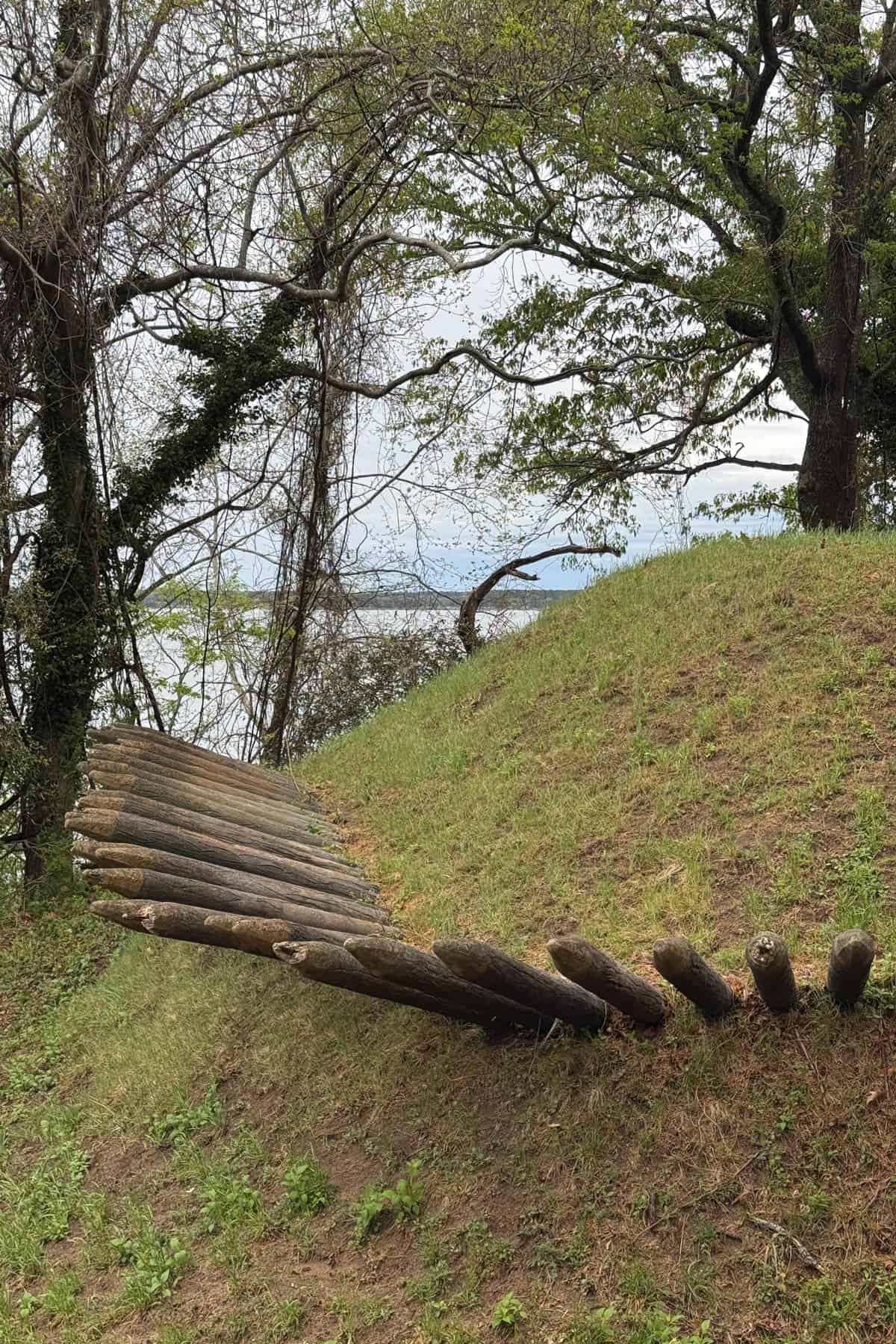
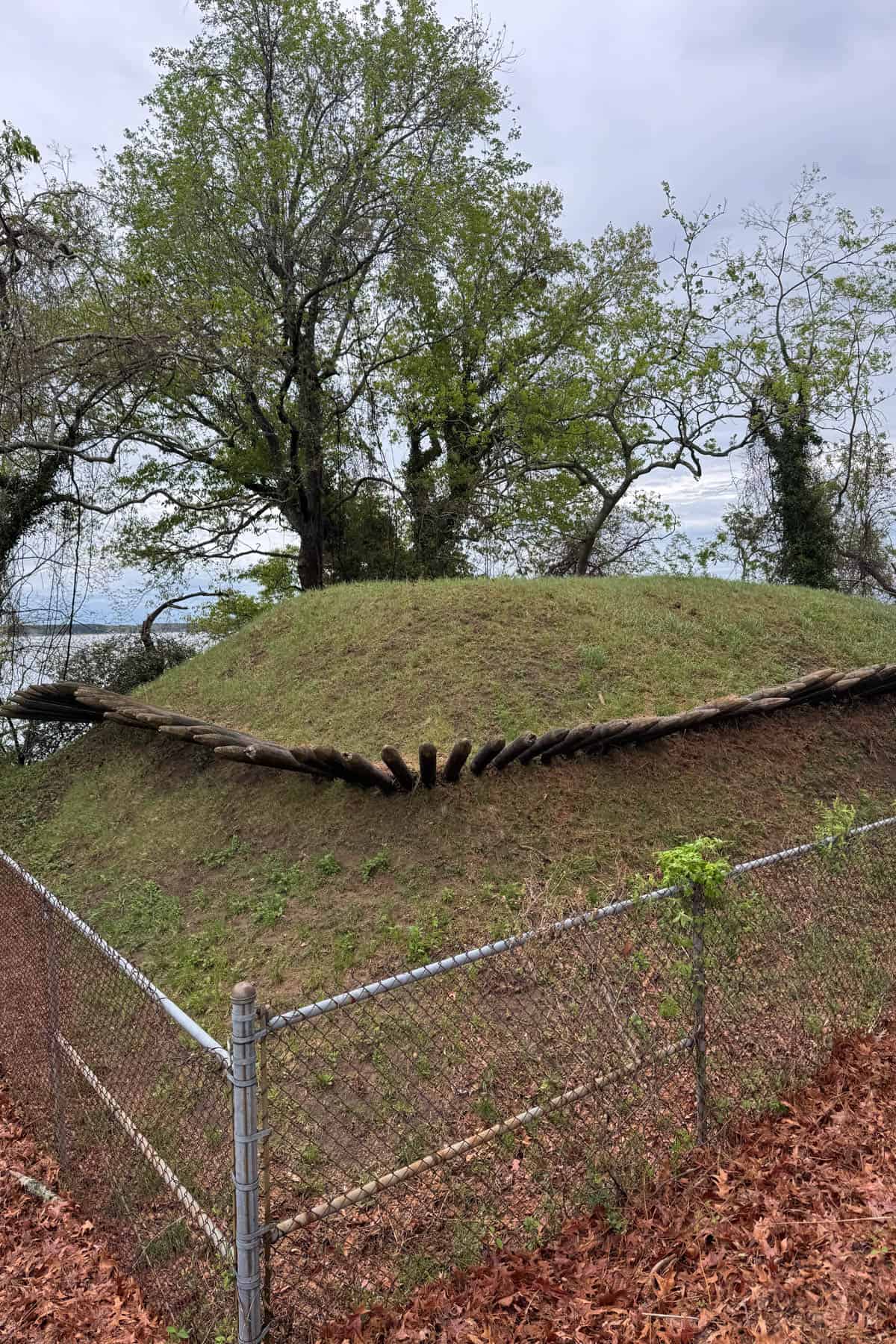
As you drive or walk through the battlefield route, you’ll see original earthworks and trenches dug by soldiers during the siege. The low, grassy ridges might not look dramatic at first, but once you realize they were dug by hand while under fire, the terrain suddenly feels very real. These trenches were the front lines, where soldiers lived, fought, and waited.
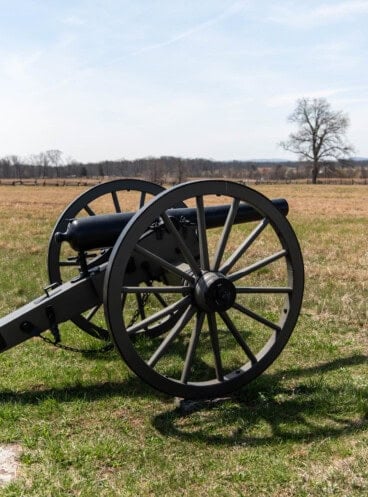
You will also see reconstructed or preserved gun emplacements where French and American artillery pounded the British defenses and redoubts 9 and 10, where American soldiers stormed in daring nighttime attacks with just bayonets and no gunfire to helped break the British defenses.
Another particularly notable and interesting spot to get out and walk is Surrender Field, where the British troops laid down their arms after the siege. The wide, quiet field is one of the most meaningful places on the battlefield and you can just imagine lines of soldiers marching out in formation to surrender with drums beating and flags furled.
There are no flashy reconstructions here. It’s just earth, grass, and quiet. But that’s what makes it powerful. The battlefield invites you to use your imagination: to picture soldiers digging through the night, cannons firing at dawn, and the final moments that led to the end of the war.
Plan on spending 1-3 hours here, depending on whether you do the self-guided driving tour or join a ranger-led program.
American Revolution Museum at Yorktown (Living History & Museum)
The American Revolution Museum at Yorktown is the living-history counterpart to the battlefield, designed to immerse visitors in Revolutionary War life, similar to how Jamestown Settlement is more immersive than Historic Jamestowne above. Instead of just looking at where events happened, you get to experience daily life during the war years. Plan on another 1-3 hours here, depending on how much additional history your group is able to take in at this point in the day!
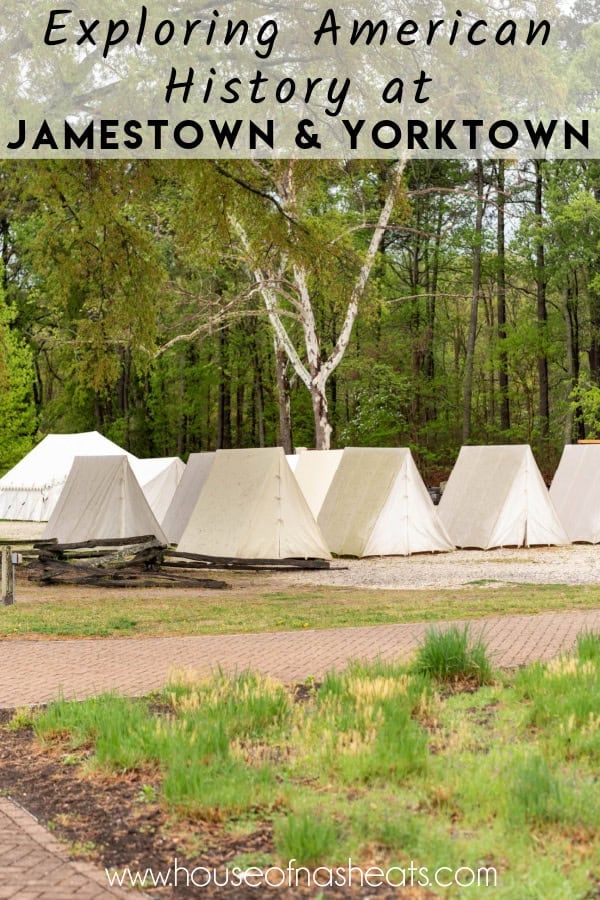
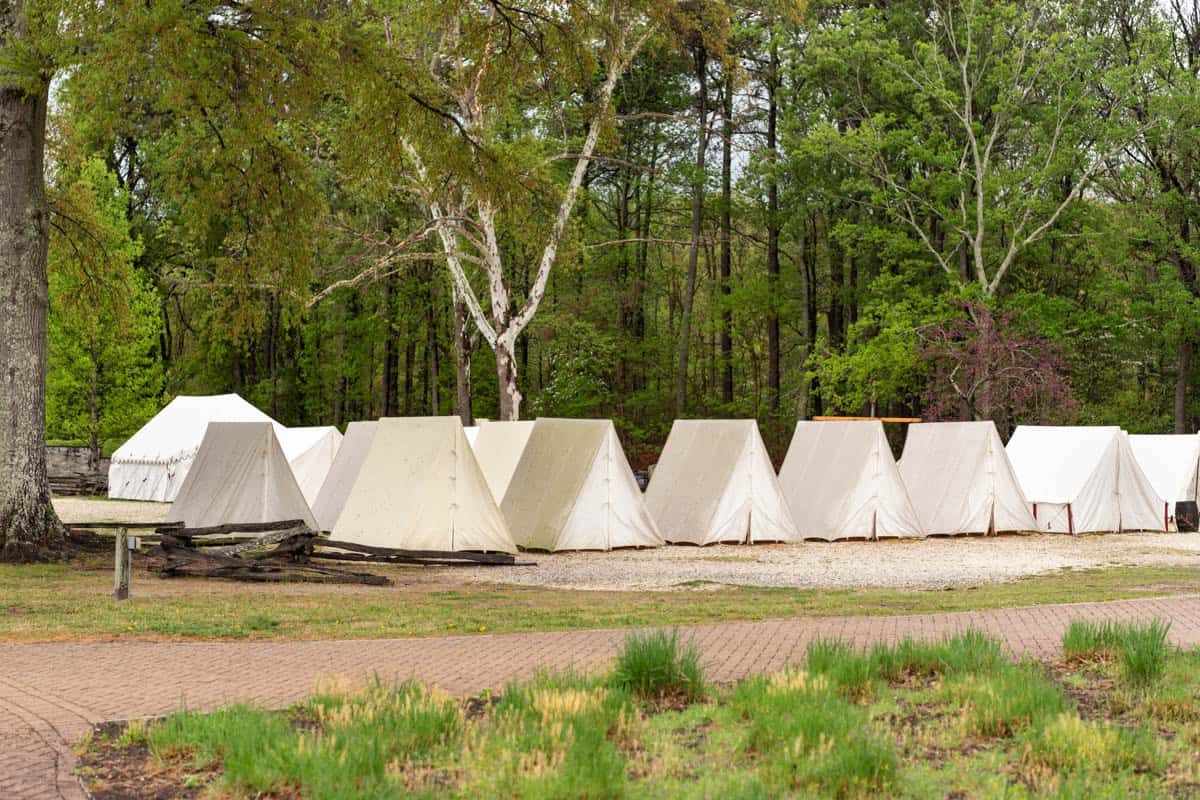
You can walk through a recreated Continental Army encampment, see soldiers drilling, musket firing demonstrations, and artillery demonstrations, and explore a Revolution-era farm with costumed interpreters explaining daily routines.
A lot of this is similar to things we saw in Colonial Williamsburg, so we didn’t feel the need to spend quite as much time here, but it’s great if this is your first or only stop.
So Which Should You Choose?
Both offer valuable but different experiences and the story feels more complete when you pair them, but if I was only choosing one I would opt for the actual battlefield in this case. I appreciated the authenticity of standing on the ground where the Revolution was decided.
Final Thoughts
If you really want to dig into history, you might want to plan one spending a full day at each location. We made it work visiting both Jamestown and Yorktown on the same day, but it was a lot to take in, especially after a full day at Colonial Williamsburg the day before!